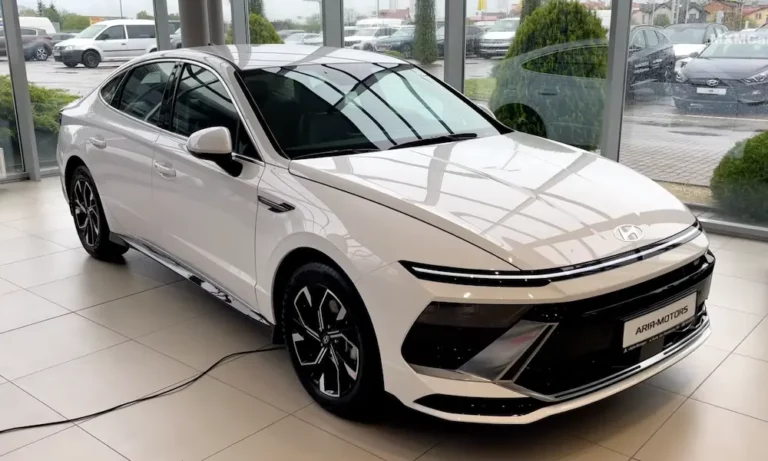
Is your temperature gauge acting weird, your heater blowing cold air, or your check engine light glaring at you? A failing thermostat is often the culprit. This guide covers every Sonata generation from 2006 to 2024, so you’ll know exactly what you’re dealing with before you touch a wrench.
Why the Thermostat Matters More Than You Think
Your thermostat isn’t just a tiny valve. It’s the gatekeeper of your entire cooling system.
When the engine is cold, it stays shut — trapping coolant inside the block to speed up warm-up. Once coolant reaches around 82°C (180°F), the wax element inside expands, the valve opens, and coolant flows through the radiator to shed heat.
That simple cycle keeps your engine running between 180–200°F — the sweet spot for fuel economy, emissions, and engine life. When it fails, everything downstream suffers.
Here’s how the thermostat design evolved across Sonata generations:
| Generation | Years | Engine | Thermostat Type |
|---|---|---|---|
| Fifth (NF) | 2006–2010 | 2.4L / 3.3L V6 | Conventional mechanical valve |
| Sixth (YF) | 2011–2014 | 2.4L / 2.0T | Integrated plastic housing |
| Seventh (LF) | 2015–2019 | 2.4L / 1.6T | Refined integrated housing |
| Eighth (DN8) | 2020–2024 | 2.5L / 1.6T | Electronic thermal module (ITMM) |
2006–2010 Sonata (NF): The Straightforward Generation
Good news if you own one of these — it’s the easiest thermostat job of the bunch.
3.3L V6: Top of the Engine
On the V6, the thermostat sits where the upper radiator hose meets the water outlet — right at the top of the engine. The housing (Part No. 25500-3C100) is a metal or high-grade plastic assembly.
To replace it:
- Drain the coolant below the upper hose
- Remove the 10mm or 12mm mounting bolts
- Disconnect any temp sensors attached to the housing
- Swap the thermostat and reinstall
The most common failure here is a degraded rubber seal. You’ll usually spot it as a slow external leak around the housing perimeter.
2.4L Four-Cylinder: Driver’s Side, Lower Hose
The four-cylinder positions the thermostat near the lower radiator hose on the driver’s side. It’s a bit more involved — you’ll likely need to pull the air filter housing and possibly the lower splash shield to get enough room for your tools.
Material watch-out: These 2006–2010 housings used a mix of aluminum and early-gen plastic. Aluminum corrodes if you skip coolant changes. Early plastic gets brittle and develops hairline cracks that only leak under pressure — tricky to find without a pressure tester.
Tip: Change your coolant every two years on these models. Corrosion inhibitors break down and aluminum housings pay the price.
2011–2019 Sonata (YF/LF): The Plastic Housing Problem
This is where Hyundai sonata thermostat replacement gets more complicated — and more common.
The GDI Theta II engine introduced in 2011 brought higher internal temperatures and a fully integrated plastic thermostat housing assembly. It’s Part No. 25600-2G500 or 25600-2G400 depending on the variant.
This housing doesn’t just hold a thermostat. It manages coolant flow to the heater core, oil cooler, and radiator simultaneously — all in one plastic unit.
The Plastic-to-Metal Expansion Problem
Plastic and aluminum expand at different rates when they heat up and cool down. Do that thousands of times over several years, and the housing starts losing the battle. The 2011–2014 turbocharged models are especially vulnerable because a turbo adds even more thermal stress.
Signs of housing failure:
- White or pink powdery residue on the engine block (evaporated coolant)
- A faint sweet smell after driving
- Coolant level dropping with no obvious puddles
Use a pressure tester on a cold engine to find hairline cracks. They won’t show up any other way.
Code P0128: The Sonata’s Most Common Check Engine Light
The seventh-gen Sonata is notorious for triggering P0128. This code means the engine isn’t hitting its target operating temperature fast enough.
The ECM watches your warm-up curve. If the curve is too flat, the light comes on.
Symptoms that usually come with P0128:
- Lukewarm heater air — coolant never gets hot enough to warm the heater core
- Worse fuel economy — the ECM stays in open-loop mode longer, running a richer fuel mixture
- Check engine light — the ECM flags the slow warm-up and stores the code
The usual cause? A thermostat stuck open or a clogged jiggle valve letting coolant constantly bleed through the radiator.
2020–2024 Sonata (DN8): The Electronic Thermostat Era
Forget everything you know about traditional thermostat replacement. The DN8 Sonata’s Smartstream 2.5L engine uses an Integrated Thermal Management Module — the ITMM (Part No. 25600-2S001).
How the ITMM Works
Instead of a wax element responding to heat, the ITMM uses an electric actuator controlled by the ECM in real time. During a cold start, it can completely block coolant flow to the radiator and the heater core — focusing every bit of heat directly on the engine block to cut friction and emissions faster.
It’s genuinely clever engineering. It’s also significantly more expensive when it breaks.
When the ITMM Fails
- The ECM may disable your air conditioning to reduce thermal load
- Some modules fail as early as 30,000 miles due to electronic faults or cracking internal channels
- It’s not a serviceable part — the whole module must be replaced
- Bleeding the system afterward requires clearing multiple coolant circuits, not just one loop
If you own a 2020–2024 Sonata and you’re seeing temperature irregularities, get it diagnosed with a proper scan tool before buying parts. This isn’t a guess-and-check job.
Step-by-Step Replacement: What Every Year Has in Common
Regardless of which generation you own, these fundamentals apply to every Hyundai Sonata thermostat replacement.
Step 1: Let It Cool Completely
Never work on a hot cooling system. A pressurized coolant system at operating temperature can cause serious burns. Give it at least two hours after the last drive.
Step 2: Drain the Coolant
Use the radiator petcock or pull the lower radiator hose. For 2011–2019 models, remove the air intake duct and filter housing first to access the thermostat on the driver’s side.
Step 3: Remove the Housing
Bolts are typically 10mm or 12mm. Once the housing is off, inspect it carefully for cracks. Clean both mating surfaces — the housing and the engine block — with a plastic scraper only. Metal scrapers gouge aluminum and create a permanent leak path.
Step 4: Install the Jiggle Valve at 12 O’Clock
This step is where a lot of DIY jobs go wrong.
The jiggle valve is a small metal pin in a hole on the thermostat flange. It must face straight up at the 12 o’clock position. It lets air bubbles escape the engine block and travel toward the radiator.
If you install it at the bottom, air gets trapped behind the thermostat. That air pocket insulates the wax element from the actual coolant temperature — so the thermostat stays closed while the engine overheats. Not a great outcome.
Step 5: Torque the Bolts Correctly
Plastic housings crack easily from overtightening. These are genuinely low-torque fasteners:
| Application | Bolt Size | Torque (ft-lbs) | Torque (in-lbs) |
|---|---|---|---|
| Thermostat Housing (2.4L) | 10mm | 7.2 | 86 |
| Thermostat Housing (3.3L) | 12mm | 10.0 | 120 |
| ITM Module Mounting | 10mm | 13.0 | 156 |
Here’s the catch: a standard foot-pound torque wrench is notoriously inaccurate at the bottom of its range. Use an inch-pound torque wrench for plastic housings. It’s more precise and it’ll save you from snapping a flange.
Bleeding the Air Out After Replacement
Refilling the coolant isn’t enough. Air pockets cause erratic temp readings, poor heater output, and localized overheating.
Manual Burping (2006–2014 Models With a Radiator Cap)
- Park on an upward slope or jack up the front end so the radiator cap sits at the highest point
- Set your cabin heater to max heat and low fan — this opens the heater core circuit
- Run the engine until the thermostat opens (upper hose gets hot)
- The coolant level will drop suddenly — top it off immediately
Pressurized Surge Tank Models (2015 and Later)
Newer Sonatas replace the traditional radiator cap with a pressurized degas tank. These systems self-bleed over a few heat cycles, but a spill-free funnel kit speeds things up significantly by pressurizing the system during the fill.
The Aspirin Trick (Older Models Only)
Some experienced techs place an aspirin tablet under the thermostat before installation to prop it open during the initial fill. The aspirin dissolves in about 15 minutes once the coolant warms up, letting the thermostat return to normal operation. It sounds odd. It works.
Choosing the Right Coolant for Your Sonata
Coolant chemistry matters as much as the thermostat itself. Always use a 50/50 mix of the right antifreeze with distilled water only. Tap water deposits minerals that clog the delicate fins inside your radiator over time.
| Generation | Years | Coolant Color | Formula |
|---|---|---|---|
| Fifth (NF) | 2006–2010 | Bright Green | IAT (Inorganic) |
| Sixth/Seventh (YF/LF) | 2011–2020 | Dark Green / Blue | HOAT / OAT |
| Eighth (DN8) | 2021–2024 | Pink | P-OAT (Long Life) |
One thing worth knowing: around the 2021 model year, Hyundai switched from green to pink coolant. It wasn’t a chemistry change — supply chain disruptions made green pigment hard to source. The P-OAT formula stayed the same. Hyundai confirmed these pink and green P-OAT fluids are interchangeable, though mixing them turns the coolant an unappetizing brown.
Coolant change intervals: The first fill on most modern Sonatas lasts up to 100,000 miles or 10 years. After that, flush every 20,000–30,000 miles. If you drive in stop-and-go traffic, tow regularly, or live somewhere with extreme temperatures, shorten that interval.
What Does a Hyundai Sonata Thermostat Replacement Cost?
Here’s what you’re looking at across the generations:
| Model Year | Part Complexity | Part Cost (USD) | Labor Estimate |
|---|---|---|---|
| 2006–2010 | Single mechanical valve | $23–$40 | ~1.0 hour |
| 2011–2014 | Integrated plastic housing | $48–$130 | ~1.5 hours |
| 2015–2019 | Integrated plastic housing | $80–$150 | ~1.5 hours |
| 2020–2024 | Electronic ITMM module | $130–$190 | ~2.5 hours |
Which Replacement Brand Should You Buy?
Not all aftermarket parts are equal. Here’s a quick breakdown:
- Aisin or Beck Arnley: OEM-equivalent quality. Aisin actually supplies parts to many Asian automakers. Best choice for long-term reliability.
- Gates or Stant: Cooling system specialists with solid seal quality. Reliable budget option.
- Dorman or Four Seasons: Good for complete integrated housing assemblies on 2011–2019 models. Dorman often reinforces the plastic around bolt holes — addressing a known factory weak spot.
- Mishimoto (performance): Opens at lower temps. Works for track use, not daily driving. It’ll prevent your Sonata from reaching the temperature needed for proper fuel economy and emissions.
Stuck-Open vs. Stuck-Closed: Know the Difference
Thermostat failure isn’t always dramatic. Here’s what each failure mode looks like:
Stuck open (the “safe” failure):
- Temperature gauge never reaches the midpoint — even after 20 minutes on the highway
- Heater blows lukewarm air
- Fuel economy drops noticeably
- Long-term risk: engine oil never gets hot enough to boil off moisture, which leads to sludge buildup
Stuck closed (the emergency):
- Temperature gauge climbs toward the red zone fast — often within the first 5 miles
- Steam from under the hood
- On the 2.5L Smartstream engine, one severe overheat event can warp the aluminum cylinder head — which means a full engine teardown
If you see that gauge climbing, pull over immediately. Don’t push it even one more mile.