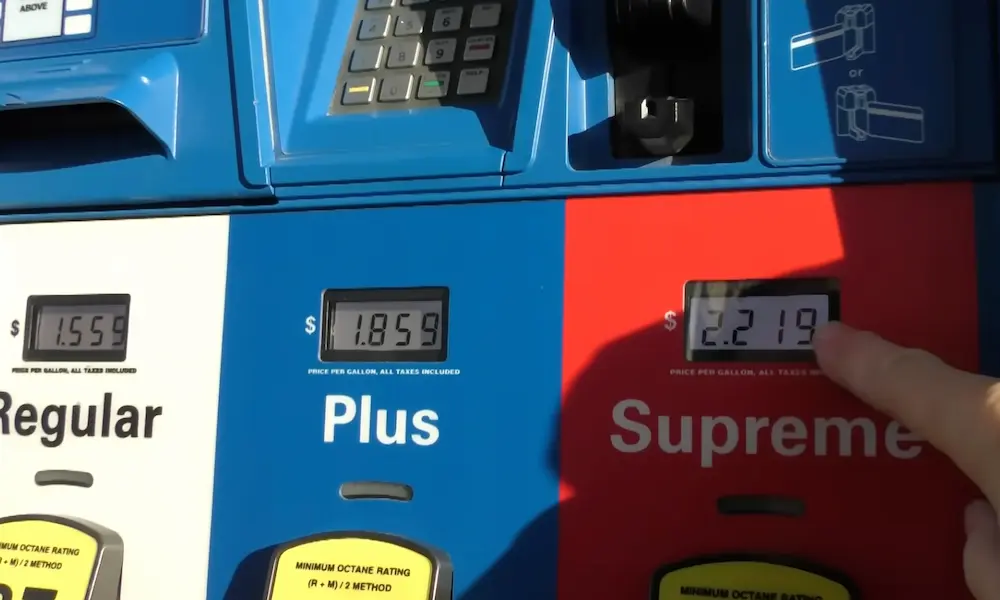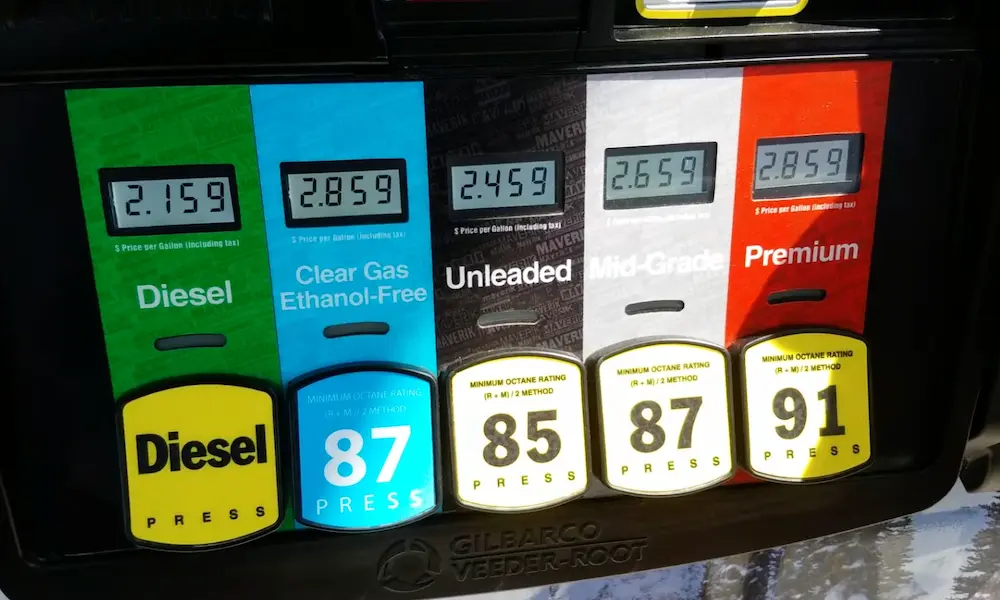
You’re standing at the pump, staring at that sweet $1.00-per-gallon discount from your Fuel Points. But there’s a nagging question: is Kroger gas good enough for your car? You’ve heard mixed things—some folks swear by it, others warn against it. Let’s cut through the noise and figure out what’s actually going into your tank.
What Actually Makes Gas “Good”?
Here’s the thing most people don’t know: all gas isn’t created equal, even though it all comes from the same pipelines.
The difference comes down to detergent additives. Think of these as soap for your engine. The EPA requires a bare minimum amount—just enough to keep your car running legally. But back in 2004, a bunch of automakers (GM, Toyota, Honda, BMW) looked at their warranty claims and said, “This isn’t cutting it.”
They created the TOP TIER™ standard—a voluntary program requiring higher levels of detergent additives. AAA tested it and found TOP TIER gas produces 19 times fewer engine deposits than the cheap stuff.
Kroger isn’t on that list.
How Kroger Sources Its Fuel
Kroger doesn’t refine gas. They’re a retailer using what’s called the “cheapest bidder” model.
Here’s how it works:
- All gas starts as base stock at regional terminals
- Branded stations (Shell, BP, Chevron) add their proprietary high-detergent additives
- Unbranded retailers like Kroger add generic, EPA-minimum additives
- Kroger buys from whoever offers the best price that day
This means the gas at your local Kroger in Texas might come from a completely different source than one in Ohio. The quality’s inconsistent by design.
You’ll sometimes hear people say “Kroger gas IS Shell gas.” Not quite. Kroger might buy base stock from a Shell terminal, but it doesn’t get Shell’s fancy additive package. The Kroger-Shell partnership is about where you redeem points, not what’s in the tank.
Why Your Engine Might Care (Or Might Not)
If you’re driving a car made before 2010, you’re probably fine. Older engines use Port Fuel Injection (PFI), where gas sprays onto the intake valves and naturally “washes” them clean.
But if you’ve got a newer car—especially one with Gasoline Direct Injection (GDI) or a turbo—you need to pay attention.
The GDI Problem
Modern GDI engines inject fuel directly into the combustion chamber, completely bypassing the intake valves. Those valves don’t get washed anymore. Oil vapor bakes onto them, creating carbon buildup.
Low-detergent gas can’t prevent this. The result? You’ll see:
- Rough idling
- 2-4% worse fuel economy
- Sluggish acceleration
- Eventually, expensive cleaning bills
This isn’t speculation. It’s documented by automakers and confirmed by mechanics who’ve torn apart engines fed a steady diet of cheap gas.
One Toyota dealer tech didn’t mince words: “Kroger gas is the worst gas you can put in your car.” That’s anecdotal, sure—but it matches the engineering reality.
What Customers Actually Experience
Consumer reports split into two camps, and it’s not random.
The “It’s Fine” crowd: These folks report zero issues. They’re often driving older vehicles or just haven’t noticed the gradual performance decline yet.
The “Never Again” crowd: They report cars running rough, lower MPG, and one even logged worse mileage from Kroger versus Costco’s TOP TIER gas.
Both groups are telling the truth. They’re just driving different engine technologies.
The Contamination Risk
Here’s where things get dicey. There are documented cases of actual contamination at Kroger stations:
Ft. Mitchell, Kentucky (2022): Multiple cars stalled and needed towing. The dealer confirmed bad gas. Kroger managers admitted “a mistake was made filling the tanks.” At least four other vehicles from that same station had identical problems.
Nashville, Tennessee (2023): A driver’s car ran rough. The gas “was indeed bad” and contained water. A Kroger employee later contacted them saying they’d received “quite a few calls about gas recently.”
But here’s the counterpoint: In Bedford, Texas (2012), a customer sued Kroger claiming water contamination. Kroger won. They proved their pumps have automatic shutoff filters, employees test tanks regularly, and a state inspection found nothing wrong.
So what’s the truth? Kroger has corporate quality controls that pass government inspections. But their fragmented “cheapest bidder” supply chain creates more points of failure than a vertically integrated brand. The risk is small but real.
The Fuel Points Program: Where Kroger Actually Wins
Let’s be honest—you’re not considering Kroger for the quality. You’re here for those ridiculous discounts.
And yeah, the Fuel Points program is legitimately one of the best loyalty programs in retail.
How You Earn Points
The basics:
- 1 point per $1 spent on groceries
- 2x points on most gift cards (every day)
- 4x points during promotional periods
- 25-75 points per prescription
But the real magic happens with the gift card hack.
Say you’re planning to spend $100 on Amazon anyway. During a 4x promo, buy a $100 Amazon gift card at Kroger first. That’s 400 points—worth 40¢ off per gallon.
On a 15-gallon fill-up, that’s $6 saved. You just got a 6% return on money you were going to spend anyway.
The Redemption Trap
Here’s where Kroger gets sneaky:
| Location | Max Discount | Points Needed |
|---|---|---|
| Kroger pump | $1.00/gallon | 1,000 points |
| Mariano’s pump (Chicago) | $2.00/gallon | 2,000 points |
| Shell partner station | 10¢/gallon | 100 points |
See the problem? You can get TOP TIER quality at Shell—but you’re limited to a measly 10¢ discount. To get that sweet $1.00 off, you’re forced back to Kroger’s non-TOP TIER pump.
It’s a golden handcuff. The program requires you to choose between maximum savings and maximum quality.
The Chicago Exception: A Potential Loophole
If you’re in Chicago, there’s an interesting twist.
Mariano’s partners with BP/Amoco instead of Shell. Both are TOP TIER brands. But here’s the kicker: the Mariano’s FAQ doesn’t mention the 10¢ redemption cap that limits the national Shell partnership.
This suggests—though it’s not confirmed—that Chicago-area shoppers might be able to redeem their full 2,000 points ($2.00/gallon) at participating BP/Amoco stations.
If true, that’s the holy grail: maximum discount on premium-quality fuel.
How to Actually Use This Information
Your strategy depends on what you’re driving and what you value.
If You Drive an Older Car (Pre-2010)
Your PFI engine is pretty forgiving. Go ahead and chase those massive discounts.
Do this:
- Stack those 4x gift card promos
- Accumulate 1,000-2,000 points
- Redeem at Kroger for $1.00-$2.00 off per gallon
- Enjoy the lowest cost-per-gallon you’ll find anywhere
You’re trading a bit of quality for serious savings, but your engine design can handle it.
If You Drive a Modern GDI/Turbo/Hybrid
Your engine is pickier. Those intake valves need protection.
Do this:
- Still earn points at Kroger (why not?)
- Redeem in small batches—100 points at a time
- Use them at Shell partner stations for the 10¢ discount
- You get TOP TIER quality, just less savings
Or try the “manual fix”: redeem at Kroger but dump in a bottle of Techron or STP fuel system cleaner every fill-up. One savvy shopper calculated he’d still save money doing this versus paying full price elsewhere.
The Chicago Power Move
If you shop at Mariano’s:
- Earn 2,000 points through aggressive gift card buying
- Drive to a participating BP/Amoco station
- Try to redeem the full 2,000 points
- If it works, you’ve just scored $2.00 off per gallon on TOP TIER fuel
If it doesn’t work (and you hit the 10¢ cap), fall back to the modern-engine strategy above.
Here’s the Bottom Line
Is Kroger gas good? For quality? No. For value? Absolutely.
Kroger isn’t competing with Shell or Chevron on fuel quality—they literally can’t, given their business model. They’re competing on price by turning your grocery shopping into fuel discounts.
The lack of TOP TIER certification isn’t a secret or a scandal. It’s a deliberate choice to keep costs low and funnel savings to loyal customers.
Your move is simple: earn those points aggressively, but think strategically about where you redeem them. Match the fuel quality to your engine’s needs, not just your wallet’s desires.
Because the real genius of Kroger’s program isn’t the gas—it’s getting you to consolidate all your spending in one place, then using those discounts on whatever fuel makes sense for your car.