Paying for a subscription on top of a car payment feels wrong. But what if skipping it means you’re on your own during a crash in the middle of nowhere? This post breaks down exactly what OnStar gives you, what it costs, and who actually needs it — so you can decide without the guesswork. Stick around, because the privacy section alone might surprise you.
What Makes OnStar Different From Your Phone
Your phone is good. OnStar’s hardware is better — at least in a crisis.
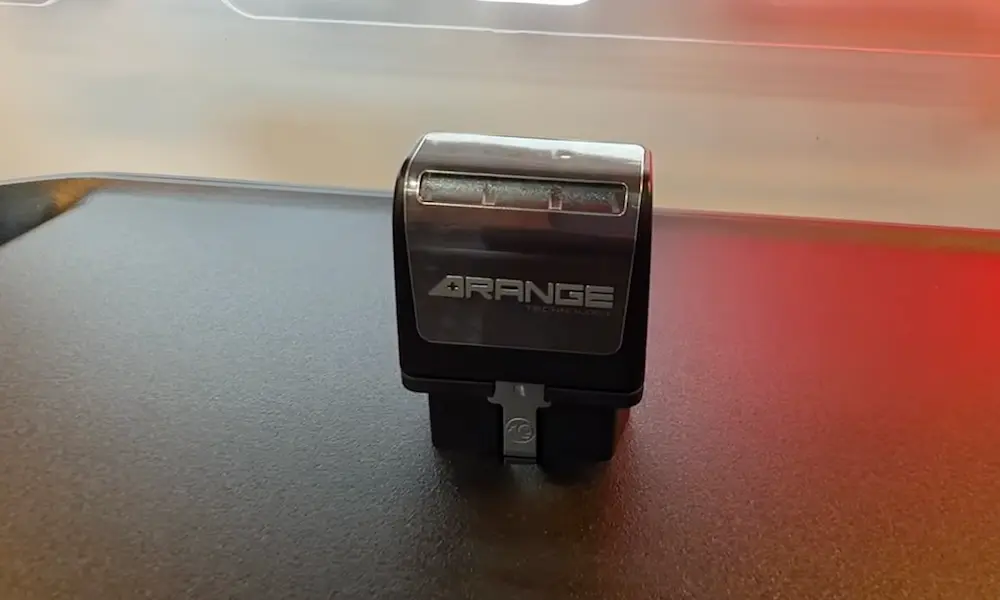
OnStar uses a dedicated telematics module built directly into your vehicle’s electrical system, not a Bluetooth-connected app. It has a roof-mounted external antenna that gets a stronger signal than any phone sitting inside a steel cabin. It also switches between multiple carriers in real time, so it connects to whoever has the best signal at that moment.
Here’s the kicker: it runs on its own power. So even if a crash destroys your phone or kills your accessory outlets, OnStar still works.
It’s also wired into your car’s airbag sensors and accelerometers. That means it doesn’t just know that you crashed — it knows the impact angle, the force, and which airbags deployed. That data goes to emergency responders before they even arrive at the scene.
No smartphone does that.
OnStar Plans and Pricing in 2026
Here’s a clear breakdown of what each tier costs and what you get:
| Subscription Tier | Monthly Rate | Annual Rate | Key Features |
|---|---|---|---|
| OnStar Basics | Free (8 years) | Included | Crash response, remote commands, voice assistant, navigation |
| OnStar Connect | $14.99–$19.99 | ~$180–$240 | In-vehicle apps, remote start, streaming |
| OnStar Protect | $22.99–$24.99 | ~$276–$300 | Emergency services, roadside assistance, stolen vehicle help, Guardian App |
| OnStar Connect Plus | $19.99–$25.00 | ~$240–$300 | Wi-Fi hotspot, HD video streaming |
| OnStar One | $34.99–$49.99 | ~$420–$600 | Full safety suite + Wi-Fi + Guardian App |
| Super Cruise Plan | $64.99 | ~$780 | Everything above + hands-free highway driving |
New 2025 and 2026 Cadillac owners get eight years of core features free, plus a three-year trial of OnStar One and Super Cruise. Chevrolet, Buick, and GMC owners get Basics free for eight years — which covers the safety stuff even if you skip the paid plans.
That’s a smart move by GM. Get you hooked, then ask for the credit card.
How the Crash Response System Actually Works
The Automatic Crash Response system is the real reason people pay for OnStar. Here’s what happens after a collision:
- The vehicle sensors detect the crash instantly
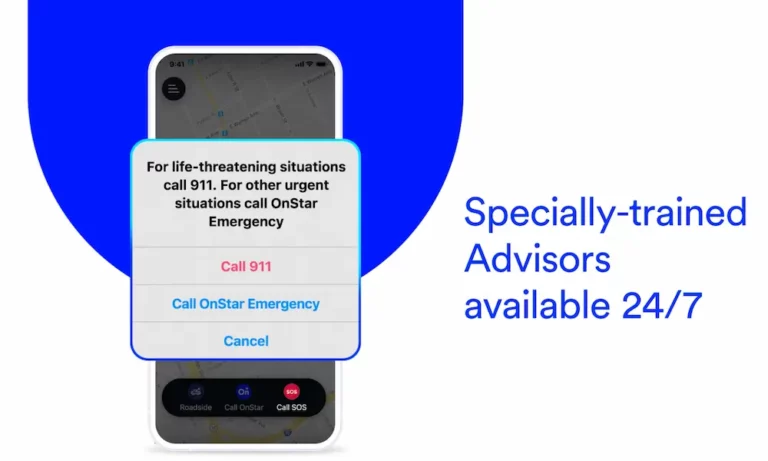
- An Emergency-Certified Advisor connects to your car automatically — you don’t have to push anything
- The advisor provides medical guidance until first responders arrive
- The system’s Injury Severity Prediction tool tells dispatchers what kind of help to bring
OnStar also bypasses the standard 911 queue, which matters during major incidents when lines get jammed. For solo drivers or anyone traveling through low-population areas, this automatic outbound call is a genuine safety net.
The Guardian App: Safety That Follows You Everywhere
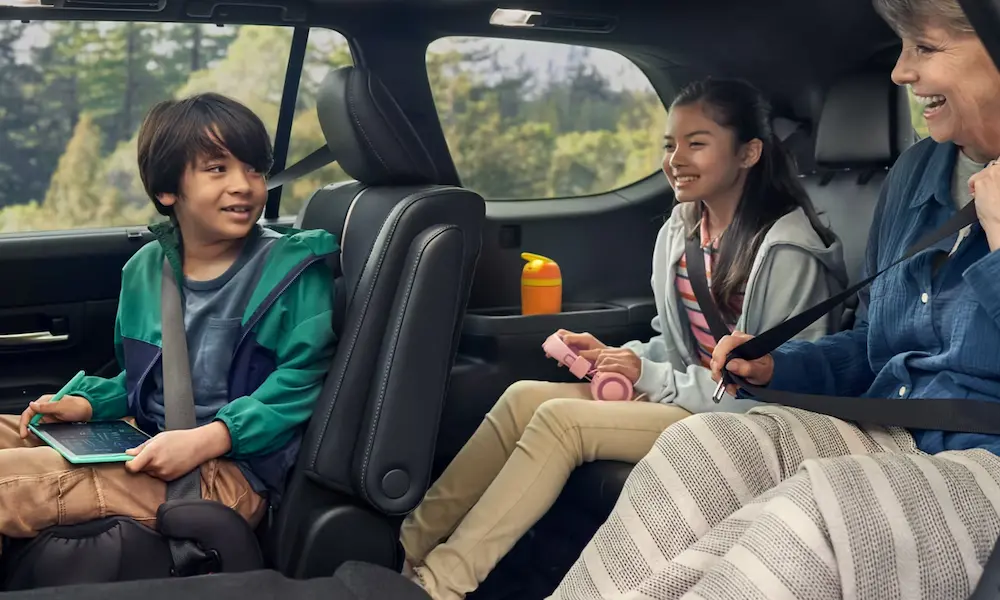
OnStar isn’t locked to your car anymore. The Guardian app extends safety services to up to seven family members on their smartphones. That means crash detection, emergency help, and roadside assistance — even when they’re walking, cycling, or riding with someone else.
It works on both Android and iPhone, though the advisor connection interface differs slightly between the two. The Guardian app turns OnStar into a person-based service rather than a vehicle-based one, which directly competes with AAA-style membership clubs.
If you’ve got teenagers or elderly parents, this feature alone might tip the scales.
Is OnStar Worth It for Theft Protection?
Vehicle theft keeps getting more sophisticated. OnStar’s Stolen Vehicle Assistance includes real-time GPS tracking and the ability to remotely slow your car to a safe speed once law enforcement is involved. Here’s how it stacks up against the alternatives:
| System | Technology | 2026 Assessment |
|---|---|---|
| OnStar SVA | GPS + Cellular | Strong: Remote slowdown + direct law enforcement link |
| LoJack | Radio Frequency | Strong: Works in parking garages where GPS fails; 90% recovery rate |
| Apple AirTag | Bluetooth | Weak: Passive tracker; alerts the thief; no law enforcement connection |
| Invoxia / GPS Trackers | LTE/GPS | Moderate: Good tracking, no remote ignition block |
The Remote Ignition Block is OnStar’s ace card. Once your car shuts off, it won’t restart. That stops joyriders cold and makes professional thieves work a lot harder.
Super Cruise: Is It Worth the $64.99/Month?
If your 2026 Cadillac LYRIQ, VISTIQ, or OPTIQ came with Super Cruise hardware, the subscription isn’t optional — it’s the price of actually using it.
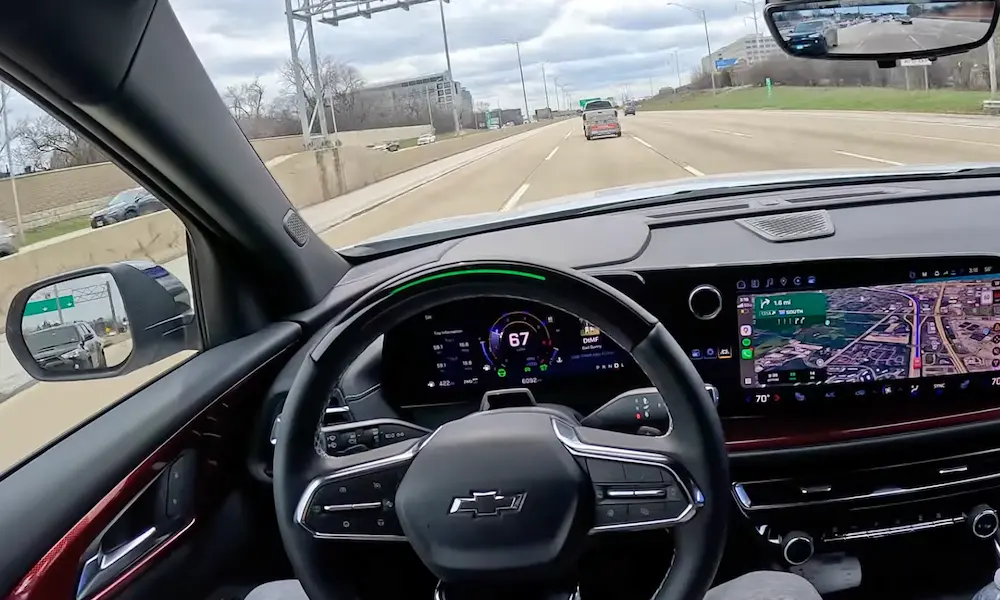
Super Cruise delivers hands-free driving on compatible highways. It needs a live data connection for HD map updates and precision GPS corrections. Without the subscription, the feature goes dark.
Key Super Cruise capabilities:
- Automatic Lane Change — no steering input needed on highways
- Hands-Free Trailering — extends the feature to towing scenarios
- HD Map Updates — keeps the vehicle aware of road changes in real time
- Driver Attention Camera — monitors your eyes to make sure you’re still watching
GM reports a 40% attach rate among pre-owned buyers who continue paying for Super Cruise after initial trials expire. Once you’ve done a long highway trip hands-free, $64.99/month starts to feel a lot more reasonable.
The FTC Privacy Bombshell You Need to Know About
This is the part that changes everything.
On January 14, 2026, the FTC finalized a major order against GM and OnStar after finding that the company collected and sold sensitive driver data — without clear consent. We’re talking GPS coordinates, hard braking events, speeding over 80 mph, and even radio listening habits.
That data went to consumer reporting agencies. Those agencies sold driving-behavior scores to insurance companies. One driver saw her premium jump 80% after her data was shared — and she had no idea it was happening.
Here’s what the FTC order now requires:
| Provision | What It Means for You |
|---|---|
| Five-Year Data Sharing Ban | GM can’t sell your driving data to insurers or reporting agencies |
| Explicit Consent Required | GM must get your clear “yes” for each individual feature — no more buried opt-ins |
| Data Deletion Rights | You can request a full copy of your data and demand it be erased |
| Location Tracking Toggle | You can turn off location tracking entirely |
| No Penalty for Opting Out | GM can’t restrict your features or punish you for refusing data consent |
The good news? OnStar is now significantly safer from a privacy standpoint. The bad news? The trust damage from years of undisclosed data sales is real, and plenty of drivers haven’t forgotten it.
OnStar vs. AAA: Which Roadside Assistance Actually Wins?
This comparison comes up constantly — and the answer depends on what you value.
| Feature | OnStar (Protect Plan) | AAA (Premier/Plus) |
|---|---|---|
| Annual Cost | $276–$300 | $65–$120 |
| Covers | Your vehicle | You (any vehicle) |
| Towing Range | To nearest dealer | Up to 100–200 miles |
| Extra Perks | Stolen vehicle recovery | DMV services, hotel/travel discounts |
| Crash Response | Automatic, vehicle-integrated | None |
AAA wins on price and flexibility — your membership follows you, not your car. That matters if you drive rentals, friends’ cars, or multiple vehicles.
OnStar wins on integration. After a crash or breakdown, you push one button and an advisor already knows exactly where you are and what’s wrong with your car. No fumbling with apps, no explaining your location, no waiting on hold.
For basic breakdown coverage only, some insurance policies include roadside assistance for as little as $5–$15 per year. At that price, OnStar’s $24.99/month Protect plan is hard to justify on roadside assistance alone.
Who OnStar Is Actually Worth It For
Rural and remote drivers: If you travel mountain passes, long stretches of highway, or areas with spotty cell coverage, OnStar’s embedded hardware and automatic crash response are genuinely difficult to replace. The carrier-switching antenna bridges signal gaps that leave your phone dead. This is where OnStar earns every dollar.
Super Cruise users: If your vehicle supports hands-free driving and you use it regularly, the subscription is part of the technology’s operating cost. Long-haul drivers report real fatigue reduction — and GM’s own retention data backs that up.
Families with new or elderly drivers: The Guardian app’s coverage for up to seven people, combined with automatic crash response, makes the Protect or One plan a multi-person safety net rather than a single-vehicle luxury.
Privacy-focused urban drivers: In the city, your phone handles navigation, crash detection, and emergency calls pretty well. Strong cell signals are everywhere. Combined with the historical data-sharing issues — even with the FTC order in place — many urban drivers will find a AAA membership and a good phone plan covers their actual needs for far less money.
What GM’s Own Reliability Numbers Say
OnStar’s value also depends on the vehicle it’s in. Consumer Reports’ 2026 reliability rankings for GM brands look like this:
| Brand | Reliability Rank | Score |
|---|---|---|
| Buick | 8th | 51 |
| Chevrolet | 17th | 42 |
| Cadillac | 18th | 41 |
| GMC | 23rd | 31 |
The Cadillac LYRIQ — a flagship for Super Cruise — scored just 31 in reliability. If your car’s infotainment system frequently glitches, OnStar’s remote diagnostics become more useful. But you’re also paying for a system that helps manage issues it arguably shouldn’t have in the first place.
The Chevrolet Trax and Buick Envision score significantly better, making OnStar a cleaner value proposition in those vehicles.
The Bottom Line on Whether OnStar Is Worth It
So, is OnStar worth it? Here’s the short version:
- Yes — if you drive in rural or remote areas, travel alone, or want hands-free highway tech
- Yes — if you want automatic crash response that works even when you can’t
- Maybe — if the Guardian App’s family safety coverage fits your household
- No — if you mostly drive in cities with strong cell coverage and you’re price-sensitive
- No — if the FTC’s findings damaged your trust and a AAA membership covers your roadside needs
The OnStar system shines brightest in the moment you hope never comes. And for drivers where that moment is statistically more likely — remote terrain, solo travel, long highway commutes — it’s a safety investment that no app fully replicates yet.