Wondering if Phillips 66 is worth your hard-earned money? You’re smart to ask. The gas you pump matters more than you think—it affects your wallet, your engine, and how your car runs. Let’s cut through the marketing hype and look at what actually makes gasoline “good.”
What Actually Makes Gas “Good”?
Here’s a truth bomb: most gas starts out identical.
At regional distribution terminals, tanker trucks from Shell, Phillips 66, Costco, and generic stations fill up from the same storage tanks. The base fuel is a commodity.
So where’s the difference? It’s in the additive package injected into each truck before it leaves. This chemical cocktail—loaded with detergents, corrosion inhibitors, and other agents—is what separates premium brands from cheap stuff.
Think of it like coffee. The beans might be the same, but what you add afterward makes a $2 cup taste different from a $5 one.
Why Detergents Matter to Your Engine
Your engine isn’t perfectly clean. Combustion creates carbon deposits—sticky gunk that builds up on fuel injectors and intake valves.
This buildup causes real problems:
- Worse fuel economy (you’re burning 2-4% more gas)
- Rough performance (hard starts, hesitation, stalling)
- Higher emissions (inefficient combustion means more pollutants)
Quality detergents prevent this mess. Cheap gas? It meets the legal minimum set by the EPA in 1996. But here’s the kicker: automakers like BMW, Toyota, and GM concluded that standard doesn’t go far enough for modern engines.
That’s why they created something better.
The TOP TIER Standard Explained
In 2004, major automakers got tired of warranty claims from deposit-related engine problems. So they wrote their own fuel standard: TOP TIER™ Detergent Gasoline.
This isn’t a marketing gimmick. It’s an engineering specification created by the companies who build your engine and pay for warranty repairs.
Who’s Behind TOP TIER?
The sponsoring automakers include:
- BMW
- General Motors
- Ford
- Toyota
- Honda
- Volkswagen
- Mercedes-Benz
- Stellantis (Chrysler/Dodge/Jeep)
Their motivation? Fewer warranty claims. Better-protected engines cost them less money.
What Makes It Different
TOP TIER fuel must meet three key requirements:
Higher detergent levels: Significantly more cleaning agents than EPA minimums
No metallic additives: Banned substances like MMT that damage catalytic converters
All octane grades: The standard applies to regular (87), mid-grade (89), and premium (93)
That last point is crucial. “Premium” only means higher octane (resistance to engine knock). It doesn’t automatically mean more detergent. A TOP TIER regular has better cleaning power than non-TOP TIER premium.
You can verify any brand at toptiergas.com. If it’s not on the list, it’s not certified.
Phillips 66: The Verdict
Yes, Phillips 66 is good gas. It’s officially licensed as TOP TIER.
But the company goes a step further with a specific claim: their fuel contains 30% more detergent than the TOP TIER minimum (and three times more than the EPA requires).
This positions Phillips 66 as a premium option within the already-high-quality TOP TIER category. While Costco meets the standard, Phillips 66 markets itself as exceeding it.
The Science Backs It Up
An independent AAA study put TOP TIER fuel to the test. Researchers ran engines for 4,000 simulated miles, comparing TOP TIER to non-certified gas.
The results were dramatic:
TOP TIER fuel produced 19 times fewer intake valve deposits than cheap gas. Specifically, non-TOP TIER fuel left an average of 660.6 milligrams of deposits per valve. TOP TIER? Just 34.1 milligrams—a 95% reduction.
The fuel economy impact matters too. Running cheap gas long-term can reduce your MPG by 2-4%. At $3.50 per gallon, a 3% efficiency loss costs you about $0.11 per gallon in wasted fuel.
If you’re “saving” three cents at a discount pump, you’re actually losing seven cents per gallon. That’s not smart economics.
How Phillips 66 Stacks Up Against Competitors
Let’s compare Phillips 66 to other major brands.
Premium Brands: Shell and Exxon
Shell is TOP TIER certified and enjoys fierce brand loyalty, especially for its V-Power NiTRO+ premium fuel. Mechanics and car enthusiasts swear by it.
Interestingly, one Honda Civic owner on a fuel economy forum reported gaining 4 MPG after switching from Shell to Phillips 66. That suggests Phillips 66’s formulation is highly competitive.
Exxon/Mobil markets its Synergy fuel aggressively, with specific claims about GDI (Gasoline Direct Injection) protection. Their premium grade even includes a friction modifier to reduce engine wear.
Both are excellent choices. Phillips 66 sits comfortably in this tier.
High-Volume Retailers: Costco
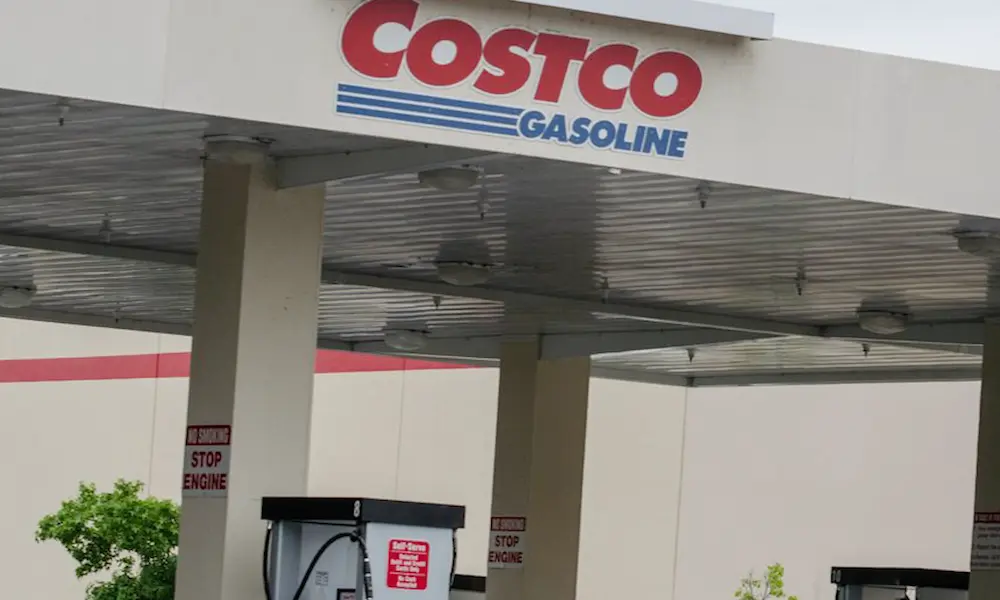
Costco’s Kirkland Signature gas is TOP TIER certified. Their competitive advantage? Price and extremely high turnover.
High volume means “fresh gas.” The fuel doesn’t sit in underground tanks for weeks, reducing degradation risk.
Costco meets the TOP TIER spec but doesn’t claim to exceed it. That’s where Phillips 66’s “30% more” claim becomes a differentiator. You’re getting extra cleaning power for a similar (or lower) price, especially with app-based discounts.
The BP Problem
BP used to be TOP TIER certified. As of 2024, it’s not on the official list anymore.
BP’s website still claims its Invigorate fuel “exceeds TOP TIER standards,” but that’s an unverified marketing claim. They’re not paying for third-party certification or submitting to automaker testing.
At a Phillips 66 pump, you’re protected by verifiable, automaker-backed certification. At BP? You’re trusting a company’s internal, unverified promise.
That makes Phillips 66 a safer, more credible choice.
| Brand | TOP TIER Status | Key Claim |
|---|---|---|
| Phillips 66 | Licensed | 30% more than TOP TIER minimum |
| Shell | Licensed | V-Power NiTRO+ additive package |
| Exxon/Mobil | Licensed | Synergy w/ GDI & friction modifiers |
| Costco | Licensed | Meets TOP TIER standard |
| BP | NOT Licensed | Claims to exceed TOP TIER (unverified) |
The GDI Engine Factor: What You Need to Know
Most new cars have Gasoline Direct Injection (GDI) engines. This technology is more efficient and powerful, but it creates a new problem.
How GDI Changes the Game
In older Port Fuel Injection (PFI) engines, gas sprays onto intake valves before entering the cylinder. This “washes” the valves with detergent-rich fuel.
In GDI engines, fuel is injected directly into the combustion chamber. It bypasses the intake valves completely. Result? Those valves never get cleaned by the fuel.
Worse, GDI injectors operate at extremely high pressure. Deposits on injector tips disrupt the spray pattern, tanking performance.
The New Standard: TOP TIER Plus
In late 2024, automakers announced TOP TIER Plus™—a higher standard that includes a specific GDI injector cleanliness test.
This creates two tiers of quality:
- TOP TIER: Proven to protect PFI intake valves
- TOP TIER Plus: Proven to protect both PFI valves and GDI injectors
Where Does Phillips 66 Stand?
Phillips 66 markets its standard TOP TIER certification. It doesn’t currently claim to meet the new TOP TIER Plus standard.
This doesn’t mean it’s bad for GDI engines—TOP TIER fuel is still vastly better than cheap gas. But a competitor offering TOP TIER Plus has been specifically tested and verified for GDI injector protection.
If you drive a modern GDI vehicle and want maximum protection, keep an eye out for the TOP TIER Plus logo at the pump.
Is Phillips 66 Safe? Addressing the Concerns
You might’ve seen negative headlines about Phillips 66. Let’s separate corporate issues from product quality.
The Lawsuits
In 2024, the City of Chicago sued Phillips 66, BP, Chevron, and others for allegedly deceiving the public about climate change. This is a macro-environmental case, not a gasoline quality issue.
Phillips 66 also faced federal charges for illegally dumping wastewater from its LA refinery. That’s a serious environmental violation related to industrial waste disposal—not contamination of retail gasoline.
Neither lawsuit affects the quality or safety of the gas you pump into your car.
Consumer Complaint Data
Phillips 66’s Better Business Bureau profile shows just 24 complaints over three years (two in the last 12 months). For a corporation this large, that’s remarkably low.
No widespread recalls or contamination reports exist for Phillips 66 gasoline in recent years.
What Mechanics and Enthusiasts Say
Qualitative data from forums like Reddit and Bimmerforums is positive. Mechanics correctly identify Phillips 66 as TOP TIER. Users appreciate its quality and app-based discounts, calling it a high-value choice.
The Real Risk: Bad Gas Stations
Here’s the dirty secret: even the best fuel can be ruined by a poorly maintained station.
Two Major Risks
Water contamination: Aging or poorly maintained underground tanks can leak groundwater into the fuel. Pumping water into your engine causes catastrophic damage.
Stale fuel: At low-volume “mom and pop” stations, gas sits in tanks for weeks or months, degrading over time.
This “last mile” problem isn’t Phillips 66’s fault. It’s a station maintenance issue.
How to Protect Yourself
Stick to high-volume, modern, and well-maintained Phillips 66 stations. Busy stations replenish their tanks frequently with fresh fuel. They also have the capital and incentive to maintain equipment properly.
Avoid sketchy, low-traffic stations with outdated equipment. The difference between brands matters less than the condition of the station itself.
| Standard | Year | Key Focus | Target Engine Type |
|---|---|---|---|
| EPA Minimum | 1996 | Basic detergency | All engines (1996 standard) |
| TOP TIER | 2004 | Higher detergency, no metallic additives | PFI intake valve cleanliness |
| TOP TIER Plus | 2024 | Adds GDI injector cleanliness test | GDI engines |
Your Buying Decision: Who Should Use Phillips 66?
Phillips 66 is unequivocally “good gas.” It’s high-quality, high-detergency fuel that provides excellent engine protection.
For PFI (Older) Engines
If you drive a pre-2010 car with Port Fuel Injection, Phillips 66 is an excellent choice. Its high detergency is perfect for maintaining intake valve cleanliness, the primary concern for these engines.
For GDI (Newer) Engines
Phillips 66 is still a very good TOP TIER choice—far superior to non-certified gas. However, the new TOP TIER Plus standard is now the gold standard specifically for GDI injector protection.
If you drive a modern GDI vehicle and want absolute maximum protection, look for the TOP TIER Plus logo. Otherwise, Phillips 66 is still a smart, reliable option.
The Bottom Line
Choosing Phillips 66 is a data-backed decision. It’s a reliable, high-quality product that provides measurable benefits over discount gas. Its claimed 30% margin above the TOP TIER minimum gives you extra quality assurance.
Don’t waste money on cheap, EPA-minimum fuel. The “savings” aren’t real when you factor in reduced fuel economy, potential repairs, and accelerated engine wear.
Stick to high-volume Phillips 66 stations. Use the app for discounts. Your engine will thank you.