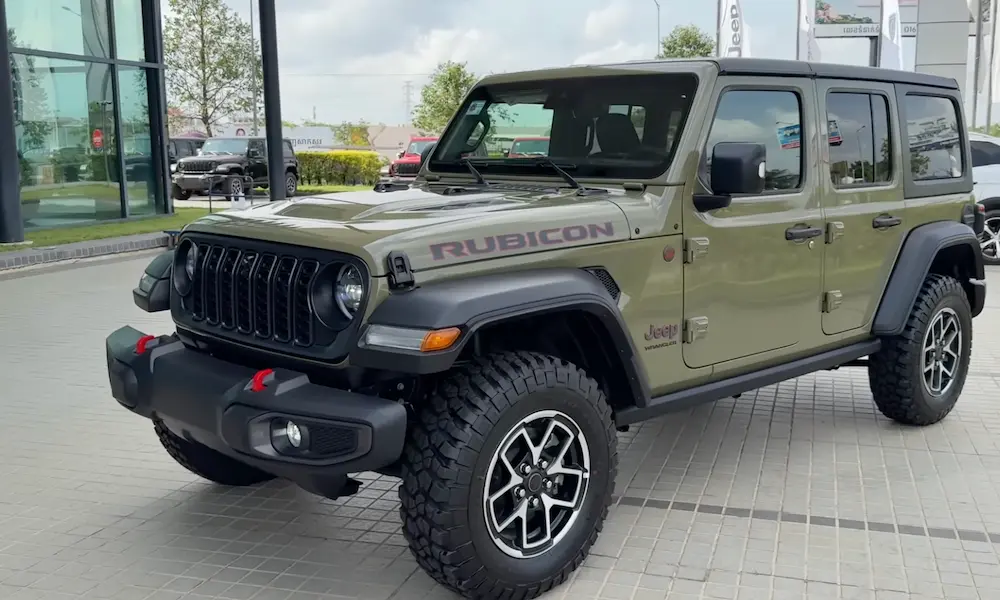
You turn the key, the lights come on, the radio works, but your Jeep Wrangler just sits there refusing to start. Frustrating, right? This common problem can happen to any Jeep owner regardless of model year or condition. The good news is that most no-start issues have straightforward solutions once you know what to look for. I’ll walk you through the most likely causes and how to fix them—from simple DIY solutions to problems that might need professional attention.
Is It Cranking or Not Cranking?
Before diving into solutions, you need to figure out exactly what’s happening when you turn the key. There are two main scenarios:
No-Crank Scenario: Nothing Happens When You Turn the Key
When you turn the key and nothing happens (or you just hear a click), but all your electrical components work fine, you’re dealing with a no-crank situation. This typically points to:
- A failed starter motor
- Corroded battery connections
- A bad starter relay
- Neutral safety switch problems
- Ignition switch issues
Listen carefully when turning the key. A single click usually means the starter solenoid is engaging but the motor isn’t turning. This is different from a completely silent response, which might indicate an electrical pathway problem.
Crank-But-No-Start Scenario: Engine Turns But Won’t Fire Up
If your engine cranks normally (you hear it turning over) but refuses to start, you’re looking at issues with:
- Fuel delivery problems
- Ignition system failures
- Engine sensor malfunctions
- Computer/module issues
With this scenario, all the mechanical parts are working to turn the engine, but something’s preventing combustion from happening.
Common Starter System Problems
Corroded Battery Terminals: The Hidden Culprit
Even with good battery voltage, your Jeep might not start due to corroded terminals. This is probably the most overlooked yet easiest-to-fix problem.
What happens: The corrosion acts as an insulator, preventing the high current needed for starting from flowing properly. Your lights and radio might work fine (they need much less current), but the starter motor can’t get enough juice.
Quick fix: Remove both battery terminals, clean them with a wire brush until they’re shiny, and reconnect them firmly. Make sure they can’t be twisted by hand when tightened. This five-minute fix has saved countless Jeep owners from towing bills.
Starter Motor Failure: When It’s Worn Out
Starter motors commonly fail after years of service. They might work intermittently before failing completely.
Symptoms:
- Clicking sound but no cranking
- Intermittent starting (works sometimes, fails other times)
- Grinding noise when trying to start
Testing tip: Tap the starter motor gently with a hammer while someone tries to start the Jeep. If it starts after tapping, the starter is definitely failing and needs replacement. This trick can get you home in an emergency, but don’t rely on it long-term.
You can also test the starter system yourself using a multimeter to check for power at the starter when someone turns the key.
Bad Starter Relay: The Easy Swap Test
The starter relay is a small electrical component that tells your starter motor when to engage. When it fails, nothing happens when you turn the key.
Quick test: Locate your starter relay in the fuse box (check your owner’s manual for the exact location). Swap it with an identical relay from another system (like the radiator fan relay). If your Jeep starts after the swap, you’ve found your problem.
Relays typically cost under $20 and take seconds to replace once you’ve located them.
Neutral Safety Switch Issues
Automatic Transmission Problems
The neutral safety switch prevents your Jeep from starting unless it’s in Park or Neutral. When this switch fails, your Wrangler might:
- Only start in Neutral but not Park
- Not start in any gear position
- Start inconsistently
Quick test: Try starting your Jeep in Neutral instead of Park. If it starts in Neutral but not Park, the neutral safety switch is likely the culprit.
Temporary bypass: In emergency situations, you can bypass the neutral safety switch, but this removes an important safety feature and should only be used to get you to a repair shop.
Manual Transmission Clutch Switch
If you have a manual transmission Wrangler, there’s a clutch safety switch that serves a similar function—preventing starting unless the clutch pedal is fully depressed.
Quick test: Push the clutch pedal all the way to the floor when starting. If it’s inconsistent, the switch might be misaligned or failing.
For TJ model owners, you can temporarily bypass the clutch safety switch by inserting a 20-amp fuse into slot #20 of the interior fuse panel.
The Notorious TIPM Problems
What Is the TIPM?
The Totally Integrated Power Module (TIPM) is basically the central electrical command center in 2007-2018 Jeep Wranglers. It controls multiple systems including the fuel pump, headlights, horn, and yes—the starting system.
TIPM failures are extremely common in JK Wranglers and can cause multiple simultaneous electrical problems. The fuel pump relay within the TIPM is particularly prone to failure.
Signs of TIPM failure:
- Random electrical system failures
- Intermittent starting problems
- Horn, headlights, or wipers acting erratically
- Fuel pump not running (no humming sound when you turn the key to “on”)
When TIPM failure affects the fuel pump relay, your Jeep might crank normally but never start because no fuel is being delivered to the engine.
Testing for TIPM Problems
If you suspect TIPM issues, check for these telltale signs:
- Turn the key to “on” (not start) and listen for the fuel pump to run for 2 seconds
- Test multiple electrical systems (horn, headlights, wipers)
- Look for patterns of multiple systems failing simultaneously
Repair options for TIPM issues include:
- Replacement of the entire module (expensive but comprehensive)
- Repair services that fix only the faulty components
- Fuel pump relay bypass kits for specific symptoms
TJ Model-Specific: Ignition Actuator Pin Failure
The $15 Part That Causes Big Headaches
If you own a Jeep Wrangler TJ, there’s a specific part that commonly fails—the plastic ignition actuator pin. This small component connects the ignition cylinder to the ignition switch and frequently breaks due to age and use.
Symptoms:
- Key turns normally but nothing happens
- Key feels “loose” or “mushy” when turning
- Key can be removed from positions other than park
This relatively inexpensive part ($15-25) requires moderate mechanical skill to replace but can save you hundreds in dealer repair costs.
Emergency fix: In many cases, you can manually actuate the switch with a screwdriver after removing the steering column cover to get yourself home or to a repair shop.
Fuel System Problems
When Gas Isn’t Getting to the Engine
Fuel system issues are common culprits for crank-but-no-start conditions. Three key components to check:
1. Fuel Pump Relay
Often the first thing to fail, especially in JK models with TIPM problems.
Quick test: Turn the key to the “on” position (not start) and listen near the back of the Jeep. You should hear the fuel pump run for about 2 seconds. No sound? Your fuel pump relay might be bad.
2. Fuel Pump
The pump itself can fail, especially in older Wranglers or those frequently run with low fuel levels.
Signs of failure:
- No humming sound when key is turned to “on”
- Engine starts but dies immediately
- Engine loses power under load
3. Fuel Pressure
Even with a working pump, you need proper pressure in the fuel lines.
For proper operation, your fuel system should maintain approximately 40 PSI at the fuel rail. Testing requires a fuel pressure gauge, but this test can quickly pinpoint fuel delivery problems.
| Component | Symptom | Quick Test | DIY Difficulty |
|---|---|---|---|
| Fuel Pump Relay | No fuel pump sound | Listen for 2-second hum when key turned to “on” | Easy |
| Fuel Pump | No start or stalls after starting | Test pressure at fuel rail | Moderate-Hard |
| Fuel Filter | Hard starting, poor performance | Replace as maintenance item | Moderate |
Systematic Diagnostic Approach
Step 1: Basic Battery Check
Even though you have power for lights and accessories, start with the battery:
- Check for corrosion on terminals
- Ensure connections are tight
- Test battery voltage (should be 12.6V or higher)
- Test under load if possible (voltage shouldn’t drop below 9.6V during cranking)
Step 2: Listen and Observe
Turn the key and pay attention:
- Do you hear clicking? (Points to starter solenoid/relay issues)
- Do the headlights dim significantly? (Indicates high current draw)
- Does the engine crank but not start? (Fuel or ignition issue)
- Do you hear the fuel pump run briefly? (Should run 2 seconds when key turned to “on”)
Step 3: Check for Patterns
Intermittent problems often follow patterns:
- Does it happen only when the engine is hot?
- Does it happen only on rainy days?
- Does it happen after short trips but not long ones?
These patterns can point to specific issues like:
- Temperature sensors (hot-only no-starts)
- Moisture-related electrical issues (weather-dependent problems)
- Fuel pressure regulator issues (problems after short trips)
Step 4: Test Major Systems
For no-crank conditions:
- Test the starter relay
- Check neutral safety switch
- Inspect ignition switch components
For crank-but-no-start:
- Check for fuel pump operation
- Test for spark at the plugs
- Verify compression (if other systems check out)
The Ground Circuit: Often Overlooked
Poor ground connections can cause various starting problems despite adequate battery voltage. Ground issues are particularly common in older Jeeps or those that have been modified.
Key ground points to check:
- Battery negative terminal to chassis
- Engine block to chassis
- Body to frame connections
Voltage drop testing between the battery negative terminal and engine block should show minimal resistance during cranking attempts. A dirty or corroded ground can mimic many other electrical problems.
Quick test: Add a temporary ground strap from the engine to the battery negative terminal. If starting improves, you’ve found a ground issue.
Computer and Sensor Issues
Modern Jeep Wranglers rely heavily on sensors to determine when and how to start. Several key sensors can prevent starting when they fail:
- Crankshaft position sensor
- Camshaft position sensor
- Throttle position sensor
- Engine coolant temperature sensor
These sensors communicate with the Powertrain Control Module (PCM) to manage engine operation. When they fail, the engine might crank but won’t start.
Diagnostic approach: Connect an OBD-II scanner to check for trouble codes. The scanner should communicate with the PCM—if it can’t establish communication, the PCM itself might be faulty.
Common sensor-related codes that cause no-start conditions include:
- P0335-P0338 (Crankshaft Position Sensor)
- P0016-P0019 (Camshaft/Crankshaft correlation)
- P0506-P0507 (Idle Control issues)
DIY vs. Professional Repair
Some Jeep starting issues are perfect for DIY repair, while others require professional help:
DIY-Friendly Repairs:
- Battery terminal cleaning
- Relay replacement
- Fuse inspection
- Basic starter tests
- Ignition actuator pin replacement (TJ models)
- Neutral safety switch testing
Professional-Level Repairs:
- TIPM replacement or repair (often requires programming)
- Fuel pump replacement (requires tank removal)
- PCM programming or replacement
- Complex electrical diagnosis
If you’ve tried the basic diagnostic steps without success, or if multiple electrical systems are failing simultaneously, professional diagnosis becomes advisable to prevent unnecessary parts replacement.
When to Tow vs. Try Roadside Fixes
If your Jeep won’t start away from home, use this quick decision guide:
Try roadside fixes when:
- You hear a single click (try tapping the starter)
- You suspect a neutral safety switch issue (try starting in neutral)
- Battery terminals look corroded (clean them)
Consider towing when:
- Multiple electrical systems have failed
- You smell fuel (indicates potential dangerous condition)
- You’ve tried basic troubleshooting without success
- You’re in an unsafe location
Remember that no-start conditions are frustrating but usually fixable without major expense if diagnosed correctly. The systematic approach to diagnosing Jeep Wrangler no-start conditions with power present requires patience and methodical testing, but you’ll save time and money by approaching the problem logically rather than guessing at solutions.