Looking for a serious truck engine that delivers impressive power without diesel complexity? The GM 6.6L V8 L8T might be exactly what you need. This gasoline powerhouse has quickly established itself as a go-to option for heavy-duty applications since its 2020 debut.
Let’s dive into what makes this engine tick, how it performs, and why it might be the right choice for your towing and hauling needs.
What is the L8T Engine?
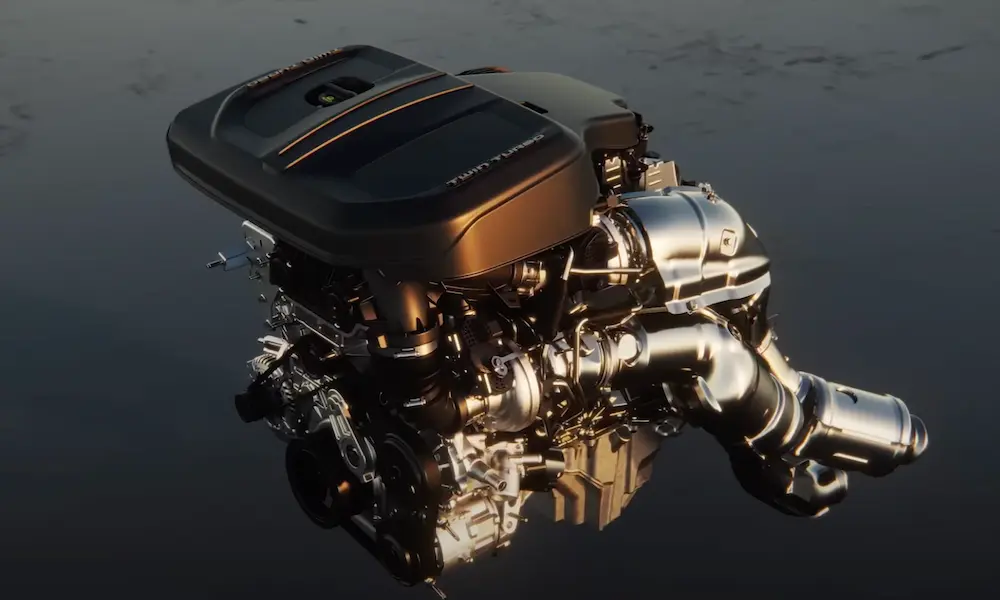
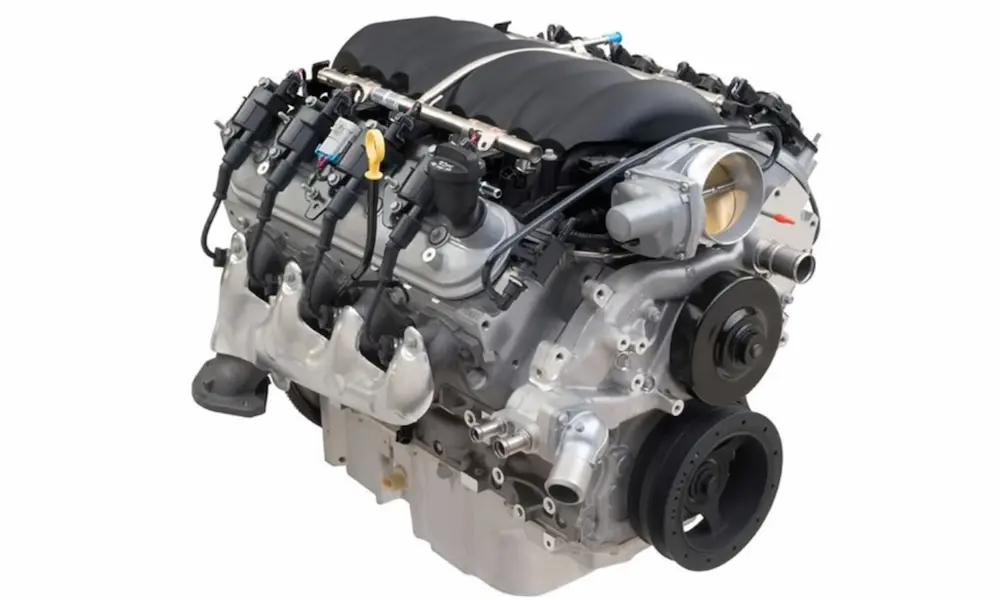
The L8T is GM’s 6.6-liter V8 gasoline engine that first appeared in the 2020 Chevrolet Silverado HD and GMC Sierra HD trucks. It’s part of GM’s fifth-generation Small Block engine family but with significant tweaks that make it ideal for heavy-duty work.
Unlike many modern engines that use lightweight aluminum blocks, the L8T intentionally uses a cast iron block. This isn’t your grandfather’s engine, though—it combines old-school toughness with modern technology to deliver impressive results.
L8T Engine Specifications at a Glance
Here’s the quick rundown of what makes up this powertrain:
| Specification | Details |
|---|---|
| Displacement | 6.6 liters (403 cubic inches) |
| Configuration | V8 with overhead valves (pushrod) |
| Block Material | Cast iron |
| Cylinder Heads | Cast aluminum |
| Bore × Stroke | 4.06 in × 3.86 in (103.25 mm × 98 mm) |
| Compression Ratio | 10.8:1 |
| Horsepower | 401 hp @ 5,200 rpm |
| Torque | 464 lb-ft @ 4,000 rpm |
| Fuel System | Direct injection |
| Recommended Fuel | Regular 87 octane |
What’s impressive here is you’re getting a high 10.8:1 compression ratio while still running on regular gas. That’s not common in high-performance engines and saves you money at the pump.
Power and Performance Capabilities
Let’s talk about what this engine can actually do. With 401 horsepower and 464 lb-ft of torque, the L8T offers an 11% increase in horsepower and a 22% increase in torque compared to GM’s previous 6.0L V8.
More importantly for truck owners, the peak power comes on 200 rpm earlier than in the previous engine. That means better response when you’re pulling away with heavy loads—exactly what you want when towing.
Speaking of towing, properly equipped trucks with the L8T can pull up to 17,370 pounds. That’s serious capability for a gasoline engine, even if it doesn’t quite match diesel alternatives.
In the Chevrolet Low Cab Forward trucks, the L8T is tuned slightly differently, delivering 350 horsepower and 425 lb-ft of torque. Still, that’s an 18% boost in horsepower over the previous engine.
The Heavy-Duty Design Philosophy
The L8T wasn’t built for sports cars—it was purpose-built for work. This philosophy shows throughout its design:
Block and Structural Components
The cast iron block features a deep-skirt design that extends below the crankshaft centerline, significantly improving rigidity. Six-bolt, cross-bolted main bearing caps secure the crankshaft and limit flexing during operation.
Inside the block, you’ll find:
- Forged steel crankshaft
- Forged powder-metal connecting rods
- Channels for jet-spray piston cooling
These forged components provide a substantial safety margin beyond what’s needed in lighter-duty engines. They’re built to handle stress when you’re operating near maximum output for long periods.
Cylinder Heads and Valvetrain
The aluminum cylinder heads feature large, rectangular intake ports with a slight twist to enhance mixture motion at lower RPMs—right where you need torque for heavy-duty applications.
The valvetrain includes:
- Two valves per cylinder
- Variable valve timing
- 8.7mm diameter pushrods for maximum stiffness
- Hydraulic roller camshaft
- Inconel exhaust valves for heat resistance
The camshaft specs (0.500 inches lift for intake, 0.492 for exhaust) are specifically chosen to enhance low-end and mid-range torque.
Advanced Technology in a Traditional Package
Don’t let the pushrod design fool you—the L8T packs plenty of modern technology:
Direct Injection System
One of the L8T’s biggest advancements over its predecessor is direct fuel injection. By injecting fuel directly into the combustion chamber rather than the intake port, the system offers:
- More precise fuel control
- Better fuel atomization
- More complete combustion
- Improved cold-start capability
- Lower operating temperatures
The high-pressure fuel pump even incorporates a “soft stop” control to reduce the characteristic ticking sound often associated with direct injection systems.
Humidity Sensing Technology
The L8T includes an air induction specific humidity sensor—a first for GM’s heavy-duty engines. This allows the engine management system to adjust combustion parameters based on ambient humidity, optimizing efficiency regardless of environmental conditions.
What’s Intentionally Missing
Notably, the L8T doesn’t include cylinder deactivation (like Active Fuel Management) or Auto Stop-Start functionality. This is likely a deliberate choice focusing on simplicity, durability, and consistent power delivery rather than maximum fuel economy—attributes that heavy-duty truck customers typically prioritize.
Commercial Availability
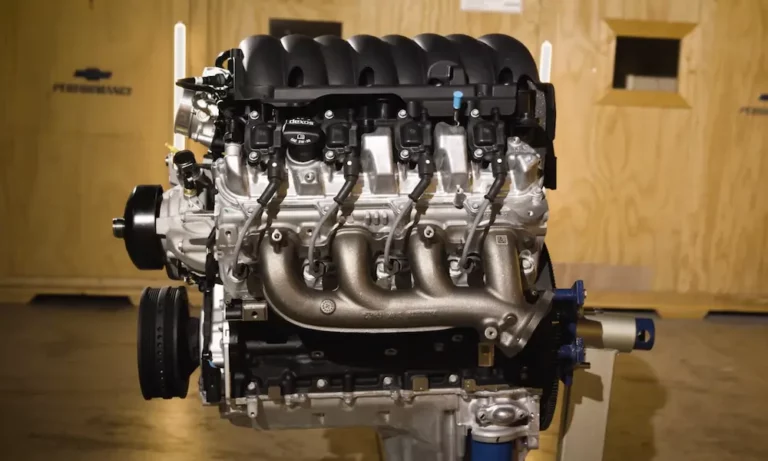
Beyond its factory installation in GM trucks, the L8T is also available as a crate engine through Chevrolet Performance (part number 19433748). This makes it an attractive option for custom vehicle builders, restorers, and performance enthusiasts.
The crate engine package includes everything from the throttle body to the oil pan, though you’ll need to purchase the controller, harness, oxygen sensors, and accessory drive system separately. As of early 2024, the complete package retailed for $8,948.80.
For builders wanting a more basic starting point, a long block version (part number 19433750) is also available without the intake manifold, throttle body, fuel pump, or injectors.
How Does the L8T Compare to Competitors?
In the heavy-duty truck market, the L8T goes head-to-head with Ford’s engines:
| Engine | Horsepower | Torque |
|---|---|---|
| GM 6.6L L8T | 401 hp | 464 lb-ft |
| Ford 7.3L “Godzilla” | 430 hp | 475 lb-ft |
| Ford 6.2L V8 | 385 hp | 430 lb-ft |
The L8T falls slightly behind Ford’s larger 7.3L “Godzilla” V8 but offers more substantial advantages over Ford’s 6.2L V8. All three engines share similar design philosophies with cast iron blocks, overhead valve architectures, and naturally aspirated configurations.
Potential Modifications and Upgrades
While the L8T is impressive in stock form, the aftermarket has already developed several upgrade paths:
- Intake and exhaust upgrades – Simple bolt-on modifications can free up additional power
- Camshaft swaps – More aggressive camshaft profiles can shift the power band to suit different applications
- Supercharger kits – For those needing substantially more power, forced induction can dramatically increase output
The engine’s robust bottom end makes it well-suited to handle power additions, though you’ll want to ensure your cooling system is up to the task if making substantial modifications.
Maintenance Considerations
The L8T retains many traditional V8 maintenance characteristics, making it relatively straightforward to service:
- Oil capacity is 8 quarts with recommended 0W-20 synthetic oil
- Spark plugs are accessible without major disassembly
- The direct injection system requires high-quality fuel to prevent carbon buildup
- Regular maintenance should include fuel filter changes
One advantage of the gasoline L8T over diesel alternatives is the simpler emission control system, which doesn’t require diesel exhaust fluid or particulate filter maintenance.
Real-World Fuel Economy
While official EPA ratings vary depending on the vehicle configuration, real-world drivers report:
- 12-14 MPG in mixed driving when unloaded
- 8-10 MPG when towing near capacity
- Slightly better highway economy compared to the previous 6.0L engine
These figures won’t match diesel efficiency under heavy loads, but for many owners, the lower purchase price and maintenance simplicity offset the fuel economy difference.
Is the L8T Right for You?
The L8T makes the most sense for:
- Heavy-duty truck owners who want gasoline simplicity with near-diesel capability
- Those who make frequent shorter trips where diesels can’t reach optimal operating temperatures
- Buyers looking to avoid the higher purchase price of diesel options
- Commercial fleets that prefer standardized fueling infrastructure
- Custom vehicle builders seeking a modern, powerful crate engine
The engine isn’t ideal for those requiring maximum towing capacity or best-possible fuel economy under heavy loads, where diesel options still hold advantages.
Future Outlook for the L8T
As emissions regulations evolve and powertrain technologies advance, the L8T represents an important component in GM’s strategy. By balancing traditional V8 attributes with modern technologies, it bridges the gap between classic truck engine simplicity and contemporary performance expectations.
While electrification will eventually impact all vehicle segments, robust gasoline engines like the L8T will likely remain relevant in the heavy-duty market for years to come, particularly for applications where refueling infrastructure, initial cost, and simplicity remain priorities.
The L8T demonstrates that there’s still plenty of life in the traditional V8—especially when enhanced with modern technology and purpose-built for demanding applications.