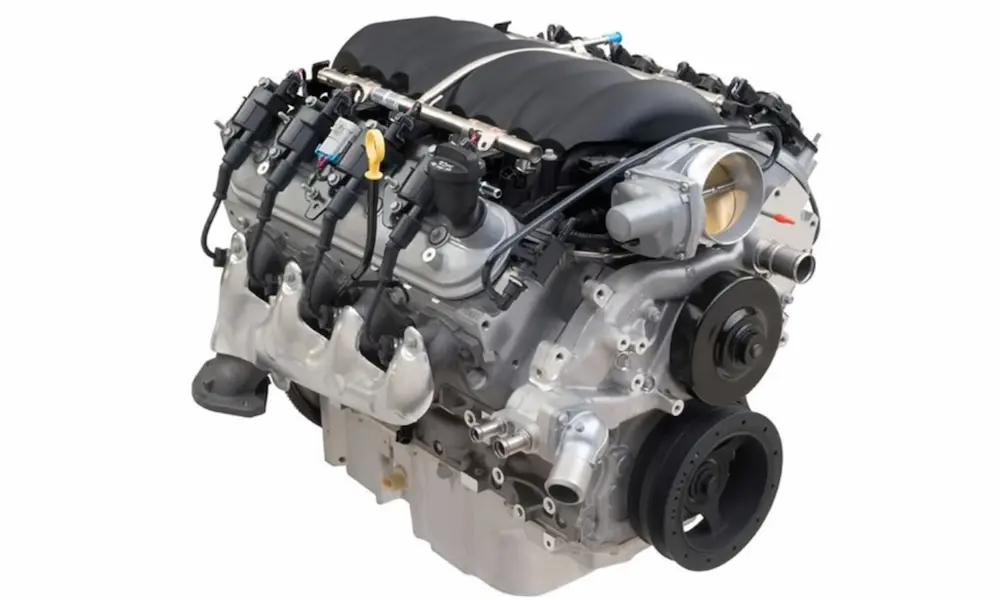
Your LS1 is already a great engine. But if you’re reading this, “great” probably isn’t good enough. The good news? This platform responds incredibly well to modifications, and there’s a clear, cost-effective path from stock to serious power. Stick around — we’re covering everything from the cheapest bolt-ons to full forced induction builds.
Why the LS1 Is Such a Great Starting Point
GM dropped the LS1 in 1997 as an all-aluminum 5.7L V8, and it immediately changed what a pushrod engine could do. The deep-skirt block design with six-bolt main caps gives it serious structural rigidity. The cylinder heads flow well straight from the factory. And the parts bin is enormous — most components are interchangeable across the entire LS family.
That last point matters more than anything. It means you can build a 450-horsepower engine using a mix of factory parts and targeted aftermarket pieces without spending a fortune.
The Right Order for LS1 Performance Upgrades
Before you spend a single dollar, get the upgrade sequence right. Buying a supercharger before your valvetrain can handle it is a great way to ruin an engine. Here’s the smartest order to follow:
- Camshaft and valvetrain support
- Long-tube headers
- LS6 intake manifold swap
- Cylinder head upgrade
- Forced induction
This “inside-out” strategy gives you the best return at every stage of the build.
Camshaft: The Highest-ROI LS1 Upgrade
The factory camshaft is almost always the primary bottleneck for power on a stock LS1. The heads flow well — the cam just won’t let them breathe fully. A properly chosen performance cam unlocks that potential for roughly $1,000–$1,500 in parts, making it the highest return upgrade on the entire platform.
Choosing the Right Cam Specs
Most LS1 builds use a split-pattern camshaft — more duration on the exhaust side — because the exhaust ports flow less efficiently than the intakes. For a street car with stock heads, an eight-degree intake/exhaust split works well. If you’re running LS3 or LS7 rectangular-port heads, that split often jumps to 20 degrees or more.
Lobe Separation Angle (LSA) also changes the character of the engine:
- 110–112° LSA: More overlap, more midrange torque, rougher idle
- 114–117° LSA: Smoother idle, better suited for forced induction
Valvetrain Support You Can’t Skip
Installing a hot cam without upgrading the supporting parts is asking for trouble. Here’s what needs to change:
| Component | OEM Spec | Performance Standard | Why It Fails Stock |
|---|---|---|---|
| Valve Springs | Single Beehive | Dual Springs / High-Rate Beehive | Valve float above 6,000 RPM |
| Pushrods | 5/16″, 0.075″ wall | 5/16″ or 3/8″, 0.080″+ wall | Deflects at high RPM |
| Rocker Arms | 1.7 ratio, pressed trunnion | Trunnion upgrade kit | Needle bearing failure |
| Lifters | Standard hydraulic roller | LS7 or link-bar | Plunger failure |
| Timing Chain | Single row | LS7 or double roller | Chain stretch |
The rocker arm trunnion upgrade deserves special attention. The factory pressed-in needle bearing caps can fail under high lift, sending loose bearings through your oiling system. It’s a cheap fix that prevents a catastrophic one — do it every time you cam an LS.
For any cam making over 0.600 inches of lift, dual valve springs are considered mandatory. If the outer spring breaks, the inner spring can often keep the valve from dropping into the cylinder.
LS1 Intake Manifold Upgrade
The factory LS1 intake manifold is the weakest link in the induction chain. Its plenum floor creates a significant restriction at higher RPMs, and it’s one of the first things you should fix on any pre-2001 engine.
LS6 Manifold: The Obvious First Move
The LS6 intake manifold is the gold standard for street builds. It features a larger plenum and revised runner floor that improves high-RPM airflow without hurting low-end torque. On a stock engine, this swap typically adds 10–15 wheel horsepower. Pair it with a camshaft upgrade and the gains stack up significantly.
Intake Manifold Comparison
Here’s how the factory and aftermarket options stack up on a modified 6.0L test mule, which gives you a clear picture of their relative performance potential:
| Intake Manifold | Peak HP | Peak Torque (lb-ft) | Throttle Body Flange |
|---|---|---|---|
| LS1 Factory | 535 hp | 468 lb-ft | 3-Bolt (75–78mm) |
| Early Truck (5.3L) | 549 hp | 481 lb-ft | 3-Bolt (75–78mm) |
| LS6 Factory | 557 hp | 483 lb-ft | 3-Bolt (75–78mm) |
| Late Truck (TBSS) | 563 hp | 597 lb-ft | 4-Bolt (90mm) |
| FAST LSXR 102mm | 591 hp | 505 lb-ft | 4-Bolt (102mm) |
One sleeper pick worth noting: the TrailBlazer SS truck intake outperformed even the FAST 102mm for torque below 4,600 RPM. If you’re doing an engine swap and hood clearance isn’t an issue, it’s a great budget option.
Cylinder Head Upgrades
All LS1 cathedral-port heads share 2.00-inch intake and 1.55-inch exhaust valves. The differences come down to combustion chamber size and casting quality. The best budget upgrade is swapping to factory 243 or 799 castings from the LS6 or LS2.
These heads feature a 64cc combustion chamber versus the LS1’s 67cc, which bumps compression and improves airflow by roughly 15–20% across the lift range. When CNC-ported, they can flow over 320 cfm and support 500+ horsepower — all from factory iron that you can often find used for a reasonable price.
Headers: Long-Tube vs. Shorty
Long-tube headers are the clear winner for performance. By using equal-length primary tubes, they time exhaust pulses to arrive at the collector without interfering with each other. This reduces backpressure and improves scavenging — where the vacuum from an outgoing exhaust pulse helps pull fresh charge into the cylinder during valve overlap.
The result? Real horsepower and torque gains above 3,000 RPM that shorty headers simply can’t match.
Shorty headers still beat cast-iron manifolds for flow, and they’re the right call when space is extremely limited or when you need 50-state emissions compliance. But if you’re building for performance, go long-tube.
High-Flow Catalytic Converters
Factory cats are usually fine until power increases exceed 25–30% over stock. High-flow catalytic converters use a lower cell-count substrate — 200 cells per square inch versus 400+ for OEM — which drops backpressure while keeping you legal. Going cat-less might pick up 5–10 hp, but it comes with exhaust odors and potential legal headaches.
Forced Induction: Supercharger vs. Turbocharger
Forced induction is the fastest path to doubling your LS1’s power output. The robust bottom end and high-flowing heads make it a natural candidate for boost.
| System Type | Power Delivery | Installation | Heat Management | Peak Potential |
|---|---|---|---|---|
| Roots/TVS | Instant torque | Moderate | High (heat soak) | Moderate |
| Centrifugal | Linear power | Moderate | Low | High |
| Single Turbo | Logarithmic/lag | Complex | High (exhaust) | Maximum |
| Twin Turbo | Smooth/less lag | Extreme | High (exhaust) | Absolute max |
Supercharger Options
- Positive Displacement (Roots/Twin-Screw): Units like the Magnuson TVS2300 bolt where the intake manifold lives and deliver instant boost from just off idle. Perfect for street cars and heavier vehicles where low-RPM torque rules.
- Centrifugal (ProCharger/Vortech): Belt-driven like a supercharger, but boost builds linearly with RPM. Highly efficient up top, but the big power hit happens near redline.
Turbocharging
Turbos use exhaust energy to drive the compressor, making them more thermally efficient than belt-driven superchargers. Boost is adjustable via wastegate rather than pulley swaps, and peak power potential is higher. The trade-off is complexity — you’ll need extensive hot-side plumbing and serious heat management to protect underhood components.
Budget: expect $5,000–$8,000 for a complete forced induction setup, with the ability to add 150–300 horsepower depending on the system.
Reliability Upgrades That Protect Your Investment
Oiling System
The factory oil pump can cavitate at high RPM. A standard-volume performance pump like the Melling 10295 handles most builds with stock bearing clearances. High-volume pumps like the Melling 10296 provide about 30% more oil flow and are necessary for engines with tighter clearances, oil coolers, or turbochargers requiring their own oil supply.
Cooling System
The LS1’s aluminum construction makes overheating a real concern on modified builds. A 160-degree thermostat lets the system start cycling earlier. For tracked cars or heavily modified engines, an aluminum radiator from a brand like DeWitts is essential.
Don’t overlook the steam port system. Air pockets can trap in the rear of the heads and cause localized hot spots in cylinders 7 and 8. A 4-corner steam kit bleeds those pockets out and prevents ring land failures — it’s an often-skipped fix that saves engines.
Piston Ring Gap
The factory cast-aluminum pistons are the first real failure point under boost. If the top ring end gap is too tight, thermal expansion causes the ends to butt together, snapping the ring land off the piston. For budget boost builds under 600 horsepower, increasing the top ring gap to 0.024–0.026 inches provides the necessary thermal expansion room without a full internal rebuild.
ECU Tuning: The Final Step
Every mechanical upgrade you make is only as good as the tune supporting it. You need the ECU calibrated to match your new combination — fuel, spark, and transmission parameters all need adjustment.
HP Tuners and EFI Live are the dominant platforms for the factory LS1 PCM. For high-boost or race builds, the Holley Terminator X standalone ECU handles boost control, nitrous management, and self-learning fueling.
For tuning methods, dyno tuning gives you the most accurate results in a controlled environment. Mail-order and e-tunes work, but they’re inherently more conservative because the tuner can’t physically monitor the car for knock or mechanical issues. Either way, a proper tune is non-negotiable — don’t skip it.
Fuel System Scaling
As power climbs, the fuel system has to keep up. The factory 28-pound injectors max out around 390 horsepower. A 500-horsepower build needs roughly 35 lb/hr injectors. Push to 600 horsepower and you want at least 42 lb/hr units. Scale the fuel pump to match, or you’ll be chasing lean conditions that destroy pistons.
The LS1 platform rewards smart, sequential building. Nail the upgrade order, don’t skip the reliability items, and always tune after major changes — and you’ll have one of the most capable V8s on the road for a fraction of what other platforms cost.