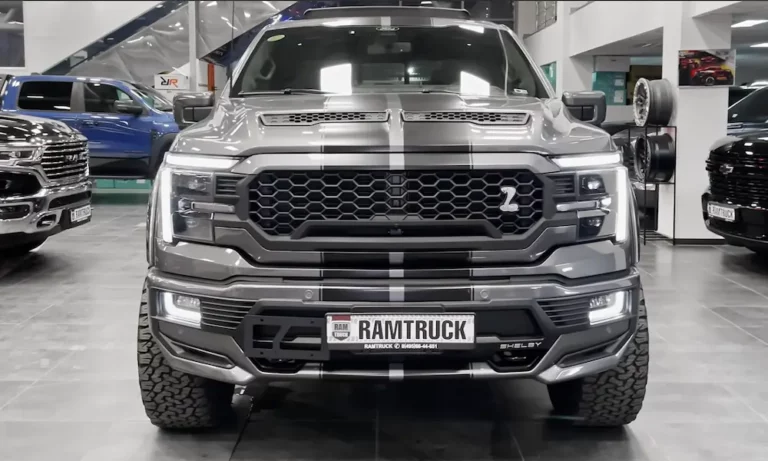
Thinking about a new Ford F-150? You might be wondering about PowerBoost and EcoBoost engines. These two options can seem confusing at first. PowerBoost is a hybrid system that combines a gas engine with an electric motor, while EcoBoost is a turbocharged gas engine.
Both engines offer great performance, but they work differently. PowerBoost gives you better fuel economy and more power for towing. EcoBoost focuses on high performance and good gas mileage.
Let’s take a closer look at these engines to help you pick the right one for your needs. By the end, you’ll have a clear idea of which F-150 engine suits you best.
Understanding EcoBoost Technology
Ford’s EcoBoost engines combine power and efficiency. These engines use advanced tech to give you more miles per gallon without losing the oomph you need.
The EcoBoost Concept
EcoBoost is Ford’s way of making engines that are both strong and fuel-smart. The idea is to use a smaller engine that works harder. This gives you the power of a bigger engine but uses less gas.
EcoBoost engines have two main tricks up their sleeve:
- Turbocharging: This uses exhaust gases to spin a turbine. The turbine pushes more air into the engine, making it stronger.
- Direct Injection: Fuel goes straight into each cylinder. This makes the engine more efficient and powerful.
Key Features of EcoBoost Engines
EcoBoost engines are special because they do more with less. Here’s what makes them stand out:
- Smaller size: These engines are compact but pack a punch.
- Better fuel economy: You’ll spend less at the pump.
- Reduced emissions: They’re kinder to the environment.
- Impressive power: You get the muscle of a larger engine.
The turbochargers in EcoBoost engines are key. They give you extra power when you need it, like when passing on the highway.
The 2.7-Liter and 3.5-Liter EcoBoost Variants
Ford offers different sizes of EcoBoost engines to fit your needs. The 2.7-liter and 3.5-liter versions are popular choices.
The 2.7-liter EcoBoost is great for everyday driving. It’s small but mighty, giving you good power and great gas mileage.
For more muscle, there’s the 3.5-liter EcoBoost. This engine comes in two flavors:
- The standard 3.5-liter: Great for towing and hauling.
- The twin-turbo 3.5-liter V6: This powerhouse can make up to 450 horsepower in some models.
Both sizes give you the EcoBoost benefits of power and efficiency. You just need to pick the one that fits your driving style best.
Exploring PowerBoost Hybrid Technology
Ford’s PowerBoost system blends gas and electric power for better performance and efficiency. It uses a strong engine, electric motor, and battery to give you more power and save fuel.
Hybrid Powertrain Basics
PowerBoost combines a gas engine with an electric motor. This team-up gives you the best of both worlds. The gas engine provides long-range driving power. The electric motor helps with quick starts and low-speed driving.
When you’re cruising, both power sources work together. This means you use less gas. The system can also run on electric power alone for short distances. You’ll notice smoother acceleration and less engine noise.
The 3.5L PowerBoost Hybrid
The heart of the PowerBoost system is a 3.5L EcoBoost V6 engine. This engine is already known for its power. In the PowerBoost setup, it gets even better.
The electric motor adds extra punch when you need it. You’ll feel this boost when towing or hauling heavy loads. The combo gives you strong acceleration and passing power.
Ford has tuned this system to work seamlessly. You might not even notice when it switches between gas and electric power. It’s all about giving you a smooth, powerful drive.
Generators and Batteries
The PowerBoost system includes a generator and a lithium-ion battery. These parts are key to how the hybrid works.
The generator turns the engine’s power into electricity. This charges the battery and powers the electric motor. Some models offer a 7.2kW onboard generator. You can use this to power tools or appliances at work sites or campsites.
The battery stores energy for the electric motor. It’s charged by the engine and through regenerative braking. This means your brakes help create power for later use. The battery is designed to last for many years without needing replacement.
Performance Metrics Comparison
Ford’s PowerBoost and EcoBoost engines offer different performance advantages. Let’s look at how they stack up in key areas that matter to truck owners.
Horsepower and Torque Analysis
The PowerBoost hybrid system packs a punch with its combined gas-electric powertrain. You’ll get an impressive 430 horsepower and 570 lb-ft of torque. This gives you plenty of muscle for hauling and acceleration.
The EcoBoost isn’t far behind though. Its 3.5L V6 delivers 400 horsepower and 500 lb-ft of torque. That’s still plenty of power for most jobs.
For raw power, the PowerBoost has a slight edge. But both will give you strong performance for daily driving and work tasks.
Fuel Economy Discussion
Here’s where the PowerBoost really shines. Its hybrid system helps you save big at the pump. You can expect around 24 mpg combined city/highway.
The EcoBoost is no gas guzzler, but it can’t match the hybrid efficiency. You’ll likely see about 20 mpg combined with the 3.5L EcoBoost V6.
Over time, those mpg gains with the PowerBoost can add up to significant fuel savings. This is especially true if you do a lot of city driving where the hybrid system excels.
Towing Prowess
When it comes to towing, the EcoBoost takes the lead. The 3.5L EcoBoost V6 can tow up to 14,000 pounds when properly equipped. That’s best-in-class for light-duty pickups.
The PowerBoost isn’t far behind though. It can still handle an impressive 12,700 pounds. For most owners, that’s more than enough towing capacity.
Consider how much you’ll actually tow. The PowerBoost’s towing ability will satisfy most needs while giving you better fuel economy for daily driving.
Practical Benefits and Drawbacks
PowerBoost and EcoBoost engines offer different advantages and challenges. Your choice depends on your driving needs, budget, and environmental concerns.
Vehicle Application and Usage
PowerBoost shines in Ford F-150 trucks, giving you extra power for towing and hauling. You’ll appreciate its strong torque for heavy loads.
EcoBoost fits a wider range of vehicles. You can find it in cars, SUVs, and trucks. It’s great for daily driving and moderate towing.
Both engines perform well, but PowerBoost gives you an edge in tough jobs. EcoBoost is more versatile for everyday use.
Costs and Fuel Efficiency
PowerBoost costs more upfront but can save you money on fuel. You’ll see better gas mileage, especially in city driving.
EcoBoost is cheaper to buy. It still offers good fuel savings compared to regular engines.
Here’s a quick comparison:
| Engine Type | Initial Cost | Fuel Efficiency |
|---|---|---|
| PowerBoost | Higher | Better |
| EcoBoost | Lower | Good |
Your long-term savings depend on how much you drive and fuel prices.
Emissions and Environmental Impact
PowerBoost is the greener choice. You’ll produce fewer emissions, especially during short trips or in traffic.
EcoBoost also reduces emissions compared to standard engines. It’s a step up for the environment, but not as big as PowerBoost.
If you care about your carbon footprint, PowerBoost is the way to go. EcoBoost is still better than non-efficient engines.
Engine Reliability and Issues
Both engines are generally reliable, but they have different quirks.
EcoBoost engines might face:
- Carbon buildup
- Turbo wear
- Intercooler condensation
PowerBoost is newer, so long-term data is limited. You might encounter:
- Battery-related issues
- More complex repairs
Regular maintenance is key for both. Keep up with oil changes and follow the manufacturer’s guidelines.
EcoBoost has a longer track record, which might give you more peace of mind. PowerBoost’s technology is promising but still proving itself over time.
Final Thoughts on PowerBoost vs EcoBoost
Both PowerBoost and EcoBoost offer great options for your Ford truck. The choice depends on your specific needs and preferences.
If you want better fuel economy and the ability to use electric power, the PowerBoost Hybrid might be your best bet. It gives you decent towing capacity while saving money at the pump.
For maximum towing power, the EcoBoost Engine is hard to beat. It can pull up to 14,000 pounds in some configurations.
Consider your daily driving habits. Do you mainly cruise around town? PowerBoost could be ideal. Need to haul heavy loads often? EcoBoost might suit you better.
Don’t forget about cost. PowerBoost typically costs more upfront, but could save you money long-term on fuel.
Test drive both if you can. You’ll get a feel for the power and performance differences firsthand.
Remember, both options offer Ford’s renowned reliability and performance. You can’t go wrong with either choice for your next truck.