You’re standing in the auto parts store staring at a wall of coolant bottles, wondering which one won’t destroy your Ram’s engine. The wrong choice could lead to water pump failure, seal damage, or worse. This guide cuts through the confusion and tells you exactly what your Ram 1500 needs.
What Coolant Type Does a Ram 1500 Use?
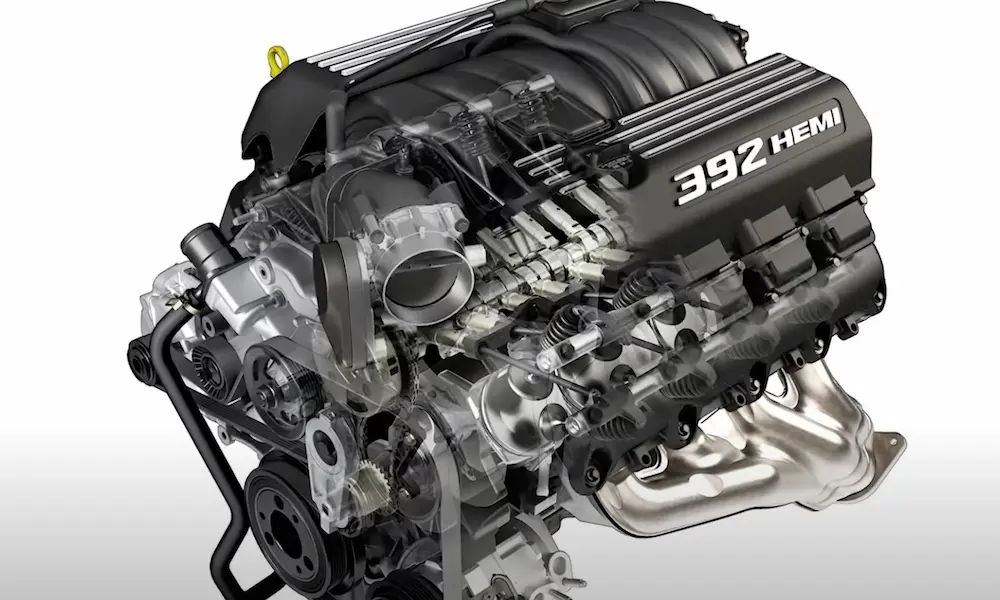
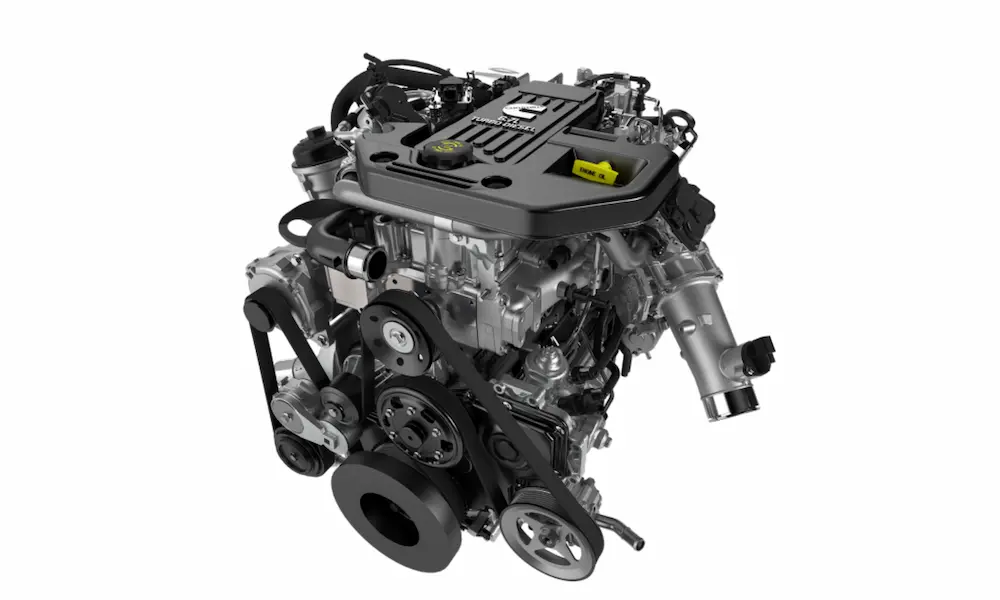
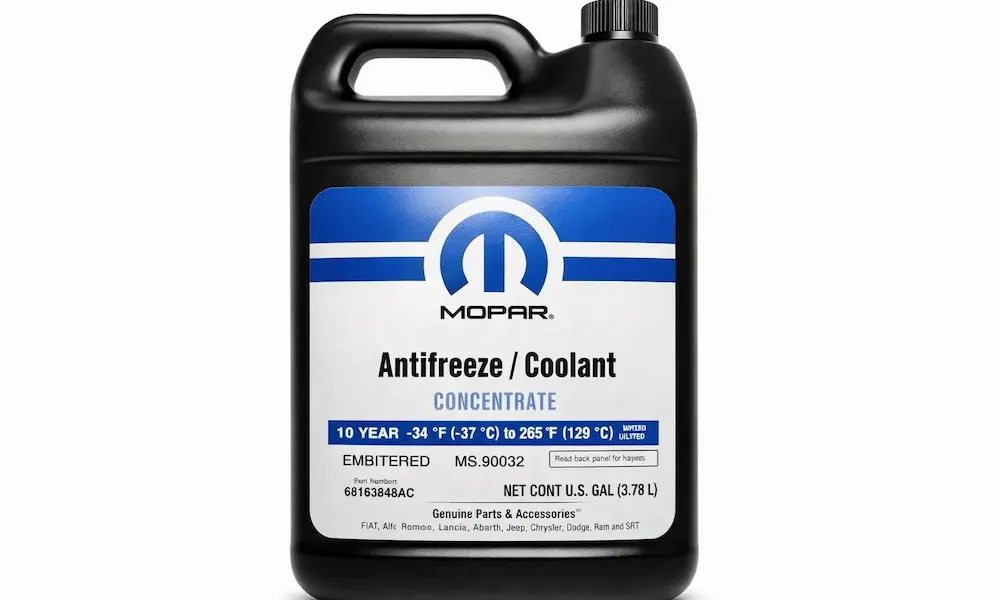
All Ram 1500 trucks from 2013 onward require MS-90032 OAT (Organic Acid Technology) coolant that meets Chrysler Material Standard specifications. This applies across the board—whether you’ve got the 3.6L V6 Pentastar, 5.7L V8 HEMI, 3.0L EcoDiesel V6, or the beastly 6.2L V8 supercharged TRX engine.
You might see coolant labeled MS-12106 in older discussions or on store shelves. Don’t panic—it’s the same stuff. Around 2019-2020, Chrysler updated their numbering system from MS-12106 to MS-90032, but both specifications refer to identical OAT coolant formulation.
Understanding OAT Coolant Specifications
OAT coolant isn’t your grandfather’s antifreeze. This ethylene glycol-based formula uses organic acid technology to protect your engine’s cooling system for an impressive 10 years or 150,000 miles before needing replacement.
Here’s what makes this Ram 1500 coolant type special:
Temperature Protection Range: -37°C to +129°C (-35°F to +265°F)
Service Life: 10 years or 150,000 miles
Base Formula: Ethylene glycol with organic acid additives
Mixing Ratio: 50% coolant to 50% distilled water (when using concentrate)
The extended service life saves you money and hassle compared to older coolant formulations that needed replacement every 30,000 miles. But this longevity only applies when you use the correct OAT coolant and maintain proper dilution.
Mopar Part Numbers for Ram 1500 Coolant
Walking into a parts store armed with the right part numbers saves time and prevents confusion. Here are the current Mopar coolant options:
68163848AB: Concentrate formula requiring 50/50 dilution with distilled water
68163849AB: Pre-mixed 50/50 formula ready to pour straight from the bottle
You might also encounter older part numbers that work perfectly fine:
68163848AA/68163849AA: Previous generation with identical MS-90032 specification
68104496AA/68104494AA: Alternative part numbers for the same OAT coolant
Canadian markets sometimes use different part numbers (68175338AC concentrate, 68175339AC pre-mixed), but they maintain the same MS-90032 specification your truck needs.
The concentrate costs less upfront but requires you to mix it properly with distilled water. The pre-mixed version costs more but eliminates mixing errors. Pick whichever fits your comfort level.
How Much Coolant Does Your Ram 1500 Hold?
Knowing your truck’s coolant capacity prevents overfilling and ensures you buy enough product. Ram 1500 coolant capacity varies by engine:
| Engine | Coolant Capacity |
|---|---|
| 3.6L V6 Pentastar | 14.0 quarts (3.5 gallons) |
| 5.7L V8 HEMI | 14.0-14.1 quarts (3.5-3.53 gallons) |
| 3.0L EcoDiesel V6 | 12.0 quarts (3.0 gallons) |
| 6.2L V8 TRX | 14.0 quarts (3.5 gallons) |
When you’re doing a complete coolant flush, buy slightly more than your engine’s capacity. You’ll lose some during the bleeding process, and it’s better to have extra than to run short mid-job.
Why Coolant Color Changes (And Why That’s Normal)
Here’s something that freaks out Ram owners: their coolant changes color. You bought purple coolant, but now your reservoir looks orange. Did someone mess with your truck?
Relax. This color evolution is completely normal for OAT coolant.
Fresh from the bottle: Mopar OAT coolant appears purple or deep pink
After heat cycles: The coolant transitions to orange or pinkish-red
This color change doesn’t indicate contamination or deterioration. It’s simply the natural aging process of OAT coolant as it does its job protecting your engine. Many owners mistakenly believe orange coolant means someone switched to HOAT (Hybrid Organic Acid Technology) coolant, but it’s just your OAT coolant doing its thing.
The distinctive purple color when fresh helps you identify genuine OAT coolant meeting MS-90032 specifications. But don’t judge your coolant’s condition by color alone—follow the service intervals instead.
Critical Compatibility Warnings You Can’t Ignore
Getting the Ram 1500 coolant type wrong isn’t a minor mistake. It’s a recipe for expensive engine damage. Here’s what you absolutely must avoid:
Never Use Universal Coolant
Those green bottles labeled “universal” or “works in all vehicles” don’t work in your Ram. Generic coolants lack the specific additives required for Ram’s cooling system. Using them can cause:
- Water pump damage
- Seal failures
- Internal corrosion
- Catastrophic engine damage
The few bucks you save aren’t worth thousands in repair bills.
Don’t Mix Coolant Types
OAT coolant must never be mixed with HOAT, IAT (Inorganic Acid Technology), or any other formulation. Mixing different coolant chemistries contaminates your cooling system and compromises protection.
If you’re not sure what’s currently in your system, it’s better to do a complete flush than risk mixing incompatible products.
Aftermarket Alternatives: Proceed with Caution
Some aftermarket brands claim their OAT coolants meet MS-90032 specifications. Maybe they do. But Ram specifically recommends using only Mopar coolant to maintain warranty coverage and optimal protection.
If you’re still under warranty, stick with Mopar. If you’re out of warranty and want to try aftermarket options, verify they explicitly state MS-90032 compatibility—not just “OAT formula.”
Maintenance Schedule for Ram 1500 Coolant
Your owner’s manual provides specific service intervals, but here’s the general guidance:
Coolant checks: Every 15,000 miles
Coolant replacement: Every 30,000 miles or 2 years under normal conditions
Extended service life: 10 years or 150,000 miles (only with proper OAT coolant and correct dilution)
The 10-year/150,000-mile service life sounds great, but it comes with conditions. You must use the correct Ram 1500 coolant type and maintain proper 50/50 dilution. Any deviations reset you to the standard 30,000-mile service interval.
Topping Off Between Services
Found your coolant level running low? Don’t just dump whatever’s handy into the reservoir.
Use only MS-90032 OAT coolant when topping off. If you’re using concentrate, remember to dilute it 50/50 with distilled water first. Pre-mixed coolant goes straight in.
In emergency situations where proper coolant is unavailable, distilled water can serve as a temporary fix. But get to a parts store and add the correct coolant as soon as possible. Plain water doesn’t provide freeze or corrosion protection.
Never use tap water. The minerals in tap water cause corrosion and deposits that damage your cooling system over time.
How to Properly Flush Your Cooling System
A complete coolant system flush isn’t just draining and refilling. Done properly, it involves:
- Draining the old coolant completely
- Cleaning with specialized flushing compounds
- Thoroughly rinsing the system
- Refilling with proper OAT coolant at correct dilution
- Bleeding air from the system
This process ensures you remove contaminants, old additives, and any incompatible coolant remnants. It gives your cooling system a fresh start with proper protection.
If you’ve never flushed a cooling system before, consider having a shop handle it. Air pockets in the system can cause overheating and engine damage.
The 2013 Model Year Transition
Here’s where things get confusing for 2013 Ram 1500 owners. The transition to OAT coolant began around 2013, but some early production 2013 models left the factory with orange HOAT coolant from previous generations.
If you own a 2013 Ram 1500, check your owner’s manual. The manual specification takes precedence over whatever color coolant is currently in your system. If your manual calls for OAT coolant, that’s what belongs in your truck—regardless of whether orange HOAT coolant is currently circulating.
When switching from HOAT to OAT, do a complete system flush. Don’t just top off or mix the two formulations.
Concentrate vs. Pre-Mixed: Which Should You Buy?
Both options work perfectly fine. Your choice depends on convenience versus cost.
| Factor | Concentrate | Pre-Mixed |
|---|---|---|
| Cost per gallon | Lower | Higher |
| Convenience | Requires mixing | Pour and go |
| Mixing errors | Possible | None |
| Storage | Takes less space | Takes more space |
If you’re comfortable measuring and mixing, concentrate saves money. A gallon of concentrate yields two gallons of 50/50 coolant when properly diluted.
If you’d rather eliminate variables and potential mixing errors, pre-mixed coolant is worth the extra cost. Just open, pour, and you’re done.
Reading Your Coolant Level Correctly
Your Ram 1500 has a coolant recovery tank with MIN and MAX markings. Check the level when the engine is cold—hot coolant expands and gives false readings.
The level should sit between the MIN and MAX lines. If it’s below MIN, add coolant. If it’s above MAX, you’ve overfilled and should remove some.
Consistently low coolant levels indicate a leak. Don’t just keep topping off—find and fix the leak. Common culprits include:
- Radiator hose connections
- Water pump seals
- Radiator itself
- Heater core
Small, slow leaks might only show up as gradual level drops. Large leaks create puddles under your truck or steam from under the hood.
What Temperature Protection Do You Actually Need?
MS-90032 OAT coolant provides protection from -35°F to +265°F when properly mixed at 50/50 ratio. That covers virtually every climate in North America.
Living in extreme cold? Don’t increase the coolant concentration beyond 60%. More coolant doesn’t equal more protection—it actually reduces freeze protection. The optimal freeze protection occurs at 60% coolant / 40% water, protecting down to about -62°F.
Living in extreme heat? Don’t reduce coolant concentration below 50%. Less coolant means less corrosion protection and lower boiling point. Stick with 50/50 regardless of climate.
The Bottom Line on Ram 1500 Coolant Type
Your Ram 1500 needs MS-90032 OAT coolant. Not universal coolant. Not whatever’s on sale. Not the same stuff your buddy uses in his Ford.
Buy Mopar part number 68163848AB (concentrate) or 68163849AB (pre-mixed). Mix concentrate 50/50 with distilled water. Check levels every 15,000 miles. Replace every 30,000 miles or enjoy the extended 10-year/150,000-mile service life with proper maintenance.
Getting this right protects your engine and prevents expensive repairs. Getting it wrong leads to damage that could total your truck’s engine. The choice is pretty simple.
Keep a gallon of proper coolant in your garage for topping off between services. Know your truck’s coolant capacity. Watch for leaks and warning signs. Your Ram will reward you with years of reliable service.