That “Perform Service” message on your Ram 3500’s dash isn’t just a friendly suggestion. Ignore it, and you’re looking at a chain of expensive engine failures. This guide breaks down exactly what triggers it, what you need to fix, and how to reset it yourself — so read to the end before you park that truck.
What Does “Ram 3500 Perform Service” Actually Mean?
First, let’s clear up a common mix-up. The “Perform Service” message is not the same as your oil change reminder. Your oil monitor uses a smart algorithm that tracks engine temps, duty cycles, and idle time. That message pops up at different intervals every time.
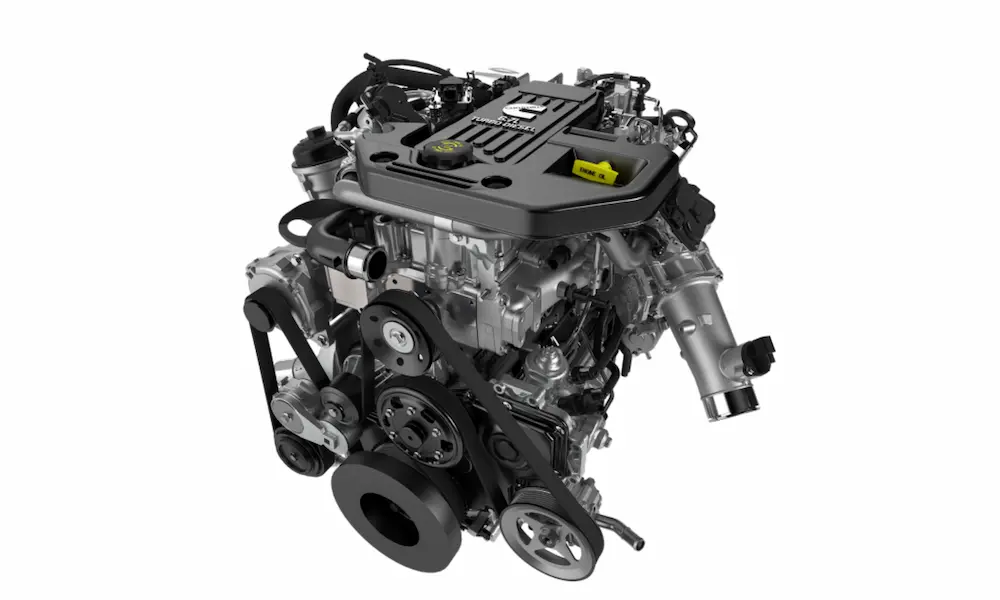
The Ram 3500 Perform Service message is different. It’s a hard-coded, mileage-based trigger tied directly to your 6.7-liter Cummins diesel’s emissions control system. When it lights up, your truck is telling you the closed crankcase ventilation (CCV) filter has hit its service limit.
Here’s when it fires depending on your model year:
| Model Year | Perform Service Mileage | Approximate Time Frame |
|---|---|---|
| 2007.5 – 2018 | 67,500 miles | ~54 months |
| 2019 – 2024 | 75,000 miles | ~60 months |
That interval isn’t a loose recommendation — it’s the maximum lifespan of the filter media under normal driving conditions.
Why Your Engine Has a CCV Filter in the First Place
Here’s the quick science. During combustion, high cylinder pressures push a small amount of exhaust gases past the piston rings into the engine block. This is called blow-by. Those gases carry oil mist, carbon soot, water vapor, and heat.
Old-school diesel engines just vented all that straight into the atmosphere through an open pipe. The EPA put a hard stop to that. So modern engines like your 6.7 Cummins route those gases back into the intake to burn them off — that’s the closed crankcase ventilation system.
But here’s the problem: you can’t feed raw oily mist directly into a turbocharged intake. It wrecks the intercooler and coats the intake manifold in sludge. So a coalescing filter sits between the crankcase and the intake. It catches the oil droplets, drains them back into the valve train, and lets clean gas pass through.
Over 67,500 to 75,000 miles, that filter gets packed with oil and carbon particles. Airflow drops. Crankcase pressure builds. Things start breaking.
What Happens If You Ignore the Ram 3500 Perform Service Message
This is where it gets expensive. A plugged CCV filter doesn’t just throw a warning light and call it a day. It starts a cascade of mechanical failures that gets worse the longer you wait.
Here’s the failure chain:
- Crankcase pressure spikes → oil weeps past valve cover gaskets and main seals
- Rear main seal blows → requires full transmission removal to fix
- Turbocharger drain backs up → oil floods past compressor seals into the intake
- Intercooler fills with oil → thermal efficiency tanks, exhaust temps climb
- Oil disappears from the dipstick → engine burns it through the intake
- Rough idle, blue/white smoke, poor fuel economy → the engine is consuming itself
Want a quick DIY check? With the engine idling at operating temp, carefully loosen the oil fill cap. If the cap vibrates hard or heavy vapor puffs out — your filter is severely clogged. Mechanics call it “excessive chuffing.”
The EGR System: The Other Half of the Service
The Perform Service interval also covers your exhaust gas recirculation (EGR) system — at least on earlier model years. The EGR pulls a portion of exhaust back into the intake to lower combustion temps, which cuts NOx emissions. But diesel exhaust is loaded with soot, and that soot mixes with the oil mist leaking past a failing CCV filter.
The result? A thick, tar-like sludge inside your intake that chokes airflow and glues your EGR valve shut.
What you do about it depends on your model year:
- 2007.5 – 2018: The factory service manual requires you to physically remove and deep clean both the EGR valve and EGR cooler. Use a non-corrosive solvent on the cooler fins and a brush on the valve face. Aftermarket cleaning kits make this DIY-friendly.
- 2019 – 2024: The EGR valve is now a sealed unit — you can’t disassemble it. The main job at 75,000 miles is replacing the CCV filter. The EGR valve gets inspected, but replacement is typically deferred to around 150,000 miles unless diagnostics show a failure.
Normal Duty vs. Severe Duty: Does Your Interval Change?
If you’re using your Ram 3500 the way it was built to be used — towing near max capacity, idling on a job site, running down dusty farm roads — you’re in severe duty territory. And that matters a lot for your CCV filter lifespan.
Heavy towing creates sustained high cylinder pressures. Excessive idling generates incomplete combustion and more soot. Both accelerate filter saturation well before the dashboard lights up.
Severe duty conditions include:
- Frequent towing near Gross Combined Weight Rating
- Extended engine idling (construction, agriculture, oilfield)
- Operating in dusty or off-road environments
- Frequent short trips with no sustained warm-up
For trucks in these conditions, technicians strongly recommend manually inspecting the CCV filter at 30,000 to 40,000 miles — well before the indicator triggers. By the time the light comes on in severe duty use, your turbo seals may already be compromised.
Full Ram 3500 Maintenance Schedule: Diesel and Gas
The Perform Service message rarely hits in isolation. By the time you reach 67,500 or 75,000 miles, several other major services are due simultaneously. Miss them and you risk voiding the powertrain warranty — which runs up to 10 years or 100,000 miles on late-model diesels.
6.7L Cummins Diesel Schedule
| Service | Standard Interval | Severe Duty Notes |
|---|---|---|
| Engine Oil & Filter | Up to 15,000 miles (dash-guided) | Can drop to every 4,000 miles with heavy idling |
| Dual Fuel Filters | Every 15,000 miles | Replace both simultaneously — chassis and engine-mounted |
| Engine Air Filter | Every 30,000 miles | Inspect more often in dusty environments |
| CCV Filter | 67,500 mi (2007.5-2018) / 75,000 mi (2019+) | Check at 30,000–40,000 miles under severe duty |
| Engine Coolant | 10 years or 150,000 miles | Use Organic Additive Technology fluid only |
For 2019+ engines, use the manufacturer-specified 10W-30 viscosity oil. Deviating from that spec can void your engine warranty.
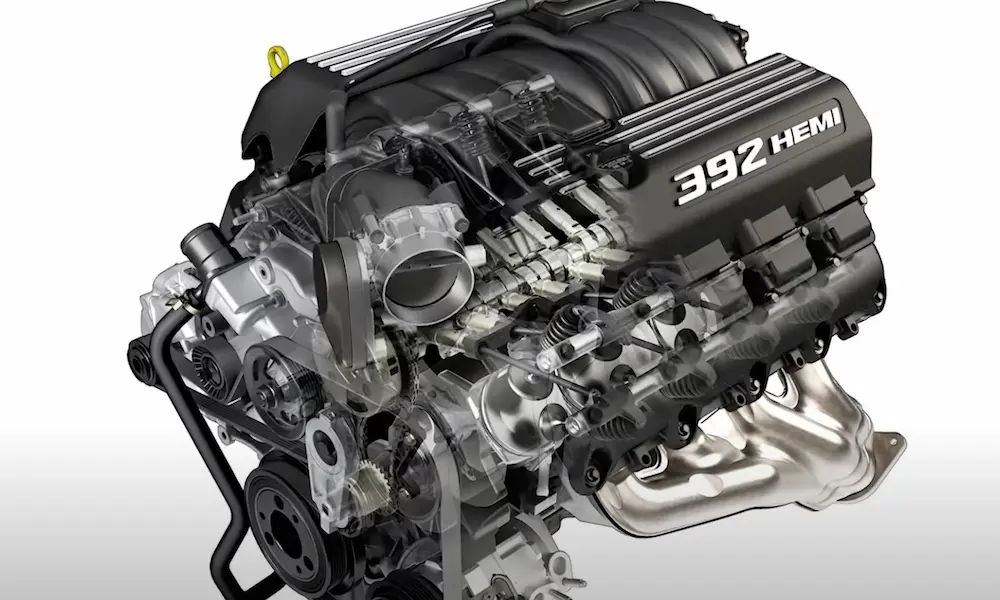
6.4L HEMI Gasoline Schedule
The gas engine doesn’t have a CCV filter or EGR cooler that triggers a Perform Service message, but it has its own schedule:
| Service | Standard Interval |
|---|---|
| Engine Oil & Filter | ~8,000 miles (or per indicator) |
| Engine Air Filter | Every 30,000 miles |
| Spark Plugs | 100,000 miles (all 16 plugs) |
| PCV Valve | 100,000 miles |
| Engine Coolant | 10 years or 150,000 miles |
Transmission Fluid: Don’t Get These Mixed Up
If your truck is near 60,000–75,000 miles, your transmission service is likely overdue too. The Ram 3500’s transmission options have very different fluid intervals — and confusing them causes catastrophic failures.
| Transmission | Application | Fluid Interval |
|---|---|---|
| 68RFE 6-Speed | Standard Output Cummins | 60,000 miles |
| Aisin AS69RC 6-Speed | High Output Cummins (to 2024) | 30,000 miles fluid / 60,000 miles filter |
| ZF TorqueFlite 8-Speed | High Output Cummins (2025+) | Consult updated manual — different fluid entirely |
| Axles & Transfer Case | All 4×4 models | 60,000 miles normal / 30,000 miles severe towing |
Fleet operators moving from older Aisin-equipped trucks to the new ZF 8-speed need to know the 30,000-mile Aisin intervals no longer apply. Using the wrong fluid or intervals in a ZF transmission voids the warranty immediately.
How to Replace the CCV Filter Yourself
This job is well within reach for a capable DIYer. The correct replacement parts are:
- Fleetguard CV52001, Cummins part number 4936636, or Mopar 68002433AA/68002433AB
- Note: These do not fit the older 5.9L Cummins — the architecture is completely different
Key steps to follow:
- Park on level ground, let the engine cool fully
- Disconnect both battery negative cables
- Remove the acoustic engine cover to expose the valve cover
- Clean the surrounding area thoroughly before cracking anything open
- Remove the filter housing bolts evenly — warping the mounting surface causes leaks
- Wipe the mating surface with a lint-free cloth only — no abrasive pads
- Lower the new filter into place carefully (some cast versions weigh ~16 lbs)
- Hand-start fasteners first, then tighten in a crisscross pattern from center outward to seat the gasket evenly
- Use the specified torque values — not forum guesses
One critical warning: a single grain of sand dropped into the exposed valve train can score your camshaft. Keep the work area clean and cover any openings immediately.
How to Reset the “Perform Service” Message
Replacing the filter won’t clear the dash message. The ECM needs a manual reset, and standard aftermarket scan tools often can’t clear this specific emissions reminder. You do it with a pedal sequence:
- Close all doors and the hood
- Turn the ignition to ON/RUN — engine OFF, cluster fully lit
- Press and release the brake pedal firmly twice
- Within 10 seconds, fully press and release the accelerator pedal to the floor twice
- Turn the ignition to OFF/LOCK
- Start the engine and confirm the message is gone
If it doesn’t clear, your timing was off or a pedal didn’t return to its full resting position. Both pedals must fully return between presses for the sensors to register correctly. Try again — most trucks clear on the second or third attempt.
What About CCV Delete Kits?
Yes, aftermarket CCV delete kits exist. They replace the factory housing with a billet valve cover that vents blow-by to a catch can or straight to atmosphere. They permanently solve the oil-in-intake problem.
But they also permanently create a legal problem. The EPA prohibits tampering with any factory emissions control device on vehicles driven on public roads. These kits are legal only for closed-course competition and off-road use. Install one on a street-driven truck and you risk federal penalties, a voided powertrain warranty, and a failed emissions inspection. For road use, the factory filter replacement is your only compliant option.
FAQs: Ram 3500 Perform Service
Does altitude affect how fast the CCV filter clogs?
Yes. At high elevation, the turbo spins harder to compress thin air, which increases cylinder pressure and generates more blow-by. Trucks that regularly run mountain passes may saturate their filter faster than sea-level vehicles, pushing them into severe duty territory.
Can I hear a clogged CCV filter before the light comes on?
Sometimes. A failing filter forces oil past the turbo seals, which can alter the turbo’s normal whistle under load — making it sound muffled or uneven. You may also hear a subtle rhythmic chuffing from the lower block area at idle as crankcase pressure fights against piston movement.
Does running biodiesel affect the Perform Service interval?
It can. Biodiesel blends have different combustion profiles and can increase fuel dilution in the engine oil. When that fuel-diluted oil turns into blow-by mist, it hits the coalescing media differently and can cause it to restrict faster than with standard petroleum diesel — potentially before the indicator triggers.
How long can I store a replacement CCV filter before installing it?
The housing stays fine, but the internal micro-fiber media can absorb moisture if stored in a humid or temperature-variable shop environment. Buy your replacement filter close to your service date, keep it in its sealed original packaging, and store it somewhere climate-controlled.
Does using the exhaust brake frequently accelerate EGR soot buildup?
It can. The exhaust brake uses turbo backpressure to slow the truck, which is great for your brake pads. But frequent low-speed exhaust braking without high exhaust temps allows more soot to deposit on the EGR valve face and inside the cooler — potentially pushing your cleaning interval earlier than the scheduled service mileage.