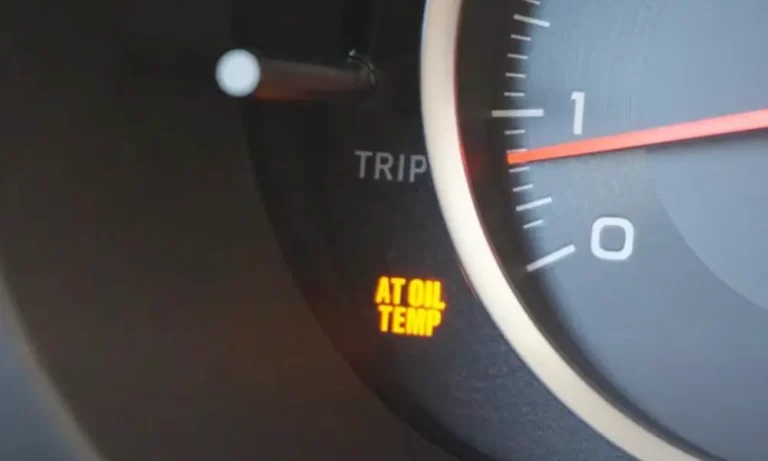
Seeing that flashing AT Oil Temp light on your Subaru’s dashboard can instantly turn a good day into a stressful one. That small warning light signals something potentially serious is happening with your transmission—but don’t panic just yet. Understanding what this warning means and taking the right steps can save you from expensive repairs down the road.
What Does the AT Oil Temp Light Mean?
When your Subaru’s AT Oil Temp light starts flashing, it’s warning you that your automatic transmission fluid temperature has exceeded safe operating limits—typically above 200°F (93°C). This isn’t something to ignore.
The AT (Automatic Transmission) Oil Temp warning system constantly monitors your transmission fluid temperature through a dedicated sensor. It’s designed to alert you before things get bad enough to cause permanent damage to your transmission’s internal components.
This is especially important in Subaru vehicles with Continuously Variable Transmissions (CVTs), which are particularly sensitive to overheating. The normal operating temperature for your transmission fluid should be around 175°F—anything above 200°F puts your transmission at risk.
What To Do When the Light Starts Flashing
When that AT Oil Temp light begins flashing while you’re driving, take these immediate steps:
- Pull over safely as soon as possible. Continuing to drive with an overheating transmission can cause irreversible damage.
- Either turn off the engine completely or let it idle in Park or Neutral for 15-20 minutes. This cooling period allows the transmission fluid temperature to drop back to safe levels.
- The warning light should turn off once the transmission has cooled. If it doesn’t, or if it returns immediately when you start driving again, you’ll need professional diagnosis.
Don’t make the mistake of ignoring this warning just because your vehicle seems to be driving normally. Many drivers report no obvious performance issues when the light first appears, but continuing to drive can result in catastrophic transmission failure—potentially costing thousands in repairs.
Common Causes of the AT Oil Temp Warning
Several factors can trigger your Subaru’s AT Oil Temp warning. Understanding these can help you prevent problems before they start.
Low or Dirty Transmission Fluid
One of the most common causes is simply insufficient or degraded transmission fluid. Your transmission fluid has three critical jobs:
- Lubricating moving parts
- Transferring hydraulic pressure for gear changes
- Cooling the transmission
When fluid levels drop or the fluid becomes contaminated with debris and metal particles, it can’t perform these functions properly. This is especially true for Subaru CVT transmissions, which require specific High Torque CVTF fluid.
Using the wrong type of transmission fluid can disrupt normal operation and cause overheating. Regular fluid changes every 60,000 to 100,000 miles can prevent many overheating issues.
Valve Body and Solenoid Problems
A significant number of AT Oil Temp warnings in Subarus stem from valve body failures—particularly solenoid malfunctions. The valve body contains multiple solenoids that control hydraulic fluid flow throughout your transmission. When these solenoids fail, they disrupt normal operation and can trigger temperature warnings.
The most commonly failing component is the torque converter clutch (TCC) lockup solenoid. This solenoid controls the engagement of the torque converter clutch, which helps improve fuel efficiency and reduce engine RPM at highway speeds. When it fails, your transmission control module may detect abnormal operation and trigger the AT Oil Temp warning even if the actual fluid temperature is normal.
Common trouble codes associated with these failures include:
| Code | Description | Typical Cause |
|---|---|---|
| P0700 | Transmission Control System Malfunction | General code indicating the TCM has detected a fault |
| P2763 | Torque Converter Clutch Solenoid Circuit Open | Open circuit in lockup solenoid or wiring |
| P2764 | Torque Converter Clutch Solenoid Circuit High | Short to voltage in solenoid circuit |
| P2762 | Torque Converter Clutch Solenoid Performance | Mechanical solenoid malfunction |
Temperature Sensor Failures
Sometimes, the AT Oil Temp warning appears not because of actual overheating, but due to a faulty temperature sensor. This can happen when the sensor itself fails, when wiring becomes damaged, or when the sensor becomes grounded against the transmission oil pan.
A professional diagnostic scan tool capable of reading actual transmission fluid temperature can determine if the warning is due to real overheating or just a sensor malfunction.
Driving Conditions That Cause Overheating
Certain driving conditions can contribute to transmission overheating, especially in CVT-equipped vehicles:
- Heavy loads or towing: Exceeding your vehicle’s recommended capacity puts extra strain on the transmission
- Extreme heat: High outside temperatures make it harder for your transmission to dissipate heat
- Stop-and-go traffic: Frequent acceleration and deceleration generate more heat in CVT systems
- Steep hills: Extended uphill driving forces your transmission to work harder
- Aggressive driving: Rapid acceleration and high-speed driving increase transmission stress
How Professionals Diagnose AT Oil Temp Issues
When you take your Subaru to a shop for diagnosis, technicians will typically follow a systematic approach to identify the root cause.
Code Scanning
The first step involves retrieving diagnostic trouble codes from the transmission control module. While basic OBD-II scanners might only show generic codes like P0700, advanced diagnostic equipment can access transmission-specific codes that provide detailed information about the failure.
Temperature Verification
To determine whether the transmission is actually overheating, technicians compare readings from multiple sources. They use professional scan tools to monitor actual transmission fluid temperature while simultaneously checking the oil pan temperature with infrared thermometers.
If the scanner shows high temperatures but the oil pan feels cool, this suggests a sensor or wiring problem rather than actual overheating.
Solenoid Testing
When valve body issues are suspected, technicians can test individual solenoids using multimeter resistance measurements. The torque converter clutch lockup solenoid, which commonly fails, should measure between 10-13.5 ohms at room temperature. Readings outside this range indicate solenoid failure.
Repair Options and Costs
The cost to fix AT Oil Temp issues varies widely depending on the underlying cause.
Valve Body Replacement
When solenoid failures are diagnosed, Subaru’s official repair procedure typically calls for complete valve body replacement, as individual solenoids aren’t sold separately by the manufacturer. Valve body assemblies generally cost between $750-$950 for parts alone, with total repair costs including labor ranging from $1,300-$2,000.
The TR580 transmission (found in many Subaru models) has its valve body mounted on top of the transmission, making it more accessible and less labor-intensive to replace. The TR690 transmission requires dropping the oil pan and removing the valve body from underneath, increasing labor time and costs.
Alternative Solenoid Replacement
More recently, aftermarket suppliers like Dorman have made individual solenoid replacement possible. These replacement solenoids cost approximately $60-$100 each, representing significant savings compared to complete valve body replacement. However, this repair requires specialized knowledge and tools.
Check Your Warranty Coverage
Many Subaru CVT transmissions manufactured between 2010-2018 are covered by extended warranties of 10 years or 100,000 miles. If your vehicle falls within this coverage period, you may be eligible for free repairs. Always check with Subaru dealerships about warranty coverage before paying for repairs.
Preventing AT Oil Temp Problems
Prevention is always better (and cheaper) than repairs. Here’s how to avoid AT Oil Temp issues in your Subaru:
Regular Fluid Service
Despite Subaru of America’s historical position that CVT fluid is “lifetime” and requires no service, evidence strongly suggests regular fluid changes prevent many transmission issues. Subaru Japan recommends CVT fluid changes every 36,000 miles or three years, and many technicians recommend service intervals between 60,000-100,000 miles for U.S. vehicles.
When servicing CVT fluid, only Subaru-approved High Torque CVTF should be used. Generic or incorrect fluids can cause immediate performance issues and long-term damage. Proper fluid level is also critical, as both overfilling and underfilling can cause overheating.
Smarter Driving Habits
Certain driving practices can help prevent transmission overheating:
- Go easy on the gas: Gradual acceleration reduces stress on CVT components
- Stay within limits: Follow manufacturer-recommended towing and cargo limits
- Warm up properly: Let your transmission reach operating temperature before demanding full performance
- Use manual mode when appropriate: Utilizing manual or sport modes in challenging conditions can prevent excessive CVT belt slip
Cooling System Maintenance
Since transmission coolers are often integrated with engine cooling systems, maintaining proper engine coolant levels and radiator function helps prevent transmission overheating. Blocked radiators, low coolant levels, or failed cooling fans can contribute to transmission temperature issues.
Signs You Need Professional Help Now
While some maintenance can be performed by experienced DIY mechanics, AT Oil Temp warnings typically require professional diagnosis and repair. Modern CVT systems are complex and require specialized tools for proper diagnosis.
Get professional help immediately if you notice:
- Warning lights that won’t stay off: AT Oil Temp warnings that return right after cooling
- Multiple warning lights: Several dashboard lights illuminating simultaneously
- Performance changes: Slipping, rough shifting, or unusual noises with the temperature warning
- Burning smells: Burnt transmission fluid odor indicates severe overheating damage
Long-Term Reliability Considerations
Subaru CVT transmissions have improved in reliability over the years, but certain models and years are more prone to issues. The TR690 transmission (used in 2010-2011 Legacy and Outback models) had significant torque converter clutch problems that could cause stalling. These early issues were addressed in later production, but affected vehicles may still experience problems if not previously repaired.
For high-mileage Subarus (over 150,000 miles) experiencing valve body failures, you’ll need to weigh repair costs against your vehicle’s value. While valve body replacement can restore proper operation, other transmission components may be nearing the end of their useful life, potentially requiring additional repairs soon.
By understanding what your AT Oil Temp light is telling you and responding appropriately, you can avoid catastrophic transmission failures and keep your Subaru running reliably for many miles to come. Regular maintenance, smart driving habits, and prompt attention to warning signs are your best strategies for preventing costly transmission problems.