Keeping your Subaru Outback running smoothly doesn’t have to be complicated. With the right service schedule, you’ll maximize your vehicle’s lifespan, maintain its safety features, and protect its resale value. Whether you’ve just driven off the lot with a new model or you’re caring for an older generation, this guide will walk you through exactly when and what to service.
The Importance of Regular Maintenance for Your Outback
Your Subaru Outback is designed for adventure and reliability, but even the most robust vehicles need consistent care. Following the manufacturer’s recommended service intervals prevents small issues from becoming expensive problems.
The core of Subaru Outback maintenance follows a simple pattern:
- Basic services every 6,000 miles or 6 months
- More comprehensive services at 30,000-mile intervals
- Major component maintenance between 60,000-105,000 miles
Let’s break down exactly what you need to do and when.
The 6,000-Mile/6-Month Service Interval
This is your Outback’s most frequent and fundamental maintenance checkpoint.
What Needs Attention:
- Oil and filter change: Your Outback needs fresh oil to keep the boxer engine running smoothly. Use 0W-20 full synthetic for 2011+ FB/FA engines or 5W-30 for older EJ engines.
- Tire rotation: Ensures even wear across all four tires, which is particularly important for Subaru’s symmetrical all-wheel drive system.
- Multi-point inspection: Technicians will check your brakes, belts, hoses, battery condition, exhaust shields, external lights, and wiper blades.
- Fluid top-off: All essential fluids will be checked and topped up as needed.
Regular oil changes protect your engine from premature wear. The flat boxer engine design means oil serves a critical role in preventing varnish buildup in the low-positioned cylinder heads.
The 12,000-Mile/Annual Service
At your one-year or 12,000-mile mark, your Outback needs additional attention beyond the standard 6,000-mile service.
What to Add to Your Basic Service:
| Component | Service Needed | Why It Matters |
|---|---|---|
| Cabin air filter | Replacement | Improves interior air quality and HVAC efficiency, especially important in dusty regions or during wildfire season |
| Brake system | Detailed inspection | Ensures proper function and prevents caliper seizure from winter salt exposure |
| Steering & suspension | Comprehensive check | Identifies any worn components before they create safety issues |
Cabin filters are often overlooked but play a huge role in your driving comfort. A clean filter means better airflow and cleaner air inside your vehicle, which is especially important if you have allergies or respiratory concerns.
The 30,000-Mile/30-Month Service
This significant service interval includes several important fluid exchanges and component inspections.
Critical Services at This Stage:
- Replace your engine air filter to maintain optimal fuel efficiency and performance.
- Flush and replace your brake fluid with fresh DOT 3 or DOT 4 fluid.
- Inspect drive belts, cooling system hoses, fuel lines and connections.
- Check your CVT fluid condition (though many owners with heavy use opt for a CVT fluid change by 45,000 miles).
- Consider changing differential oil if you frequently tow, drive off-road, or experience extreme temperature variations.
This 30,000-mile mark represents the first major service interval where neglecting maintenance can lead to more serious issues down the road. The brake fluid exchange is particularly important as moisture contamination can compromise braking performance.
The 60,000-Mile/5-Year Major Service
At 60,000 miles, your Outback requires attention to several major components that have reached their service life.
Major Components Requiring Service:
| System | Maintenance Required | Special Considerations |
|---|---|---|
| Spark plugs | Replace with iridium plugs (2.5i & 3.6R) | FB engines require partial intake removal for passenger-side access; budget for additional labor |
| Brake fluid | Complete system flush and replace | Critical for EyeSight-equipped models to maintain consistent pedal feel |
| Wheel bearings | Thorough inspection | Rough roads accelerate wear; failure can affect ABS function |
| CVT fluid | Inspection (consider replacement) | Some owners opt for early replacement in severe driving conditions |
Spark plug replacement at this interval is crucial for maintaining fuel economy and performance. The boxer engine layout makes access more challenging than in conventional engines, but proper replacement ensures reliable starts and efficient operation.
The 90,000-105,000 Mile Services
This mileage range includes some of the most significant (and potentially costly) maintenance items for your Outback.
Critical High-Mileage Services:
- CVT fluid replacement: While Subaru’s official recommendation is now 100,000 miles, many owners in hot climates or with heavy use opt for the 90,000-mile mark based on independent testing showing earlier viscosity breakdown.
- Timing belt replacement: For 2010-2012 Outbacks with the 2.5L EJ25 engine and older generations, replace the timing belt, tensioners, and water pump at 105,000 miles or 105 months, whichever comes first. This prevents catastrophic engine damage if the belt fails.
- Coolant service: The Subaru Super-Coolant in newer models (2013+) has its first recommended change at 137,000 miles/11 years, but annual inspection for pH levels and additive depletion is wise.
Timing belt replacement is one of the most crucial services for older EJ-engine Outbacks. Unlike newer FB engines with timing chains, the belt-driven EJ25 engines can suffer catastrophic valve damage if the belt fails.
Adjustments for Severe Driving Conditions
Your service intervals should be shortened if you regularly encounter:
- Roads with heavy salt treatment
- Dusty conditions or unpaved roads
- Frequent short trips (less than 5 miles)
- High mountain driving
- Regular towing
- Extreme temperature environments
Modified Intervals for Harsh Conditions:
- Oil and filter: Every 3,000-5,000 miles instead of 6,000
- Brake fluid: Every 15,000 miles/15 months
- CVT fluid: Consider servicing at 40,000 miles if towing or driving in extreme heat
- Add fuel system cleaner every 30,000 miles to prevent carbon buildup in direct-injected FB engines
The National Highway Traffic Safety Administration recommends more frequent fluid changes for vehicles operating in severe conditions to prevent premature component failure.
Using Technology to Track Your Maintenance
Modern Outbacks (2020+) offer digital maintenance tracking to help you stay on schedule.
Digital Maintenance Features:
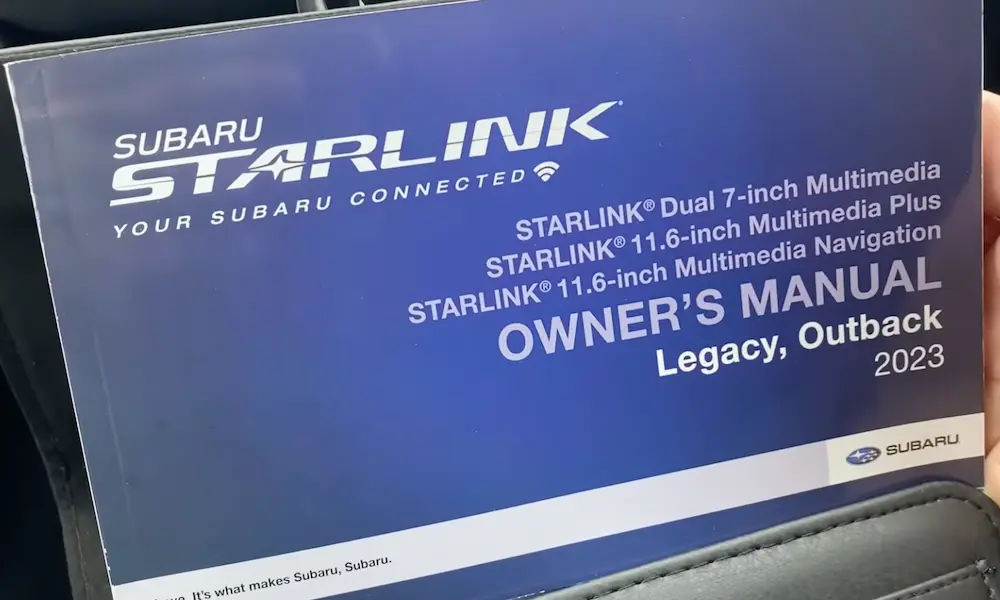
- Program service reminders through the 11.6-inch STARLINK touchscreen
- Set custom alerts for oil changes, tire rotations, and inspections
- Receive notifications via the MySubaru app
- Track service history digitally
The MySubaru app makes it easier than ever to maintain accurate service records, which becomes invaluable for warranty claims and when selling your vehicle.
Budgeting for Outback Maintenance
Understanding the costs helps you plan for routine maintenance without financial surprises.
Estimated Maintenance Costs:
- 6,000-mile oil service: $50-90
- 30,000-mile package: $350-450
- 60,000-mile service (including spark plugs): $800-1,000
- 105,000-mile timing belt package (EJ engines): $1,200-1,800
Over a ten-year period, expect to spend approximately $8,400 on maintenance—less than many comparable SUVs, but with costs concentrated around major service intervals.
Quick-Reference Maintenance Table
Here’s a consolidated view of your Subaru Outback’s service needs by mileage:
| Mileage | Time | Essential Services |
|---|---|---|
| 6,000 | 6 months | Oil & filter change, tire rotation, multi-point inspection |
| 12,000 | 12 months | Above + cabin filter, brake/steering detailed check |
| 30,000 | 30 months | Above + engine air filter, brake fluid, comprehensive inspections |
| 60,000 | 5 years | Above + spark plugs, wheel bearings inspection |
| 90,000-100,000 | 7-8 years | CVT fluid replacement |
| 105,000 | 8.5 years | Timing belt + water pump (EJ engines only) |
Maintaining Your Outback’s CVT Transmission
The continuously variable transmission (CVT) in your Outback requires special attention for long-term reliability.
CVT Maintenance Best Practices:
- Follow the “inspect and replace as necessary” guideline at 30,000 miles
- Consider preventative fluid changes by 60,000 miles for heavy-use vehicles
- Complete fluid replacement by 90,000-100,000 miles at the latest
- Use only Subaru genuine CVT fluid
- Consider adding an external transmission cooler if you tow regularly
The dealer service guidelines for CVT maintenance have evolved over time, with Subaru extending the service interval to 100,000 miles for newer models. However, many independent shops and experienced owners recommend earlier service for transmissions under heavy use.
Preserving Your Outback’s All-Wheel Drive System
The symmetrical all-wheel drive system is a hallmark Subaru feature that needs proper care.
AWD System Maintenance:
- Maintain even tire wear with regular rotations
- Replace tires in complete sets with matching sizes and tread patterns
- Check differential fluid every 30,000 miles
- Replace front and rear differential oils at 60,000 miles if you tow or drive off-road
- Inspect CV boots and axles at each oil change for tears or damage
The differential fluid service is often overlooked but critical for AWD performance, especially if you push your Outback’s capabilities with off-road driving or heavy loads.
Extending Your Outback’s Engine Life
The boxer engine design has specific maintenance needs to ensure longevity.
Engine Longevity Tips:
- Never extend oil change intervals beyond recommended limits
- Consider 5,000-mile oil changes for turbocharged models
- Use only the recommended oil viscosity (0W-20 for newer models)
- Clean the throttle body at 60,000 miles to prevent idle issues
- Address head gasket concerns promptly if you notice coolant loss (mostly relevant to pre-2010 models)
- Keep the engine bay clean, especially around the boxer engine’s low-mounted oil filter
The horizontal boxer engine design provides a lower center of gravity and improved handling, but it also means certain components are more challenging to access. Following proper maintenance intervals prevents the need for more extensive repairs.
Caring for Your Outback’s Braking System
The Outback’s safety systems depend heavily on properly maintained brakes.
Brake Maintenance Schedule:
- Inspect pads and rotors at every oil change
- Clean and lubricate caliper slides annually in regions using road salt
- Flush brake fluid every 30,000 miles (15,000 in severe conditions)
- Check ABS sensors when servicing wheel bearings
- Pay special attention to rear brakes, which often wear prematurely in Outbacks
The advanced driver assistance systems in newer Outbacks, including EyeSight technology, rely on consistent brake performance. Fresh brake fluid ensures these safety systems function as designed.
The Benefits of Following Your Subaru Outback Service Schedule
Consistent maintenance delivers measurable advantages beyond just preventing breakdowns.
Long-Term Benefits:
- Extended vehicle lifespan (many Outbacks exceed 250,000 miles with proper care)
- Maintained safety system performance
- Improved fuel efficiency
- Higher resale value with documented maintenance history
- Reduced likelihood of roadside emergencies
- Preserved warranty coverage
The Subaru maintenance booklet outlines minimum requirements, but following these enhanced guidelines will help your Outback deliver the reliability and longevity the model is known for.
Seasonal Maintenance Considerations
Your maintenance needs may change with the seasons, particularly if you live in an area with extreme weather variations.
Seasonal Checkpoints:
Spring/Summer Preparation:
- Check A/C system performance before hot weather arrives
- Inspect cooling system for leaks or weak points
- Test battery (heat accelerates battery deterioration)
- Verify tire condition for summer road trips
Fall/Winter Preparation:
- Test heater and defrost systems
- Check battery and charging system (cold weather reduces battery efficiency)
- Inspect wiper blades and washer fluid system
- Consider winter tires for snowy regions
The Subaru technical service bulletins often contain seasonal recommendations specific to your Outback’s model year and known issues.