Got your ABS, TRAC, and VSC lights all glowing at once? There’s a good chance Toyota C0215 is the culprit. This code points directly at your left rear wheel speed sensor — and ignoring it means driving without your car’s key safety nets. Stick around, because this guide walks you through exactly what’s happening, why it happens, and how to fix it for good.
What Is the Toyota C0215 Code?
Toyota C0215 means your Skid Control ECU has detected a problem with the left rear wheel speed sensor circuit. The official description is “Left Rear Wheel Speed Sensor Signal Malfunction” or “Rear Speed Sensor LH Circuit.”
This isn’t just a minor inconvenience. The Skid Control ECU is the brain behind your ABS, EBD (Electronic Brake-force Distribution), Traction Control (TRAC), and VSC (Vehicle Stability Control). When it loses a clean signal from the rear-left sensor, it shuts those systems down rather than risk acting on bad data.
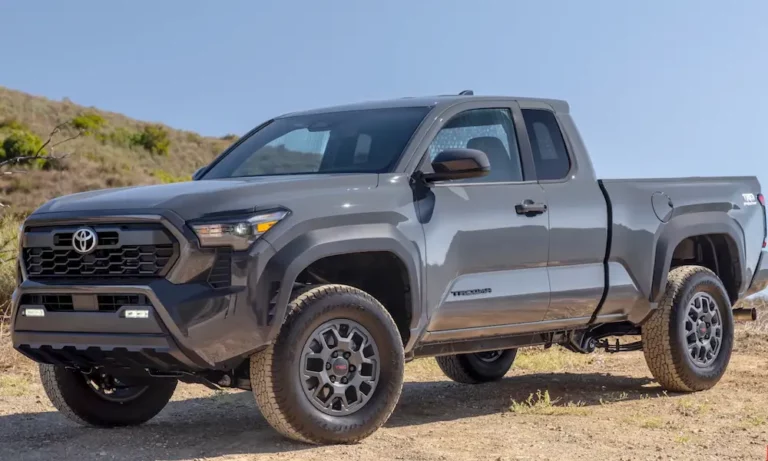
The code appears across a wide range of Toyota and Lexus vehicles — Camry, Corolla, Prius, RAV4, Tacoma, and more.
How Toyota’s Wheel Speed Sensors Actually Work
Before you can fix it, it helps to know what you’re dealing with.
Older Toyotas used passive electromagnetic sensors. These had a magnet and wire coil that generated an AC voltage as a toothed reluctor ring spun past them. The faster the wheel, the higher the frequency and amplitude of that signal.
Modern Toyotas use active Hall Effect sensors. These produce a clean digital square-wave signal and can detect wheel speed all the way down to 0 km/h — something passive sensors can’t do.
The left rear sensor sits on the rear axle carrier or inside the wheel hub, depending on your model. Its wiring runs up through the fender well and into the engine bay, connecting to the Skid Control ECU at terminals labeled RL+ and RL- in Toyota’s service documentation.
| Component | Location | Type | Key Interface |
|---|---|---|---|
| Speed Sensor (LH) | Rear Axle Carrier / Hub | Electromagnetic or Hall Effect | Air gap to sensor rotor |
| Sensor Rotor | Axle Hub / Drive Shaft | Toothed steel or magnetic ring | Hub bearing alignment |
| Signal Harness | Fender well to engine bay | Twisted pair (often shielded) | ECU connector J9 |
| Skid Control ECU | Engine compartment | Microprocessor / Actuator | CAN Bus / Instrument cluster |
Why the ECU Throws the C0215 Code
The Skid Control ECU doesn’t throw this code lightly. It uses specific time-based and frequency-based thresholds before logging a fault. Here’s what triggers it:
Static Circuit Failures
If the ECU detects an open circuit or a short to ground for 0.5 seconds or longer, C0215 gets stored. That means a snapped wire, a loose terminal, or a dead sensor coil will do it.
Dynamic Signal Failures While Driving
This is where it gets more complex. While the car moves, the ECU compares all four wheel speeds against each other. It flags a left rear fault if:
- No signal for 15 seconds when vehicle speed exceeds 10 km/h (6 mph)
- Seven or more signal dropouts in a single ignition cycle — classic sign of a fraying wire
- The left rear reads less than 1/7th the speed of the second-slowest wheel for 15+ seconds at speeds above 10 km/h
- Seven or more abnormal pulse counts — usually caused by a damaged reluctor ring or magnetic interference
What You’ll Notice Behind the Wheel
Warning Lights Come On Together
The most obvious sign is the simultaneous illumination of the ABS, TRAC, and VSC warning lights. They light up together because all three systems rely on the same wheel speed data. The ECU disables them all rather than make decisions on faulty input.
ABS Fires Off at Low Speeds
This one catches drivers completely off guard. When the left rear sensor sends an intermittent signal, the ECU can misread it as a wheel that’s locking up — even on dry pavement. The result? Unexpected ABS activation at slow speeds, complete with a grinding noise from the ABS pump and a pulsating pedal. Ironically, this can actually increase your stopping distance in traffic.
Full System Shutdown
If the fault goes permanent, the ECU enters fail-safe mode. Your brakes still work hydraulically, but ABS, EBD, and VSC are gone. On wet roads or during emergency stops, that’s a real problem. Some Toyota models also lose cruise control functionality or show an inaccurate speedometer when a rear sensor fails.
On Camry Hybrids and the Prius, the hit is even bigger — the regenerative braking system depends on this data too, so fuel efficiency drops alongside safety.
What Actually Causes Toyota C0215
The left rear sensor lives in one of the harshest spots on the car — right in the firing line of road spray, salt, and debris.
Corrosion and Moisture
Vehicles in salt-heavy regions are especially vulnerable. Road salt gets into the sensor connector, oxidizes the terminal pins, and creates resistance that chokes the signal. A known Technical Service Bulletin for the Yaris flags exactly this problem, sometimes requiring both the sensor and the sub-harness to be replaced.
Wiring Harness Fatigue
The harness to the rear sensor flexes constantly with suspension movement. Over time, the copper strands inside can fracture — even if the insulation looks fine. These hidden breaks cause intermittent dropouts that only show up on bumpy roads or under load. Where the harness passes through the fender well and through plastic clips is where wear happens most.
Hub and Rotor Problems
The air gap between the sensor tip and the reluctor ring must stay within tight tolerances — often less than 1.0 mm. A worn wheel bearing creates hub runout, which makes the rotor wobble and sends inconsistent signals. Brake dust and iron filings also accumulate on the sensor’s magnetic tip over time, blurring the signal.
| Cause | Specific Problem | What You’ll Find |
|---|---|---|
| Electrical | Internal coil open circuit | Resistance reads OL on multimeter |
| Mechanical | Damaged or corroded rotor teeth | Signal noise on oscilloscope |
| Environmental | Terminal corrosion or moisture | Green oxidation inside connector |
| Structural | Harness fatigue or chafing | Intermittent continuity during flex test |
How to Diagnose Toyota C0215 Step by Step
Don’t just swap the sensor and hope for the best. Run through this properly.
Step 1: Scan Tool and Live Data
Connect a scan tool that can access Toyota’s ABS/VSC data stream. Pull up the “Wheel Speed RL” parameter and compare it with the other three sensors while driving slowly or spinning the rear wheels on a lift.
- If the left rear reads 0 while the others show 20 km/h → definite circuit failure
- If the left rear flickers or drops to zero intermittently → suspect wiring or a damaged reluctor ring
Step 2: Multimeter Resistance Test
Disconnect the sensor and measure resistance across its two terminals. Compare your reading against these model-specific specs:
| Toyota Model | Expected Resistance at 20°C |
|---|---|
| Corolla, RAV4 | 0.92 kΩ – 1.22 kΩ |
| Camry (Hybrid & Non-Hybrid) | 1.2 kΩ – 1.6 kΩ |
| Prius (Gen 2/3) | 1.04 kΩ – 1.30 kΩ |
| Land Cruiser Prado | 95 Ω – 105 Ω (select circuits) |
A reading of “OL” means an open circuit — the sensor’s dead. A much lower-than-spec reading points to an internal short. Also test each terminal against body ground — anything under 1 MΩ means you’ve got a short to ground.
Step 3: Oscilloscope Waveform Check
For stubborn intermittent faults, back-probe the Skid Control ECU connector and watch the actual waveform while the wheel spins. A healthy signal shows voltage peaks that grow taller as speed increases, with spacing that narrows uniformly. If you see a missing or deformed peak every 360 degrees of rotation, a damaged reluctor ring tooth is your culprit.
How to Fix the Toyota C0215 Code
Replacing the Sensor
- Jack up the rear of the vehicle and put it on jack stands
- Remove the wheel to access the sensor and mounting bolt
- Soak the mounting bolt with penetrating oil — these sensors rust in place
- Remove the 10mm or 12mm bolt, then gently rock the sensor free. Don’t pry hard — you’ll snap the housing
- Clean the mounting hole with a wire brush to remove rust
- Install the new sensor and torque the bolt to 8.0 N·m (71 in·lbf)
- Route the harness exactly as it was, with all plastic clips secured
Always use an OEM-spec sensor. Aftermarket sensors in the $50–$100 range often carry signal compatibility risks that can bring the code right back.
Repairing the Harness
If wiring is the issue, a Toyota pigtail sub-harness replacement is the cleanest fix. When splicing, use waterproof solder sleeves only — standard crimp connectors let moisture wick into the copper, and you’ll be back to square one.
Hub and Bearing Replacement
If the reluctor ring is damaged or the bearing is worn, replace the entire hub and bearing assembly. On many modern Toyotas, the reluctor ring is integrated into the bearing’s magnetic seal — you can’t replace it separately.
What Does the Repair Cost?
| Vehicle | Estimated Total | Parts (OEM) | Labor |
|---|---|---|---|
| Toyota Camry | $359 – $502 | $255 – $381 | $104 – $153 |
| Toyota Corolla | $360 – $534 | $255 – $381 | $104 – $153 |
| Toyota Tacoma | $550 – $760 | $350 – $500 | $200 – $260 |
| Toyota Prius | $184 – $279 | $120 – $180 | $64 – $99 |
| Toyota Pickup (Pre-1995) | $275 – $309 | ~$201 | $73 – $107 |
The Tacoma sits at the higher end because of its more demanding hub access and ruggedized sensor design. The Prius is the cheapest fix — though on hybrids, leaving it unresolved costs you more through lost regenerative braking efficiency.
Check for TSBs Before You Start Any Repair
Always search for Technical Service Bulletins before touching a single bolt. Toyota has issued TSBs for moisture intrusion in rear speed sensor harnesses on certain 2007–2010 models — meaning a straight sensor swap won’t hold if the harness itself is the weak point. There are also bulletins covering sensor rotor corrosion on older Camry and Corolla models, where rust causes the rotor teeth to swell and physically contact the sensor tip.
Keep It From Coming Back
Wheel speed sensors aren’t considered wear items, but they typically last between 60,000 and 150,000 miles depending on conditions. A few habits keep them healthy longer:
- Inspect connectors at every brake service — look for green oxidation or stressed wiring
- Clean the sensor tip when you pull it — brake dust and metallic filings build up and muddy the signal
- Address a noisy wheel bearing immediately — a worn bearing wobbles the rotor, which destroys the sensor over time
The Toyota C0215 code is fixable with a methodical approach. Rush the diagnosis, and you might replace a perfectly good sensor when the real problem is a $15 connector repair. Take it step by step, and you’ll get your safety systems back online — and keep them there.