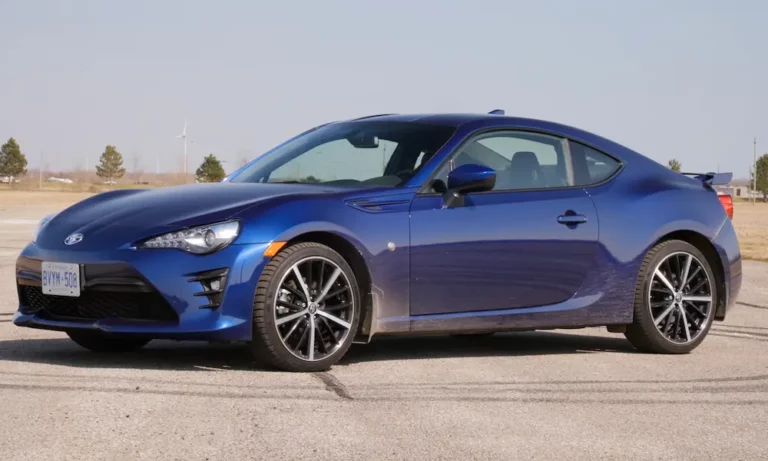
So you’ve got a GT86 and you’re already wondering what it could be. Good instinct. This guide covers every major Toyota GT86 modification — from a simple intake swap to a full supercharger build — so you leave with a clear plan, not just a wishlist.
What Makes the GT86 Worth Modifying?
The GT86 is already a brilliant car. Front-engine, rear-wheel drive, low center of gravity, and steering that actually talks to you. But Toyota left some clear gaps on purpose.
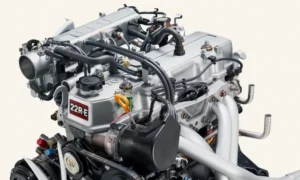
The FA20 boxer engine — a 2.0-liter, 12.5:1 compression unit with dual injection — produces around 197–205 hp. That’s fine. What’s not fine is the notorious mid-range torque dip between 3,200 and 4,500 RPM. Fix that, and the car transforms.
Here are the full FA20 specs you’re working with:
| Spec | Detail |
|---|---|
| Engine Code | FA20D (Toyota 4U-GSE) |
| Displacement | 1,998 cc |
| Configuration | Horizontally Opposed 4-Cylinder |
| Compression Ratio | 12.5:1 |
| Bore x Stroke | 86mm x 86mm |
| Peak Power | 197–205 hp @ 7,000 RPM |
| Peak Torque | 151–156 lb-ft @ 6,400–6,600 RPM |
| Valvetrain | DOHC, 4 Valves/Cylinder, Dual VVT |
Understanding Modification Stages
Before you buy anything, understand the three tuning stages. They exist for a reason — skip one and you’ll waste money or break things.
Stage 1: Quick Wins, No Drama
Stage 1 keeps the stock internals intact. You’re cleaning up airflow and refining what’s already there. Expect 10–20 extra horsepower from:
- A cold-air intake or high-flow panel filter
- A cat-back exhaust system
- A basic ECU remap
- A throttle controller like the Pedal Commander (doesn’t add power, but kills that annoying throttle lag)
It’s a solid starting point for anyone who still daily drives their GT86.
Stage 2: Fixing the Torque Dip
This is where things get interesting. Stage 2 centers on replacing the factory exhaust manifold — the main cause of that mid-range hesitation. Add an aftermarket header, remove the primary cat, and pair it with an aggressive ECU tune.
Running E85 fuel at Stage 2 exploits that high compression ratio beautifully. Most owners see 25–40 hp gains and a much smoother power band.
Stage 3: Forced Induction Territory
Stage 3 means a turbo or supercharger. The supporting cast grows too — high-flow injectors, uprated fuel pump, stronger clutch. The stock block handles around 300–320 wheel horsepower (WHP) safely. Push past that and you need forged internals.
Headers: UEL vs. EL — Pick Your Poison
The aftermarket header is the most impactful single mod on a naturally aspirated GT86. The choice comes down to sound vs. outright performance.
Equal Length (EL) Headers
EL headers time exhaust pulses perfectly, creating a scavenging effect that pulls gases out of the combustion chamber more efficiently. The result? Maximum top-end power and a higher-pitched exhaust note. Best choice for track use.
Unequal Length (UEL) Headers
UEL headers produce the famous “Subaru rumble” because the varying runner lengths cause exhaust pulses to collide. They fill in that torque dip brilliantly but give up a little peak power versus EL designs.
| Brand/Model | Type | Key Advantage | Notes |
|---|---|---|---|
| ACE 350 | 4-2-1 EL | Eliminates torque dip entirely | Hard to find; high cost |
| JDL 4-2-1 | EL | Best mid-range and top-end | US-made; lifetime warranty |
| Tomei Expreme | UEL | Signature rumble + mid-range torque | Lightweight titanium option available |
| JDL UEL | UEL | Solid mid-range improvement | Often ceramic-coated |
The ACE 350 wins on performance, but JDL’s 4-2-1 is now the community standard for EL builds because it’s actually available. Whatever you choose, coat it or wrap it — heat management matters.
Supercharger vs. Turbo: The Real Difference
Forced induction flips the GT86 from a momentum car into a genuine performance machine. Which path you take depends on how you use the car.
Superchargers: Predictable and Drivable
Superchargers run off the crankshaft, so boost builds linearly with RPM. No lag. No sudden torque surge. Two main types:
- Centrifugal (HKS, Jackson Racing): Feels like a bigger naturally aspirated engine. The Jackson Racing kit is the benchmark for reliability and install ease.
- Positive Displacement/Twin-Screw (Harrop, Edelbrock): Huge torque from very low RPM. The Harrop TVS1320 uses an Eaton TVS rotor — OEM quality feel with serious output.
Turbos: More Power, More Complexity
Turbos use exhaust gas to drive a turbine. The upside is higher peak efficiency and serious torque numbers. The downside is turbo lag, increased heat, and the risk of boost creep if the wastegate isn’t sized correctly. Sudden low-RPM torque can also stress the stock connecting rods.
| Metric | Centrifugal SC | Twin-Screw SC | Turbocharger |
|---|---|---|---|
| Throttle Response | Instant | Instant | Delayed |
| Power Curve | Linear | Flat/immediate | Exponential |
| Thermal Load | Moderate | High | Very High |
| Max Power (safe stock block) | ~350 WHP | ~330 WHP | 400+ WHP |
| Install Complexity | Moderate | Complex | High |
A supercharger is generally safer for a stock-block FA20 up to ~300 WHP. Intercooling matters either way — compressed air gets hot, and hot air kills timing.
ECU Tuning: EcuTek vs. Open Flash Tablet
Hardware changes mean nothing without the right tune. Two platforms dominate the GT86 scene.
EcuTek: The Pro Standard
EcuTek gives professional tuners full access to the factory ECU. Its RaceRom suite includes:
- Flex-fuel support: Automatically adjusts fueling and timing based on E85 content
- Safety triggers: Cuts boost if oil temp spikes or fuel runs lean
- Flat-foot shifting and rev-match: Programmable directly into the factory ECU
Cost is around $300 per VIN, plus tuner fees. It’s worth every cent for forced induction builds.
Open Flash Tablet (OFT): The DIY Option
The OFT is a handheld device with pre-loaded off-the-shelf maps. It’s affordable, easy to use, and great for Stage 1 and 2. For forced induction? Stick with EcuTek.
| Feature | EcuTek | OFT |
|---|---|---|
| Target User | Pro / High-Power | DIY / Stage 1-2 |
| Customization | Unlimited | Pre-defined maps only |
| Flex-Fuel | Automatic | Manual switching |
| Cost | ~$300 per VIN + tuner | Included with device |
Oil Cooling: The Reliability Mod You Can’t Skip
The FA20 runs hot. Skip oil cooling and you risk spun rod bearings — a well-documented failure on early engines. Keep oil temps between 180°F and 230°F.
Your three main options:
- Jackson Racing DROC: Replaces the factory radiator with an integrated oil cooler. Easy install, slightly over-cools in winter.
- GReddy / HKS dedicated kits: High thermal dissipation, preferred by professional shops for track use.
- Thermostatic sandwich plates: Essential for street cars — they block oil flow to the cooler until the engine reaches operating temp, preventing over-cooling during your morning commute.
Suspension: Making the Chassis Work Harder
The GT86 understeers from the factory — Toyota did that intentionally for safety. Suspension upgrades remove that bias and let the car rotate the way it wants to.
Coilovers: Start Here
Coilovers replace the factory strut and spring with a single adjustable unit. What to look for:
| Feature | Why It Matters |
|---|---|
| Monotube design | Better heat dissipation; no damping fade on track |
| Pillowball top mounts | Eliminates rubber deflection; sharper steering feel |
| 30+ damping levels | Lets you tune for road surface |
| Threaded lower mounts | Adjust ride height without messing with spring preload |
The Ksport Kontrol Pro offers 36 damping levels and suits most dual-purpose builds. Dedicated track use calls for the Ksport Version RR or Circuit Pro 3-Way.
Sway Bars and Geometry Correction
A stiffer rear sway bar reduces body roll and corrects the understeer balance without making the ride punishing. When you lower the car, adjustable endlinks prevent incorrect sway bar preload — don’t skip them.
Lowering also affects rear geometry. Since the rear camber isn’t adjustable from the factory, rear lower control arms are essential for dialing in alignment and maximizing your tire’s contact patch.
Brakes: Pads, Fluid, and Big Brake Kits
Stock brakes work fine on the street. Push them on track and they’ll fade fast.
Brake Pad Comparison
| Pad | Best Use | Thermal Range | Notes |
|---|---|---|---|
| Winmax AP3 | Mixed street/track | Up to 1200°F | Great bite; noisy when cold |
| Ferodo DS2500 | Dual duty | High | Industry standard; low noise |
| Hawk HPS 5.0 | Spirited street | Moderate | Good cold bite; fades on track |
Big Brake Kits
Ksport’s Slimline BBK uses 13-inch two-piece floating rotors that are 50% lighter than OEM. Three-piston opposed calipers deliver consistent pressure while reducing unsprung weight.
Wheel Fitment: Size, Offset, and Grip
The GT86 runs a 5×100 bolt pattern with a 56.1mm hub bore. Wheel weight matters hugely on this car — heavy wheels kill the feedback.
Three popular setups:
- 17×9 ET35-42: The sweet spot. Fits 245/40R17 or 255/40R17 with massive grip gains over stock.
- 18×9.5 ET38-40: Aggressive look; needs coilovers and negative camber to clear fenders.
- 17×8 ET35-45: OEM-plus feel. 225/45R17 tires with no modifications needed.
Tire Choice Matters More Than Wheel Size
The single fastest upgrade on a GT86 is better tires. Swapping the factory low-rolling-resistance rubber for a Michelin Pilot Sport 4S, Falken RT660, or Hankook RS-4 delivers the biggest lap time improvement of any modification.
Aerodynamics: Function vs. Form
Functional Aero
- Front splitters (APR, Verus Engineering): Create high pressure above the splitter, reducing front lift at speed
- Rear diffusers: Accelerate underbody airflow to create rear downforce
- GT wings (Voltex, APR): Swan-neck mounts are preferred — keeping the underside of the wing clear of brackets improves aerodynamic efficiency
Widebody: Rocket Bunny and Pandem
Kei Miura’s Rocket Bunny kits are practically synonymous with the GT86 scene. The V2 brings a redesigned front bumper and ducktail spoiler. The V3 goes full aggression with canards and a multi-piece front lip.
These kits require cutting factory fenders — they’re a commitment. They also add weight and generally reduce aerodynamic efficiency. Think drift builds and show cars, not grip-focused setups.
The Recommended Build Progression
Don’t throw money at the car randomly. Build it in phases:
- Phase 1 — Foundations: Quality tires (Michelin PS4S), upgraded brake fluid (RBF600), and an oil cooler if you’re planning any track time
- Phase 2 — Fix the Torque Dip: EL or UEL header with an EcuTek flex-fuel tune — this is the single biggest improvement to the driving experience
- Phase 3 — Chassis Refinement: Monotube coilovers, front camber bolts, and rear lower control arms for a proper performance alignment
- Phase 4 — Forced Induction: A supercharger for street/track balance, plus fuel system and clutch upgrades to support it
Every Toyota GT86 modification you make should serve the chassis, not just the horsepower number. The platform is transparent — it tells you exactly what it needs. Listen to it, build it in order, and you’ll end up with a car that embarrasses machinery twice its price.