Still on the fence about the TurboMax? You’re probably wondering if a four-cylinder can really replace a V8 in a full-size truck. Spoiler: the numbers say yes. This guide breaks down every key TurboMax engine spec, how it performs against the 5.3L V8, what it costs to own, and what reliability actually looks like in the real world. Stick around — there’s a lot more here than the sticker sheet tells you.
What Is the TurboMax Engine?
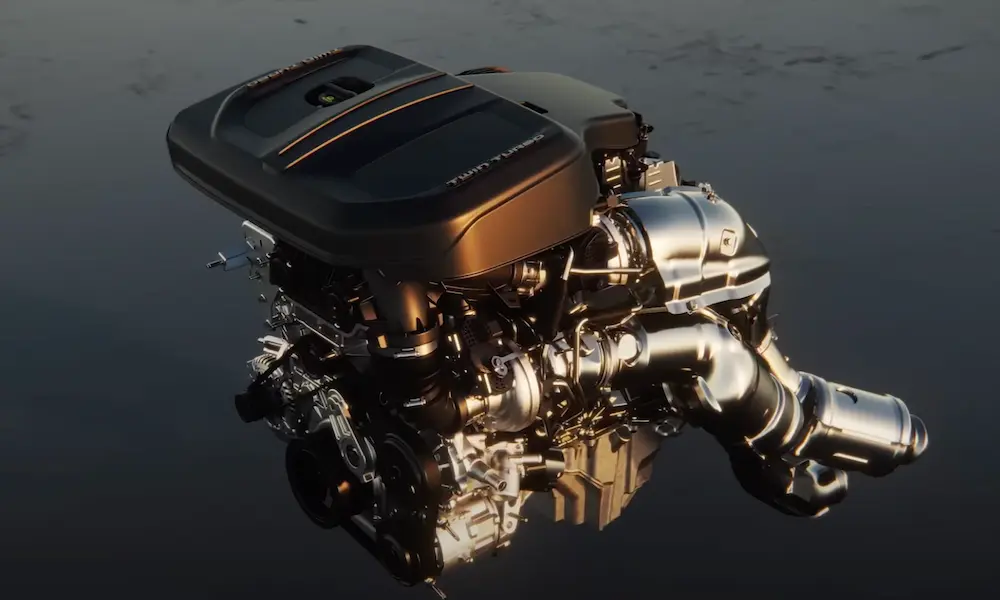
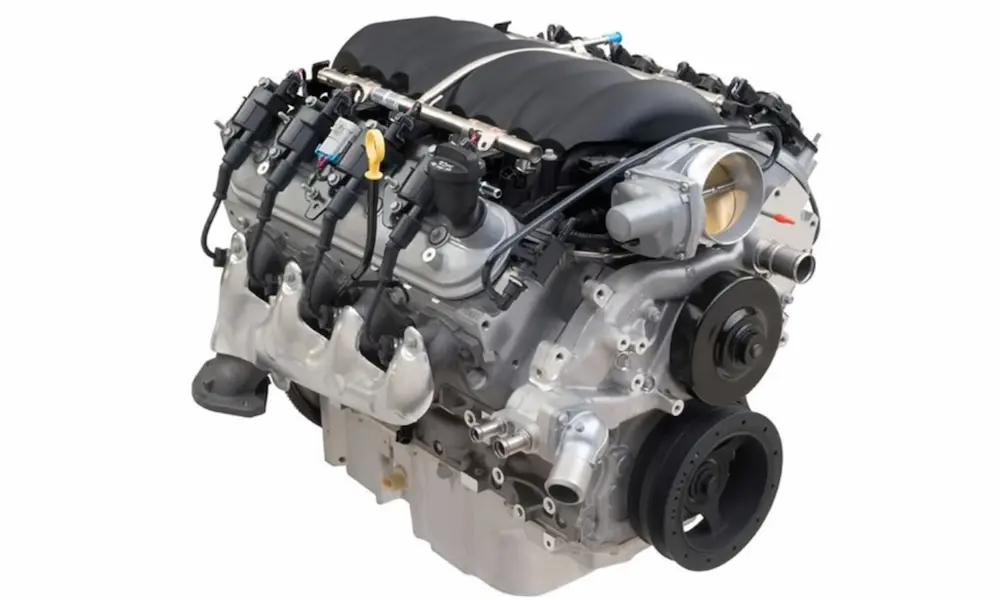
The GM 2.7L TurboMax (internally coded L3B) is a turbocharged inline four-cylinder engine built specifically for truck duty. GM didn’t adapt it from a car platform — they designed it from scratch to handle the towing, hauling, and durability demands of the Silverado 1500, Sierra 1500, Colorado, and Canyon.
It replaced three older engines in GM’s lineup: the 4.3L V6 and two versions of the 3.6L V6. In 2024, GM officially rebranded it as the “TurboMax” to give it a proper identity alongside the Duramax diesel name.
The goal was simple: diesel-like torque at a gasoline price point.
Full TurboMax Engine Specs
Here’s every key specification in one place:
| Specification | Detail |
|---|---|
| Configuration | Inline 4-Cylinder (I4) |
| Displacement | 2.7L (166.4 cu in) |
| Bore × Stroke | 3.63 in × 4.02 in (92.25 mm × 102 mm) |
| Compression Ratio | 10.0:1 |
| Max Horsepower | 310 hp @ 5,600 RPM |
| Max Torque | 430 lb-ft @ 1,500 RPM |
| Torque Range (Plateau) | 1,500 – 4,000 RPM |
| Peak Boost Pressure | ~22 psi |
| Fuel Injection Pressure | 2,900 psi (direct injection) |
| Valvetrain | DOHC, 4 valves per cylinder |
| Block Material | 380 T5 aluminum with cast-iron liners |
| Cylinder Head Material | 356 T5 aluminum |
| Crankshaft | Forged steel (30% stiffer than cast) |
| Firing Order | 1-3-4-2 |
| Oil Capacity | ~6 quarts |
| Recommended Oil | Full synthetic 0W-20 |
| Recommended Fuel | 87-octane (91 for peak performance) |
The undersquare design — where the stroke (4.02 in) is longer than the bore (3.63 in) — is a deliberate engineering choice. A longer stroke means more leverage on the crankshaft, which is exactly why torque arrives at just 1,500 RPM.
How the Engine Is Built: Materials and Construction
The Block and Cylinder Liners
The TurboMax block uses a “lost foam” casting process. Engineers create a polystyrene foam model of the engine, coat it in ceramic, and pack sand around it. Molten aluminum pours in, the foam evaporates, and what’s left is an incredibly complex casting with built-in cooling passages and oil galleries you can’t achieve with traditional methods.
The aluminum block stays lightweight, but cast-iron cylinder liners handle the wear. That combination gives you a block that’s lighter than cast iron — improving front-to-rear weight balance — while still surviving millions of combustion cycles.
The Rotating Assembly
GM built the TurboMax’s internals with a diesel-inspired philosophy:
- Forged steel crankshaft — 30% stiffer than cast-iron units, with grain structure following the crank’s contours for better fatigue resistance
- Reinforced connecting rods — rated for high cylinder pressures
- Pistons with cast-iron ring carriers — prevents groove wear under sustained load
- Piston cooling jets — oil nozzles spray the underside of each piston to carry heat away from combustion crowns
These aren’t car-engine internals stuffed into a truck. They’re engineered specifically for the 430 lb-ft of torque this engine produces.
The Dual-Volute Turbocharger: Why It Matters
Standard turbochargers send all four cylinders’ exhaust into one chamber before hitting the turbine. The problem? Exhaust pulses from different cylinders collide and cancel each other out, wasting energy and slowing the turbine.
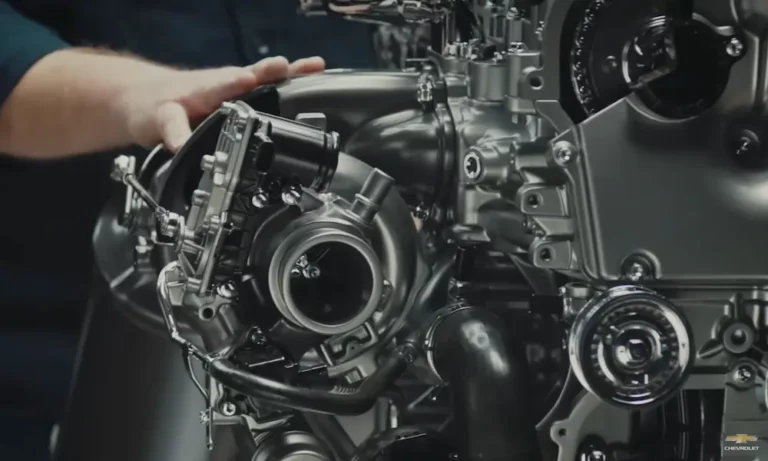
The TurboMax uses a BorgWarner dual-volute turbocharger with a housing split into two separate spiral passages. Cylinders 1 and 4 feed one volute. Cylinders 2 and 3 feed the other. Every exhaust pulse hits the turbine wheel cleanly, with zero interference.
The result? The turbo spins up to 250,000 RPM much faster, and 22 psi of boost arrives almost instantly.
| Turbocharger Component | What It Does |
|---|---|
| Dual-Volute Housing | Keeps exhaust pulses separate to prevent energy loss |
| Integrated Exhaust Manifold | Shortens exhaust travel distance to preserve pulse energy |
| Electronic Wastegate | Controls boost levels and backpressure with precision |
| Charge Air Cooler | Drops compressed air temp by ~130°F for better air density |
| Thermosyphon Cooling | Keeps coolant circulating after shutdown to protect turbo bearings |
The integrated exhaust manifold — cast directly into the cylinder head — shortens the distance exhaust gases travel to reach the turbo. Less distance means less heat loss and stronger pulse energy hitting the turbine.
The Tri-Power Valvetrain and Active Fuel Management
Three Operating Modes
The TurboMax uses a sliding camshaft design called Tri-Power. It switches between three distinct states based on what you’re asking the engine to do:
- High-lift mode — Intake valves open fully for maximum airflow during hard acceleration or towing
- Low-lift mode — Reduces valve opening to improve air velocity and fuel atomization during light cruising
- Active Fuel Management (AFM) — Deactivates two cylinders during steady highway driving, effectively turning the engine into a 1.35L two-cylinder to cut pumping losses
The DOHC setup runs on a heavy-duty 8mm roller timing chain designed to last the full service life of the engine.
Direct Injection and Variable Valve Timing
Fuel sprays directly into the combustion chamber at 2,900 psi, creating ultra-fine atomization for clean, efficient combustion. Variable valve timing continuously adjusts intake and exhaust cam phasing to optimize performance across the RPM range.
One trade-off with direct injection: fuel never washes over the intake valves, so carbon deposits can build up over time. GM uses specific valve timing strategies to reduce this, but it’s worth keeping in mind for long-term maintenance.
Thermal Management: Keeping Cool Under Pressure
Pushing 430 lb-ft from a four-cylinder creates serious heat. GM’s Active Thermal Management system uses a rotary valve to direct coolant where it’s needed most — including blocking coolant flow to the block on cold starts so the engine reaches operating temperature faster.
An electric water pump replaces the traditional belt-driven unit. This matters for two reasons:
- It runs at whatever speed the cooling system needs, independent of engine RPM
- After shutdown, it keeps circulating coolant through the turbocharger to prevent heat soak from damaging the turbo bearings
Additional thermal and durability features include:
- Sodium-cooled exhaust valves — hollow valves filled with sodium that melts and transfers heat from the valve head to the stem
- Dual balance shafts — counter-rotating at twice engine speed to cancel the vibrations inherent in a large-displacement four-cylinder
- Tri-metal bearings — handle massive torque loads without premature wear in the bottom end
TurboMax vs. 5.3L V8: The Numbers That Actually Matter
This is the comparison most buyers want to see. Here’s how the TurboMax stacks up against the 5.3L EcoTec3 V8:
| Category | 2.7L TurboMax | 5.3L V8 |
|---|---|---|
| Max Horsepower | 310 hp @ 5,600 RPM | 355 hp @ 5,600 RPM |
| Max Torque | 430 lb-ft @ 1,500 RPM | 383 lb-ft @ 4,100 RPM |
| Torque Advantage | +47 lb-ft more | — |
| Torque Arrival | 1,500 RPM | 4,100 RPM |
| Transmission | 8-Speed Automatic | 10-Speed Automatic |
Yes, the V8 makes more horsepower at the top. But torque is what moves trailers and hauling loads — and the TurboMax delivers 47 lb-ft more of it, arriving 2,600 RPM earlier. When you’re merging onto a highway with a loaded trailer, the TurboMax stays in its power band. The V8 needs to downshift to find its torque.
The TurboMax also weighs significantly less than the V8, which directly increases available payload capacity and improves front-axle handling.
Towing and Payload: Real-World Capability
Silverado 1500 Towing Capacity (TurboMax)
| Configuration | Drivetrain | Max Towing | Max Payload |
|---|---|---|---|
| Regular Cab, Long Bed | 2WD | 9,500 lbs | 2,260 lbs |
| Regular Cab, Long Bed | 4WD | 9,300 lbs | 2,220 lbs |
| Regular Cab, Standard Bed | 2WD | 9,100 lbs | 2,260 lbs |
| Double Cab, Standard Bed | 2WD | 9,200 lbs | 2,130 lbs |
| Crew Cab, Short Bed | 4WD | 9,000 lbs | 2,010 lbs |
The 2,260-pound maximum payload is the highest rating in the entire Silverado 1500 lineup — including V8 and diesel options. Contractors hauling gravel, lumber, or tools should take note: the TurboMax is technically the most capable half-ton for bed work.
The GMC Sierra 1500 pushes this even further. In its Pro Regular Cab 2WD configuration, it reaches 2,440 pounds of maximum payload.
Colorado and Canyon: Mid-Size Dominance
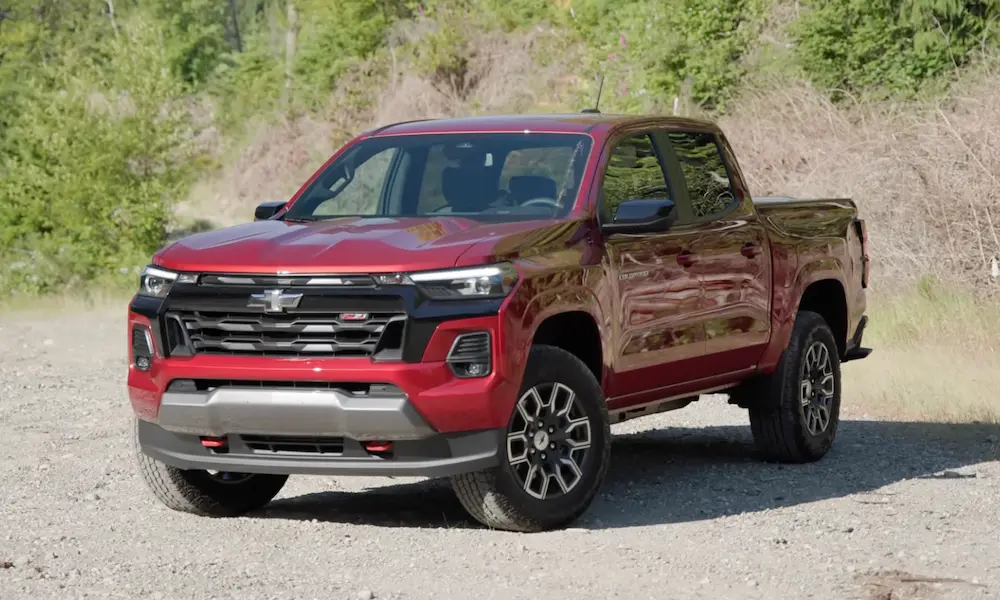
In the mid-size segment, the TurboMax is the only engine offered on the current Colorado and Canyon. It delivers a best-in-class 7,700 lbs of towing for standard trims — enough to haul trailers that used to require a full-size truck.
Off-road variants (ZR2, AT4X) rate lower at 6,000 lbs due to their specialized long-travel suspensions and larger tires, but that’s still strong for a mid-size built to crawl trails.
Fuel Economy: What to Expect
EPA Estimates for Silverado 1500 TurboMax
| Drivetrain | City | Highway | Combined |
|---|---|---|---|
| 2WD Crew/Double Cab | 18–19 MPG | 21–22 MPG | 19–20 MPG |
| 4WD Crew/Double Cab | 17–18 MPG | 20–21 MPG | 18–19 MPG |
| Regular Cab 4WD | 18 MPG | 21 MPG | 19 MPG |
Real-world highway driving often beats the EPA numbers. Some owners report up to 24 MPG on long unladen trips. Under heavy towing into a headwind, expect 9–11 MPG.
87 or 91 Octane?
The TurboMax officially runs on regular 87-octane — a significant advantage over rivals that require premium fuel. That said, the engine control module detects fuel quality and can advance ignition timing when 91-octane is used, often yielding smoother power delivery and 1–1.5 MPG improvement. For daily driving, 87 is fine. For heavy towing in extreme heat, premium fuel keeps the engine performing at its best.
Reliability and Known Issues
What to Watch For
| Issue | Description | Fix |
|---|---|---|
| Carbon Buildup | Direct injection doesn’t wash intake valves | Use Top Tier fuel; clean intake valves every ~60k miles |
| Spark Plug Wear | Turbo heat accelerates electrode wear | Inspect or replace every 40k–60k miles |
| Block Cracking | Manufacturing flaw on select 2023 models | Check your VIN for Customer Satisfaction Program N232415060 |
| Turbocharger Wear | Heat degrades oil without proper cooling | Use full synthetic oil; change every 5k–7.5k miles |
The block cracking program covers affected 2023 Silverado and Colorado models with engine replacement at no cost to the owner, and it runs through March 2026. If you own or are buying a 2023 model, check the VIN immediately.
Early versions (2019–2020) had some high-pressure fuel pump and lifter noise issues, but those are largely resolved in the 2022+ High-Output and TurboMax variants.
Oil changes every 5,000 miles (rather than the official 7,500-mile interval) are strongly recommended for trucks doing frequent towing or cold-weather short trips. It’s cheap insurance for the turbo and AFM lifters.
The 100,000-Mile Warranty: GM Puts Its Money Where Its Mouth Is
Starting with the 2024 model year, GM backed the TurboMax with a 5-year/100,000-mile powertrain warranty — matching the Duramax diesel and leaving Ford, Ram, and Toyota’s standard gasoline warranties behind.
| Coverage Type | TurboMax (2024+) | Industry Standard |
|---|---|---|
| Bumper-to-Bumper | 3 Years / 36,000 Miles | 3 Years / 36,000 Miles |
| Powertrain Limited | 5 Years / 100,000 Miles | 5 Years / 60,000 Miles |
| Roadside Assistance | 5 Years / 100,000 Miles | 5 Years / 60,000 Miles |
| Rust-Through Protection | 6 Years / 100,000 Miles | Varies |
Coverage includes all major internal engine components, the turbocharging system, transmission, and drive system — plus roadside assistance and courtesy transportation during warranty repairs. That’s not a base-engine warranty. That’s the same confidence statement GM makes for its diesel lineup.
What’s Coming Next for TurboMax
GM has confirmed the TurboMax will carry forward into the 2027 Silverado and Sierra. Industry reports suggest the engine could push into the 350-horsepower range in updated form to compete with high-output rivals.
The compact, efficient design also makes it a natural candidate for hybrid pairing, where electric motors could stack torque on top of the existing 430 lb-ft to create a genuinely formidable powertrain at a reasonable price point.
Assembly happens at GM’s Spring Hill, Tennessee plant, with casting operations in Bedford, Indiana — meaning domestic supply chain stability isn’t a concern for future production.
The TurboMax has earned its place. It’s not a compromise engine anymore — it’s the benchmark for what a modern gasoline truck engine should do.