Want to know exactly how much power the 12 valve Cummins makes — and why some years crush others? You’re in the right place. This guide breaks down every horsepower and torque rating, the fuel pump changes that made history, and why this engine still dominates the diesel world today. Stick around — the best parts are toward the end.
What Is the 12 Valve Cummins?
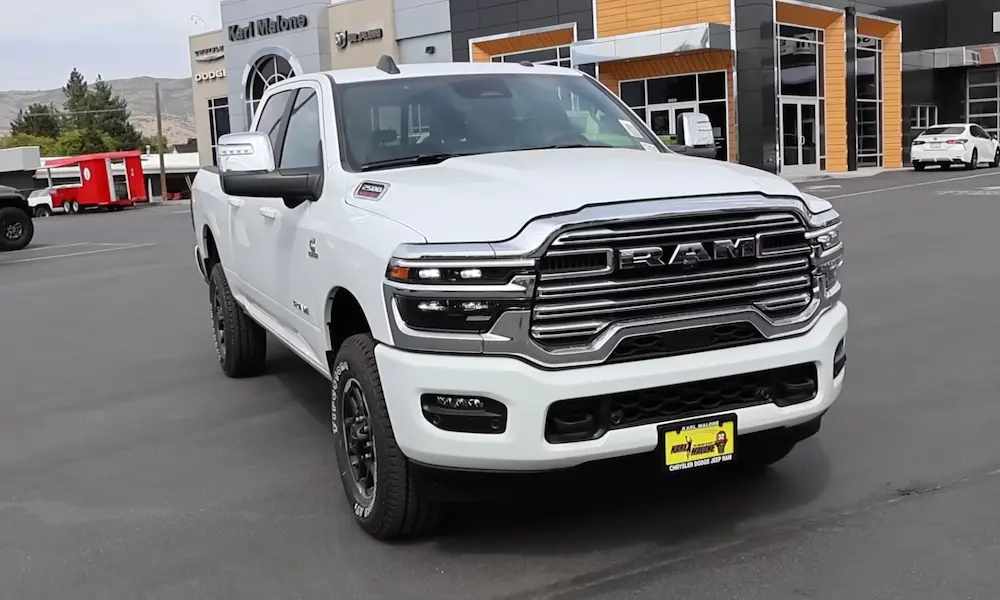
The 5.9-liter 12 valve Cummins (also called the 6BT) is a cast-iron inline-six diesel engine that Dodge dropped into its Ram pickups from 1989 through mid-1998. Before it showed up, diesel trucks were slow, smoky, and forgettable. The 12 valve Cummins changed all of that overnight.
It runs on purely mechanical fuel injection — no computers, no sensors, no software. Just physics, steel, and diesel fuel. That simplicity is exactly why enthusiasts still chase these trucks decades later.
12 Valve Cummins HP and Torque by Year
Here’s every factory 12 valve Cummins hp and torque rating from 1989 to 1998. Note how the numbers split based on transmission choice once the P7100 pump arrived in 1994.
| Model Year | Transmission | Horsepower | Torque (lb-ft) | Injection Pump |
|---|---|---|---|---|
| 1989 | Auto & Manual | 160 hp @ 2,500 RPM | 400 @ 1,600 RPM | Bosch VE Rotary |
| 1990 | Auto & Manual | 160 hp @ 2,500 RPM | 400 @ 1,600 RPM | Bosch VE Rotary |
| 1991 | Auto & Manual | 160 hp @ 2,500 RPM | 400 @ 1,600 RPM | Bosch VE Rotary |
| 1992 | Auto & Manual | 160 hp @ 2,500 RPM | 400 @ 1,600 RPM | Bosch VE Rotary |
| 1993 | Auto & Manual | 160 hp @ 2,500 RPM | 400 @ 1,600 RPM | Bosch VE Rotary |
| 1994 | Auto (47RH) | 160 hp @ 2,500 RPM | 400 @ 1,500 RPM | Bosch P7100 |
| 1994 | Manual (NV4500) | 175 hp @ 2,600 RPM | 420 @ 1,500 RPM | Bosch P7100 |
| 1995 | Auto (47RH) | 160 hp @ 2,500 RPM | 400 @ 1,500 RPM | Bosch P7100 |
| 1995 | Manual (NV4500) | 175 hp @ 2,600 RPM | 420 @ 1,500 RPM | Bosch P7100 |
| 1996 | Auto (47RE) | 180 hp @ 2,600 RPM | 420 @ 1,500 RPM | Bosch P7100 |
| 1996 | Manual (NV4500) | 215 hp @ 2,600 RPM | 440 @ 1,500 RPM | Bosch P7100 |
| 1997 | Auto (47RE) | 180 hp @ 2,600 RPM | 420 @ 1,500 RPM | Bosch P7100 |
| 1997 | Manual (NV4500) | 215 hp @ 2,600 RPM | 440 @ 1,500 RPM | Bosch P7100 |
| 1998 | Auto (47RE) | 180 hp @ 2,600 RPM | 420 @ 1,500 RPM | Bosch P7100 |
| 1998 | Manual (NV4500) | 215 hp @ 2,600 RPM | 440 @ 1,500 RPM | Bosch P7100 |
The peak factory 12 valve Cummins hp and torque rating is 215 horsepower and 440 lb-ft — available only in 1996–1998 manual transmission trucks.
Why 160 HP Still Dominated the Competition
On paper, 160 horsepower sounds weak. It wasn’t.
The early 12 valve Cummins produced 400 lb-ft of torque at just 1,600 RPM. That’s massive pulling power before you’ve even touched highway speeds. Competing gas and diesel engines needed to rev much harder to reach similar torque numbers — and most never got there.
That low-RPM torque curve made the truck effortless to drive when towing. You didn’t need to wring the engine out. It just pulled.
The Two Fuel Pumps That Defined the 12 Valve Era
Bosch VE Rotary Pump (1989–1993)
The Bosch VE rotary pump used a single central plunger to feed all six cylinders. It was compact, efficient, and excellent for fuel economy. The downside? It had a low power ceiling.
That didn’t stop people from finding gains. A simple modified fuel pin inside the pump could add 40 to 60 horsepower with basic hand tools. It remains one of the cheapest performance upgrades in diesel history.
Bosch P7100 Inline Pump (1994–1998)
The P7100 — or “P-pump” — changed everything. Cummins introduced it to meet 1994 federal emissions regulations that demanded cleaner exhaust. The solution was higher injection pressure, which burned fuel more completely.
The P7100 uses six individual plunger and barrel assemblies — one per cylinder — driven by an internal camshaft. This design generates enormous hydraulic pressure and atomizes fuel far better than the VE rotary ever could.
It also happens to be incredibly tuneable with hand tools. That’s why enthusiasts call the 1994–1998 trucks the golden era.
Understanding the Four P7100 Variants
Not all P-pumps are the same. There are four distinct mechanical versions that match the 160, 175, 180, and 215 horsepower ratings. You can identify your specific variant from the stamped ID tag on the driver’s side of the pump case.
The key internal differences come down to three things:
Camshaft profile:
- The 160 and 175 hp pumps use a 901 cam — smooth and reliable, but limited at high RPM
- The 180 and 215 hp pumps use a 903 cam — same 12mm lift, but with an aggressive return ramp that refills the plunger cavity much faster
Delivery valve size:
- 160 and 175 hp pumps use “131” spec valves
- 180 and 215 hp pumps use the larger “181” spec valves, which flow more fuel per stroke
Factory fuel flow:
- 160 and 175 hp pumps: ~135–140 cc per 1,000 strokes
- 180 hp pump: ~170 cc
- 215 hp pump: ~180 cc
The 215 hp pump also uses the lightest governor weights from the factory — giving it the most aggressive throttle response of any stock P-pump.
The 1991.5 Intercooler Update Nobody Talks About
Midway through the 1991 model year, Cummins added an air-to-air intercooler to the 12 valve platform. This single change transformed how the engine handled heat under load.
Cooler intake air is denser. Denser air holds more oxygen. More oxygen means a better combustion event. The power numbers on paper stayed at 160 hp, but the engine’s ability to sustain that power under continuous towing improved dramatically.
Cummins also upgraded the automatic transmission to a four-speed unit with overdrive during this update. Highway fuel economy jumped as a result.
The Killer Dowel Pin: A Known Factory Weakness
Every 12 valve owner needs to know about this one.
A small steel dowel pin in the front of the engine block aligns the timing gear cover during assembly. Over thousands of miles, engine vibration and thermal cycling can work this pin loose. If it drops into the timing gears, it destroys them — and takes the engine with it.
The fix is simple: install an aftermarket retainer tab over the pin. It’s cheap, it takes minutes, and it prevents catastrophic engine failure. If you own an early 12 valve, do this before anything else.
Why the Engine Block Is Built Like a Tank
The 6BT uses a deep-skirt cast-iron block paired with forged-steel I-beam connecting rods. Forged rods align the grain structure of the metal — that’s what gives them their strength. In stock form, these rods handle up to roughly 800 rear-wheel horsepower.
The cylinder head uses six 12mm bolts per cylinder. That dense bolt pattern keeps the head gasket sealed even under high boost. Factory head bolts can handle up to around 100 psi of intake boost before they stretch — which is far beyond anything the stock turbo produces.
For sustained boost above 45 psi, most builders switch to aftermarket head studs with 220,000 psi tensile strength. At extreme competition levels above 55 psi, the block deck and head get machined to accept metal fire rings that create an unbreakable seal.
Turbocharger Evolution: From Laggy to Responsive
The early 1989–1993 trucks ran a fixed-geometry Holset H1C turbocharger. It was tough, but it spooled slowly. Turbo lag was noticeable.
In 1994, the Holset WH1C introduced mechanical wastegate technology. By 1995, the Holset HX35W became standard equipment through the end of 12 valve production. The wastegate allowed engineers to use a smaller turbine housing, which spooled faster at low RPM. When boost hit its limit — around 21–22 psi from the factory — the wastegate opened to bypass excess exhaust pressure and protect the engine.
The result was noticeably better throttle response and a much wider usable powerband.
How to Add 40–100 HP With Hand Tools
Because the 12 valve runs purely mechanical injection, you can gain real horsepower without touching a laptop. Here’s what actually works:
- Air Fuel Control (AFC) adjustment — The AFC housing on top of the P-pump limits fuel delivery under low-boost conditions. Adjusting the pre-boost screw and star wheel dramatically improves spool-up time and kills low-end sluggishness
- Fuel plate modification — The P-pump’s steel fuel plate limits rack travel. Grinding or replacing it with an aftermarket plate (like a #10 or #12 profile) lets the rack travel further, injecting more fuel per stroke
- Governor spring upgrade — A 3,000 or 4,000 RPM spring kit prevents the governor from cutting fuel at higher RPM, widening the powerband significantly
For injector upgrades, Bosch “Marine 370” injectors — originally designed for a 370 hp marine version of the 5.9 — use a 5-hole nozzle with 0.012-inch orifices. Paired with pump tuning, they can add up to 100 horsepower.
Compound Turbo Systems: When One Isn’t Enough
To match big fueling increases without melting the engine, the aftermarket developed sequential compound turbocharger systems. A large atmospheric turbo feeds compressed air into a smaller high-pressure turbo on the exhaust manifold. The result is dramatically cooler intake temps and boost levels exceeding 70 psi.
Here’s how the common stages break down:
| Kit Stage | Turbo Configuration | Max HP Supported | Best For |
|---|---|---|---|
| Stage 2.5 | S362/68 over S475 | 625 HP | Daily driving and heavy towing |
| Stage 3 | S362/68 over S480 | 650 HP | Room for future fueling upgrades |
| Stage 3.5 | Ball-Bearing S362/68 over S475 | 625 HP | Faster spool — 150–200 RPM quicker |
| Stage 4 | S363/68 over S475 | 650 HP | Strong mid-range towing power |
| Stage 6 | S363/73 over S480 | 800 HP | Requires significant pump modifications |
| Stage 8.5 | Ball-Bearing S366/73 over S480 | 1,100 HP | Competition drag racing and sled pulling |
How the 12 Valve Cummins Changed the Truck Market Forever
Before 1989, diesel pickups were slow. Chrysler’s decision to install a commercial-grade turbocharged inline-six into a consumer pickup instantly made competing diesel V8 engines from Ford and GM look obsolete.
Ford responded in mid-1994 with the direct-injected, turbocharged 7.3-liter Power Stroke. The “torque wars” had officially begun. That competition directly created the powerful, capable diesel truck segment that dominates North American roads today.
And the 12 valve Cummins started all of it.
Frequently Asked Questions
What are Weifu and BYC injection pumps, and how do they relate to the original Bosch P7100?
Weifu and BYC are Asian manufacturers that reproduce the P7100-style mechanical injection pump for modern applications. BYC is actually a direct official Bosch supplier, so authentic Bosch internal components often appear inside BYC-branded pumps. Weifu builds a slightly lower-cost version with the same architecture but different delivery valves. Both are widely used in the American aftermarket and frequently come pre-assembled with performance-ready components like extended rack plugs and larger delivery valve holders — making them solid starting points for high-horsepower builds.
What exactly is a “6BA” engine, and how does it differ from the standard 12 valve 6BT?
The 6BA is the naturally aspirated version of the same 5.9-liter block. It uses the same cast-iron block, forged crankshaft, and camshaft as the turbocharged 6BT, but the pistons are completely different. The 6BA runs a 19.0:1 compression ratio — versus 17.0:1 in the turbocharged 6BT — because it needs that extra heat to ignite fuel without a turbocharger forcing air into the cylinders.
If you buy an industrial or agricultural 12 valve Cummins for a swap, what should you expect to modify?
Industrial 12 valve engines often use a Lucas injection pump instead of the automotive Bosch VE — and Lucas pumps perform poorly in variable-throttle driving. You’ll also likely deal with oil pans that hit the front suspension crossmember, incompatible throttle linkages, different water connections, unique alternator brackets, and sometimes very restrictive cast-iron exhaust manifolds. Budget time and money for these modifications before the engine ever starts in a truck chassis.
What is “P-pumping” a 24 valve Cummins?
P-pumping refers to removing the electronic Bosch VP44 pump from a 1998–2002 24 valve Cummins and replacing it with the mechanical P7100. The VP44 is notorious for failing when it overheats. Swapping in the mechanical P-pump eliminates that vulnerability entirely. The result is a hybrid engine with the superior airflow of the 24 valve head and the bulletproof reliability of the mechanical P-pump — with massive power potential and zero electronic limiters.
How do you set the idle speed on a 1994–1998 12 valve Cummins?
Because the engine is fully mechanical, idle speed requires manual adjustment of the throttle linkage on the injection pump. Automatic transmission trucks should idle at 750–800 RPM in Drive with the air conditioning running. Manual transmission trucks use the same target RPM in neutral with the A/C on. Set it too low and the engine stalls when engaging gear. Set it too high and transmission shifts become harsh and damaging.
What is a core charge when buying remanufactured diesel engine parts?
A core charge is a refundable deposit suppliers collect to ensure you return your original broken component for rebuilding. For a remanufactured long block, core charges typically run around $2,900. You ship your original engine back in the same crate the new one arrived in to receive a full credit. The same applies to transmissions and torque converters — the supplier needs the original housings to remanufacture future cores for other customers.