Ever wondered why car enthusiasts still obsess over an engine that debuted three decades ago? The Toyota 2JZ isn’t just an engine – it’s automotive royalty that continues to dominate tuning scenes worldwide. Whether you’re planning your dream build or simply curious about what makes this straight-six so special, this guide breaks down everything you need to know about 2JZ engine specs.
What Exactly Is the 2JZ Engine?
The 2JZ is a 3.0-liter inline-six engine developed by Toyota in the early 1990s. It’s the larger sibling of the 2.5-liter 1JZ and became famous as the heart of the Toyota Supra MK4. What makes it special isn’t complicated technology – it’s overengineering at its finest.
This powerplant features a cast-iron block paired with an aluminum 24-valve cylinder head and dual overhead camshafts. Its perfect square bore and stroke (both 86mm) provide an ideal balance between torque and high-RPM power. But these basics only hint at why the 2JZ continues to command respect long after production ended.
2JZ-GTE: The Twin-Turbo Titan
The 2JZ-GTE is the star of the family – the twin-turbocharged variant that put the 2JZ on the map. Let’s break down its key specs:
- Displacement: 2,997cc (3.0L)
- Configuration: Inline-6
- Bore × Stroke: 86.0mm × 86.0mm
- Compression Ratio: 8.5:1
- Factory Power (JDM): 276hp @ 5,600 RPM
- Factory Power (Export): 320hp @ 5,600 RPM
- Factory Torque (JDM): 318 lb-ft @ 3,600 RPM
- Factory Torque (Export): 325 lb-ft @ 3,600 RPM
- Redline: 6,800 RPM
- Turbocharger Setup: Sequential twin turbochargers
The 2JZ-GTE came in two main generations. The first (1991-1996) used sequential CT20 turbos in JDM models and larger CT12B turbos for export markets. The second generation (1997-2002) introduced VVT-i (Variable Valve Timing-intelligence) technology that improved torque delivery and bumped peak torque to 333 lb-ft while maintaining the same maximum power.
What’s fascinating is that the “official” 276hp rating for Japanese models was only due to Japan’s gentleman’s agreement limiting advertised horsepower. In reality, these engines were pushing significantly more power even from the factory.
2JZ-GE: The Non-Turbo Variant
Not all 2JZ engines came with turbos. The naturally aspirated 2JZ-GE found homes in various Toyota and Lexus models, offering reliability with respectable performance:
- Displacement: 2,997cc (3.0L)
- Configuration: Inline-6
- Bore × Stroke: 86.0mm × 86.0mm
- Compression Ratio: 10.5:1 (early), 10.0:1 (later VVT-i)
- Power: 217-230hp
- Torque: 210-224 lb-ft
- Redline: 6,500 RPM
Like its turbocharged sibling, the 2JZ-GE evolved over time. Early models (1991-1996) used a distributor ignition system, while later versions (1997 onwards) received VVT-i and a more modern DIS-3 ignition system with three coils replacing the distributor.
The 2JZ-GE is often overlooked due to the GTE’s fame, but it’s actually an excellent platform for forced induction conversions. Its higher compression ratio means that, with proper tuning, it can make similar power to a GTE once turbocharged.
2JZ-FSE: The Direct Injection Version
The less-known member of the 2JZ family is the 2JZ-FSE, which incorporated Toyota’s D4 direct injection system:
- Displacement: 2,997cc (3.0L)
- Configuration: Inline-6
- Bore × Stroke: 86.0mm × 86.0mm
- Compression Ratio: 11.3:1
- Power: 217-220hp
- Torque: 217-224 lb-ft
Produced from 1999-2007, this variant was used exclusively in Toyota’s rear-wheel and all-wheel drive models with automatic transmissions, including the Crown, Progres, and Brevis. Though technologically advanced for its time, the FSE didn’t achieve the legendary status of its siblings due to some reliability concerns with its direct injection system.
The Secret Behind the 2JZ’s Incredible Strength
What makes the 2JZ truly remarkable isn’t its factory performance – it’s what happens when you modify it. Here’s why this engine can handle enormous power increases:
Iron Block Foundation
Unlike many modern engines that use aluminum blocks to save weight, the 2JZ’s iron block provides exceptional strength. Its thick cylinder walls can withstand tremendous pressures without deformation, giving tuners a solid foundation for high-boost applications.
Robust Bottom End
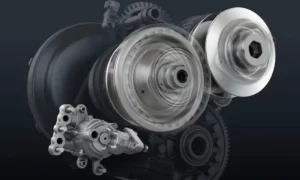
The 2JZ crankshaft is supported by seven main bearings, providing exceptional stability even at high RPMs. The connecting rods are famously overbuilt, and the pistons feature adequate material thickness. This robust bottom end is why many 2JZ engines can handle double or triple the factory power with stock internals.
Closed Deck Design
The closed deck block design provides superior cylinder support compared to open deck designs. This prevents cylinder distortion under high boost conditions and contributes significantly to the engine’s ability to handle extreme pressures.
Timing Belt vs. Chain
While some consider timing chains more durable, the 2JZ’s belt-driven timing system has proven remarkably reliable. The design includes adequate safety margins, and with proper maintenance, timing belt failures are rare even in high-performance applications.
Tuning Potential: How Much Power Can a 2JZ Really Make?
The 2JZ’s tuning ceiling is astonishingly high. Here’s what you can expect at different modification levels:
Mild Tuning (400-500hp)
With basic modifications like:
- Aftermarket exhaust
- Front-mount intercooler
- ECU tune
- Higher-flowing intake
- Boost controller
You can reach the 400-500hp range while maintaining excellent reliability and response.
Medium Tuning (600-800hp)
Moving to the next level requires:
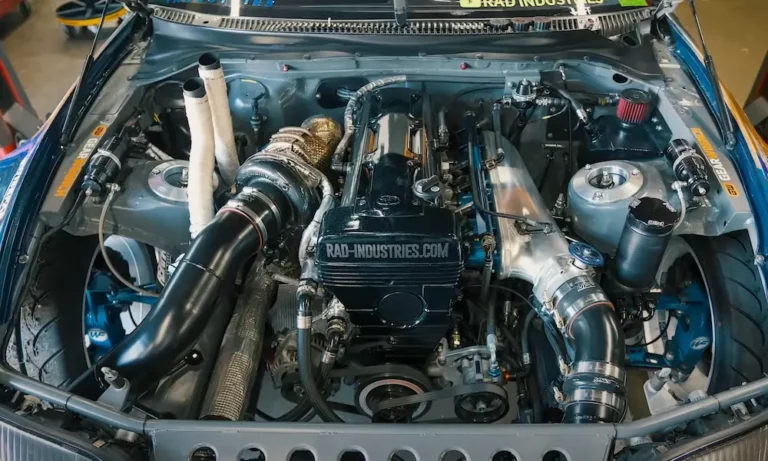
- Single turbo conversion (typically Garrett GTX series)
- Upgraded fuel system (injectors, pump)
- Stronger clutch
- Port and polish work
- Aftermarket camshafts
At this level, you’ll want to consider forged pistons if pushing beyond 600hp for longevity.
Extreme Tuning (1000hp+)
For the four-digit power club:
- Fully built bottom end with forged internals
- Large single turbo (or compound setup)
- Custom intake manifold
- Standalone ECU
- Complete fuel system overhaul
- Cylinder head work
With the right components and tuning, 2JZ engines have exceeded 2000hp in drag racing applications.
Common 2JZ Problems and Weaknesses
Despite its legendary status, the 2JZ isn’t perfect. Here are the common issues to watch for:
Oil Pump/Oil Starvation
Under sustained high-G loading (like track driving), stock oil pumps can struggle to maintain pressure. Aftermarket baffled oil pans and high-volume pumps are recommended for serious performance driving.
VVT-i Gear Failures
Later 2JZ engines with VVT-i can experience failure of the VVT gear assembly, causing rattling and eventually affecting performance. Upgraded units are available for high-performance applications.
Stock Twin Turbo Limitations
The factory sequential turbo setup, while innovative, becomes a restriction beyond 400hp. Most serious builds convert to a single turbo for better reliability and power potential.
Valve Spring Issues
Stock valve springs can be a weak point when revving beyond 7,000 RPM or when using aggressive camshafts. Upgraded springs are a must for high-RPM builds.
2JZ Engine Applications: Where You’ll Find Them
The 2JZ appeared in several vehicles across the Toyota and Lexus lineup:
- Toyota Supra MK4 (2JZ-GTE, 2JZ-GE)
- Toyota Aristo/Lexus GS300 (2JZ-GTE, 2JZ-GE)
- Toyota Soarer/Lexus SC300 (2JZ-GE)
- Toyota Crown/Crown Majesta (2JZ-GE, 2JZ-FSE)
- Toyota Origin (2JZ-GE)
- Toyota Progres (2JZ-GE, 2JZ-FSE)
- Toyota Brevis (2JZ-FSE)
- Toyota Altezza AS300/Lexus IS300 (2JZ-GE)
Comparative Specs: 2JZ vs. Other Legendary Engines
To truly appreciate the 2JZ’s capabilities, let’s compare it to other iconic engines of its era:
| Engine | Configuration | Displacement | Factory Power | Typical Max Power on Stock Internals | Block Material |
|---|---|---|---|---|---|
| Toyota 2JZ-GTE | Inline-6 | 3.0L | 276-320hp | 700-800hp | Cast Iron |
| Nissan RB26DETT | Inline-6 | 2.6L | 276hp | 600-700hp | Cast Iron |
| Honda C30A (NSX) | V6 | 3.0L | 270hp | 400-450hp | Aluminum |
| Mitsubishi 4G63 | Inline-4 | 2.0L | 195-276hp | 500-600hp | Cast Iron |
| BMW S54 | Inline-6 | 3.2L | 333hp | 450-500hp | Cast Iron |
Buying a 2JZ: What You Need to Know
If you’re in the market for a 2JZ engine, here’s what to consider:
Identifying Different 2JZ Variants
Look at the engine code stamped on the block:
- 2JZ-GTE: Twin-turbo variant
- 2JZ-GE: Naturally aspirated variant
- 2JZ-FSE: Direct injection variant
Check for telltale signs like turbochargers (GTE), VVT-i (later models have a VVT gear on the intake cam), and intake manifold design.
Price Expectations
As of 2023, expect to pay:
- $8,000-15,000 for a complete, low-mileage 2JZ-GTE
- $3,000-6,000 for a 2JZ-GE
- $2,000-4,000 for a 2JZ-FSE
Prices vary significantly based on condition, completeness, and market demand. The 2JZ-GTE continues to increase in value as clean examples become scarcer.
Common Swaps and Compatibility
The 2JZ is a popular swap candidate for various vehicles. Common swaps include:
- Nissan 240SX/S-chassis
- BMW E36/E46
- Toyota 86/Subaru BRZ
- Various older Toyota models
You’ll need custom mounts, a suitable transmission, and significant wiring work for any swap. Several companies offer complete swap kits to simplify the process.
Maintaining Your 2JZ Engine
To keep your 2JZ running strong:
- Oil Changes: Use high-quality synthetic oil and change every 3,000-5,000 miles for modified engines
- Cooling System Maintenance: Replace coolant regularly and ensure the radiator and fans are adequate for your power level
- Timing Belt Service: Replace every 60,000-90,000 miles or sooner for high-output builds
- Boost Control: Monitor boost levels carefully and ensure your fuel system is matched to your power goals
- ECU Tuning: Professional tuning is critical for modified engines to prevent detonation and ensure longevity
The Evolution of the JZ Family
The 2JZ wasn’t created in a vacuum – it evolved from Toyota’s earlier inline-six designs:
- M-series engines (1965-1992): The predecessors that established Toyota’s inline-six reputation
- 1JZ engines (1990-2007): The 2.5L little brother to the 2JZ
- 2JZ engines (1991-2007): The legendary 3.0L powerplant
- GR series (2019-present): The spiritual successor in modern Toyota/BMW models
The engineering philosophy that created the 2JZ came from Japan’s economic bubble period, when cost was secondary to engineering excellence. This explains why the engine was so overbuilt compared to cost-optimized modern designs.
Modern Legacy: The 2JZ in Today’s Car Culture
Three decades after its introduction, the 2JZ remains relevant in motorsports and car culture:
- Drifting: Many Formula Drift competitors still use 2JZ power
- Time Attack: Record-setting time attack builds often feature 2JZ engines
- Drag Racing: The engine continues to dominate import drag racing classes
- Street Cars: Clean, 2JZ-powered street builds command premium prices
The engine has become more than a mechanical component – it’s a cultural icon referenced in movies, music, and gaming. Its distinctive sound is instantly recognizable to enthusiasts worldwide.
Is the 2JZ Still Relevant in the Modern Era?
With the march of technology bringing direct injection, variable geometry turbos, and electric vehicles, you might wonder if the 2JZ has become obsolete. The answer is both yes and no.
From an efficiency and emissions standpoint, modern engines are superior. However, the 2JZ’s fundamental strength, simplicity, and tuning potential remain impressive even by today’s standards. While newer engines may offer more power per liter in stock form, very few can match the 2JZ’s ability to handle massive power increases reliably.
The 2JZ represents an engineering philosophy that prioritized robustness over cost-efficiency – an approach rarely seen in today’s margin-focused manufacturing. This is why, despite newer alternatives, the demand for 2JZ engines continues to grow rather than diminish.
Final Thoughts on the 2JZ Legacy
The 2JZ engine specs tell only part of the story – what makes this engine truly special is the perfect storm of overengineered design, timing in automotive history, and the passionate community that continues to push its boundaries.
Whether you’re planning to build one or simply appreciate its engineering, the 2JZ represents a high-water mark in internal combustion engine design. In an era where engines are increasingly viewed as appliances rather than art, the 2JZ reminds us of a time when manufacturers built engines not just to specification, but beyond it – creating legends that outlive their original applications.
No wonder enthusiasts still say: “There’s no replacement for 2JZ displacement.”