Looking for the real scoop on the legendary LS2 engine? You’ve hit the jackpot. Whether you’re planning an engine swap, tuning your Corvette, or just appreciating GM engineering, this guide breaks down everything that makes the 6.0L LS2 a performance icon. By the end, you’ll understand why this powerplant remains a favorite among gearheads and how its engineering choices translate to real-world performance.
What Is the LS2 Engine?
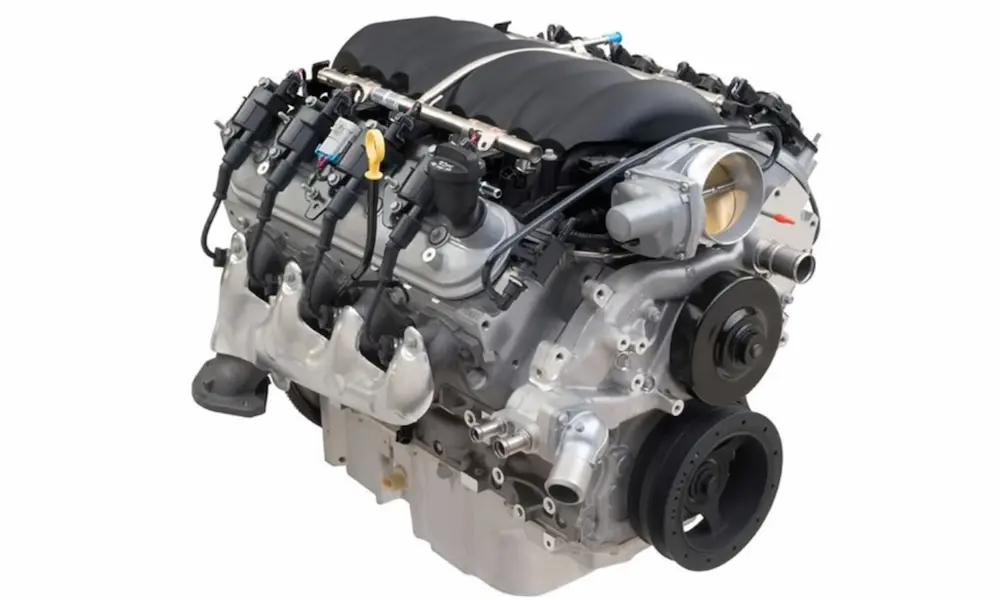
The LS2 is a 6.0-liter V8 engine developed by General Motors as the first member of their Gen IV small-block family. Introduced in 2005, it replaced the LS1 and brought significant improvements to GM’s performance lineup. With 400 horsepower and 400 lb-ft of torque in its standard form, the LS2 represented a substantial 50 hp increase over its predecessor.
Built with an aluminum block and heads, the LS2 maintained the traditional small-block Chevy architecture while incorporating modern engineering. It became the standard powerplant for vehicles like the C6 Corvette, Pontiac GTO, and Cadillac CTS-V, establishing itself as one of the most significant production V8 engines of its era.
LS2 Engine Specs: The Essential Numbers
Want to know exactly what makes an LS2 tick? Here are the core specifications:
| Specification | Details |
|---|---|
| Displacement | 6.0L (364 cubic inches) |
| Engine Block | Cast aluminum |
| Cylinder Heads | Cast aluminum |
| Bore | 4.00 inches (101.6mm) |
| Stroke | 3.62 inches (92mm) |
| Compression Ratio | 10.9:1 |
| Horsepower | 400 hp @ 6,000 RPM |
| Torque | 400 lb-ft @ 4,400 RPM |
| Redline | 6,500-6,800 RPM |
| Valvetrain | OHV (overhead valve), 2 valves per cylinder |
| Valve Sizes | 2.00″ intake, 1.55″ exhaust |
The LS2’s large 4-inch bore combined with a moderate stroke creates an engine that breathes efficiently and revs freely while maintaining excellent low-end torque. This balance makes it versatile for various driving conditions.
LS2 vs. LS1: What Changed?
The LS2 wasn’t just a bigger LS1 – it introduced several key improvements that justified its designation as the first Gen IV small-block:
- Displacement increase: 6.0L vs. 5.7L (a 0.3L bump)
- Higher compression: 10.9:1 vs. 10.25:1
- Improved cylinder heads: Better port design derived from Z06 heads
- Electronic throttle control: Integrated directly into the engine controller
- Higher-flowing intake manifold: Supporting the increased airflow requirements
- Strengthened bottom end: Six-bolt main cap design
These changes delivered significant performance gains. The LS2’s 400 horsepower and 400 lb-ft of torque represented increases of 50 hp and 40 lb-ft over the standard LS1, making it immediately popular with enthusiasts.
Vehicles That Came With the LS2
The LS2 powered some of GM’s most exciting vehicles between 2005 and 2009:
- Chevrolet Corvette C6 (2005-2007): The flagship application with the full 400 hp
- Pontiac GTO (2005-2006): Bringing muscle car credibility to Pontiac’s revival
- Cadillac CTS-V (2006-2007): Establishing Cadillac as a serious performance luxury brand
- Chevrolet SSR (2005-2006): 390 hp in the unique convertible pickup
- Chevrolet Trailblazer SS (2006-2009): Creating one of the quickest SUVs of its time
- Saab 9-7X Aero (2008-2009): The unlikely Swedish SUV with Corvette power
While specifications remained largely consistent across applications, some vehicles like the SSR, Trailblazer SS, and 9-7X Aero received slightly detuned 390-horsepower versions due to different intake and exhaust configurations.
LS2 Engine Block and Bottom End Design
The foundation of the LS2’s performance comes from its robust block design. While maintaining the traditional 4.400-inch bore centers dating back to the original 1955 small-block Chevy, the LS2 block incorporates several modern features:
Block Construction and Design
The aluminum block significantly reduces weight compared to iron blocks, but doesn’t sacrifice strength. A deep-skirt design extends below the crankshaft centerline, adding rigidity to the bottom end. The block features a 9.240-inch deck height, optimized for ideal combustion chamber geometry.
Most impressive is the six-bolt main cap design. Unlike traditional engines with four bolts per cap, the LS2 uses six – four vertical bolts and two cross-bolts per cap. This design dramatically increases crankshaft rigidity, allowing the engine to handle much more power than its factory rating would suggest.
Rotating Assembly
Inside the block, the LS2 uses a cast nodular iron crankshaft with a 3.62-inch stroke. While not forged, this cast crank has proven remarkably durable, capable of handling around 900 horsepower in stock form for limited durations.
The powdered metal connecting rods connect to hypereutectic aluminum pistons with friction-reducing coatings. These components create a 10.9:1 compression ratio with flat-top piston designs that work with the cylinder head combustion chambers to create efficient swirl patterns for the air-fuel mixture.
LS2 Cylinder Heads and Valvetrain
The LS2’s cylinder heads represent a significant advancement over previous designs, sharing DNA with those used in the high-performance LS6 found in the C5 Z06 Corvette:
Head Design and Flow Characteristics
The aluminum heads feature cathedral-shaped intake ports (named for their arched appearance) that provide excellent flow characteristics. Combustion chambers are designed with unshrouded valves, allowing better airflow and more efficient combustion.
With 2.00-inch intake valves and 1.55-inch exhaust valves, the LS2 heads strike an ideal balance between flow capacity and low-speed torque. The intake ports are raised compared to earlier designs, improving the path for air entering the combustion chamber.
Valvetrain Components
The LS2 uses a traditional pushrod (OHV) valvetrain with:
- Single in-block camshaft
- 1.7:1 ratio investment-cast roller rocker arms
- Hydraulic roller lifters
- Beehive-style valve springs designed for higher RPM operation
This proven design keeps the engine compact while delivering excellent performance. The stock camshaft specifications provide a good balance of low-end torque and high-RPM power, with approximately 204/211 degrees duration at 0.050″ lift and 0.520/0.520″ lift for intake/exhaust.
Fuel System and Engine Management
The LS2 introduced several advances in fuel delivery and electronic control:
Fuel Injection System
The LS2 uses a sequential port fuel injection system with high-flow injectors mounted in the intake manifold. This system provides precise fuel delivery across the RPM range, contributing to both performance and efficiency.
The composite intake manifold is designed to provide even air distribution to all cylinders while maintaining a low profile to fit under the Corvette’s hood. Its internal runners are tuned for optimal performance across the engine’s operating range.
Electronic Controls
One of the most significant advances in the LS2 was its integrated electronic throttle control. Unlike the LS1, which used a separate throttle actuator control module, the LS2 integrated this functionality directly into the engine control module (ECM). This change simplified the system while improving responsiveness.
Some LS2 variants (RPO code L76) featured GM’s Active Fuel Management system, which could deactivate four cylinders during light-load cruising to improve fuel economy. This technology foreshadowed efficiency features that would become standard in later GM engines.
LS2 Performance Potential and Modification
The LS2’s robust design makes it an excellent candidate for modifications. Here’s how it responds to common performance upgrades:
Basic Bolt-On Modifications
Even simple modifications yield noticeable power gains with the LS2:
- Cold air intake: 10-15 horsepower gain with cooler, less restricted airflow
- Long-tube headers: 15-25 horsepower with improved exhaust scavenging
- Cat-back exhaust: 5-10 horsepower while improving the exhaust note
- Tune: 15-25 horsepower by optimizing fuel and timing maps
Combined, these basic modifications can push an LS2 well beyond 450 horsepower while maintaining excellent drivability and reliability.
Camshaft Upgrades
The LS2 responds exceptionally well to camshaft swaps. A moderately aggressive camshaft with increased duration and lift can add 30-50 horsepower when paired with supporting modifications like:
- Stronger valve springs
- Upgraded pushrods
- Higher-ratio rocker arms
- Headers and intake
These modifications can push the LS2 into the 480-500 horsepower range while still maintaining reasonable street manners.
Head and Intake Upgrades
For enthusiasts seeking even more power, cylinder head upgrades provide the next level of performance. Many builders upgrade to LS3 cylinder heads, which offer improved flow thanks to rectangular intake ports instead of the LS2’s cathedral ports.
Combined with a matching intake manifold (the LS3 manifold is a popular choice), performance-oriented cylinder heads can support 550+ naturally aspirated horsepower in a well-built LS2.
Forced Induction
The LS2’s strong bottom end makes it an excellent candidate for forced induction. Popular options include:
- Superchargers: Providing immediate boost and linear power delivery
- Turbochargers: Offering maximum power potential with modern control systems
- Nitrous oxide: A cost-effective way to add significant power for short durations
With proper supporting modifications, forced induction can safely push an LS2 to 600-800 horsepower for street/strip applications. The engine’s internal components generally require upgrading once you exceed 600 horsepower for long-term reliability.
How to Identify an LS2 Engine
If you’re looking at an engine and wondering if it’s an LS2, here are the key identifiers:
- VIN code: In the original vehicle, the 8th digit will be “U” for car applications (2005-2007)
- Block casting numbers: Look for 12568952 or 12560799 on the engine block
- Displacement decal: Many LS2 engines have a “6.0L” decal on the coil covers
- Intake manifold design: The LS2 has a distinctive composite intake manifold
- Three-bolt front cover design: This differs from the LS1’s four-bolt design
These identifiers help distinguish the LS2 from other similar-looking LS engines, particularly important for second-hand engines or those found in salvage yards.
LS2 vs. LS3: Key Differences
The LS3, introduced in 2008, succeeded the LS2 in the Corvette and other GM performance vehicles. Understanding their differences helps in deciding which engine might be right for your project:
| Feature | LS2 | LS3 |
|---|---|---|
| Displacement | 6.0L (364 ci) | 6.2L (376 ci) |
| Bore | 4.00 inches | 4.065 inches |
| Stroke | 3.62 inches | 3.62 inches |
| Horsepower | 400 hp | 430 hp (Corvette) |
| Intake ports | Cathedral | Rectangular |
| Compression | 10.9:1 | 10.7:1 |
| Injectors | 33 lb/hr | 42 lb/hr |
| Production years | 2005-2009 | 2008-2017 |
The LS3 built on the LS2’s foundation with increased displacement achieved through a larger bore, improved cylinder head design with rectangular intake ports, and higher-flow injectors. These changes boosted power to 430 horsepower in the Corvette application.
Despite these differences, many components remain interchangeable between the LS2 and LS3, making hybrid builds popular among enthusiasts.
LS2 Engine Reliability and Common Issues
The LS2 is known for excellent reliability, but like any engine, it has a few known issues to watch for:
Known Reliability Concerns
- Valve drop: Some early LS2 engines experienced valve seat issues that could lead to dropped valves. GM addressed this with improved metallurgy in later production.
- Piston ring wear: Higher mileage LS2 engines can experience increased oil consumption due to piston ring wear, particularly when used hard or not maintained properly.
- Oil pump failures: While rare, the OEM oil pump can fail in high-mileage engines, especially those subjected to sustained high RPM operation.
- Water pump lifespan: The LS2’s water pump typically lasts 80,000-100,000 miles before requiring replacement.
Maintenance Recommendations
To maximize LS2 reliability:
- Use quality oil: GM recommends 5W-30 for most applications, though 5W-40 synthetic provides better protection for modified engines
- Change the oil regularly: Every 5,000 miles for normal use, more frequently for high-performance applications
- Inspect for leaks: Check valve covers and oil pan gaskets periodically, as they can deteriorate over time
- Monitor cooling system: Overheating is the enemy of any engine; ensure the cooling system remains in good condition
- Use proper fuel: The 10.9:1 compression ratio works best with premium fuel (91+ octane)
With proper maintenance, LS2 engines regularly exceed 200,000 miles while maintaining excellent performance.
The LS2’s Place in Automotive History
The LS2 occupies a pivotal position in General Motors’ engine development timeline. As the first Gen IV small-block, it bridged the gap between the original LS-series engines and later developments like the LS3, LS7, and LS9.
Its introduction in 2005 coincided with growing enthusiasm for LS swaps, with hot rodders recognizing the compact dimensions, light weight, and exceptional power-to-weight ratio made these engines ideal for transplanting into various vehicles. The LS2’s 400 horsepower represented a threshold that previous generations of car enthusiasts could only achieve through extensive modifications.
Today, the LS2 remains highly sought after for engine swap projects. Its combination of displacement, power, and reasonable cost in the second-hand market makes it an attractive option compared to both older (LS1) and newer (LS3) alternatives.
Finding and Purchasing an LS2 Engine
If you’re in the market for an LS2, here’s what you need to know:
Sources for LS2 Engines
- Salvage yards: Often the most cost-effective source, though condition can vary
- Online marketplaces: eBay, Facebook Marketplace, and enthusiast forums frequently have complete engines
- Specialty shops: Companies that specialize in LS engines often have rebuilt or refreshed units
- Crate engines: GM Performance and aftermarket companies offer new LS2-based crate engines
What to Look For
When evaluating a used LS2:
- Compression test results: Should show even compression across all cylinders
- Oil pressure: Healthy engines maintain 50+ psi at operating temperature
- Exterior condition: Check for cracks, especially around water jacket areas
- Oil quality: Dark oil isn’t necessarily bad, but milky oil indicates potential head gasket issues
- History: If available, knowledge of the previous application and how the engine was used
Typical Costs
As of current market conditions:
- Used complete engine: $3,500-$6,000 depending on condition and mileage
- Rebuilt/refreshed engine: $7,000-$10,000
- New crate engine: $9,000-$12,000+ depending on specifications