The 3.0 Hurricane engine specs have truck owners buzzing—and for good reason. Stellantis just replaced one of America’s most beloved V8s with a twin-turbo inline-six. Is it worth the hype? This post breaks down every spec, trim matchup, and maintenance detail so you can decide for yourself. Stick around to the end—the comparison table alone might surprise you.
What Exactly Is the 3.0 Hurricane Engine?
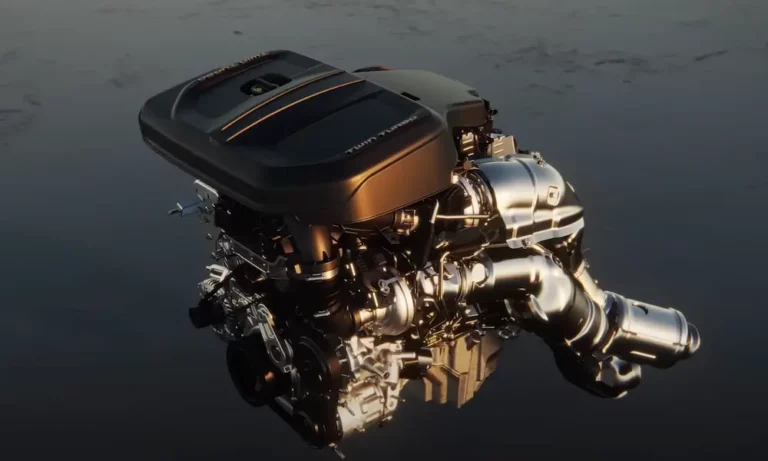
The Hurricane isn’t a warmed-over V6. It’s a clean-sheet, twin-turbocharged inline-six built from scratch over three years at Stellantis’ Auburn Hills, Michigan headquarters. Stellantis officially calls it the Global Medium Engine Turbo Six.
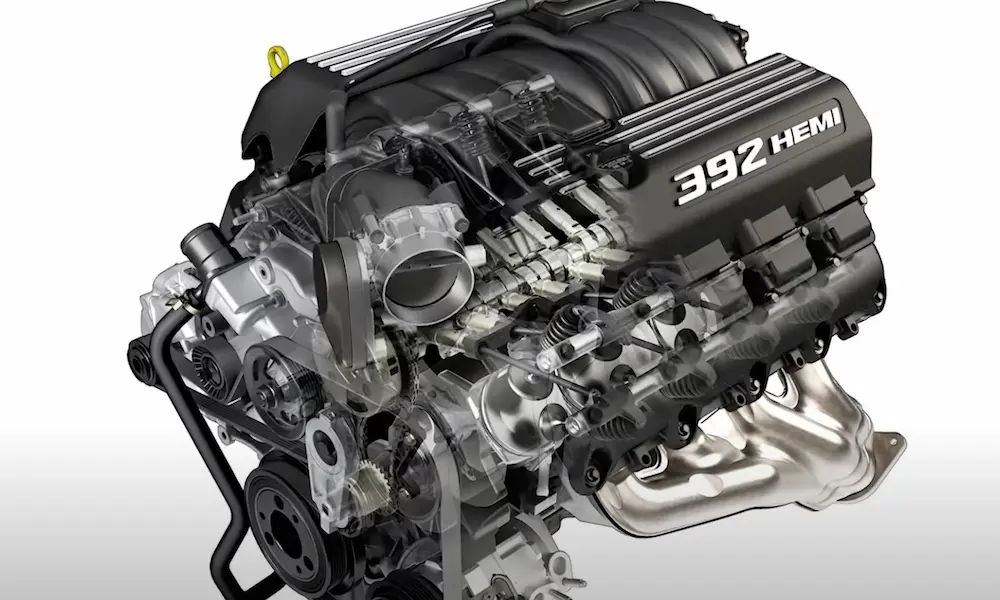
Its job? Replace the 5.7-liter Hemi V8 in trucks and SUVs while delivering more power, better fuel economy, and lower emissions. That’s a tall order—and based on the numbers, it delivers.
The engine displaces 2,993cc (183 cubic inches) with a bore of 84.0mm and a stroke of 90.0mm. That undersquare design means more torque at low RPMs—exactly what you want when you’re pulling a loaded trailer up a hill.
Why Inline-Six Instead of a V8?
This is the question every Ram and Jeep fan asks first.
A straight-six layout creates natural primary and secondary balance—no balance shafts needed. That translates directly into a smoother idle and less vibration at highway speeds. If you’ve ever driven a Ram 1500 Tungsten or a Jeep Grand Wagoneer, you know cabin refinement matters. The inline-six delivers that premium feel without compromise.
It’s also up to 15% more fuel-efficient than the outgoing Hemi V8 while producing fewer greenhouse gas emissions. That efficiency supports Stellantis’ 2038 carbon neutrality goal.
The Block: Built Tough, Built Light
The Hurricane uses a deep-skirt cast-aluminum block reinforced with cross-bolted steel main bearing caps. Aluminum keeps the weight down. The cross-bolted caps lock the forged steel crankshaft in place through both vertical and horizontal planes—critical when twin turbos are pushing high boost pressures.
Dry weight comes in at:
- Standard Output: 430 lbs
- High Output: 441 lbs
That’s lighter than the cast-iron Hemi block, which helps front-to-rear weight balance in the Ram 1500 and Dodge Charger.
Plasma Transfer Wire Arc: The Cylinder Wall Secret
Here’s where things get interesting.
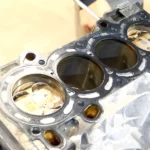
Most aluminum engines use iron cylinder liners. The Hurricane skips them entirely. Instead, Plasma Transfer Wire Arc technology sprays molten steel alloy onto the aluminum bore walls at 2,300°C and supersonic speeds. The result is a coating that’s:
- Less than one-tenth the thickness of a traditional iron liner
- 10x more wear-resistant than conventional liners
- Far better at transferring heat away from the combustion chamber
Better heat transfer means lower risk of engine knock under boost. Thinner walls mean more room for cooling jackets. It’s a smarter solution than gluing in heavy iron sleeves.
Standard Output vs. High Output: Know the Difference
The Hurricane comes in two flavors, and choosing the wrong one for your needs is easy if you don’t know the details.
| Technical Specification | Standard Output (SO) | High Output (HO) |
|---|---|---|
| Displacement | 3.0L (183 cu in) | 3.0L (183 cu in) |
| Piston Material | Cast Aluminum | Forged Aluminum |
| Compression Ratio | 10.4:1 | 9.5:1 |
| Peak Boost Pressure | 22.4 psi | 26.0–30.0 psi |
| Fuel Injection Pumps | Single High-Pressure | Dual High-Pressure |
| Charge Air Cooler | Water-to-Air (Single Inlet) | Water-to-Air (Dual Inlet) |
| Maximum Engine Speed | 5,800 rpm | 6,100 rpm |
The SO runs a higher 10.4:1 compression ratio for better part-throttle efficiency. The HO drops to 9.5:1 so those turbos can push up to 30.0 psi of boost without triggering detonation. To handle that extra heat, HO pistons are forged aluminum with an anodized top ring land and diamond-like coating on the piston pins.
Both variants use dual overhead cams with four valves per cylinder and fully independent variable valve timing on both intake and exhaust camshafts. The exhaust valves are sodium-filled—the sodium melts at operating temperature and wicks heat away from the valve head, preventing burn damage under sustained high loads.
Performance Numbers Side by Side
Standard Output Specs
The SO Hurricane is the workhorse. It replaced the 5.7L Hemi in mid-tier Ram 1500 trims and the Jeep Wagoneer.
| Performance Metric | Hurricane Standard Output |
|---|---|
| Horsepower | 420 hp @ 5,200 rpm |
| Torque | 469 lb-ft @ 3,500 rpm |
| Maximum Towing | 11,550–11,610 lbs |
| Maximum Payload | 1,930–1,980 lbs |
| City Fuel Economy | 18 mpg (4×2) / 17 mpg (4×4) |
| Highway Fuel Economy | 25 mpg (4×2) / 24 mpg (4×4) |
That 25 mpg highway figure from a 420-horsepower truck engine would have seemed like fiction five years ago.
High Output Specs
The HO is the performance pick. It’s standard on the Ram 1500 Limited, Tungsten, and the Ram 1500 RHO—which does 0-60 mph in 4.6 seconds.
| Performance Metric | Hurricane High Output |
|---|---|
| Horsepower | 540 hp @ 5,700 rpm |
| Torque | 521 lb-ft @ 3,500 rpm |
| Maximum Towing | 9,920–10,050 lbs |
| Maximum Payload | 1,490–1,520 lbs |
| City Fuel Economy | 15 mpg (4×4) |
| Highway Fuel Economy | 21 mpg (4×4) |
Note that the HO pulls less than the SO. That’s by design—it’s tuned for speed, not sustained heavy-duty towing. If moving maximum weight is your priority, the SO is actually the smarter pick.
How It Breathes: Twin Turbos and the Charge Cooler
Both engines use two parallel low-inertia turbochargers—one feeding cylinders 1-3, one feeding 4-6. Smaller turbos spool faster, which nearly eliminates turbo lag.
The result? At least 90% of peak torque from just 2,350 rpm all the way to redline. You don’t have to rev hunt to feel the power. It’s just there when you need it.
Both variants use a water-to-air charge air cooler mounted directly on the engine. Unlike a front-mounted air-to-air intercooler, the liquid-cooled system maintains consistent intake temperatures even in hot weather or during sustained towing. The HO gets a dual-inlet design to support its higher airflow demands.
Fuel delivery runs through a direct injection system operating at up to 5,075 psi (350 bar). The SO uses a single high-pressure pump. The HO needs a dual-pump setup to feed 540 horsepower at full throttle.
Hurricane vs. 5.7L Hemi: The Real Numbers
| Performance Feature | 3.0L Hurricane HO | 5.7L Hemi V8 (eTorque) |
|---|---|---|
| Peak Horsepower | 540 hp | 395 hp |
| Peak Torque | 521 lb-ft | 410 lb-ft |
| Block Material | Cast Aluminum | Cast Iron |
| Configuration | Inline-6 | V8 |
| Induction | Twin-Turbo | Naturally Aspirated |
| 0–60 MPH Time | ~4.2–4.6 seconds | ~6.5 seconds |
| Max Towing (Ram) | 10,050 lbs | 11,320 lbs |
The only category where the Hemi still wins is maximum towing capacity in the Ram 1500. The Hurricane SO closes that gap further—11,610 lbs vs. 11,320 lbs—and it beats the Hemi there too. The torque curve difference is massive. The Hemi has to rev to find its peak torque. The Hurricane delivers a flat plateau of torque from low RPM, making it feel effortless on highway ramps and grades.
Which Trucks and SUVs Get the Hurricane?
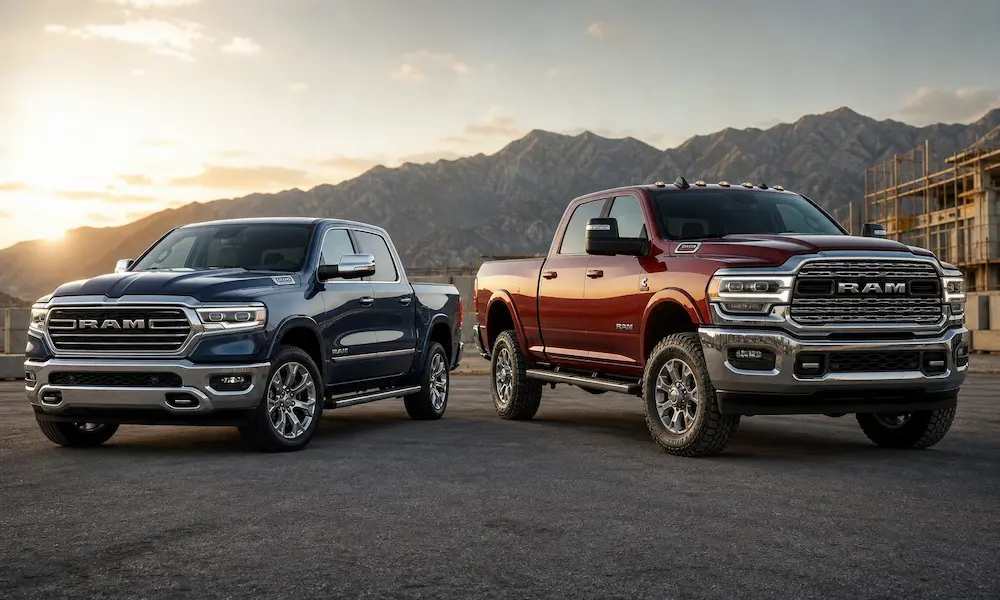
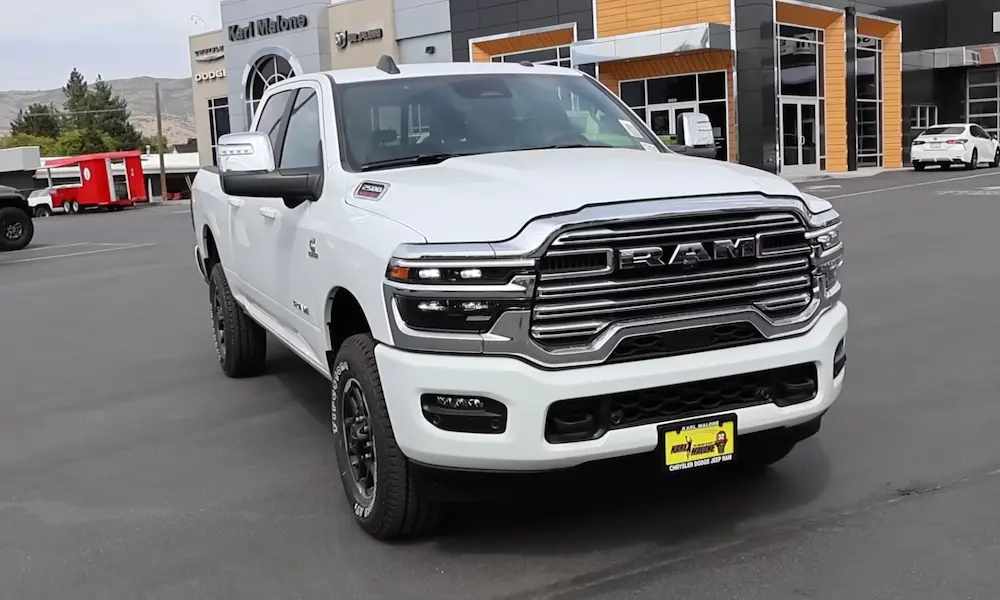
Ram 1500 Lineup
- Tradesman, Big Horn, Rebel: Standard Output Hurricane
- Laramie: Standard Output only
- Limited, Tungsten: High Output standard
- RHO: High Output with performance exhaust and long-travel suspension
Jeep and Dodge
The Jeep Wagoneer and Grand Wagoneer have fully transitioned to the Hurricane. For 2026, the Grand Wagoneer runs the 420-horsepower SO as standard, giving it a 10,000-lb tow rating with flagship refinement.
Dodge uses the Hurricane in the new Charger under the “Sixpack” name—in 420-hp and 550-hp versions. It’s a nod to heritage with modern forced-induction guts.
Maintenance: What the Hurricane Actually Needs
High-tech engines need proper care. Here’s what keeps this one running right.
Oil Type and Change Intervals
Both engines hold 7.5 quarts (7.1 liters) with filter. Full synthetic only—the turbo bearings demand it.
- Standard Output: 0W-20 full synthetic, up to 10,000 miles between changes (7,500 miles if you tow frequently)
- High Output: 0W-40 full synthetic, change every 6,000 miles or six months
The HO’s thicker 0W-40 oil provides a heavier lubricating film for the higher bearing loads and heat levels at 540 horsepower.
Spark Plugs
Each engine uses six iridium spark plugs—one per cylinder.
- Standard Output: Replace at 100,000 miles
- High Output: Replace at 60,000 miles due to higher heat and boost levels
Air Filter
Replace every 30,000 miles under normal conditions. Cut that to 20,000 miles if you drive in dusty environments. Turbocharged engines pull massive air volumes—a clogged filter stresses the turbos directly.
Fuel Requirements
- High Output: Premium 91 octane is required. Using 87 forces the ECU to retard timing and reduce boost. You won’t damage the engine, but you’ll feel the power loss immediately.
- Standard Output: Premium 91 octane is recommended for towing. Regular 87 octane works fine for daily driving without any risk.
Thermal Management Worth Knowing About
The Hurricane’s exhaust manifolds are cast directly into the cylinder head—not bolted on separately. These integrated, water-cooled manifolds reduce under-hood temps, speed up catalytic converter warm-up, and protect the turbine wheels from heat fatigue.
The cooling system runs two separate circuits: one for the engine block and head, another dedicated to the charge cooler and turbos. After you shut the engine off, an electric after-run pump keeps coolant circulating through the turbochargers. This prevents oil from carbonizing in the hot turbo bearings—the most common killer of older forced-induction engines.
The oil system uses a variable displacement pump that adjusts output to actual engine demand rather than just spinning faster with RPM. Six piston cooling jets spray oil onto the underside of every piston crown to pull combustion heat away from the top of the engine. Smart engineering that protects the engine and reduces parasitic losses at the same time.
The 3.0 Hurricane engine specs tell a clear story: Stellantis built an engine that outmuscles the Hemi V8 it replaces in almost every measurable way. More horsepower, more torque earlier in the RPM range, better fuel economy, and a smoother, lighter architecture underneath. Whether you’re spec’ing a work truck, a luxury SUV, or a muscle car, the Hurricane covers the full range without compromise—as long as you give it the maintenance it needs.