You’re standing in a transmission shop, staring at two nearly identical units. One’s a 4L60E, the other’s a 4L70E. They look the same. They bolt up the same way. But swap the wrong one into your truck, and you’ll be right back here next week with a check engine light and a transmission stuck in limp mode.
Let’s break down what actually separates these two workhorses—and more importantly, which one belongs in your rig.
What’s in a Name? Decoding GM’s Transmission Labels
GM’s naming system isn’t random alphabet soup. Each character tells you something specific about what you’re dealing with.
The 4L60E breaks down like this: “4” means four forward gears, “L” indicates longitudinal (rear-wheel-drive) orientation, “60” represents the torque capacity rating (roughly 360 lb-ft), and “E” signals electronic control.
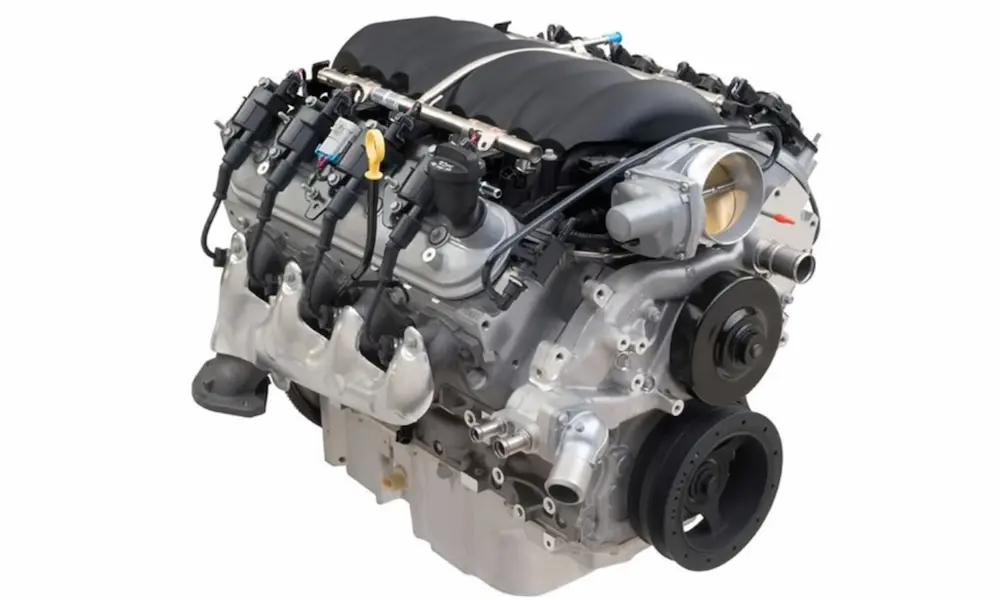
The 4L70E follows the same logic, but that jump from “60” to “70” isn’t just marketing. It’s a validated increase in torque handling, bumping capacity to around 400-430 lb-ft in factory trim. GM built this stronger unit specifically for high-output LS engines—think 6.0L LS2s in Trailblazer SS models and heavy-duty Silverados.
Here’s what throws people: the cases look identical. Same bolt pattern, same external dimensions, same basic architecture. But crack them open, and you’ll find some seriously beefed-up guts.
The Mechanical Upgrades That Actually Matter
Five Pinions vs. Four: Why One More Makes All the Difference
Pop the pan on a standard 4L60E, and you’ll find planetary carriers with four pinion gears. For a stock 5.3L suburban puttering around town, that’s fine. But put a high-stall converter behind a built motor, and those four-pinion carriers start flexing under the load.
The 4L70E solves this with five-pinion planetary carriers in both the input and reaction gear sets. That fifth pinion doesn’t just add strength—it fundamentally changes how torque gets distributed. Instead of four contact points sharing the load, you’ve got five. That’s roughly 20% less stress on each individual gear tooth and pinion pin.
Sure, the five-pinion setup adds a bit of rotational mass. Technically, that’s more weight to spin. But when you’re dealing with 400+ horsepower, the durability gain crushes any minimal parasitic loss.
The Infamous Sun Shell Problem—and How 4L70E Fixes It
Ask any transmission builder about the 4L60E’s weak point, and they’ll immediately point to the reaction sun shell. This stamped steel component is the Achilles heel of the entire 700R4/4L60E family.
When it fails (and it will, eventually), you lose reverse, second, and fourth gear. You’re stuck limping home in first and third, wondering why you didn’t upgrade when you had the chance.
The 4L70E addresses this with a heat-treated and hardened sun shell. It’s not quite as bombproof as aftermarket options like “The Beast” shell, but it’s a massive step up from the standard 4L60E part. The heat treatment hardens the splines where failure typically starts, while keeping the core ductile enough to absorb shock loads without shattering.
Hardened Shafts: Built for Real Power
The output shaft takes a beating, especially in 4WD trucks launching hard. Standard 4L60E shafts are decent for stock applications, but they’re known to twist or snap under serious torque.
The 4L70E uses induction-hardened output shafts with a hard outer layer and a tough inner core. Some versions also get shot peening treatment to prevent fatigue cracks from starting.
Same story with the input shaft. The 4L70E version uses higher-grade alloy steel to handle the input torque from those big LS motors without grenading.
The Electronic Differences That’ll Bite You
Here’s where swapping gets tricky. The mechanical differences are straightforward—stronger parts handle more torque. But the electronic changes? That’s where most DIY swaps go sideways.
The Missing 3-2 Downshift Solenoid
In a standard 4L60E, there’s a dedicated solenoid managing the 3-2 downshift. This controls the delicate dance of releasing the 3-4 clutch while applying the 2-4 band. Get the timing wrong, and the transmission either binds up or flares (engine revs freely with no power transfer).
The 4L70E? GM deleted that solenoid entirely. They redesigned the hydraulic circuit and relied on smarter control algorithms to handle the shift timing.
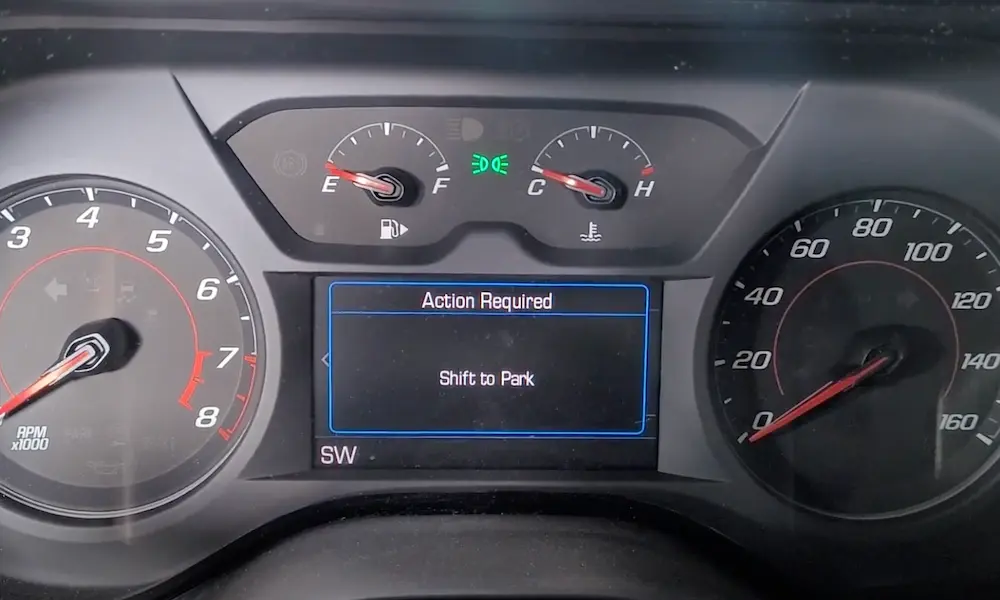
Sounds like progress, right? It is—until you try swapping a 4L70E into an older truck. The older PCM expects to see that 3-2 solenoid circuit. When it finds nothing, it throws a P0785 code, cranks line pressure to maximum (hello, harsh shifts), and drops into third-gear limp mode.
You can’t just ignore this. You need either a harness adapter with a dummy resistor or—better yet—swap the entire valve body and internal harness from your old 4L60E onto the 4L70E case.
The Input Speed Sensor Revolution
The 4L70E introduced something the standard 4L60E lacks: an Input Speed Sensor (ISS). This magnetic sensor reads the input shaft rotation, giving the transmission control module way more diagnostic precision.
With an ISS, the TCM can:
- Calculate exact torque converter slip by comparing engine RPM to input shaft RPM
- Detect internal clutch slip by comparing input shaft RPM to output shaft RPM
- Trigger protective limp mode within milliseconds of detecting a problem
On a 4L60E, the PCM can only compare engine RPM to output RPM. That’s like trying to diagnose which link in a chain broke when you’re only looking at the ends. The ISS lets the TCM see what’s happening inside the transmission in real-time.
Here’s the catch: if you try putting a standard 4L60E (no ISS) into a vehicle that came with a 4L70E, the Gen IV PCM will freak out. It needs that ISS signal. No workaround, no easy fix. Don’t do it.
Connector Pin Count: The Quick Visual ID
Don’t trust color codes—aftermarket replacements throw those off. Count the actual pins instead.
| Connector Type | Year Range | Pin Count | Key Features |
|---|---|---|---|
| Early Gen III | 1993-1995 | 12-Pin | Old school, incompatible with LS swaps |
| Standard 4L60E | 1996-2006 | 13-Pin | No ISS, includes 3-2 solenoid |
| ISS Addition | 2007-2008 | 15-Pin | Adds ISS pins, drops 3-2 solenoid |
| Late Gen IV | 2009+ | 17-Pin | Includes Internal Mode Switch |
The 15-pin and 17-pin connectors are your telltale signs of a 4L70E or late-model 4L65E with ISS integration.
Clutch Pack Strength: Where the Rubber Meets the Road
The 3-4 clutch pack is notoriously the weak link in the entire 4L60 architecture. It holds torque in both third and fourth gear, but there’s limited space inside the input drum for clutch plates.
A standard 4L60E typically runs six friction plates. Under heavy load or with raised line pressure, these thin plates warp or glaze, leading to the dreaded 3-4 flare.
The 4L70E upgrades to a seven-friction plate stack. GM fit that extra plate by using slightly thinner steels with higher-grade friction material. That’s about 15-17% more holding surface area.
Performance builders often skip both factory setups and go straight to the Raybestos Z-Pak, which uses single-sided clutch plates to cram even more friction surfaces into the same space.
The Corvette Servo Advantage
The 2-4 band wraps around the reverse input drum to create second and fourth gears. How hard that band clamps down depends on the servo piston.
The 4L70E comes standard with the larger “Corvette Servo” piston. More surface area means more hydraulic force, which translates to firmer 1-2 and 3-4 shifts with better holding capacity.
Standard 4L60E units (outside of performance packages) used a smaller, softer servo to prioritize smooth shifts over strength. That’s great for Grandma’s Tahoe, not so great for your built truck.
Can You Actually Swap Between Them?
Short answer: it’s complicated.
Upgrading a 4L60E vehicle to 4L70E:
Mechanically, it bolts right in. Same block pattern, same crossmember mounts. The ISS won’t hurt anything—the older PCM doesn’t know it exists and will ignore it.
But that missing 3-2 solenoid? That’ll kill you. Your options:
- Use a harness adapter with a dummy resistor (works, but shifts may be clunky)
- Swap the entire valve body, separator plate, and internal harness from your old 4L60E onto the 4L70E case (best solution)
Downgrading a 4L70E vehicle to 4L60E:
Don’t. Seriously, don’t. The Gen IV PCM requires the ISS signal to function. Without it, you’ll have codes, limp mode, and possibly disabled traction control systems. You’d have to essentially rebuild the 4L60E into a 4L70E to make it work, which defeats the entire purpose.
Fluid Specs and Maintenance Reality
The shift from 4L60E to 4L70E coincided with GM moving from Dexron III to Dexron VI fluid.
Dexron VI is a lower-viscosity, synthetic-blend formula with better oxidation stability. It’s factory fill for all 4L70E units and officially backward compatible with older 4L60E transmissions.
Here’s where it gets interesting: some builders argue that Dexron VI’s lower viscosity can reveal internal leaks in high-mileage 4L60E units. For a worn-out old 4L60E, sticking with thicker Dexron III might mask problems that Dexron VI would expose.
Also, make sure you’re using the right filter. Deep pan transmissions need deep pan filters. Use a shallow filter in a deep pan, and you’ll starve the pump of fluid during hard acceleration or steep climbs.
What It Actually Costs
A remanufactured 4L60E runs around $2,000-$2,200. A remanufactured 4L70E? You’re looking at $2,400-$3,100, thanks to scarcer cores and pricier internal components.
Here’s the math that matters: if you’ve already got a 4L60E vehicle and want 4L70E strength, it’s often cheaper to have your existing 4L60E rebuilt with performance parts. A Level 2 build with a Sonnax shell, Z-Pak clutches, and Corvette servo will run around $3,500—and often outperform a stock 4L70E while maintaining perfect electronic compatibility.
The Aftermarket Path
Both transmissions have massive aftermarket support. Shift kits from TransGo (HD2) and Sonnax are industry standards, increasing line pressure and reducing shift overlap to cut down on heat.
The Sonnax SmartShell redesigns the sun shell to redirect thrust loads away from vulnerable bearings—it’s basically mandatory for any serious performance build, regardless of whether you start with a 60E or 70E.
For torque converters, the 4L70E uses the 300mm LS-style pattern. Stock converters stall around 1,600-1,800 RPM. Performance driving typically calls for 2,800-3,200 RPM stall speeds to keep the engine in its power band. Heavy towing or forced induction setups need billet multi-disc converters to handle the abuse without slipping.
Which One Should You Actually Choose?
If you’re building a truck from scratch or doing an LS swap, the 4L70E is the obvious choice—if your electronics support it. The stronger internals, better diagnostics, and refined hydraulics make it worth the premium.
If you’re replacing a failed 4L60E in an older vehicle (pre-2007), stick with a 4L60E or perform the valve body swap trick. Fighting the electronics incompatibility isn’t worth the headache.
And if you’re building for serious power—we’re talking 500+ hp—skip the factory question entirely. A properly built 4L60E with aftermarket hard parts will handle more power than either factory unit and integrate seamlessly with your existing electronics.
The 4L70E represents the final evolution of GM’s four-speed automatic before the industry moved to six-speeds and beyond. It’s a worthy upgrade, but only if you understand what you’re actually getting—and what headaches you might be buying into.