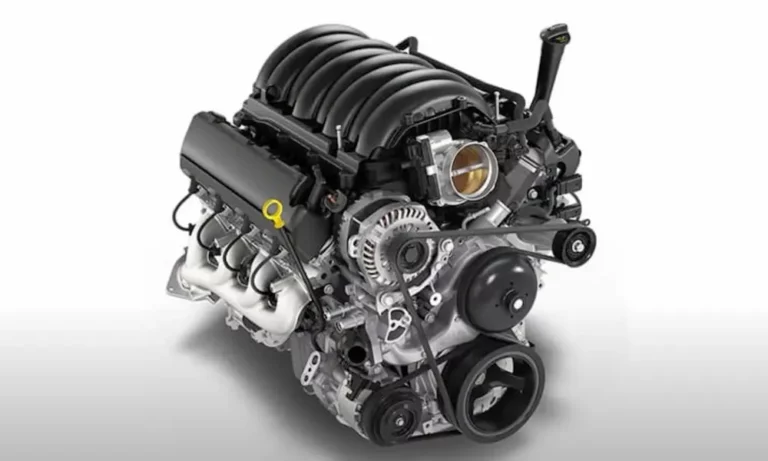
Thinking about buying a GM truck with the 5.3L V8? Smart move—unless you pick the wrong year. Some models will run forever, while others might leave you stranded with a $4,000 repair bill. Here’s what you need to know before you buy.
Why AFM Technology Is a Double-Edged Sword
Active Fuel Management sounds great on paper. GM’s cylinder deactivation system switches between 8 and 4 cylinders to save fuel. The EPA says it boosts fuel economy by 5.5–7.5%. But here’s the catch: it adds complexity to an otherwise bulletproof engine design.
The system uses collapsible hydraulic lifters controlled by high-pressure oil. When everything works perfectly, you get better gas mileage. When it doesn’t, you’re looking at catastrophic engine failure. The difference between a good year and a bad year comes down to design flaws, supplier quality, and manufacturing refinements.
The Absolute Worst Years: Don’t Touch These
2007–2009: The Oil Consumption Nightmare
These years represent the worst of the Gen IV era. The problem? A fatally flawed PCV valve design that literally sucked oil out of the engine and into the combustion chamber.
Here’s what happened: When AFM deactivated four cylinders, it created pressure pulses in the crankcase. The PCV valve was positioned poorly, creating a siphon effect that pulled oil mist into the intake manifold. That oil burned in the cylinders, leaving carbon deposits that gummed up the piston rings.
Once the rings stuck, oil consumption spiraled out of control. Owners reported burning a quart every 500 miles. Even worse, this damage is cumulative and often irreversible without a complete engine rebuild.
The verdict: Avoid these years entirely. They’re ticking time bombs.
2014: First-Year Disaster
The 2014 Silverado and Sierra marked the debut of the Gen V L83 engine with direct injection. It also marked the highest recall volume in the entire K2XX generation.
These trucks suffered from:
- Lifter collapse at low mileage
- A/C condenser failures from poor welding
- Widespread electrical gremlins
- Radiator leaks
- Power steering assist loss
The 2014 models were essentially beta testers for GM’s new platform. Mechanics consistently warn against this year due to the aggressive VLOM calibration that accelerated lifter wear.
2021: The “Bad Batch” Catastrophe
If there’s one year that stands out as the absolute worst, it’s 2021. This wasn’t a design flaw—it was a massive supplier failure that resulted in defective lifter locking pins.
The pins were made from improperly heat-treated steel. They’d shear or fail to lock with as few as 3,000 miles on the odometer. Dealerships were overwhelmed with dead trucks, and backorders for replacement lifters stretched into months.
GM issued service bulletin N212353840 identifying specific build windows, but the damage was done. The failure rate was so severe that it triggered the Harrison et al. class action lawsuit.
The verdict: Avoid 2021 models at all costs unless they have the RPO YK9 code (more on that later).
Years to Approach with Caution
2010: The Transition Year
GM started addressing the oil consumption problem in 2010 by adding AFM shields in the oil pan. These shields prevented oil from spraying directly on cylinder walls. But the valve cover issue persisted, making this a risky year.
2011–2013 (Aluminum Block LC9)
In early 2011, GM released a redesigned valve cover with improved baffling. Trucks built after February 2011 generally got the update at the factory.
But here’s the problem: The Siqueiros class action lawsuit specifically targeted 2011–2014 models with the aluminum block LC9 engine. The $150 million settlement confirmed that even the “fixed” valve covers didn’t solve the piston ring durability issues.
If you’re looking at these years, make sure it’s the iron block LMG version, not the aluminum LC9.
2015–2017: The Chevy Shake Era
These Gen V years introduced a new problem: transmission shudder. The 6L80 and 8L90 transmissions developed a severe vibration at highway speeds caused by the torque converter clutch slipping excessively.
GM programmed the transmission to allow “micro-slip” to mask the vibration from AFM’s V4 mode. But the factory transmission fluid absorbed moisture and degraded quickly. The constant slipping glazed the torque converter surface, causing violent shuddering.
GM eventually released new Mobil 1 synthetic fluid to fix it, but many transmissions were permanently damaged. When evaluating these years, you can’t separate engine reliability from the transmission issue—they’re linked by the AFM strategy.
The Safe Choices: Years You Can Trust
2011–2013 (Iron Block LMG Only)
If you’re shopping for a Gen IV truck, stick with the iron block LMG version from these years. The PCV issues were resolved, and the iron block offers better thermal stability than the aluminum LC9.
How to identify it: The LMG is typically found in standard 4WD crew cabs and lower trim levels. The LC9 aluminum block was reserved for higher trims and hybrids.
2018: The Sweet Spot
Ask any mechanic about the best year for a K2XX truck, and they’ll point to 2018. It’s the final year of the platform, meaning GM had ironed out virtually all the issues.
By 2018:
- A/C condensers were updated
- Transmission fluid formulations were corrected
- Lifter designs underwent multiple revisions
- Manufacturing quality peaked
Consumer complaint data shows a sharp drop in catastrophic failures for 2018 models compared to 2014–2016. While AFM remains a weak point, this is the most refined version you’ll find.
2021–2022 with RPO YK9: The Hidden Gem
Here’s a little-known secret: During the chip shortage, GM built thousands of trucks without DFM capability. These trucks carry the RPO code YK9 on the glovebox sticker.
The hardware is still there—they have the L84 engine and physical DFM lifters installed. But the ECM is programmed to never activate them. The truck runs in V8 mode 100% of the time.
This is huge for reliability. The lifters aren’t constantly cycling in and out of engagement, which dramatically reduces wear on the locking pins. These YK9 trucks represent the best of both worlds: modern technology without the primary failure mechanism.
2023–2024: The Updated Parts Era
Mid-2022 brought a major interior refresh and updated lifter part numbers. GM switched to part #12698945, suggesting a supplier change or metallurgical correction.
Early data indicates that 2023 and 2024 models have significantly lower failure rates than the 2021 peak. The “bad batch” appears to have been flushed from the system. However, the inherent complexity of the 16-lifter DFM system remains a long-term concern.
Understanding the Generational Differences
The 5.3L V8’s reliability story breaks into three distinct eras, each with its own failure pattern.
Generation IV (2007–2013): Oil Consumption
Engine codes: LC9 (aluminum), LMG (iron)
Primary issue: PCV design flaw causing oil pullover and piston ring fouling
Best years: 2011–2013 (iron block only)
Generation V (2014–2018): Mechanical Failure
Engine code: L83
Primary issue: Lifter collapse, transmission shudder, first-year bugs
Best years: 2018
Critical advances: Direct injection, variable valve timing, higher compression (11.0:1)
Generation VI (2019–Present): DFM Complexity
Engine code: L84
Primary issue: Supplier defects, all 16 lifters are collapsible
Best years: 2021–2022 (YK9 only), 2023–2024
Game changer: Dynamic Fuel Management can operate in 17 different firing fractions
How to Protect Yourself from AFM Failure
If you already own one of these trucks—or you’re buying a model year that’s not on the “safe” list—you’re not helpless. Several proven strategies can dramatically reduce your risk.
Electronic Disablers: The $200 Insurance Policy
The most popular solution is an OBD-II plug-in device like the Range Technology AFM Disabler. It plugs into your diagnostic port and prevents the ECM from entering V4 mode.
By keeping the VLOM solenoids from cycling, oil pressure to the lifters remains constant. This prevents the shock of re-pressurization that often causes locking pins to fail. While it can’t fix a lifter that’s already broken, it’s widely accepted as a preventative measure that can double or triple lifter lifespan.
No products found.
Fuel economy impact: You’ll lose the 5–7% efficiency gain, but that’s a small price compared to a $4,000 repair.
Mechanical Deletes: The Nuclear Option
For a permanent fix, a DOD Delete Kit replaces all the AFM components with standard parts. This involves:
- Replacing collapsible lifters with solid LS7 lifters
- Installing a standard valley cover plate instead of the VLOM
- Swapping the camshaft (AFM cam lobes have different lift profiles)
- Reprogramming the ECM
Parts cost: $600–$1,000
Labor: 12+ hours, bringing total shop bills to $3,500–$6,000
Legal status: Companies like Jasper Engines offer CARB-compliant delete kits that are legal even in California.
Oil Change Discipline: The Critical Variable
The single most controllable factor is oil quality. The hydraulic passages in the VLOM and lifters are extremely narrow—even minor sludge buildup can clog the filter screen.
The rule: Ignore GM’s oil life monitor. Change your oil every 3,000–4,000 miles using high-quality synthetic oil (Dexos approved). This keeps the hydraulic system pristine and prevents the sludge accumulation that kills lifters.
Alternatives to AFM Engines
If the risk is unacceptable, consider these AFM-free alternatives within the GM lineup.
The 4.8L V8 (L20): Gen IV Only
Available in 2007–2013 Silverado/Sierra 1500s, the 4.8L has no AFM hardware. It uses standard lifters and a standard valley cover from the factory. It’s virtually immune to oil consumption and lifter collapse issues.
Trade-off: Lower towing capacity and horsepower (302 hp vs 315 hp)
Discontinued: After 2013
The 6.0L V8 (L96/LY6): HD Trucks Only
Available in 2007–2019 Heavy Duty trucks, the 6.0L “Iron Giant” has no AFM, an iron block, and is legendary for reaching 300,000+ miles.
Trade-off: Poor fuel economy (10–12 mpg) and harsher HD ride quality
The 3.0L Duramax Diesel: 2020+ Option
The inline-6 diesel has no AFM/DFM lifters and delivers exceptional fuel economy (25–30 mpg).
Trade-off: Complex emissions system (DEF, DPF) and a belt-driven oil pump that requires transmission removal to service at 150,000 miles
What the Lawsuits Tell Us
Two major class-action lawsuits have targeted GM’s AFM technology, revealing important patterns.
The Siqueiros settlement established a $150 million fund specifically for 2011–2014 LC9 engines. The fact that it covers years after the valve cover fix suggests the piston ring design remained fundamentally flawed.
The Harrison lawsuit targets DFM engines and focuses on the danger of sudden power loss on highways. This confirms that the 2021 “bad batch” wasn’t an isolated incident—it was severe enough to create safety hazards.
Making the Smart Buy Decision
Here’s your quick reference guide for navigating the used market:
Buy with Confidence
- 2011–2013 Silverado/Sierra (iron block LMG only)
- 2018 Silverado/Sierra (L83)
- 2021–2022 with RPO YK9 (check glovebox sticker)
- 2023–2024 (updated parts era)
- Any year 2500HD with 6.0L gas engine
Exercise Caution
- 2010 (transition year, inconsistent fixes)
- 2016–2017 (check for transmission shudder TSB completion)
- 2019–2020 (early DFM adoption)
Avoid Completely
- 2007–2009 (oil consumption crisis)
- 2011–2013 LC9 aluminum block (lawsuit target)
- 2014 (first-year plague)
- 2015 (transmission shudder peak)
- 2021 without YK9 (bad batch disaster)
The GM 5.3L V8 can be an incredibly reliable engine—if you know which years to target. The data shows a clear U-shaped reliability curve, where mid-generation years suffer the most while late-generation years offer the best stability.
For any AFM/DFM vehicle purchased outside of warranty, installing a Range Technology disabler or performing a full mechanical delete remains the single most effective insurance policy. By removing the cycling stress from the locking pins, the engine operates as the robust small-block V8 it was designed to be—without the complexity that causes catastrophic failures.