You’ve got a 5.9 Cummins and you’re staring at an empty oil jug wondering if you bought enough. Whether you’re running a Dodge Ram, a marine setup, or an industrial unit, the answer isn’t always the same. Read to the end — the differences matter more than you’d think.
The Quick Answer: How Much Oil Does a 5.9 Cummins Take?
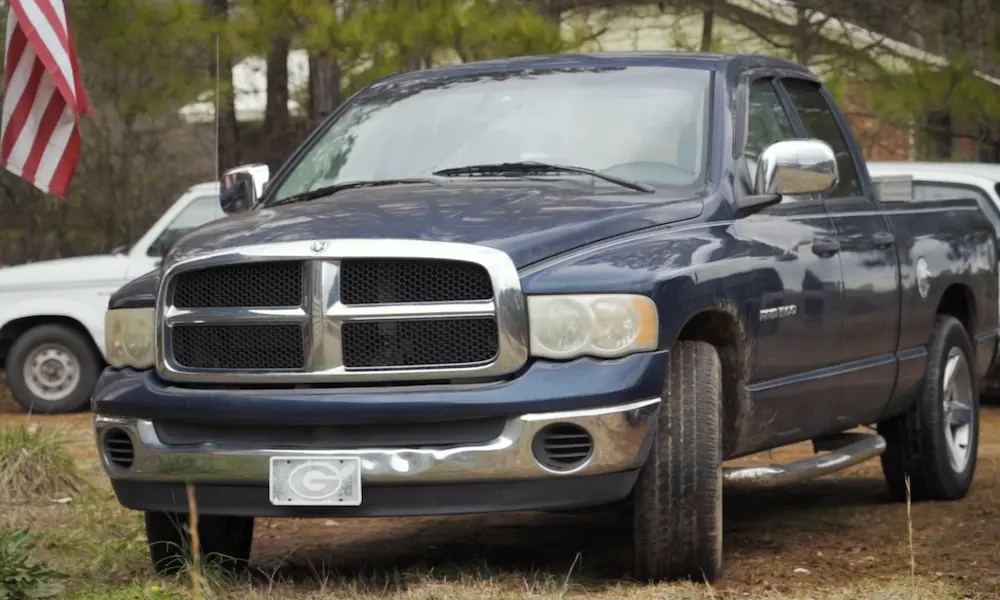
For most Dodge Ram owners doing a standard oil change with a filter swap, the 5.9 Cummins oil capacity is 12 quarts (3 U.S. gallons). That’s the number you’ll hear in forums, see in owner’s manuals, and read on enthusiast breakdowns of the engine.
But here’s the thing — that 12-quart figure only applies to on-highway trucks. Marine engines, industrial units, and custom applications use different sumps, and their capacities can run significantly higher. So before you pour, keep reading.
Oil Capacity by Generation: 12-Valve vs. 24-Valve
The 5.9 Cummins has two major eras. The 12-valve 6BT (1989–1998) and the 24-valve ISB (1998.5–2007) share a similar block architecture, but their documentation doesn’t always agree on exact oil volume. Here’s a clear breakdown:
| Engine Generation | Model Years | Injection System | Oil Capacity w/ Filter (Quarts) | Liters |
|---|---|---|---|---|
| 1st Gen 12-Valve | 1989–1993 | VE Pump | 12.0 | 11.4 |
| 2nd Gen 12-Valve | 1994–1998 | P7100 Pump | 11.0–12.0 | 10.4–11.4 |
| 2nd Gen 24-Valve | 1998.5–2002 | VP44 Pump | 12.0 | 11.4 |
| 3rd Gen 24-Valve | 2003–2004 | HPCR | 12.0 | 11.4 |
| 3rd Gen 24-Valve | 2004.5–2007 | HPCR/610 | 12.0 | 11.4 |
The 11-quart figure you’ll occasionally see for mid-1990s 12-valve engines reflects older factory documentation. Most techs and long-time owners now standardize at 12 quarts, which gives a better safety margin against oil degradation and aeration.
Pro tip: Always pre-fill your oil filter before installing it. The filter holds roughly one quart, and pre-filling it ensures you get near-instant oil pressure on startup. It’s a small habit that saves your turbocharger bearings every single time.
Why the 5.9 Cummins Needs That Much Oil
This engine doesn’t just use oil for friction reduction. The 5.9 Cummins runs J-hook piston cooling nozzles that spray oil directly onto the underside of the piston crowns. This controls heat during heavy towing and high-torque pulls.
That means the 12-quart capacity isn’t generous — it’s necessary. You need enough volume to handle both lubrication and thermal management without burning through the oil’s protective chemistry too fast.
5.9 Cummins Oil Capacity for Marine Engines
If you’re running a marine 5.9 Cummins — like a 6BTA, QSB 5.9, or a Diamond series — the game changes completely. Marine engines run at 80–100% load for extended periods. They need more oil volume for thermal management, and their sumps are designed to handle varying hull installation angles.
| Marine Engine Model | Sump Config | Low Mark (Quarts) | High Mark (Quarts) | Gallons (High) |
|---|---|---|---|---|
| 6BT / 6BTA 5.9 | Standard Marine | 13.0 | 15.0 | 3.75 |
| QSB 5.9 | Electronic Marine | 13.0 | 15.0 | 3.75 |
| High Output 6BTA (Diamond) | Diamond Series | 14.0 | 16.0 | 4.00 |
| QSB 6.7 (for comparison) | High Pressure Marine | 12.5 | 14.4 | 3.60 |
The Marine Dipstick Calibration You Can’t Skip
Because marine engines sit at an angle in the bilge, factory dipstick markings are often inaccurate for your specific installation. Marine technicians recommend draining the pan completely, adding the specified low-mark volume, marking the dipstick yourself, then topping up to the high mark. This prevents two expensive problems:
- Too little oil → pump sucks air in heavy seas → bearing damage
- Too much oil → crankshaft hits the oil surface → aeration and foaming
Industrial and Stationary Applications: Bigger Pans, More Oil
Agricultural equipment, generators, fire pumps, and excavators often use the 5.9 Cummins with completely different oil pan configurations. These applications prioritize larger oil reservoirs for extended run times at constant load.
The 6BTA5.9 F1 fire pump engine, for example, uses a rear-sump steel pan with a system capacity of 15.0 quarts (14.2 liters). Here’s how common industrial pan part numbers break down:
| Pan Part Number | Application | Sump Location | Capacity (Quarts) |
|---|---|---|---|
| 3915703 | Mid-Duty Truck / Industrial | Rear | 15.0 |
| 2831341 | ISB / QSB Heavy Duty | Front/Rear | 15.0 |
| 3914013 | 6CT / 6BT High Capacity | Front | 20.0 |
| 4089093 | OEM Dodge Replacement | Rear | 12.0 |
| 18-944 | Canton Racing / Custom | Universal | 20.0 |
High-capacity stationary generator configurations can push total system capacity to 24–28 quarts to maintain thermal stability across 500-hour service intervals.
Choosing the Right Oil: Viscosity and Temperature
The 5.9 Cummins has relatively generous bearing clearances compared to modern gasoline engines, so it needs heavy-duty diesel engine oil (HDDEO). SAE 15W-40 is the gold standard across all generations and most climates.
Here’s how to adjust for temperature:
- Warm and standard climates: SAE 15W-40 — protects the turbocharger and high-pressure fuel components best
- Cold climates (below freezing): SAE 10W-30 — improves cold-start lubrication; pair it with a block heater near 0°F
- Arctic conditions (well below 0°F): Synthetic SAE 5W-40 or 5W-30 — the only option that stays fluid enough to reach turbocharger bearings during initial cranking
For full synthetic options, Shell Rotella T6 and Valvoline Premium Blue are consistently recommended for heavy towing or extreme heat duty cycles.
API CK-4 vs. FA-4: One of These Will Hurt Your Engine
In late 2016, the API introduced two new oil categories. Getting this wrong is an easy and expensive mistake.
API CK-4 replaced CJ-4. It’s fully backward compatible with every 5.9 Cummins produced since 1989. It offers better oxidation resistance, shear stability, and aeration control. This is your oil.
API FA-4 is a low-viscosity category designed for 2017 and newer heavy-duty engines. It runs a thinner lubricating film by design — which means it doesn’t provide adequate boundary lubrication for the larger clearances in legacy B-series engines. Cummins specifically excludes FA-4 from use in engines without modern aftertreatment systems. Don’t use it in your 5.9. Full stop.
ZDDP and Your 12-Valve Flat-Tappet Cam
This one matters specifically for 12-valve 6BT owners. The flat-tappet camshaft design relies on Zinc Dialkyldithiophosphate (ZDDP) — an anti-wear additive — to protect cam lobes from the high pressure of the valve springs. Without adequate ZDDP, cam lobes wear fast.
Modern CK-4 oils typically contain 800–1,200 ppm of zinc. For a stock, well-seasoned 12-valve engine, 1,200 ppm is enough. For engines with aftermarket high-lift cams or heavier valve springs, you may need 1,500–1,600 ppm. A ZDDP supplement or “Classic” diesel oil handles that. Just don’t go above 2,000 ppm — too much zinc gets corrosive and works against you.
Oil Change Intervals: How Often Should You Actually Change It?
Intervals depend entirely on how you use the engine, not just the calendar.
Dodge Ram On-Highway Intervals
- 1989–2002 (Mechanical & VP44): Every 6,000–7,500 miles under normal use. Drop to 3,000–3,750 miles if you tow regularly, idle a lot, or work in dusty conditions.
- 2003–2007 (Common Rail HPCR): The improved combustion efficiency extends normal-duty intervals to 15,000 miles or 12 months. Severe duty stays at 7,500 miles or 6 months.
Marine and Industrial Hour-Based Intervals
- 6BT / 6BTA Marine: Change oil every 200–300 hours. Commercial or harsh environments push that toward 200 hours to control soot-induced viscosity increase.
- Stationary / Generator: Every 250–500 hours depending on sump size and oil quality.
Three Mechanical Issues That Trash Your Oil System
The Killer Dowel Pin (KDP)
12-valve and early 24-valve engines (up to ~2002) have a small steel locating pin in the timing gear housing. Vibration can work it loose and drop it into the timing gears. Best case: it cracks the housing and dumps your oil. Worst case: catastrophic timing failure. Fixing the KDP is mandatory preventative maintenance on these engines. Do it before it decides to do you.
The “53” Block Casting Problem
Some 24-valve ISBs built between 1999 and 2002 used a thinner-walled block casting marked with a large “53.” These blocks crack on the passenger side below the exhaust manifold. The result is usually a coolant leak — but the overheating that follows degrades your oil fast and leads to bearing failure if you miss it.
Turbocharger Coking
The 5.9’s lubrication system cools the turbocharger bearings. Shut the engine down immediately after hard use and the hot oil left sitting in the turbo center housing carbonizes into hard deposits. Those deposits block future oil flow and destroy the turbo bearings. Let the engine idle for 2–5 minutes after any hard pull. It’s cheap insurance.
A Note on the NHTSA Technical Service Bulletin
For owners of later-model 5.9 and 6.7 Cummins trucks, this NHTSA technical service bulletin covers lubrication system-related service procedures worth reviewing, particularly if you’re dealing with oil consumption concerns or pressure irregularities on your specific vehicle.
The Bottom Line on 5.9 Cummins Oil Capacity
Here’s the fast-reference summary:
- Dodge Ram (all years): 12 quarts with filter
- Marine 6BT / 6BTA / QSB 5.9: 13–15 quarts depending on sump
- Industrial / Fire Pump / High-Output Marine: 15–20+ quarts
- Best oil for most applications: SAE 15W-40, API CK-4
- Never use: API FA-4
The 5.9 Cummins earns its legendary reputation honestly — but only when the lubrication system gets what it needs. Get the capacity right, use the right oil spec, and stick to an interval that matches your actual duty cycle. The engine will return the favor with hundreds of thousands of miles of reliable service.