Changing the oil on your 6.7 Cummins shouldn’t feel like defusing a bomb — but for many owners, it absolutely does. The oil filter location changes depending on your model year, and picking the wrong approach wastes time, makes a mess, and can damage your truck. This guide covers every generation so you know exactly what you’re dealing with before you grab a wrench.
Why the Oil Filter Location Actually Matters
On a 6.7 Cummins, the oil filter isn’t just a $15 part you swap in five minutes. This engine holds 12 full quarts of oil, and the filter sits in tight, awkward spots (at least on pre-2025 trucks). Get the location wrong, and you’ll dump hot oil on your front axle, your arm, and your dignity.
Knowing your exact filter location also helps you:
- Buy the right tools before you start
- Avoid a $300 shop bill for a DIY job
- Prevent dry starts that destroy turbocharger bearings
Let’s break it down by generation.
2007.5–2012: Buried Deep on the Passenger Side Block
The original 6.7 Cummins debuted mid-2007 to replace the beloved 5.9L and meet new federal diesel emissions standards. Cummins added EGR systems and a Diesel Particulate Filter, which crowded the engine bay badly.
Where’s the filter? Lower passenger side of the engine block, mounted upside down on a threaded stud.
You can’t reach it from above without removing the entire air intake. The only practical access point is through the passenger side front wheel well, reaching up through a narrow gap between the frame rail and suspension components.
The big problem: The filter mounts inverted and holds significant oil volume. When you break it loose, oil immediately starts draining — and the gap is too tight to drop the filter straight down. You have to tilt it sideways to drag it out, which guarantees a spill if you’re not prepared.
OEM Filter: Mopar 05083285AA / Fleetguard LF16035
2013–2018: Same Location, Same Headaches
Many owners consider the 2013–2018 generation the most refined and reliable platform of the modern Cummins era. Power climbed to 385 hp and 900 lb-ft of torque. The emissions system got smarter with DEF injection added.
Where’s the filter? Identical placement: lower passenger side, inverted spin-on canister.
Nothing changed ergonomically. The filter still sat deep in the wheel well, still required awkward sideways extraction, and still made a mess if you weren’t careful. Community threads confirm the frustration — Reddit users regularly compare notes on getting the filter out without coating the axle in used oil.
Two common workarounds emerged during this era:
Option 1 — Through the Wheel Well
Reach in from the passenger front wheel well with a 93mm, 15-flute cap-style wrench on a 3/8-inch drive with a long extension. Less swing space required than a band wrench.
Option 2 — Top Down via Air Intake Removal
Loosen the hose clamps, pull the 10mm retaining bolts, and completely remove the air intake tube. This creates a clear vertical path to the filter and prevents the sideways tilt problem — but adds real time to a basic oil change.
OEM Filter: Mopar 05083285AA / Fleetguard LF16035
The Tool You Actually Need for 2007.5–2024 Trucks
The aftermarket solved what the factory didn’t. An oil filter plug tool — available from Lisle, Powerbuilt, and Doc’s Diesel — threads directly into the center opening of the spin-on filter after you break it loose.
Here’s how it works:
- Break the filter loose with your 93mm cap wrench
- Spin the filter fully off the block stud by hand
- Immediately thread the plug tool into the center of the oil-filled filter
- The plug seals against the factory gasket — zero drips
- Use the T-handle or U-handle to tilt and extract the filter through the wheel well
The same tool works in reverse for installation. Pre-fill your new filter, plug it, maneuver it into position, yank the plug, and thread it onto the stud fast. Pre-filling prevents a dangerous dry start that starves your turbo bearings.
2019–2024: Access Window Helps, But Doesn’t Fix Everything
The fifth-generation Ram HD arrived in 2019 with a lighter compacted graphite iron block and eventually topped out at a jaw-dropping 1,075 lb-ft of torque in high-output form. Engineers also finally acknowledged the filter access problem.
Where’s the filter? Still lower passenger side, still an inverted spin-on canister.
The fix? A removable access flap built into the plastic inner fender liner. This portal lets you reach straight through the wheel well to the filter housing without fighting suspension components. The YouTube tutorials on this generation show how much cleaner access feels compared to earlier trucks.
The honest truth: it’s better, but not perfect. The filter still mounts upside down. You still need the oil filter plug tool. You still need the 93mm cap wrench. The access window just removes some of the blind reaching and structural interference.
OEM Filter: Mopar 05083285AA / Fleetguard LF16035
2025–2026+: A Complete Redesign That Changes Everything
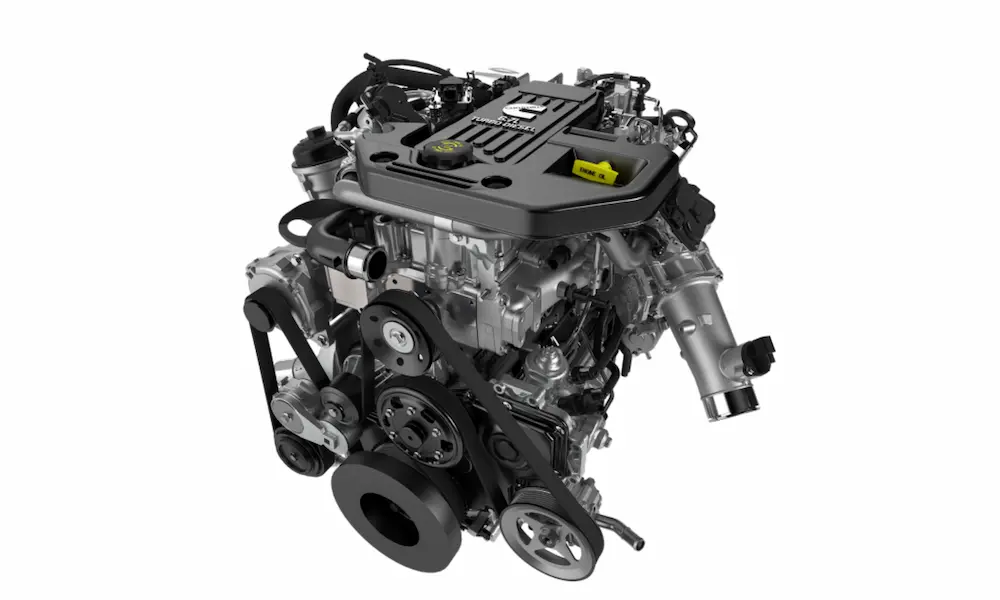
Cummins officially launched the next-generation 6.7L Turbo Diesel for 2025 Ram Heavy Duty trucks, and the oil filter location got a total rethink.
Where’s the filter? Top of the engine, passenger side — fully accessible by opening the hood and standing over the engine bay.
Gone is the inverted spin-on metal canister. The 2025+ engine uses a permanent composite housing with a replaceable cartridge element. You don’t buy a metal can anymore — you buy a paper element and a rubber seal. The Mopar 68677810AA and the Fleetguard LF16453 are the correct replacements.
How to Change the 2025+ Oil Filter (Step-by-Step)
This system looks simple but has one critical safety step that most people skip:
- Let the engine cool slightly after shutdown
- Locate the small 6mm Allen plug at the center of the housing cap
- Remove the 6mm Allen plug first — this relieves internal hydraulic pressure
- Allow the retained oil to gravity-drain back into the reservoir
- Use a 28mm low-profile socket (like CTA Tools part 7888) to unthread the main housing cap
- Lift the cap out vertically — it brings the cartridge element with it
- Swap the media, replace the sealing rings, reinstall to factory torque specs
Skip step 3 and hot oil will shoot out of the threads when you unscrew the cap. Service tutorials confirm this is a real burn hazard. Don’t skip it.
OEM Filter: Mopar 68677810AA / Fleetguard LF16453
Quick Reference: 6.7 Cummins Oil Filter Location by Year
| Model Year | Filter Location | Filter Type | Access Method | OEM Part Number |
|---|---|---|---|---|
| 2007.5–2012 | Lower passenger side block | Spin-on canister | Wheel well / underneath | Mopar 05083285AA |
| 2013–2018 | Lower passenger side block | Spin-on canister | Wheel well or air intake removal | Mopar 05083285AA |
| 2019–2024 | Lower passenger side block | Spin-on canister | Fender liner access window | Mopar 05083285AA |
| 2025–2026+ | Top of engine, passenger side | Cartridge element | Over engine bay (standing) | Mopar 68677810AA |
Oil Specs That Go With Every Filter Change
Swapping the filter without using the right oil is a waste of your time and money. Here’s what you need:
Capacity: All generations take exactly 12 quarts (3 gallons). Overfill it and you risk blowing main seals or creating an engine runaway condition. Underfill it and you’re destroying bearings. Always verify with the dipstick after filling.
Oil Type: Must carry API CK-4 certification and meet Cummins CES 20081 or CES 20086 specs. These are low-ash formulations — critical for protecting your DPF. Using old high-ash oil clogs the DPF’s ceramic honeycomb structure and eventually costs thousands in replacement parts.
Viscosity by Generation and Climate
| Generation | Standard Temp | Cold Climate (Below 0°F) |
|---|---|---|
| 2007.5–2018 | 15W-40 | 5W-40 Full Synthetic |
| 2019–2026+ | 10W-30 Full Synthetic | 5W-40 Full Synthetic |
Many commercial operators and heavy towers run 5W-40 year-round in newer trucks for maximum film strength under load, accepting a minor theoretical fuel economy trade-off.
Don’t Forget the Crankcase Ventilation Filter
Sitting on top of the valve cover, the crankcase ventilation (CCV) filter strips oil mist from blowby gases before they recirculate into the intake. Replace it every 67,500 miles under normal conditions — or every 15,000–20,000 miles on a tuned or hard-working truck.
A clogged CCV spikes crankcase pressure, which prevents turbocharger oil from draining back into the pan. That oil backs up past the turbo seals, burns blue smoke out the exhaust, and eventually kills the turbocharger. It’s a cheap filter with expensive consequences if you ignore it.
The 2025 platform uses a new part number for this filter — Mopar 68677813AA — and it now sits conveniently clustered near the new top-mounted oil and fuel filters for a clean, centralized service zone.
What the 2025 Redesign Means for DIY Owners
The 2025 shift isn’t just an engineering win — it’s a practical game-changer for anyone doing their own maintenance. On older trucks, a complete service meant:
- Passenger wheel well for the oil filter
- Driver side engine bay for the primary fuel filter
- Crawling under the truck for the chassis-mounted water separator
On a 2025+, you do all of it standing in one spot over the passenger side of the engine bay. The dual-stage fuel filters now sit right next to the oil filter housing — a Stage 1 five-micron cartridge and a Stage 2 three-micron NanoNet cartridge, both top-load. Open the hood, swap three filters, close the hood. Done.
For fleet operators tracking labor hours, this consolidation makes a measurable difference in service time across every truck in rotation.
One Last Thing: Use the Filter as a Diagnostic Tool
If your 2019–2024 Cummins starts ticking, cut open the old spin-on filter before you throw it away. Metal flakes in the pleats are a direct early warning sign of lifter and camshaft failure. Catching it early means addressing it before metallic debris reaches the main bearings and turns a $2,000 repair into a full engine replacement.
Your oil filter sees everything that circulates through your engine. It’s worth 60 seconds to inspect it before it goes in the trash.