Looking to understand what makes the GM 604 crate engine the go-to choice for circle track racers across North America? Whether you’re building your first race car or considering an upgrade from a 602, this guide breaks down everything you need to know about this sealed racing powerplant. We’ll explore the specs, performance figures, and maintenance requirements that have made the 604 a staple in dirt track competition.
What Is a 604 Crate Engine?
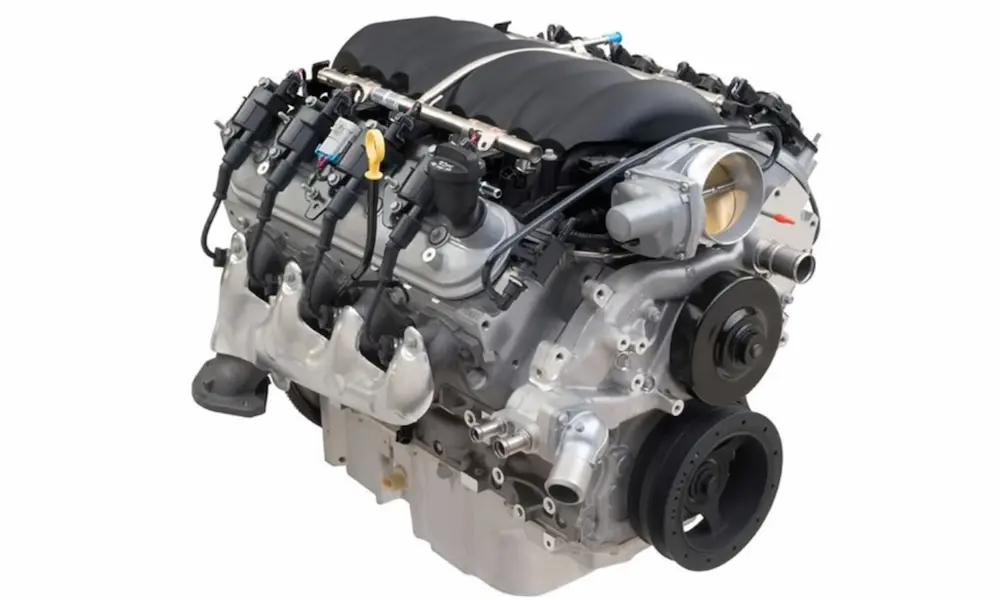
The GM 604 crate engine (officially designated as the CT400) is a factory-sealed 350 cubic inch small block Chevrolet racing engine designed specifically for circle track competition. It gets its “604” nickname from the last three digits of its original GM part number (19434604), though newer versions carry updated part numbers like 88869604.
This engine represents Chevrolet Performance’s solution to rising racing costs. Based on the Fast Burn 385 street crate engine, the 604 includes race-specific modifications while maintaining factory sealing to ensure competitive parity between racers. The sealed design means teams can’t modify internal components, putting the focus back on driver skill rather than engine development budgets.
Core Engine Specifications
The 604 crate engine combines proven small block architecture with racing-specific components to deliver reliable power. Here’s a breakdown of its core specifications:
Block and Rotating Assembly
- Cast iron four-bolt main block (casting #10243880)
- 9.025-inch deck height (±0.001 inch tolerance)
- 55-pound forged steel crankshaft with 3.480-inch stroke
- Powdered metal connecting rods measuring 5.7 inches
- Rod weight: 604.15 grams (±10 grams)
- Hypereutectic aluminum pistons with flat crowns and valve reliefs
- Piston diameter: 3.998-3.999 inches
- Piston weight: 533 grams each
- Compression ratio: 9.72:1
The engine’s foundation uses traditional small block architecture with tighter manufacturing tolerances than typical production engines. The forged crankshaft and balanced connecting rods provide durability for sustained high-RPM operation.
Cylinder Heads and Valvetrain
- Fast Burn aluminum cylinder heads (casting #19417568)
- 62cc combustion chambers
- 205cc intake port volume (77cc exhaust)
- 2.00-inch intake valves
- 1.55-inch exhaust valves
- Aluminum roller rocker arms (1.5:1 ratio)
- LS-style beehive valve springs (in models after 2014)
The Fast Burn cylinder heads represent the engine’s biggest advantage over the lower-spec 602 crate engine. With larger intake runners and improved combustion chamber design, these heads significantly improve airflow at higher RPMs, contributing to the engine’s 404 horsepower output.
Camshaft Specifications
- Steel hydraulic roller camshaft
- Valve lift: 0.474 inches (intake), 0.510 inches (exhaust)
- Lobe lift: 0.316 inches (intake), 0.340 inches (exhaust)
- Duration: 208° intake, 221° exhaust (at 0.050-inch lift)
- 112° lobe centerline
The camshaft profile balances low-end torque with high-RPM breathing capacity. The hydraulic roller design offers a maintenance advantage over solid lifter setups while still providing reliable valve control at racing RPMs.
Performance Numbers and Output
The 604 crate engine delivers impressive performance that makes it competitive across various racing formats:
- Horsepower: 404 HP at 5,600 RPM
- Torque: 406 lb-ft at 4,600 RPM
- Maximum recommended RPM: 5,800
- Fuel requirement: 92-93 octane unleaded
These numbers represent a significant step up from the 602 crate engine’s 350 horsepower. The torque curve peaks relatively low in the RPM range at 4,600, providing strong acceleration out of corners—a crucial advantage in dirt track racing.
While these are the factory specifications, dyno testing has shown that optimized tuning can yield additional gains. Switching to alcohol fuel instead of gasoline typically adds about 14 lb-ft of torque and 4 horsepower, while proper timing adjustments and spark plug selection can unlock further performance.
Carburetion and Ignition Requirements
For optimal performance, the 604 engine requires:
- Recommended carburetor: Holley 650 HP (part #80541-1)
- Baseline jetting: 73 primary, 73 secondary
- Spark plugs: AC Delco MR43LTS with 0.045-inch gap
- Ignition timing: 36° total advance at 4,000 RPM
- Recommended headers: 1-5/8″ to 1-3/4″ primary tubes with 3.5″ collectors
The relatively modest compression ratio allows the engine to run safely on pump gasoline, which helps reduce operating costs compared to race fuel requirements. The ignition timing spec of 36 degrees represents an increase from the 32 degrees specified for 602 engines, taking advantage of the improved combustion chamber design.
Racing Applications and Sanctioning
The 604 crate engine has been widely adopted across numerous racing sanctioning bodies:
IMCA and Regional Series
The International Motor Contest Association (IMCA) represents the largest user base for 604 engines, particularly in Late Model divisions. These series require unaltered sealed GM 604 crate engines with additional IMCA Cable-Lok systems to prevent tampering.
Other organizations that commonly use the 604 include:
- United Midwest Promoters (UMP)
- United States Racing Association (USRA)
- Numerous state and local sanctioning bodies
The engine’s versatility allows it to perform effectively in both dirt Late Model and Modified applications, though specific rules around weight breaks and aerodynamic packages vary between sanctioning bodies.
Technical Regulations
Most racing series using 604 crate engines specify:
- Minimum vehicle weight: 2,300 pounds after race with driver
- Engine setback: 6 inches from center of upper ball joint to #1 spark plug
- Stringent seal verification during technical inspection
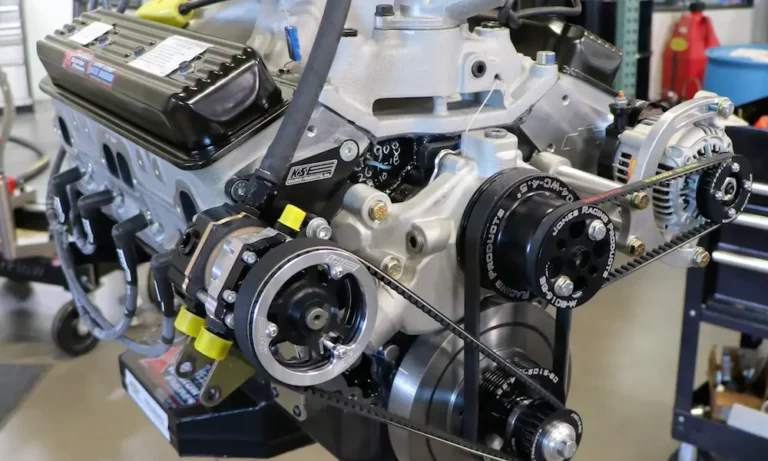
The sealed nature of the engine means internal modifications are prohibited, though certain external components like valve covers, timing covers, and headers may be substituted with approved aftermarket pieces.
This table summarizes how different series regulate the 604 crate engine:
| Racing Series | Minimum Weight | Engine Setback | Special Requirements |
|---|---|---|---|
| IMCA Late Model | 2,300 lbs | 6″ from ball joint to #1 plug | IMCA Cable-Lok seals |
| UMP Modified | 2,400 lbs | 6″ (±1″ tolerance) | Series-specific seals |
| Regional Late Models | 2,300-2,350 lbs | Varies by track | Often allow weight breaks |
Maintenance Requirements
While the sealed design limits what can be modified, proper maintenance is essential for maximizing engine life and performance.
Oil Change Intervals and Procedures
Racing applications demand more frequent oil changes than street engines:
- Recommended interval: Every 100-150 racing laps or 5-10 racing events
- Oil capacity: 8 quarts with dual kick-out oil pan
- Normal oil pressure: 40 PSI at 2,000 RPM
- Recommended oil: Mobil 1 Racing 15W-50 synthetic
Proper warm-up procedures are critical:
- Maintain RPM below 1,200 for first 30-45 seconds
- Ensure oil pressure exceeds 40 PSI
- Gradually increase to 1,600-2,000 RPM as water temperature reaches 140°F
- Final warm-up requires minimum oil temperature of 150°F before racing
Valve Adjustment and Timing
The hydraulic roller valvetrain requires periodic adjustment:
- Tighten rocker arm nuts to zero lash
- Advance an additional 1/2 to 3/4 turn
- Rocker arm stud torque: 50-58 lb-ft
Ignition timing should be verified regularly:
- Check total advance at 4,000 RPM with vacuum advance disconnected
- Confirm 36° total advance for optimal power without detonation
Rebuild Specifications and Tolerances
When rebuilding a 604 crate engine, racing series regulations typically permit minimal machining operations to maintain competitive parity:
Allowable Machining Parameters
- Maximum overbore: 0.008″ increase from standard 4.000″ bore
- Block deck surfacing limit: 0.005″ maximum
- Cylinder head deck surfacing: 0.005″ maximum
- Compression ratio limits: 9.6:1 to 10.1:1 (varies by series)
For overbore applications, Mahle oversized pistons (part numbers MHL9301278 series) are typically approved as replacement components.
Prohibited Modifications
Racing series strictly prohibit:
- Lightening of internal engine components
- Knife-edging or material removal from crankshafts
- Connecting rod modifications
- Additional water lines or block strengthening
- Lifter bore alterations
Replacement parts must be OEM GM components or specifically approved aftermarket equivalents, with documentation required for any non-standard components.
602 vs. 604: Key Differences
For racers considering an upgrade from the 602, these are the key differences that make the 604 more powerful:
| Component | 602 Crate Engine | 604 Crate Engine |
|---|---|---|
| Cylinder Heads | Cast iron Vortec | Aluminum Fast Burn |
| Intake Port Volume | 170cc | 205cc |
| Intake Valve Size | 1.94″ | 2.00″ |
| Exhaust Valve Size | 1.50″ | 1.55″ |
| Rocker Arms | Stamped steel | Aluminum roller |
| Valve Springs | Standard | LS-style beehive |
| Horsepower | 350 HP | 404 HP |
| Torque | 390 lb-ft | 406 lb-ft |
| Timing Advance | 32° | 36° |
The Fast Burn cylinder heads represent the most significant performance advantage, with larger intake runners and improved combustion chamber design allowing the engine to breathe more effectively at higher RPMs.
The Future of 604 Crate Racing
The GM 604 crate engine has become a cornerstone of affordable circle track racing across North America. Its sealed design and strong performance have created a level playing field that emphasizes driver skill and chassis setup over engine development budgets.
Chevrolet Performance continues to support the platform with replacement parts and technical resources, ensuring the engine will remain viable for years to come. As racing series continue to adopt cost-control measures, the 604’s popularity seems likely to grow rather than diminish.
For racers seeking a reliable, competitive powerplant that won’t break the bank, the 604 crate engine remains one of the best options in modern circle track racing.