If your GM truck, SUV, or performance car is shuddering, slipping, or throwing codes, you might already be dealing with 6L80 transmission problems. This guide breaks down every major failure point — from the torque converter to the valve body — so you know exactly what’s happening and what to do about it. Stick around, because the last section could save you thousands.
What Is the 6L80 Transmission?
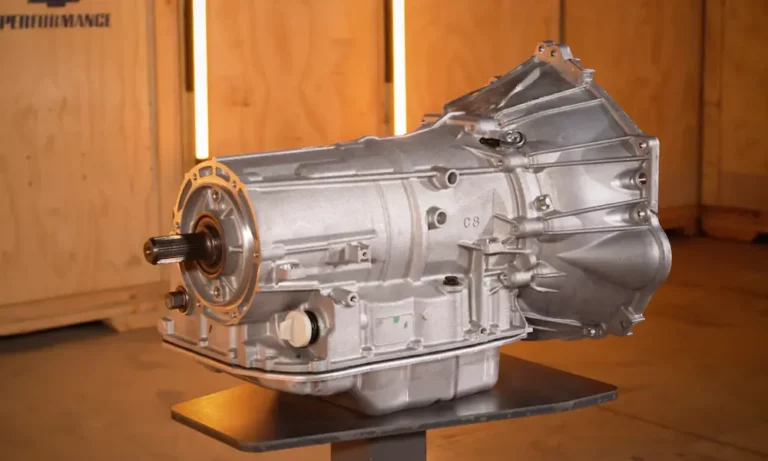
The Hydra-Matic 6L80 debuted in 2006 and quickly became GM’s go-to six-speed automatic for the Chevrolet Silverado, GMC Sierra, Tahoe, Yukon, Cadillac Escalade, Corvette, and Camaro. It replaced older four-speed units with a smarter, more efficient design that used electronic controls and clutch-to-clutch shifting.
The key innovation — and the key headache — is the Transmission Electro-Hydraulic Control Module (TEHCM). It combines the transmission control module, solenoids, and pressure switches into one unit that lives inside the transmission fluid. No external wiring harness, but extremely sensitive to heat and contamination.
Nearly two decades of field data have revealed that this transmission has some predictable, cascading failure patterns. The good news? Once you know them, you can stop them.
The Torque Converter: Where Most 6L80 Problems Start
Ask any transmission specialist about 6L80 transmission problems and they’ll point straight at the torque converter. It’s the most common starting point for total transmission failure.
GM built the factory converter with a thin stamped-steel cover and a single-disc lockup clutch. That design works fine for light-duty driving. But for trucks that tow, haul, or run in hot climates, it’s not enough.
The Shudder You Can’t Ignore
The Transmission Control Module commands a slight, controlled slip in the torque converter clutch (TCC) to absorb engine vibrations. Under heavy loads or high temperatures, that thin cover can “balloon” — physically expand — which distorts the clutch apply surface. The friction lining glazes over and starts to disintegrate.
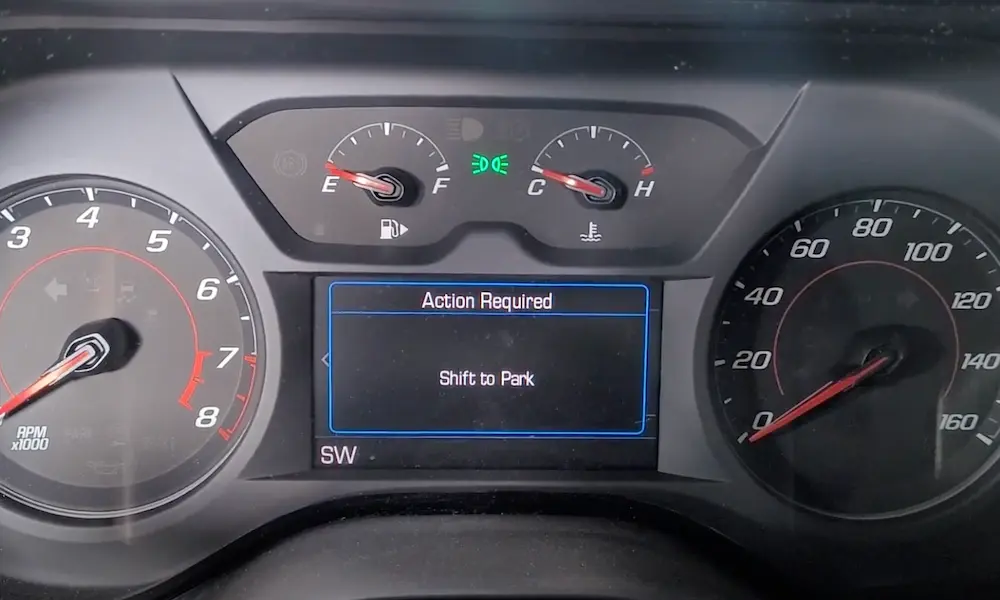
You’ll feel it as a shudder between 35 and 55 mph during light acceleration or steady cruising. It feels like driving over a rumble strip. That sensation is the clutch lining grabbing and slipping in rapid succession.
The “Glitter Machine” Effect
Here’s where a single failing part turns into a full transmission rebuild. The 6L80’s torque converter and main case share the same fluid. Once the converter clutch starts shedding debris, that material — metallic particles, abrasive friction dust, and sludge — cycles through the entire hydraulic system.
| Contaminant Type | What It Hits | What Breaks |
|---|---|---|
| Metallic shrapnel | Oil pump vanes | Scoring, loss of line pressure |
| Friction dust | TEHCM pressure switches | Membrane puncture, limp mode |
| Glazed material | Valve body bores | Sticking valves, shift flare |
| Sludge and silt | Clutch pistons | Seal hardening, clutch burnout |
This is why replacing just the torque converter often isn’t enough. By the time you feel the shudder, the contamination has usually already spread.
Oil Pump Failure: The Collateral Victim
The 6L80 uses a variable-displacement vane-style pump in the bell housing. It’s the only source of hydraulic pressure for the entire transmission. When converter debris enters the system, it acts like a grinding compound against the pump’s precisely machined aluminum surfaces.
As those surfaces wear down, the pump loses efficiency. You’ll notice it most when the fluid is hot, because thinner warm fluid leaks past the worn vanes more easily. A delayed engagement into Drive or Reverse that only happens when the vehicle is warmed up is a classic sign.
Without enough pressure, the clutch packs can’t hold. They slip. Then they burn.
Stator Support Seal Leaks
Early 6L80 units also had a problem with the stator support sealing rings — the parts that direct fluid to the 3-5-Reverse and 1-2-3-4 clutch drums. Those rings leaked, especially during cold starts, causing delayed Reverse engagement or a slipping 1-2 shift until everything warmed up. GM updated the ring design, but the newer parts don’t always fit older pump housings without machine work.
Valve Body Wear: When Hydraulics Get Sloppy
The valve body is an aluminum manifold with steel valves constantly moving inside it. Over time, those steel valves enlarge the aluminum bores. Contaminated fluid speeds that process up dramatically.
When a bore wears out, pressure leaks past the valve. You lose control of that hydraulic circuit. The shift quality goes sideways.
The Four Valves That Matter Most
Pressure Regulator (PR) Valve — Controls line pressure for the whole transmission. Wear here causes either pressure spikes that crack drums or pressure drops that burn clutches. It also manages the lube circuit that keeps everything from running dry.
TCC Regulator Valve — Manages converter clutch application force. Worn bore = wrong TCC apply pressure = more shudder.
Actuator Feed Limit (AFL) Valve — Steps down mainline pressure to a level the solenoids can handle. When the bore wears, solenoids get inconsistent pressure and you start seeing codes like P0751 and P0776.
Clutch Select Valves — Route fluid to the correct clutch packs. Sticking or leaking here causes a “tie-up” (two gears at once) or a complete neutral condition where the transmission won’t find a gear.
Sonnax and TransGo valve body kits replace worn aluminum valves with hardened steel and add seals to circuits that were originally metal-on-metal. This is one of the most effective upgrades for restoring shift quality.
Hard Part Failures: The Mechanical Weak Spots
Some 6L80 transmission problems aren’t about fluids or electronics. They’re about parts that simply weren’t built strong enough.
3-5-Reverse Drum Laser Weld Crack
The 3-5-Reverse drum is welded to the input hub with a laser weld. Under stress and repeated engagement cycles, that weld can crack. When it does, hydraulic pressure escapes and you lose 3rd, 5th, or Reverse. In bad cases, the drum separates completely. GM released an updated drum design — you can identify it by a dot-matrix QR code printed on the housing.
1-2-3-4 Apply Piston Cracking
This is the clutch that gets the vehicle moving. The apply piston is cast aluminum, and it has a documented tendency to crack in the rib area due to casting flaws. A cracked piston can’t hold pressure, which means no movement in the first four forward gears. GM’s updated piston has 22% more rib area for significantly better durability.
4-5-6 Clutch Hub and Dampener
The 4-5-6 dampener absorbs engine pulses when the torque converter is locked. It can fracture under heavy load, leaving you with no 4th, 5th, or 6th gear while the lower gears still work.
| Component | How It Fails | What You’ll Notice | The Fix |
|---|---|---|---|
| 3-5-R Drum | Laser weld cracks | Slip in 3rd, 5th, Reverse; P0776 | Updated drum with QR label |
| 1-2-3-4 Piston | Casting cracks | No forward movement or clutch slip | HD piston with 22% more rib area |
| 4-5-6 Hub | Dampener fractures | Loss of overdrive gears | Updated manufacturing design |
| Low Sprag | Outer race spline fails | Drops to neutral after launch | Replacement and full inspection |
Overheating: The Bypass Valve Problem Nobody Talks About
Heat destroys transmissions. The 6L80 uses a thermostatic bypass valve (TBV) to help the fluid reach operating temperature quickly by routing it around the cooler until it warms up.
The problem? Factory bypass valves in many GM trucks were set to open at 190°F. That’s dangerously close to the temperature where Dexron VI starts to break down. If the valve’s internal plastic cup fails and sticks closed — which it frequently does — fluid temps can shoot past 230°F or even 250°F.
At those temperatures, the fluid oxidizes, loses its friction-modifying properties, and hardens the rubber seals throughout the transmission. This accelerates the shudder problem and creates internal pressure leaks.
GM responded with an updated bypass valve (referenced in TSB 21-NA-199) that opens at 158°F instead of 190°F. Many professional builders go further and do a full bypass delete, replacing the thermostatic valve with a full-flow block so fluid always circulates through the cooler. Pairing that with a larger auxiliary cooler — like a Tru-Cool 40k — keeps temperatures safely below 180°F even when towing.
Reading the Codes: What Your Scan Tool Is Actually Telling You
The 6L80’s diagnostic system can be misleading. A mechanical failure — like a leaking seal — can trigger what looks like an electrical fault code. Here’s what the most common codes actually mean:
- P0741 (TCC Performance): Too much slip when the converter should be locked. Almost always a failing converter clutch.
- P0776 / P0796 (Pressure Control Solenoid B/C Performance): The TCM commanded a pressure but didn’t see the expected gear ratio change. Could be a solenoid, a stuck valve, or a cracked drum.
- P2714 / P2715 (Pressure Control Solenoid D Performance): Often tied to the 1-2-3-4 clutch circuit — suspect the cracked apply piston.
- P0711 / P0713 (Fluid Temperature Sensor): The TEHCM’s temp sensor is sending bad data. Wrong temperature readings cause the TCM to command the wrong line pressure, which produces harsh or soft shifts.
One critical step after any 6L80 repair: the TEHCM must be programmed to the vehicle’s VIN using GM’s SPS2 system, and a “Fast Learn” procedure must be run with a scan tool. Skip this and the TCM will apply old, high-wear pressure values to new, tight clutches — destroying them quickly.
The TEHCM: Four Generations, Four Sets of Headaches
The TEHCM has gone through distinct generations, each with its own known failure points.
| TEHCM Generation | Model Year Range | Known Vulnerabilities |
|---|---|---|
| Gen 1 | 2006–2009 | Frequent pressure switch membrane ruptures |
| Gen 1 Updated | 2010–2013 | Fluid intrusion into circuit boards |
| Gen 2 | 2014–2016 | High sensitivity to voltage drops and poor grounds |
| Gen 2 Global | 2017–2020 | Solenoid sticking from debris accumulation |
The TEHCM is also the reason you need to keep your battery and grounds in good shape. A weak battery or corroded ground can cause enough electrical noise to send the TEHCM into limp mode or trigger false fault codes.
The Right Fluid — And When to Change It
The 6L80 runs on Dexron VI full-synthetic fluid. That’s it. Don’t use Dexron ULV (for 10-speeds) or Mobil 1 LV ATF HP “Blue Label” — that fluid was developed specifically for the 8L90 eight-speed and isn’t the standard spec for the 6L80.
Shudder that’s caused by depleted friction modifiers in the fluid requires more than a quick top-off. TSB 20-NA-142 outlines a multi-stage fluid exchange that uses 12 to 16 quarts of fresh Dexron VI across several pan drops to fully flush out degraded additives.
Change your fluid every 30,000 to 45,000 miles. Pull the pan, replace the filter, and inspect the magnet for metal accumulation. This single habit catches failing components before they contaminate the entire system.
The Legal Side: GM’s Transmission Litigation
6L80 transmission problems aren’t just a mechanical issue — they’ve become a legal one. The class-action lawsuit Speerly v. General Motors alleges that GM knowingly sold vehicles with defective transmissions that created safety hazards, with some owners reporting shifts so violent they felt like a rear-end collision.
Internal GM documents revealed during litigation show the manufacturer identified root causes for these defects as early as 2014 but directed dealers to describe the symptoms as normal behavior.
The 6L80’s core failures — converter shudder, thermal management failures — share the same fundamental mechanisms as the 8L90 at the center of that lawsuit. More recently, GM issued major recalls for its 10-speed transmissions due to faulty transmission control valves that could cause rear wheels to lock up at highway speed. While the 6L80 isn’t under that specific recall, the pattern across GM’s transmission lineup suggests that proactive maintenance isn’t optional — it’s protection.
How to “Bulletproof” Your 6L80
If you tow, haul, or just want this transmission to outlast the truck, here’s what professional builders do:
Billet torque converter — CNC-machined cover replaces the thin OEM stamping. Upgrade to a triple-disc lockup clutch and eliminate ballooning for good.
Sonnax or TransGo valve body kit — Hardened steel valves replace worn aluminum ones. Seals get added to circuits that were originally bare metal. Shift quality improves immediately.
Updated thermal bypass valve — Replace the 190°F unit with the 158°F version or do a full bypass delete. Add an auxiliary cooler if you tow.
Billet 1-2-3-4 piston — Swap the crack-prone cast piston for a solid billet aluminum version before it fails.
Flush or replace the cooler — This one’s critical. Debris from the old failure hides in the cooler lines. If you don’t flush them thoroughly or replace them entirely, that debris flushes back into the new unit and destroys it within miles.
Maintenance Schedule That Actually Works
Keep this simple routine and you’ll avoid most of the common 6L80 transmission problems before they compound:
- Every 30,000–45,000 miles: Drop the pan, replace the filter, inspect the drain plug magnet
- At any service: Check battery health and clean transmission-to-engine and engine-to-chassis grounds
- With a scan tool: Monitor TCC Slip RPM during highway cruising — any slip above 50 RPM while locked means the converter is going
- If you tow or haul: Consider disabling Active Fuel Management with a tuner to reduce constant TCC cycling that wears the converter faster
- If fluid is dark or smells burnt: Don’t top off — do the full TSB 20-NA-142 multi-stage fluid exchange
The 6L80 is a genuinely capable transmission when its known weaknesses get addressed. Most of the catastrophic failures you read about online follow the same path: a converter starts to shudder, the debris spreads, and suddenly a $400 converter job becomes a $3,500 rebuild. Stay ahead of the fluid, watch the temps, and upgrade the parts that GM should have built stronger from the start.