Ever noticed your car’s dashboard displaying the outside temperature? That reading comes from your ambient air temperature sensor. Whether you’re troubleshooting a faulty temperature reading or just curious about where this small but mighty component lives, you’re in the right place. Let’s explore where manufacturers hide these sensors and why their location matters more than you might think.
What Is an Ambient Air Temperature Sensor?
The ambient air temperature sensor (sometimes called the outside air temperature or OAT sensor) is your vehicle’s way of measuring the temperature outside. This tiny device provides critical data to your car’s:
- Climate control system
- Engine management computers
- Safety features
- Dashboard temperature display
Unlike other sensors that monitor your engine’s internal conditions, this one focuses exclusively on the outside world, helping your vehicle adapt to changing environmental conditions.
Common Ambient Air Temperature Sensor Locations
Finding your car’s temperature sensor can feel like a scavenger hunt, but most manufacturers place them in one of three strategic locations.
Front Grille and Bumper Area
The most popular spot for ambient temperature sensors is behind the front grille or inside the front bumper. Manufacturers favor this location because it:
- Keeps the sensor away from engine heat
- Protects it from direct sunlight
- Allows access to freely flowing outside air
- Shields it from road debris while maintaining functionality
This placement gives the sensor a clean stream of incoming air while driving, providing the most accurate reading of the actual outside temperature.
Mirror-Mounted Sensors
Some vehicle manufacturers have gotten creative by placing the ambient temperature sensor underneath or within the passenger-side mirror housing. This location has gained popularity, especially in:
- Ford F-150 trucks (2018 and newer models)
- Ford Everest SUVs
- Various BMW models
- Higher-end luxury vehicles
Ford’s media team explains that placing the sensor “beneath the side mirror means it’s away from hot engine parts, and out of direct sunlight and rain which can all skew the accurate measurement of the ambient temperature.”
Radiator Support Area
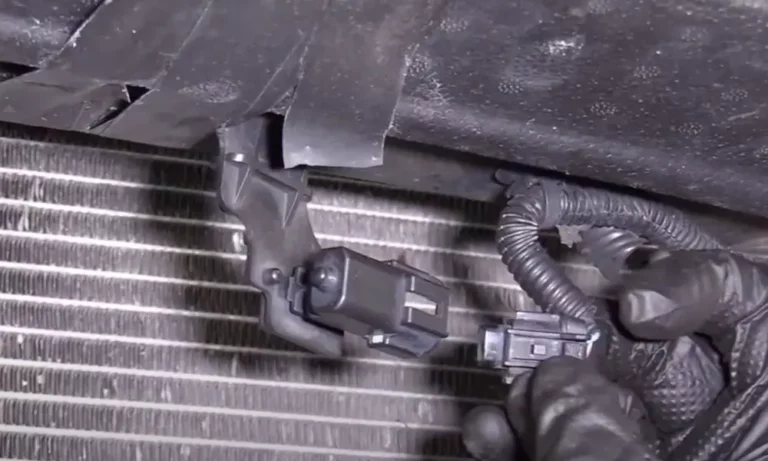
The third common location is on the center radiator support or front cross member. This mounting point:
- Ensures consistent airflow over the sensor
- Keeps the sensor isolated from heat-producing components
- Offers protection while remaining accessible for service
Vehicle-Specific Ambient Air Temperature Sensor Locations
Let’s break down where you’ll find the sensor in popular vehicle makes and models.
Honda Vehicles
Honda Civic (2016-2022)
The ambient air temperature sensor in recent Civic models is tucked in the front radiator support area. You can access it through the lower grille without completely removing the bumper in many cases. The sensor is connected by a small wiring harness with a clip connector.
Honda Pilot (2009-2015)
In the Pilot SUV, the sensor is positioned behind the front bumper. You’ll need to remove some underbody panels to access it properly.
Honda Accord
The Accord’s temperature sensor can often be accessed through the bumper without complete removal, saving you time during maintenance.
Toyota Models
Toyota Camry (2006-2011)
For the sixth-generation Camry, Toyota mounted the ambient temperature sensor in front of the radiator support. You’ll need to remove the front bumper cover for proper access.
Toyota Corolla (2009-2019)
The Corolla’s sensor is located behind the front grille area, requiring partial disassembly of the front end to access.
Toyota Sienna (2013)
If you drive a 2013 Sienna minivan, you’ll find the sensor in the lower grille area, attached to the bottom of the front bumper beam on the passenger side.
Chevrolet and GM Models
Chevrolet Cruze
The Cruze positions its ambient temperature sensor underneath the vehicle behind the front bumper, making it somewhat challenging to access without lifting the vehicle.
Chevrolet Silverado
In most Silverado trucks, the sensor sits behind the grille on the right side near the headlamp assembly. However, newer models may have it located in the passenger mirror, similar to Ford trucks.
GM Duramax Trucks (2023+)
The latest Duramax diesel trucks position the sensor on the underside of the passenger side mirror, following the industry trend toward mirror-mounted sensors.
Ford Vehicles
Ford F-150 (2018 and newer)
Ford moved the ambient temperature sensor to the passenger side mirror in 2018 models and beyond. You’ll need to partially disassemble the mirror housing to access it.
Ford F-150 (2017 and earlier)
Pre-2018 F-150s have the sensor located behind the front grille in a more traditional position.
Ford Focus
The Focus uniquely places its sensor at the bottom of the passenger side mirror, setting a trend that larger Ford vehicles would later follow.
Nissan Models
Nissan Altima
The Altima’s ambient temperature sensor hides behind the front bumper on the driver’s side, mounted to the reinforcement bar. Complete bumper removal is typically necessary for replacement.
Nissan Rogue
Similar to the Altima, the Rogue’s temperature sensor is positioned behind the front bumper, requiring significant disassembly for access.
BMW Vehicles
BMW 3-Series E90/E91/E92/E93 (2005-2013)
These 3-Series models uniquely place the sensor in the driver’s front wheel well liner area, making it more accessible than many other vehicles.
BMW 3-Series F30/F31/F34
The newer generation 3-Series positions the sensor in the front bumper area, requiring more disassembly for access than the previous generation.
Mercedes-Benz
Mercedes typically locates its ambient temperature sensors in the lower section of the front grille. The sensor tip protrudes slightly to measure environmental temperature while remaining protected from damage.
This Handy Table Shows Ambient Temperature Sensor Locations By Vehicle Make
| Vehicle Make | Common Sensor Location | Access Difficulty | Notes |
|---|---|---|---|
| Honda | Front radiator support | Moderate | Accessible through lower grille in many models |
| Toyota | Front of radiator support | Moderate to High | Usually requires bumper removal |
| Chevrolet/GM | Behind grille or mirror-mounted | Moderate | Newer models trending toward mirror placement |
| Ford | Mirror-mounted (newer models) | Moderate | Requires mirror disassembly |
| Nissan | Behind front bumper | High | Complete bumper removal often necessary |
| BMW | Wheel well or bumper | Low to Moderate | Earlier models more accessible than newer ones |
| Mercedes | Lower front grille | Moderate | Sensor tip slightly exposed |
Why Sensor Location Matters
The position of your ambient air temperature sensor isn’t just a random choice by engineers. Its location directly impacts:
Accuracy of Readings
A properly positioned sensor provides the most accurate outside temperature reading. If placed too close to heat sources like the engine or exhaust, readings will be artificially high.
Climate Control Performance
Your car’s automatic climate control system relies on accurate outside temperature data to efficiently heat or cool the cabin. Inaccurate readings lead to poor climate control performance and reduced comfort.
Engine Management
Modern engines use outside temperature data to optimize the air-fuel mixture, especially in cold weather. Incorrect readings can affect engine performance and fuel economy.
Safety Systems
Ford notes that the ambient temperature sensor is crucial for parking sensor accuracy, as the speed of sound waves varies with temperature. This means your parking sensors work better when the temperature reading is accurate.
Accessing and Servicing Your Ambient Temperature Sensor
Most ambient temperature sensors require significant disassembly for access and replacement. Here’s what you need to know:
Front Bumper Sensors
For sensors located behind the grille or in the bumper:
- You’ll typically need to remove the entire front bumper assembly
- Some models allow access through the grille openings
- Budget 1-2 hours for this job if you’re doing it yourself
Mirror-Mounted Sensors
If your sensor is in the side mirror:
- The mirror housing needs to be partially disassembled
- Take care with the mirror glass and electronics
- Plastic trim tools are essential to avoid damaging the mirror housing
Safety First
Always disconnect your vehicle’s battery before working on any electrical components, including the ambient temperature sensor. This prevents electrical shorts and potential damage to sensitive electronics.
Symptoms of a Failing Ambient Temperature Sensor
How do you know if your sensor needs attention? Watch for these telltale signs:
- Erratic or obviously incorrect temperature readings
- Temperature display stuck on one reading
- Climate control system not working properly
- Check engine light illuminated with related trouble codes
- Temperature display showing dashes instead of numbers
DIY or Professional Repair?
Replacing an ambient temperature sensor can be a DIY project, but your comfort level should depend on:
- Your vehicle’s specific sensor location
- Your mechanical skills and available tools
- Whether bumper removal is required
- Your comfort working with electrical components
A professional mechanic will typically charge 1-2 hours of labor plus the cost of the sensor (usually $30-$100), making this a $150-$300 repair at most shops.
What You Need for a DIY Replacement
If you decide to tackle this yourself, gather these tools and supplies:
- Replacement ambient temperature sensor (vehicle-specific)
- Basic hand tools (screwdrivers, socket set)
- Plastic trim removal tools
- Work gloves
- Flashlight or work light
- Service manual or online guide specific to your vehicle
The Environmental Impact of Accurate Temperature Sensing
An often-overlooked benefit of a properly functioning ambient temperature sensor is its environmental impact. When your car accurately knows the outside temperature:
- The climate control system works more efficiently, using less energy
- Engine management systems optimize performance for the conditions
- Less fuel is wasted during warm-up in cold weather
- Emissions are better controlled across varying temperatures
Modern Trends in Sensor Technology and Placement
Vehicle manufacturers continue to evolve how they implement ambient temperature sensing:
- Integration with other sensor systems like rain sensors
- Combining multiple environmental sensors into single units
- More sophisticated algorithms to filter out false readings
- Moving sensors away from traditional locations to improve accuracy
Beyond Temperature: The Multi-Function Future
The latest vehicles are beginning to use ambient temperature sensors as part of larger environmental monitoring systems that also track:
- Air quality
- Humidity
- Barometric pressure
- Pollution levels
These integrated systems help modern vehicles adapt to changing environmental conditions for improved comfort, performance, and safety.
By understanding where your ambient air temperature sensor is located and how it functions, you’re better equipped to diagnose issues and maintain this small but important component of your vehicle’s complex systems.