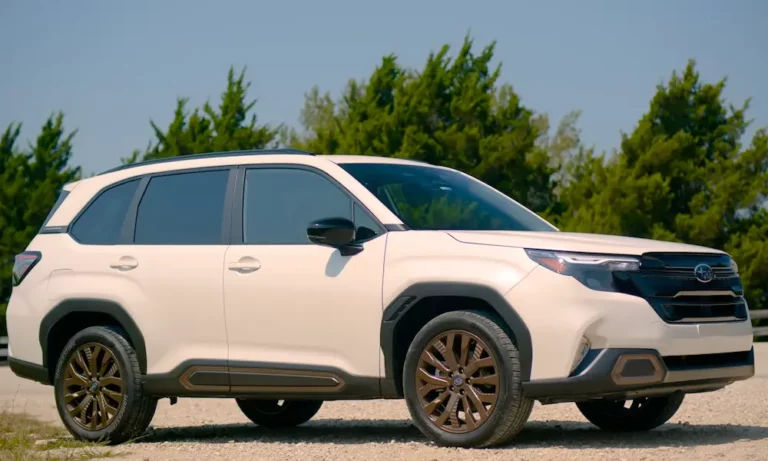
Ever wondered if a Subaru Forester will keep you moving through snow, mud, and daily commutes without frequent repair shop visits? With so many mixed opinions online, it’s hard to separate facts from anecdotes. I’ve gathered comprehensive reliability data across all Forester generations to help you make an informed decision about this popular compact SUV.
Subaru Forester Reliability: The Quick Answer
Subaru Foresters from 2020-2025 are highly reliable vehicles, scoring 83-84/100 from J.D. Power. Older models (especially 2014-2015) suffered from significant issues. Current models benefit from refined engines, improved transmissions, and excellent safety scores. With proper maintenance, modern Foresters should last 200,000+ miles.
Reliability Ratings: How the Forester Stacks Up
The Forester receives mixed scores depending on the rating source and model year:
| Source | Rating | What It Means |
|---|---|---|
| J.D. Power | 83/100 (2025 models) | Above-average reliability with strong dealer service ratings |
| Consumer Reports | 82/100 (2025 models) | High marks for safety, visibility and fuel economy |
| RepairPal | 3.5/5 (21st out of 26 compact SUVs) | Average annual repair cost: $632 |
While Consumer Reports consistently ranks newer Foresters positively, RepairPal’s ranking shows the Forester faces more repair issues than some competitors.
Forester Reliability by Generation: The Good, Bad, and Ugly
First Generation (1998-2002): The Pioneering Years
Reliability Score: 3/5
Common Issues:
- Head gasket failures (particularly in the 2.5L EJ25 engine)
- Rear self-leveling shock failures around 100,000 miles
- High repair costs ($2,000+ for head gasket replacements)
Verdict: These models established Subaru’s AWD reputation but are too old to recommend today unless as collector items.
Second Generation (2003-2008): The Improvement Era
Reliability Score: 3.5/5
Strengths:
- Improved head gasket design
- The 2004-2005 models earned CarComplaints’ “Seal of Awesome” for minimal issues
Common Issues:
- Timing belt failures in higher-mileage vehicles
- Catalytic converter inefficiencies
- Oxygen sensor cracks costing $200-400 to replace
Verdict: The 2004-2005 models are surprisingly reliable for their age if properly maintained.
Third Generation (2009-2013): The Mixed Bag
Reliability Score: 2.5/5
Common Issues:
- Persistent head gasket failures
- Excessive oil consumption (pre-2012 models with EJ25 engine)
- Takata airbag recalls affected nearly all models
Standout Year: 2012+ models with the FB25 engine showed significant improvements in oil consumption and gasket durability.
Verdict: Avoid the 2010 model (which received Consumer Reports’ lowest 1/5 reliability rating), but 2012-2013 are decent options.
Fourth Generation (2014-2018): The Problem Child
Reliability Score: 2/5
Major Issues:
- CVT transmission failures (especially in extreme temperatures)
- Piston ring defects causing excessive oil consumption
- Rear spring fractures
- Windshield cracking
Important Note: A class-action lawsuit forced Subaru to extend the CVT warranty to 10 years/100,000 miles for affected vehicles.
Worst Years: 2014-2015 models had the highest complaint rates, with over 1,000 engine-related complaints and average repair costs exceeding $2,000.
Verdict: Avoid the 2014-2015 models entirely. The 2018 model is considerably better as most issues were addressed.
Fifth Generation (2019-Present): The Renaissance
Reliability Score: 4/5
Improvements:
- Direct fuel injection
- Revised CVT programming
- Enhanced noise insulation
- Updated EyeSight safety systems
Persistent Issues:
- Lower control arm bushing wear in higher-mileage examples
- Premature battery drain
- TPMS sensor failures ($200-400 repair)
Verdict: The 2020-2025 models represent the most reliable Foresters ever made, with J.D. Power reliability scores of 84/100.
Major Trouble Spots: What Breaks on Foresters?
Oil Consumption Problems
Most prevalent in 2011-2015 models, many Foresters consumed oil at rates exceeding 1 quart per 1,000 miles. This stemmed from faulty piston rings and head gasket designs.
Impact: Engine overhauls costing $3,000-$6,000 were sometimes needed.
Fix: Subaru extended warranties for affected vehicles, but many owners still faced significant expenses.
CVT Transmission Issues
The Lineartronic CVT transmissions in 2014-2018 models frequently developed:
- Shuddering at low speeds
- Complete failure (particularly in extreme temperatures)
- Hesitation when accelerating
Impact: Replacement costs exceeded $5,000 outside warranty coverage.
Fix: Subaru’s 10-year warranty extension helped many owners, but the issue damaged consumer confidence.
Head Gasket Failures
This classic Subaru problem affected multiple generations but was most common in EJ25 engines (pre-2012). Symptoms included:
- White smoke from exhaust
- Coolant leaks
- Engine overheating
Impact: Repairs typically cost $1,500-$2,500.
Fix: The FB25 engine introduced in later models largely resolved this issue.
Electrical and Sensor Malfunctions
Modern Foresters rely heavily on sensors and electronics, leading to new reliability challenges:
- Oxygen sensor failures
- TPMS system malfunctions
- EyeSight system glitches
- Windshield cracks affecting safety cameras
Impact: Sensor replacements average $200-$400, while windshield replacements with proper camera calibration can exceed $1,000.
Best and Worst Years for Subaru Forester Reliability
Best Forester Model Years
- 2020-2025 models: Enhanced FB25 engine with top safety scores and minimal reported issues
- 2018: Final year of fourth generation with most CVT and oil problems resolved
- 2004-2005: Surprisingly reliable early models with low complaint rates
Worst Forester Model Years
- 2014-2015: Plagued by CVT failures and subject to a class-action lawsuit for piston ring defects
- 2010: Received just 1/5 reliability rating from Consumer Reports due to excessive oil consumption
How Long Do Subaru Foresters Last?
With proper maintenance, Subaru Foresters can last 200,000+ miles. The National Highway Traffic Safety Administration reports fewer complaints about Foresters compared to many popular competitors.
Owner Experience: Many Reddit users report trouble-free ownership with 2016-2018 models reaching well over 200,000 miles with regular maintenance.
Key to Longevity: Strict adherence to the maintenance schedule, particularly:
- Oil changes every 6,000 miles (or sooner for older models)
- CVT fluid changes every 60,000 miles
- Timing belt replacement (on older models) at 105,000 miles
Forester vs. Competitors: Reliability Comparison
How does the Forester compare to its main competition?
| Vehicle | RepairPal Reliability | Average Annual Repair Cost |
|---|---|---|
| Subaru Forester | 3.5/5 | $632 |
| Toyota RAV4 | 4/5 | $429 |
| Honda CR-V | 4/5 | $407 |
| Mazda CX-5 | 4/5 | $447 |
The Toyota RAV4 sets the reliability benchmark in this segment. When comparing the Forester to the RAV4, the Toyota has lower ownership costs and fewer serious issues.
However, the Forester offers superior all-wheel-drive capability, better ground clearance, and more standard safety features in base models.
What Owners Say About Forester Reliability
Owner experiences vary greatly by model year:
Positive Experiences:
- “My 2018 Forester has 175,000 miles with only routine maintenance.”
- “The 2022 model’s EyeSight system has saved me from multiple accidents.”
- “96% 10-year retention rate shows how many owners stick with these vehicles.”
Negative Experiences:
- “My 2014 Forester needed a $6,000 engine rebuild at 80,000 miles.”
- “The CVT on my 2015 model was replaced twice under warranty.”
- “Oil consumption in my 2011 model was ridiculous – a quart every 800 miles.”
Maintenance Tips to Improve Forester Reliability
- Change oil religiously – Every 6,000 miles or sooner for older models prone to oil consumption
- Monitor oil levels – Especially important for 2011-2015 models
- CVT fluid changes – Don’t believe the “lifetime fluid” myth; change every 60,000 miles
- Replace timing belt (if applicable) at 105,000 miles
- Keep software updated – Modern Foresters need regular infotainment and ECU updates
Cost of Ownership: What to Budget for Your Forester
According to CarEdge, Forester owners should expect:
First 5 years: $4,186 in maintenance and repairs
First 10 years: $14,034 in maintenance and repairs (including major services)
These costs are slightly higher than the segment average but lower than luxury compact SUVs.
Common Repair Costs:
- CVT replacement (out of warranty): $4,000-7,000
- Head gasket repair: $1,500-2,500
- Oxygen sensor replacement: $200-400
- Control arm bushing replacement: $300-600
Shopping for a Used Forester: What to Look For
Pre-Purchase Checklist
- Check service records for oil consumption monitoring
- Verify CVT warranty status (especially for 2014-2018 models)
- Test drive on highway and in stop-and-go conditions to check for CVT shuddering
- Inspect underbody for rust (particularly in areas using road salt)
- Verify EyeSight calibration on 2019+ models
- Look for evidence of head gasket leaks (oil residue at the gasket seams)
Red Flags When Buying Used
- Blue smoke from exhaust
- Low oil level despite recent oil change
- Hesitation or shuddering from transmission
- Excessive rust on frame components
- Multiple airbag or EyeSight warning lights
- Mismatched body panels suggesting accident repair
Is a New Forester More Reliable Than Used?
The 2024-2025 models represent the highest reliability point in Forester history, with:
- Refined FB25 engine design
- Improved CVT programming
- Enhanced EyeSight driver assistance
- Comprehensive warranty coverage
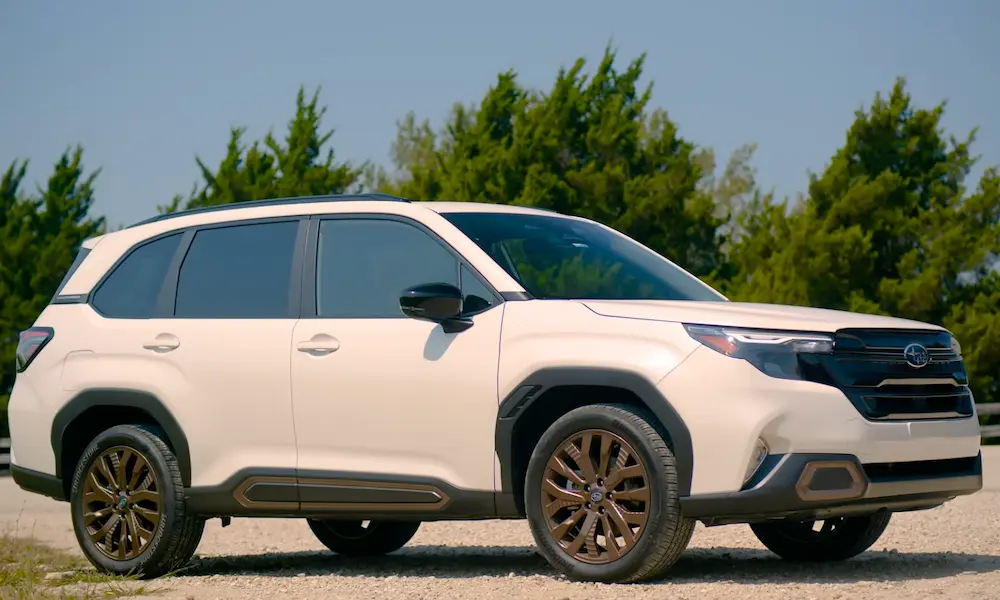
The new 2025 Forester Hybrid offers improved fuel economy without compromising the model’s off-road capability.
New vs. Used Value Proposition:
- New (2024-2025): Maximum reliability, latest features, full warranty
- Nearly New (2020-2023): Good reliability, modern features, some remaining warranty
- Older (2018-2019): Acceptable reliability, affordable pricing, expired warranty
- Much Older (pre-2018): Variable reliability, budget pricing, higher repair risks
Conclusion: Is the Subaru Forester Reliable?
The Subaru Forester’s reliability depends entirely on the model year you choose:
Current models (2020-2025) are highly reliable vehicles that should provide years of trouble-free service with proper maintenance.
Older models have clear “avoid at all costs” years (particularly 2014-2015) and some surprisingly good performers (2004-2005, 2018).
For the best combination of reliability and value, target a:
- 2018 model (used bargain)
- 2020-2022 model (certified pre-owned)
- 2024-2025 model (new with full warranty)
With proper maintenance and by avoiding problematic model years, a Subaru Forester can deliver the all-weather capability, safety, and longevity that has earned the model its dedicated following.