Shopping for a used Chevy Cruze? The wrong model year can cost you thousands in repairs. This guide breaks down every generation, flags the problem years, and tells you exactly which year to buy — and why the answer might surprise you.
Why the Cruze’s Year Matters More Than Most Cars
The Chevrolet Cruze ran from 2011 to 2019, but it wasn’t a steady, consistent car throughout that run. It went through two very different generations, a messy early production period, and a surprisingly polished final chapter.
Buying the wrong year means coolant leaks, transmission headaches, and a wallet full of regret. Buying the right year means a quiet, fuel-efficient compact that holds up well and costs less to maintain than most rivals.
The best year for Chevy Cruze is 2019 — but let’s walk through why, and which years to flat-out avoid.
The Two Generations: A Quick Breakdown
Before diving into individual years, you need to know the two generations are practically different cars.
First Generation (2011–2015, plus 2016 as the “Cruze Limited”):
- Built on the GM Delta II / J300 platform
- Available with a 1.8L naturally aspirated engine or a 1.4L turbocharged engine
- 65% high-strength steel body
- Notoriously troubled cooling and transmission systems
Second Generation (2016–2019):
- Built on the newer D2XX platform
- Up to 250 lbs lighter than Gen 1
- New 1.4L LE2 turbocharged engine with an aluminum block
- Far fewer systemic problems
The jump from Gen 1 to Gen 2 wasn’t a facelift — it was a complete redesign that fixed nearly every major flaw.
Years to Avoid: The Chevy Cruze Hall of Shame
2011 and 2012: A Rocky Launch
The 2011 Cruze earned a five-star overall NHTSA safety rating right out of the gate. That was the good news.
The bad news? The 6T40 automatic transmission was a disaster. Owners reported harsh shifting, hesitation, and outright failures at low mileage. And that “antifreeze smell” inside the cabin? That was coolant leaking from cracked plastic components — a direct result of the engine running at extreme temperatures, sometimes above 217°F before the thermostat even opened.
The 2012 model went on to record the highest complaint volume in the Cruze’s entire history. Brakes locking up or becoming too stiff to press down caused real accidents. Head gasket failures followed unchecked cooling leaks. Average annual repair costs for a 2011 hit around $611.
Skip these two entirely.
2013 and 2014: Getting Better, Then Getting Worse
The 2013 improved on the 2011–2012, but the 2014 introduced its own set of headaches. That year racked up nine separate recall campaigns — the most of any Cruze model year.
Two recalls stand out as especially serious:
- A steering gear shaft separation recall that affected handling at highway speeds
- An engine compartment fire risk caused by oil spilling onto plastic underbody components
The 2014 also introduced a 2.0L diesel that achieved 46 mpg on the highway, which was genuinely impressive. But nine recalls is a hard number to overlook when you’re buying used. You’d want to verify every recall is completed via VIN check before touching a 2014.
The Best First-Gen Option: 2015 Chevy Cruze
If you specifically want a first-generation Cruze — maybe for the price point, or the 1.8L engine’s simplicity — the 2015 is your only real option.
By 2015, GM had worked through most of the transmission and cooling system complaints. The model got a mild facelift, a revised grille, and OnStar 4G LTE with Wi-Fi hotspot capability. Owners rated it 4.2 out of 5 for reliability on Kelley Blue Book. It dropped to just four recalls.
The Eco trim was particularly efficient, hitting 42 mpg highway through active grille shutters and low-rolling-resistance tires. Average annual repair costs fell to around $530.
It’s not perfect — it still uses the older platform, and it lacks the refinement of Gen 2 — but it’s the sanest first-gen choice.
| Model Year | Avg. Annual Repair Cost | Main Problem | Recalls |
|---|---|---|---|
| 2011 | $611 | Transmission shifting / cooling leaks | 6 |
| 2012 | $575 | Head gasket / brake issues | 8 |
| 2014 | $580 | Steering / water pump failure | 9 |
| 2015 | $530 | Infotainment glitches | 4 |
| 2017 | $510 | Piston / engine misfire | 3 |
| 2019 | $490 | Minor electrical / accessories | 2 |
The Second Generation Arrives: 2016 and 2017
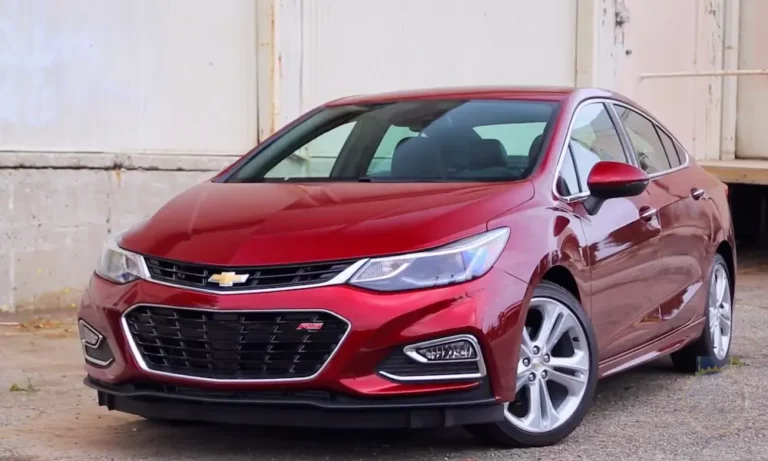
The 2016 Cruze was a massive step forward. The new D2XX platform brought a longer wheelbase (106.3 inches vs. 105.7 inches), more rear legroom, and a weight reduction of up to 250 lbs. The new 1.4L LE2 engine made 153 hp and 177 lb-ft of torque — more than the old engine — while running at a cooler 190°F operating temperature.
That cooler running temperature alone eliminated most of the plastic component degradation that ruined first-gen cooling systems.
But the 2016 and early 2017 models had their own issue: Low-Speed Pre-Ignition (LSPI). This condition could crack pistons — usually cylinder number one — during low-rpm, high-torque moments like accelerating from a stoplight. It’s a serious engine problem that led to costly repairs for some early buyers.
The 2016–2019 Cruze hatchback models also had a recall covering 111,966 units for potential fuel leaks during rollover or rear-impact crashes. Worth checking that it’s been addressed.
Good cars. Just not quite the finished product yet.
2018: Almost Perfect
The 2018 Cruze is excellent. Piston issues from 2016–2017 were largely addressed. Consumer Reports rated the 2018 significantly higher than competitors like Honda, Mazda, and Subaru for reliability. Average annual repair costs dropped to around $510.
The hatchback body style — added in 2017 — was now fully developed, offering 22.7 cubic feet of cargo space behind the rear seats and 47.2 cubic feet with the seats folded down. That’s more than many subcompact SUVs.
One recall to check: over 210,000 units across GM models including the 2018 Cruze were recalled for insufficient coating on rear brake caliper pistons, which could trap air and reduce braking performance. Confirm it’s done.
The 2018 is a strong choice — it just gets slightly edged out by the final year.
The Best Year for Chevy Cruze: 2019
The 2019 Cruze is the best year for Chevy Cruze, full stop. Here’s why.
The Engine Finally Got It Right
By 2019, GM revised the piston design and updated engine management software on the 1.4L LE2. The LSPI problem that affected 2016–2017 models? Effectively gone. J.D. Power gave the 2019 Cruze a Quality & Reliability score of 87 out of 100, ranking it #3 in the compact segment — just behind the Volkswagen Beetle and Toyota Corolla.
Annual repair costs for a 2019 average just $490, well below the $652 average across all vehicle models tracked by RepairPal.
The Tech Finally Caught Up
The 2019 model introduced the Chevrolet Infotainment 3 system as standard equipment. It features a 7-inch touchscreen with noticeably faster processing and improved Apple CarPlay and Android Auto integration. CarMax reviewers consistently call it one of the better infotainment experiences in the compact segment.
The Diesel Is a Hidden Gem
The 1.6L turbo-diesel, available in both sedan and hatchback for 2019, pairs with a 9-speed automatic transmission. EPA ratings hit 48 mpg highway for the sedan and 45 mpg for the hatchback. Real-world drivers routinely report exceeding 50 mpg on highway trips. That’s hybrid territory without the hybrid price tag.
Safety Got Serious
The second generation improved crashworthiness compared to first-gen models, which received a “Marginal” rating on the IIHS Small Overlap Front test due to the side curtain airbag not adequately protecting the head during certain crash angles. The redesigned second gen addressed structural concerns in the A-pillar and instrument panel intrusion, earning better scores in available IIHS evaluations.
The available Driver Confidence Package II on the 2019 Premier adds:
- Forward Collision Warning
- Low Speed Automatic Emergency Braking
- Lane Keep Assist with Lane Departure Warning
- IntelliBeam automatic high beams
- Rear Cross Traffic Alert
One honest caveat: adaptive cruise control was never offered on any Cruze. Honda and Toyota offered it as standard on the Civic and Corolla by 2018–2019. It’s a real gap if that matters to you.
One Recall to Know About
The 2019 model is covered by a recall involving missing bolts on the start/stop transmission accumulator, which could cause fluid leaks and loss of propulsion. It’s a documented issue — just confirm it’s been completed using a VIN lookup before you buy.
What to Check Before You Buy Any Used Cruze
Regardless of year, run through this list before handing over any money:
- Run the VIN through NHTSA’s recall database to confirm all open recalls are closed
- Ask for maintenance records — specifically coolant flushes on any Gen 1, and oil change history on any Gen 2 turbo
- Check for TSB 18-NA-260 on 2016–2019 models (A/C condenser plug refrigerant leak — a documented issue with a straightforward fix)
- Cold weather buyers: TSB 18-NA-035 notes that turbo models may not shift into overdrive in extreme cold below 14°F — this is intentional protective behavior, not a defect
- On Gen 1 models with manual transmissions: budget for potential slave cylinder replacement, which can run over $1,000 in labor since it requires dropping the transmission
A pre-purchase inspection from an independent mechanic is always worth the $100–$150 fee on any used car purchase.
The Bottom Line
The best year for Chevy Cruze is 2019 — it’s the most mechanically mature, technologically equipped, and versatile version of the car ever made. If budget pushes you toward an earlier model, the 2015 is the best first-gen option, and the 2018 is a close runner-up to 2019 in the second generation.
Avoid 2011, 2012, and 2014 unless the price is extremely low and every recall is verifiably completed.
The Cruze never got the credit it deserved in its final years. On the used market, that works in your favor.