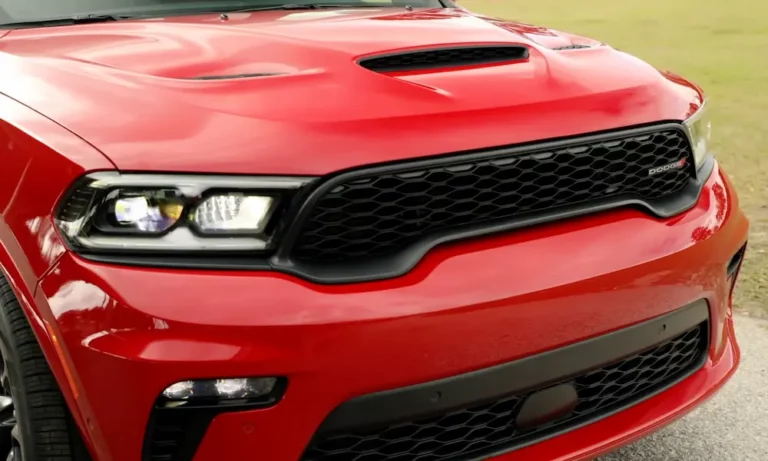
Shopping for a used Durango? With nearly 30 years of model years to sort through, picking the right one can feel overwhelming. Some years are rock-solid. Others are ticking time bombs. This guide cuts through the noise and tells you exactly which years to buy — and which ones to run from.
What Makes One Durango Better Than Another?
The Dodge Durango has gone through three very different generations. Each one feels like a different truck.
| Generation | Years | Platform | Best Known For |
|---|---|---|---|
| First Gen | 1998–2003 | Body-on-Frame (Dakota) | Rugged, simple mechanics |
| Second Gen | 2004–2009 | Body-on-Frame (unique) | Larger size, Hemi power |
| Third Gen | 2011–Present | Unibody (WD Platform) | Handling, luxury feel, performance |
The platform switch in 2011 is the biggest dividing line. Before that, you had a truck in SUV clothing. After that, you got something that handles more like a performance crossover than a workhorse ute.
Your “best year” depends on what you actually need. Want cheap and tough? Look at the second gen. Want a daily driver the whole family loves? The third gen wins every time.
First Generation (1998–2003): Skip Early, Buy Late
The first-gen Durango was built on the Dakota pickup platform. It introduced three-row seating to a mid-size package before that was common. That was genuinely clever. The execution? Spotty, depending on the year.
Best First-Gen Years: 2001–2003
By 2001, Dodge had sorted out the worst early quality issues. The interior got a proper update — less Dakota pickup, more proper SUV. These years also added the 4.7-liter V8 as a more modern engine option. If you want a rugged, body-on-frame Durango that’s easy to wrench on, 2001–2003 is your window.
First-Gen Years to Avoid: 1998–2000
The 1999 model year is widely flagged as the worst of the generation. The 5.2-liter Magnum V8 was prone to oil sludge buildup, which could kill the engine even if you changed your oil on schedule. Front suspension wear and brake deficiencies were also more common in these early units. Steer clear.
Second Generation (2004–2009): One Great Year Surrounded by Landmines
The second gen grew bigger and brought the legendary 5.7-liter Hemi V8. On paper, exciting. In practice, the early years were a genuine mess.
Second-Gen Years to Avoid: 2004–2006
The 2004 model year is a low point in Durango history. Faulty dashboard electrical components could overheat and cause cabin fires. A massive recall followed in 2007. Complete engine failures at low mileage were also reported, along with cracked exhaust manifold bolts that caused loud ticking and exhaust leaks.
| Model Year | Recall Severity | Primary Risk | Verdict |
|---|---|---|---|
| 2004 | High | Engine failure, electrical fires | Avoid completely |
| 2005 | High | Transmission failure, electrical | Avoid completely |
| 2006 | Moderate | Exhaust manifold, electrical | Risky |
| 2007 | Moderate | Suspension, electrical | Average |
| 2008 | Low | Minor airbag components | Buy this one |
The Best Second-Gen Year: 2008
The 2008 Durango stands apart from everything before it in this generation. Dodge fixed the electrical and mechanical failures that had plagued 2004–2006. Only two outstanding recalls remained, both minor airbag items — not anything that affects how the truck drives. If you want a big, box-shaped body-on-frame Durango with towing muscle and a lower price tag, 2008 is the one.
Quick note on 2009: production was cut to around 4,000 units during the economic downturn. Finding a clean one is tough. The 2008 is your practical target.
Third Generation (2011–Present): The Best Durangos Ever Built
The 2011 redesign changed everything. The Durango moved to a unibody platform shared with the Jeep Grand Cherokee. Ride quality, interior materials, and fuel efficiency all jumped significantly. This generation has stayed in production for over a decade — that says something.
Third-Gen Years to Avoid: 2011–2013
The early third-gen models had a nasty habit: the Totally Integrated Power Module, or TIPM, would fail. This module controls the vehicle’s electrical brain. When it went, you’d get sudden stalling, no-start conditions, or a fuel pump that stayed on after you shut the engine off. Not ideal.
The 2011 model specifically was recalled for TIPM problems, alternator failures, and a brake booster shield issue. Water could enter the booster, reduce braking power, and eventually cause corrosion. These issues were corrected under recall for many vehicles, but buying a used 2011–2013 still carries risk. Always verify the VIN to confirm recall work was completed before you hand over cash.
The 2014 Turning Point
The 2014 refresh was genuinely transformative. Dodge swapped the old transmission for a ZF-sourced eight-speed automatic. Smoother shifts, better acceleration, and improved fuel economy — all in one update. The interior got updated with a 7-inch digital instrument cluster and an available 8.4-inch Uconnect touchscreen.
The 2014 had some first-year software bugs in the new transmission, but it set the stage for the best Durango era ever.
The Golden Years: 2017–2020
This is the sweet spot. Dodge had fixed the early-gen electrical gremlins, the TIPM drama, and the transmission software quirks. The platform was fully mature.
| Year | J.D. Power Quality Score | Reliability Verdict |
|---|---|---|
| 2014 | 73/100 | Good (update the software) |
| 2015 | 77/100 | Good |
| 2016 | 79/100 | Very Good |
| 2017 | 83/100 | Excellent |
| 2018 | 79/100 | Excellent |
| 2019 | 83/100 | Excellent |
| 2020 | 86/100 | Best overall |
The 2017 Durango earned an 83 out of 100 from J.D. Power. Most reported issues were minor — door lock glitches, small electrical hiccups. Nothing that leaves you stranded. For a family buying one used Durango to keep for a decade, 2017 is the single best answer.
The 2020 model carries the highest J.D. Power score of any Durango in the past 16 years: 86 out of 100. It’s the most refined, most polished version of the pre-refresh third gen. If your budget stretches that far, grab it.
The 2021 Refresh: New Tech, Strong Performance
The 2021 update brought a driver-focused dashboard inspired by the Dodge Challenger, an optional 10.1-inch touchscreen, and the limited-production 710-horsepower SRT Hellcat. New tech always carries some early-adoption risk, but the core mechanicals stayed the same as the proven 2017–2020 units. Initial data from 2021 models shows reliability holding strong.
Engine Reliability: Which Powertrain Should You Choose?
The engine you pick shapes your long-term experience as much as the model year does.
| Engine | Horsepower | Max Towing | 0–60 MPH | Best From |
|---|---|---|---|---|
| 3.6L V6 | 295 hp | 6,200 lbs | 7.4 sec | 2017+ |
| 5.7L V8 | 360 hp | 7,400 lbs | 6.2 sec | 2014+ |
| 6.4L V8 (SRT) | 475 hp | 8,700 lbs | 4.4 sec | 2018+ |
| 6.2L SC V8 (Hellcat) | 710 hp | 8,700 lbs | 3.5 sec | 2021/2023 |
The 3.6L Pentastar V6: Most Reliable Pick
The Pentastar V6 is the dependability king. Some owners report lifter and rocker arm wear past 100,000 miles — a slight ticking noise is the warning sign. But that’s far less common than the issues found in older engines. Pair it with the eight-speed transmission from 2014 onward, and you’ve got a smooth, efficient daily driver.
The 5.7L Hemi V8: Best for Towing
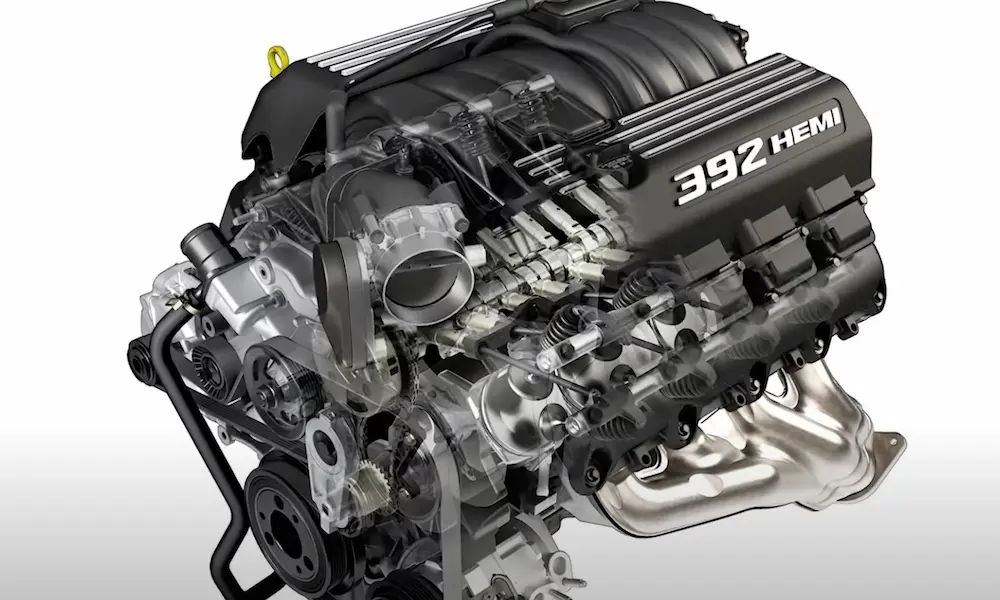
The Hemi is what most people picture when they think Durango. It’ll pull 7,400 pounds and run well past 200,000 miles with proper maintenance. The known issue is “Hemi tick” — a lifter or timing chain problem that worsens with poor oil change habits. Stick to synthetic oil and change it every 5,000–7,500 miles. That single habit prevents most Hemi headaches.
SRT 392 and Hellcat: Surprisingly Reliable
You’d expect the 710-horsepower Hellcat to be fragile. It’s not. These trims come with reinforced internals, Brembo brakes, and Bilstein active suspension as standard. The higher-spec build quality actually gives them excellent owner reliability scores.
Towing Capability: The Durango’s Biggest Advantage
Most three-row crossovers top out around 5,000 pounds. The Durango blows past that in every configuration:
- V6 models: 6,200 lbs
- 5.7L V8 models: 7,200–7,400 lbs
- SRT (6.4L and 6.2L) models: 8,700 lbs
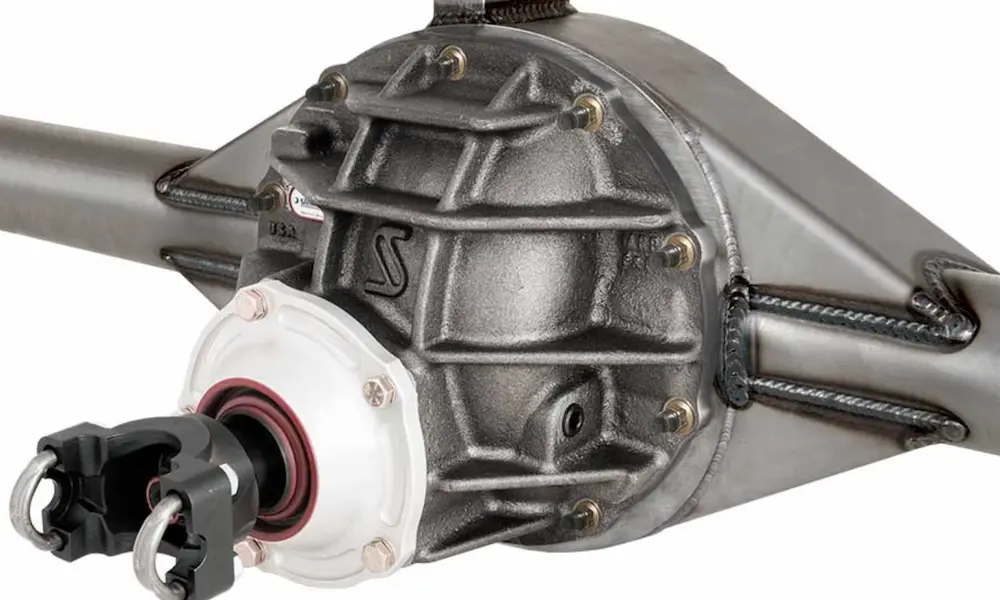
The 2021+ R/T with the Tow ‘n Go package is the standout value play here. It borrows SRT hardware — Brembo brakes, Bilstein active damping, electronic limited-slip rear axle — to push the standard 5.7L V8 to the same 8,700-pound rating as the much pricier SRT. You get SRT towing performance without paying SRT prices.
Key Safety Recalls You Must Know About
Before buying any used Durango, pull the VIN and check these specific recalls.
2011–2014 alternator failures: The alternator could fail suddenly, stalling the engine while driving. Some failures also caused short circuits and fire risk.
2011–2014 brake booster shield: Water intrusion into the brake booster could reduce stopping power. A recall was issued, then a second recall followed to verify the repair was done correctly.
2018–2019 ABS module issues: A faulty ABS module could light the brake lights incorrectly, disable antilock braking, and allow the vehicle to shift out of Park without pressing the brake pedal — a real roll-away risk.
Run every candidate vehicle through the NHTSA database before buying. It takes two minutes and can save you from an expensive mistake.
What It Actually Costs to Own a Durango
The average annual repair cost for a Durango is around $675. That’s below the $784 average for full-size SUVs and only slightly above the $652 all-vehicle average. Unscheduled repair visits average 0.2 per year — better than the 0.4 average for the segment.
A well-maintained Durango hits 150,000–200,000 miles with average care. With proper maintenance, 250,000–300,000 miles is realistic. Key service intervals to stick to:
- Oil changes: Every 5,000–7,500 miles
- Transmission fluid flush: Every 60,000–80,000 miles
- Spark plug replacement: At 100,000 miles
- Professional inspection: Twice yearly — catch small issues like leaking pinion seals before they become major repairs
Best Value on the Used Market
The 2014–2018 window offers the best depreciation sweet spot. These vehicles have shed their initial value but still carry almost every feature of a brand-new model. The Durango depreciates roughly 46% over its first five years — which works in your favor as a used buyer.
| Trim | Resale Strength | Best Value Years |
|---|---|---|
| SXT | Average | 2016–2018 |
| GT | Good | 2017–2020 |
| Citadel | Good | 2019–2020 |
| R/T | Excellent | 2021+ (Tow ‘n Go) |
| SRT 392 | Excellent | 2018–2020 |
| Hellcat | Top tier | 2021/2023 |
Quick Reference: Best and Worst Years
Buy these:
- 2017 — Best overall reliability, fewest complaints, 83/100 J.D. Power
- 2020 — Highest quality score ever (86/100), most refined pre-refresh model
- 2008 — Best second-gen option for body-on-frame buyers
- 2021 R/T with Tow ‘n Go — Best capability-to-price ratio for heavy towers
Avoid these:
- 1999–2000 — Oil sludge, engine failure, brake issues
- 2004–2006 — Electrical fires, complete engine failures, severe quality problems
- 2011–2013 — TIPM module failures, alternator shorts, brake booster corrosion
The Durango’s combination of three-row seating and class-leading towing puts it in a category of one. No other unibody crossover pulls 8,700 pounds while fitting seven passengers. Just pick from the right years, check the recalls, and change your oil on schedule. Do those three things and this SUV will serve you well past 200,000 miles.