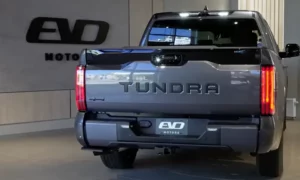
Shopping for a used Tundra is equal parts exciting and overwhelming. With 26 years of model years to sort through, picking the right one matters — a lot. This guide cuts through the noise and tells you exactly which years to target (and which to skip). Read to the end, because the answer depends on who you are as a buyer.
Why the Tundra’s History Matters Before You Buy
The Toyota Tundra isn’t one truck — it’s three distinct generations, each with its own strengths, quirks, and landmines. Knowing which era you’re dealing with directly affects how much you’ll spend on repairs, what you’ll get back when you sell, and how long the truck will actually last.
The Tundra launched for the 2000 model year as Toyota’s answer to the Ford F-150 and Chevrolet Silverado. It was slightly smaller, but immediately stood out for build quality. Since then, it’s gone through two full redesigns and is now on its third-generation platform with a twin-turbocharged V6.
Let’s walk through each era.
First Generation (2000–2006): Rough Start, Strong Finish
The first-gen Tundra ran on a 4.7-liter i-Force V8 that became legendary for durability. But the early years had real problems.
Years to Avoid: 2000–2003
The 2000 model year alone racked up over 1,000 negative NHTSA reports. Issues included:
- Transmission cooling failures — coolant and transmission fluid mixed, a mess known as the “strawberry milkshake” problem
- Premature front ball joint wear — a safety issue that eventually triggered a recall
- Poor paint quality and body panel corrosion
These aren’t deal-breakers on paper, but for a used truck, they’re expensive surprises you don’t want.
Best First-Gen Year: 2006
By 2006, Toyota had worked out most of the kinks. Industry analysts consistently call the 2006 model the best first-gen Tundra. Here’s what made it stand out:
- Updated 4.7-liter V8 with VVT-i — up to 282 horsepower
- New five-speed automatic transmission replaced the old four-speed unit
- Ball joint and transmission cooling fixes were already in place
- Smaller dimensions make it easier to park and maneuver than later generations
If you want a simple, capable, and proven work truck, the 2006 is your pick.
| Feature | 2000–2003 | 2005–2006 |
|---|---|---|
| Standard V6 | 3.4L (190 HP) | 4.0L (236 HP) |
| Optional V8 | 4.7L (245 HP) | 4.7L VVT-i (282 HP) |
| Transmission | 4-Speed Auto | 5-Speed Auto |
| Crew Cab | Not available | Available |
Second Generation (2007–2021): The Golden Era
The XK50 platform was Toyota’s full swing at competing with the Big Three. It was bigger, more powerful, and came with a new 5.7-liter V8 that could tow up to 10,200 pounds at launch — a class-leading number at the time.
But the first two years had problems.
Skip These: 2007–2008
The 2007 and 2008 Tundras dealt with secondary air injection pump failures and piston slap complaints. The air pump issue was frustrating — moisture got in, the pump failed, and the truck went into limp mode. Parts were expensive and the placement made repairs a hassle.
Solid Middle Years: 2009–2013
By 2009, Toyota had ironed out most of the early production issues. The 2009 model had the fewest complaints of the early second-gen lineup.
In 2010, Toyota added a new 4.6-liter V8 producing 310 horsepower — a great option for buyers who didn’t need the full 5.7-liter and wanted slightly better fuel economy.
The 2013 model is a standout for used buyers. By then, Toyota had fixed the head gasket leaks and frame corrosion problems from earlier years. It’s the final pre-facelift year and represents a mature, sorted-out truck.
The Facelift Era: 2014–2021
The 2014 update brought a sharper exterior and a much-improved interior. More importantly, the mechanical components had been in production for over seven years — assembly quality was at its peak.
In 2015, Toyota introduced the TRD Pro trim with Fox or Bilstein shocks. It became one of the most desired versions of the truck almost immediately.
In 2018, Toyota Safety Sense-P became standard across all trims — adaptive cruise, lane departure warning, and automatic emergency braking with pedestrian detection.
In 2020, Apple CarPlay and Android Auto finally went standard. Late arrival, sure, but they made the interior feel genuinely modern.
| Model Year | Key Update | Reliability Rating |
|---|---|---|
| 2007 | All-new platform, 5.7L V8 | Lower — early production issues |
| 2009 | Refinements to early problems | High — fewest early complaints |
| 2013 | Final pre-facelift, fixes applied | High — sorted out frame/gasket issues |
| 2018 | TSS-P standard on all trims | Strong |
| 2021 | Final V8 year, CarPlay/Auto standard | Highest — best second-gen model |
Best Second-Gen Year: 2021
The 2021 Toyota Tundra is the best year overall if reliability is your top priority. It’s the final year of the proven 5.7-liter V8. Every second-gen problem — the air pumps, the frame rust, the head gaskets — had been addressed by this point. It has modern safety tech and connectivity without the unproven complexity of turbochargers.
The 2021 has extremely low complaint volumes and commands a premium on the used market for good reason. People who bought these trucks aren’t selling them cheaply.
Third Generation (2022–Present): Power Gains, Growing Pains
The 2022 Tundra was a massive departure. Toyota dropped the V8 entirely and replaced it with a twin-turbocharged 3.4-liter V6, paired with a 10-speed automatic and a new fully boxed steel frame. Rear leaf springs were replaced with a multi-link coil setup for a much better ride.
On paper, it’s the best Tundra ever built. In practice, the first two years were rough.
Avoid These: 2022–2023
Two serious problems hit the early third-gen trucks hard.
Problem 1: Turbo wastegate failures. Some 2022 Tundras went into limp mode before hitting 500 miles. The wastegate actuators failed, and replacing them often meant removing the cab from the frame. That’s a nightmare for any owner and any dealer service department.
Problem 2: Machining debris recall. Toyota found that during engine block manufacturing at their Alabama and Tahara plants, metal shavings weren’t fully cleared from the V35A engine. This debris could damage the #1 main bearing, leading to engine knock, stalling, or full seizure while driving. The recall — which Car and Driver reported covered roughly 100,000 non-hybrid 2022–2023 units — required a full engine replacement.
Hybrid owners were excluded from the initial recall. Toyota’s reasoning? The hybrid motor could still move the truck to safety if the gas engine failed. That explanation hasn’t sat well with owners, and potential class-action litigation is ongoing.
The 2022 and 2023 models received some of the lowest Tundra reliability ratings Consumer Reports has ever recorded. Skip them.
Best Third-Gen Years: 2025–2026
Analysts believe trucks built after mid-2024 use corrected manufacturing processes that eliminate the debris contamination issue. The 2025 and 2026 models offer:
- Up to 12,000 pounds towing capacity
- Toyota Safety Sense 2.5 standard
- A luxurious interior that rivals premium SUVs
- 20–22 mpg combined — a significant improvement over the old V8’s 13–15 mpg
That said, about 45% of 2026 reviewers on KBB don’t recommend the vehicle. Concerns about interior plastics, electronic glitches, and long-term turbo durability persist. The 2025 and 2026 are the most capable Tundras ever made — but they’re not yet proven over time the way the V8 was.
| Powertrain | HP | Torque | Max Tow | MPG (Combined) |
|---|---|---|---|---|
| i-Force V6 (SR) | 348 | 405 lb-ft | 8,300 lbs | 20 |
| i-Force V6 (Standard) | 389 | 479 lb-ft | 12,000 lbs | 20 |
| i-Force Max (Hybrid) | 437 | 583 lb-ft | 11,450 lbs | 22 |
Known Issues to Watch Across All Years
No Tundra is perfect. Here are the problems that follow specific generations.
Exhaust Manifold Ticking (2007–2021)
A cold-start tick that fades as the engine warms up. It’s a leaking exhaust manifold — common on 5.7-liter engines. It won’t destroy the engine, but it affects performance and emissions over time if ignored.
Cam Tower Oil Leaks (2014–2021, High Mileage)
This one’s more serious. Oil seeps where the camshaft towers meet the cylinder head. A severe cam tower leak requires significant disassembly — labor alone can run into thousands of dollars. Always check for oil seepage around the valve covers on any high-mileage second-gen truck.
Secondary Air Injection Pumps (2005–Early 2010s)
Moisture kills these pumps, and when they go, the truck enters limp mode. Toyota eventually addressed it with extended warranties and part revisions, but it’s still a known issue on mid-life Tundras. Check for it before buying any truck from this window.
Resale Value: The Tundra’s Secret Weapon
The Tundra is one of the best-resale-value trucks on the market, consistently earning recognition from Kelley Blue Book and often retaining over 60% of its value after five years. That high residual value actually lowers your true ownership cost.
Here’s how the used market stacks up by year:
| Model Year | Depreciation Rate | Value Rating | Reason |
|---|---|---|---|
| 2019 | ~24% over 5 years | Strong utility | Proven V8, TSS-P, lower entry price |
| 2021 | ~27% over 3 years | Premium value | Final V8, most refined tech |
| 2023 | ~22% over 2 years | Best value pick | Modern tech, high residual life remaining |
The 2023 Tundra is currently a strong used-market value pick — you can save over $12,000 vs. new while still getting 83% of its remaining useful life. Just make sure the engine recall has been completed before buying any 2022 or 2023 truck.
Which Year Is Actually Best for You?
There’s no single “best year” — it depends entirely on what you need the truck to do.
You want it to last 15–20 years with minimal drama → Buy the 2021. It’s the most refined second-gen Tundra ever built, with a V8 that owners trust absolutely. Modern safety tech is standard. It’ll outlast almost anything else in its class.
You want maximum towing and modern tech → Buy the 2025 or 2026. The current-generation Tundra tows up to 12,000 pounds and drives like a luxury truck. The manufacturing issues from 2022–2023 are behind it. Just know you’re the early adopter on a relatively new powertrain.
You want the best bang for your buck → Buy the 2019. Toyota Safety Sense-P is standard, the 5.7-liter V8 is well proven, and the price gap between a 2019 and a 2021 is significant. You get 95% of the truck for noticeably less money.
You want a simple, compact workhorse → Buy the 2006. The best of the first generation, smaller and easier to drive than modern trucks, with a bulletproof V8 and most early problems already resolved.
The Tundra’s 26-year run proves one thing clearly — Toyota builds trucks that go the distance. Pick the right year for your needs, do a solid pre-purchase inspection, and this truck will likely still be running when everything else has given up.