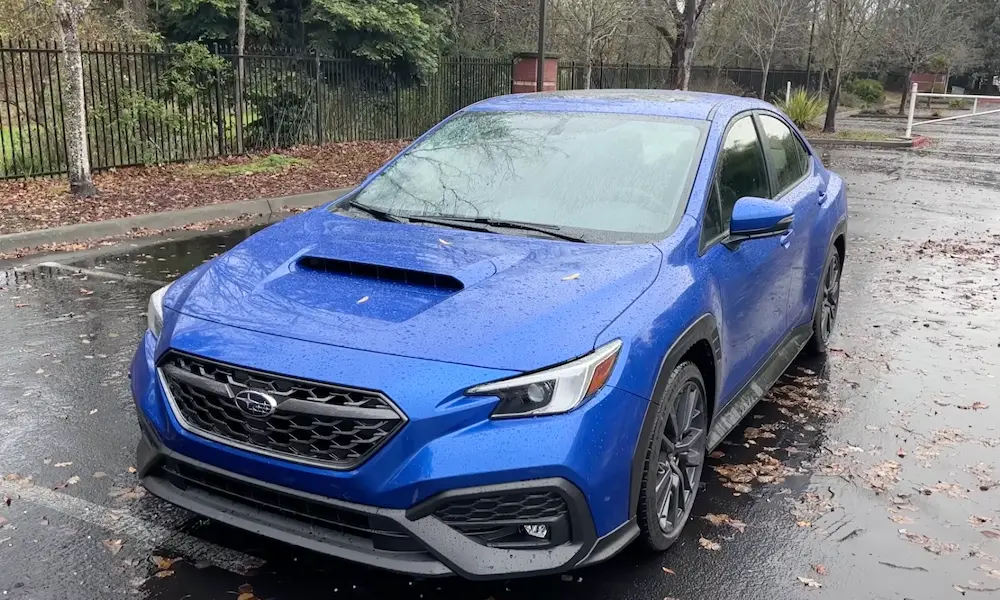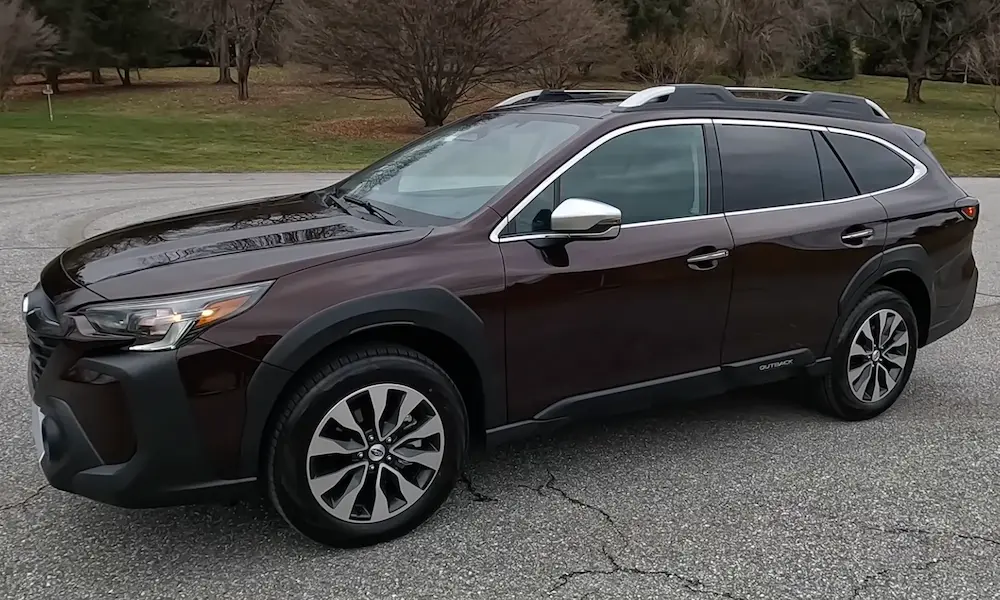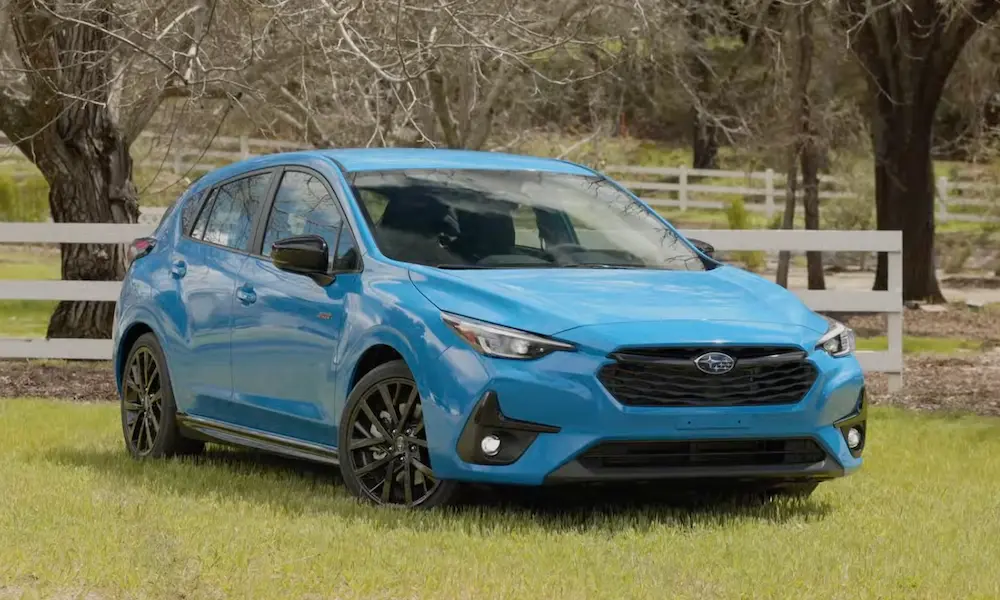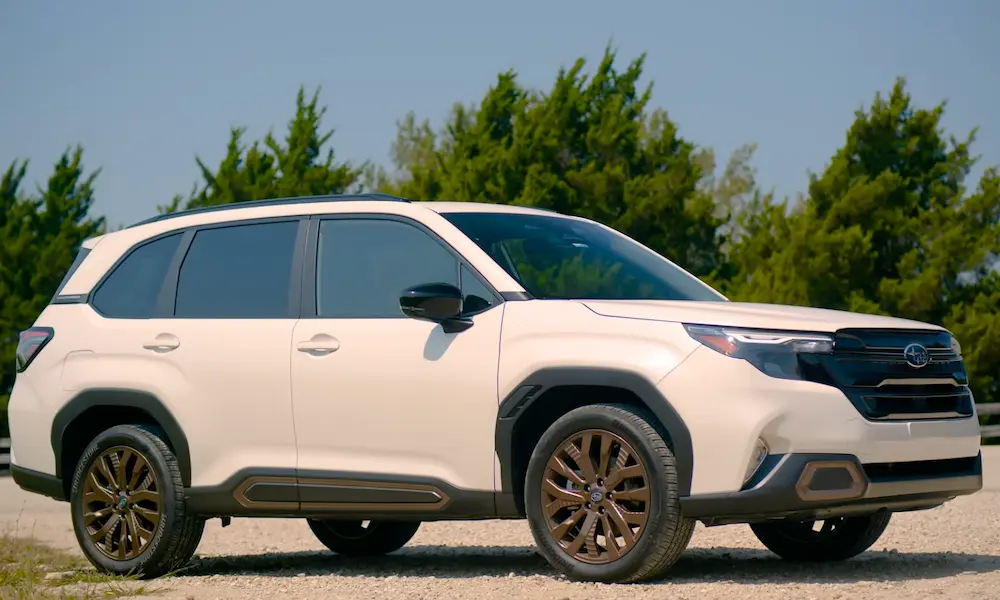
That little horseshoe light on your dashboard is trying to tell you something. It might be a simple pressure drop, or it could mean a sensor has given up for good. Either way, this guide walks you through what’s actually happening, what it costs, and how to fix it right.
What Is a Subaru TPMS Sensor (and Why Should You Care)?
Subaru uses a direct tire pressure monitoring system. That means each wheel has its own physical sensor measuring real air pressure — not an estimate pulled from wheel speed data.
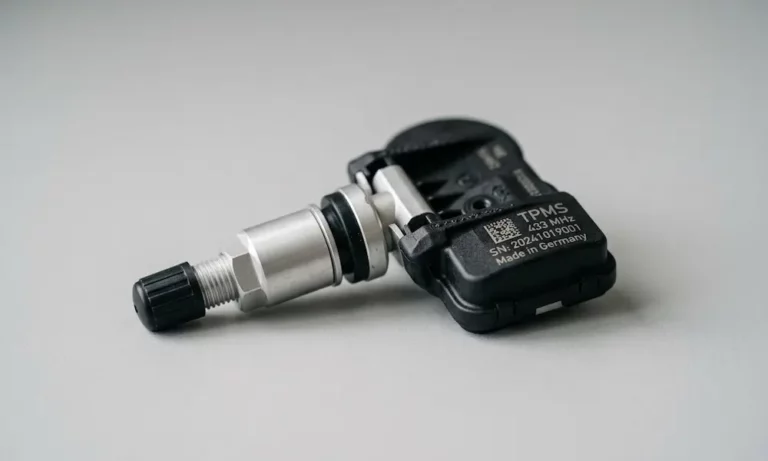
Each sensor packs a pressure transducer, temperature sensor, microchip, radio transmitter, and a sealed battery into one small unit. It mounts inside the wheel, integrated into the valve stem. When pressure drops 25% below the recommended level, the system alerts you.
This setup is more accurate than indirect systems, but it also means when a sensor dies, you need to replace hardware — not just reset a computer.
The TREAD Act made TPMS mandatory on all US vehicles after September 2007. Subaru’s been refining its system ever since.
The One Thing That Trips Everyone Up: 315 MHz vs. 433 MHz
This is the most important detail in any Subaru TPMS sensor replacement. Get it wrong and the light stays on — permanently.
Subaru used 315 MHz sensors from 2008 through the mid-2010s, then gradually shifted to 433 MHz starting around 2017. The two frequencies are completely incompatible. A 315 MHz sensor can’t talk to a 433 MHz receiver, full stop.
Here’s a quick reference by model:
| Model | 315 MHz Years | 433 MHz Years |
|---|---|---|
| Impreza | 2008–2016 | 2017–2025 |
| Forester | 2008–2018 | 2019–2025 |
| Outback | 2005–2017 | 2018–2025 |
| Legacy | 2008–2017 | 2018–2025 |
| Crosstrek | 2013–2017 | 2018–2025 |
| WRX | 2012–2021 | 2022–2025 |
| Ascent | N/A | 2019–2025 |
| BRZ | 2013–2020 | 2022–2025 |
If you own a 2017 Impreza, double-check your VIN before ordering parts. Transition years can vary by build date.
Reading Your TPMS Warning Light
Your dashboard light tells you more than most people realize. The behavior of the light is the first diagnostic clue.
Steady light: The system is working fine and found low pressure in at least one tire. Check all four tires and inflate to the spec on your door jamb. On 2020+ Outbacks and Foresters, you can view individual tire pressures right on the multi-function display.
Flashing for 60–90 seconds, then staying on: This is a system malfunction signal. The control module tried to reach a sensor and got nothing back. That’s usually a dead sensor battery, but it can also mean a damaged sensor or a failed receiver.
Light comes on in cold weather: Totally normal. For every 10°F drop in temperature, tires lose about 1 PSI. Inflate your tires cold (after sitting for 3+ hours) to the door jamb spec and the light should go off once you’re driving.
Why Subaru TPMS Sensors Fail
The Battery Problem
Every sensor runs on a sealed lithium battery that can’t be swapped out. When it dies, the whole sensor goes with it. Average lifespan is 5–10 years, with 7 years being the typical expectation.
Battery life depends on how hard the sensor works. Once you hit about 20 mph, the sensor wakes up and transmits data every 60 seconds. Stop-and-go city driving cycles sensors in and out of sleep mode constantly, which drains the battery faster than steady highway miles.
Moisture Damage
Subaru issued Technical Service Bulletin 05-85-21R covering 2015–2021 WRX, Legacy, and Forester models. Moisture was getting into sensor housings through the valve stem interface, corroding the electronics. If your vehicle falls in that range and you’re seeing a flashing TPMS light, moisture damage might be the culprit — not just a dead battery. Make sure any replacement uses the updated, better-sealed design.
Diagnostic Trouble Codes: What the Scanner Says
A basic OBDII scan tool can pull TPMS codes from the control module. Here’s what the common ones mean:
| DTC Code | Meaning | What to Do |
|---|---|---|
| C2021–C2024 | Tire 1–4 pressure below threshold | Check and inflate tires |
| C2121–C2124 | Transmitter 1–4 no data | Sensor dead or damaged — replace it |
| C2125 | Spare tire sensor no data | Replace spare sensor (Ascent/Outback Wilderness) |
| C2921 | ID registration failure | Relearn process failed — redo it |
One important pattern to know: if you see all four sensors throwing “no data” codes at the same time, it’s almost certainly not four dead batteries. That points to a failed receiver, a blown fuse, or radio frequency interference from an aftermarket device.
How Subaru TPMS Sensor Replacement Actually Works
This isn’t a driveway job. The sensor lives inside the tire, so you need a tire changer to get to it. Here’s the process:
1. Deflate and dismount
Remove the wheel, pull the valve core, and fully deflate the tire. The bead breaker arm on the tire machine needs to be positioned 90–180 degrees away from the valve stem — if it hits the sensor directly, it’ll crush it.
2. Remove the old sensor
Once the bead is broken and the sidewall is pulled back, the sensor comes out through the rim hole after removing the retaining nut on the outside of the wheel.
3. Clean the rim hole
Any oxidized metal or rubber residue needs to come off. A clean surface is the only way the new sensor’s rubber grommet seals properly.
4. Install and torque correctly
Use the new grommet and washer that come with the sensor. Subaru sensors require 35–80 inch-pounds of torque on the retaining nut. Too loose and you’ll have a slow leak. Too tight and you’ll snap the aluminum stem or crack the housing.
5. Remount and rebalance
The tire goes back on, gets inflated to spec, and the wheel gets rebalanced. The new sensor’s weight is slightly different from the old one, so skipping the balance step can cause vibration.
Programming vs. Relearning: They’re Not the Same Thing
This trips up a lot of DIYers. There are two separate steps after installing a new sensor.
Programming applies to universal aftermarket sensors (like Schrader EZ-sensor or Autel units). These ship blank and need to be loaded with the correct Subaru protocol — the right frequency and data packet structure — before they can communicate with your car at all.
Relearning is what happens after that. Even a genuine OEM sensor has a unique serial number the car doesn’t recognize yet. The vehicle’s ECU needs to be told which sensor IDs are now on its wheels. Most Subaru models require an OBDII relearn — there’s no auto-learn feature that picks up new IDs just from driving.
The relearn process involves triggering each sensor in order (Front Left → Front Right → Rear Right → Rear Left) with a TPMS tool, then uploading those IDs to the control module via the OBD port. Tools like the ATEQ VT56 or Bartec Tech600Pro handle this, but they’re expensive professional devices — another reason most people have a shop handle the full replacement.
What It Costs: A Realistic Breakdown
| Where You Go | Cost Per Sensor | Relearn Included? |
|---|---|---|
| Subaru Dealership | $150–$350 | Yes |
| Independent Tire Shop | $75–$150 | Usually yes |
| Warehouse Club (Costco) | $45–$65 | Yes, with tire install |
| DIY (part only) | $25–$60 | No — need a separate tool |
Dealerships use OEM sensors with zero compatibility guesswork. Independent shops often use quality aftermarket sensors from Schrader, Huf, or Bosch at a lower price point. Both are solid options.
If one sensor fails on a car that’s 7–8 years old, it’s almost always smarter to replace all four at once. The other three batteries are the same age and will fail soon anyway. You pay for programming and labor once instead of four separate visits.
Things That Cause False TPMS Warnings
Sometimes the sensors are fine and something else is jamming the signal.
Cheap USB chargers: Inexpensive chargers plugged into your center console can emit broadband radio noise that interferes with the 315 or 433 MHz signal from your tires.
Dash cameras: If the power cable runs along the headliner near the rearview mirror — where the TPMS receiver often sits — it can block the signal. This is a documented issue in the Subaru community.
Metallic window tint: Traditional tints with metallic particles can act like a Faraday cage, shielding the interior from sensor signals. If you’re in a sunny state and getting ghost TPMS warnings, ceramic or non-metallic tint is the fix.
The Spare Tire Situation
Most Subaru models — Impreza, Forester, WRX, Crosstrek — come with a temporary donut spare that has no sensor. If you swap to the spare after a flat, the TPMS light will stay on. That’s expected behavior, not a malfunction.
The Ascent and Outback Wilderness are different. They come with full-size spares that do have sensors, and the control module monitors all five. If you’re replacing sensors on one of these, don’t forget the spare — and make sure all five get registered during the relearn.
Quick Tips to Make Your Sensors Last Longer
- Use plastic or nickel-plated valve caps to protect against road salt and moisture
- Never mix brass valve cores with aluminum TPMS stems — galvanic corrosion will seize them together
- Inflate tires to the door jamb spec while cold (car parked 3+ hours) for accurate readings
- If you run winter wheels, put sensors in those wheels too and have them registered — swapping bare wheels will trigger a fault every time
Subaru TPMS sensor replacement is straightforward once you know the frequency your car needs and understand that the relearn step isn’t optional. Get those two things right and you’re good to go.