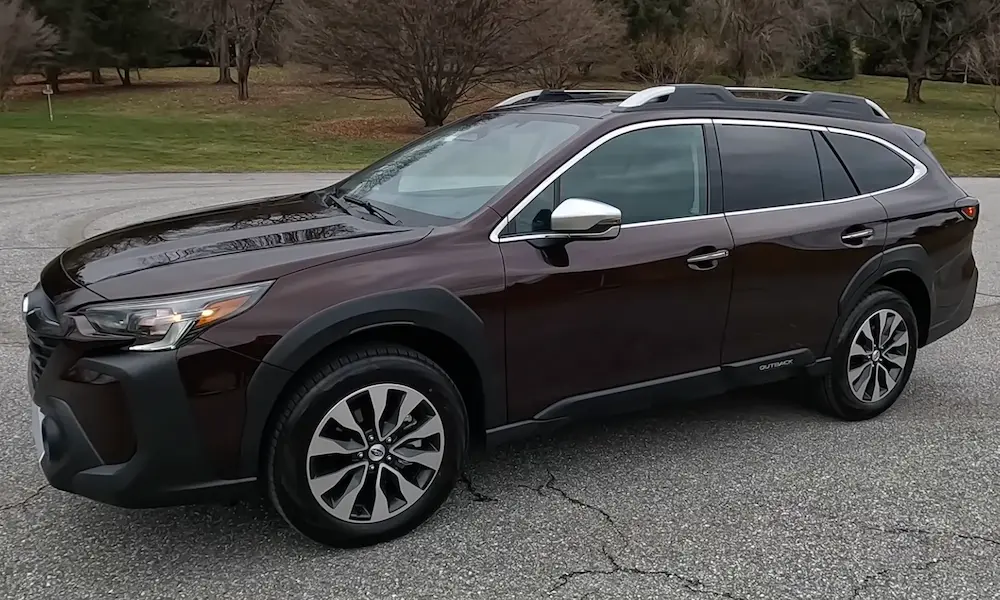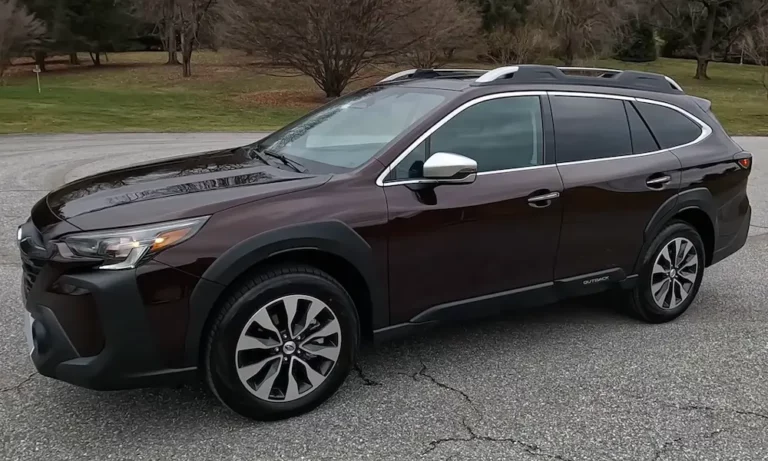
Shopping for a used Subaru Outback? The wrong model year could cost you thousands. This guide cuts through the noise and tells you exactly which years to buy — and which to skip.
Why Model Year Matters So Much With the Outback
Not all Outbacks are created equal. Over 30 years of production, this wagon-crossover hybrid has had some genuinely brilliant years — and some genuinely painful ones. Head gasket nightmares. Oil-burning engines. Batteries that die overnight. Phantom braking.
The good news? Once you know which years nailed it, finding a reliable Outback gets a lot easier.
The Best Years for Subaru Outback: Quick Verdict
| Model Year | Generation | Reliability Verdict | Best For |
|---|---|---|---|
| 2014 | Gen 4 | ✅ Strong | Budget buyers wanting a proven platform |
| 2019 (3.6R) | Gen 5 | ✅ Excellent | Long-term owners who want the bulletproof flat-six |
| 2024 | Gen 6 | ✅ Very Good | New buyers wanting modern tech without early-gen bugs |
| 2013–2014 | Gen 4 | ⚠️ Caution | Watch for oil consumption on the FB25 |
| 2010–2012 | Gen 4 | ⚠️ Mixed | CVT stalling issues in early units |
| 1999–2011 | Gen 2–3 | ❌ Skip (unserviced) | Head gasket failures on the EJ25 |
Best Year #1: The 2014 Subaru Outback
The 2014 is the last of the fourth generation — and that’s actually a good thing. By 2014, Subaru had sorted out the CVT torque converter stalling that plagued 2010–2012 models. The transmission software was updated, and the mechanical kinks were largely ironed out.
You also dodge the notorious head gasket failures tied to the old EJ25 engine. The 2014 runs the FB25 — a newer design with a timing chain instead of a belt.
What to watch for:
- The 2013 FB25 had a piston ring flaw causing excessive oil consumption. The 2014 is better, but always check oil levels before buying used.
- Confirm the CVT fluid has been serviced. Subaru marketed it as “lifetime,” but transmission specialists recommend changing it every 30,000–50,000 miles.
Bottom line: The 2014 gives you a solid, affordable entry point without the worst Gen 4 headaches.
Best Year #2: The 2019 Subaru Outback 3.6R
This is arguably the single best used Outback you can buy. Here’s why.
The 3.6-liter flat-six engine (EZ36D) is one of the most dependable powerplants Subaru ever built. It uses port injection — which avoids carbon buildup on intake valves — and it runs cooler and more consistently than the smaller four-cylinders. Technicians routinely call it the “gold standard” for long-term Subaru ownership.
The 2019 is the final year Subaru offered the 3.6R in the Outback. After 2019, it was discontinued and replaced with the 2.4L turbo.
Why 2019 specifically?
- It’s the most refined version of Generation 5
- The battery parasitic drain issues from the DCM module had not yet peaked (those hit harder in 2020–2022)
- No 11.6-inch tablet screen — so you skip the infotainment lag problems that arrived with Gen 6
- EyeSight safety tech is mature and well-tested on this platform
What to watch for:
- The fragile windshield complaint starts appearing in this era. A rock chip that would normally be a $250 fix can run over $1,000 because EyeSight cameras require dealership recalibration after glass replacement.
- Check that the Takata airbag recall was completed if you’re looking at a high-mileage example.
Bottom line: If you want the most reliable used Outback money can buy, the 2019 3.6R is it. Buy it, service the CVT fluid, and drive it to 200,000 miles.
Best Year #3: The 2024 Subaru Outback
For new or near-new buyers, the 2024 is the sweet spot in Gen 6.
Early 2020–2022 models had a rough start. The Thermo Control Valve (TCV) — an electronically controlled coolant valve — would fail and trigger a cascade of warning lights, disable EyeSight, and kill all drive modes. It’s a frustrating issue.
Subaru acknowledged the problem and issued warranty extension WM23, covering the TCV for 15 years or 150,000 miles. The 2024 models arrive with the updated TCV part (Number 12131AA012) already installed.
The infotainment situation also improved significantly. The 2025 models feature a revised Cockpit Control Unit (CCU) that addresses the communication failures seen in 2020–2023 units, and the Denso CP1.5 firmware update resolved the CarPlay microphone muting and system blackout issues that drove early owners crazy.
What to watch for:
- The 2024 still uses the 11.6-inch tablet screen. It’s better than it was in 2020, but it’s not perfect.
- If you tow or drive mountain roads regularly, don’t treat the CVT fluid as “lifetime.” Service it every 30,000–50,000 miles to protect a potential $6,500–$8,000 replacement bill.
Bottom line: The 2024 is the best new-era Outback. Subaru has cycled through the major Gen 6 growing pains, and you’re buying a much cleaner version of this generation.
Years to Avoid: The Outback’s Roughest Patches
1999–2011: The Head Gasket Era
The EJ25 engine that powered these models had a well-documented head gasket failure problem. Single-layer gaskets cracked under thermal stress, causing coolant or oil seepage. Repairs ran $1,200–$2,500.
Don’t write off these years entirely — if someone already replaced the gaskets with modern Multi-Layer Steel (MLS) versions, these engines can hit 300,000 miles. But buy an unserviced one? You’re rolling the dice.
2010–2012: CVT Stalling
The early Lineartronic CVT had a torque converter defect that caused the car to stall when stopping — mimicking a manual car with a forgotten clutch. Subaru issued extended warranties and TSBs, but many of these vehicles are well past coverage now.
2013: Oil Consumption Crisis
The 2013 Outback is the most problematic FB25 year. Piston ring defects caused engines to burn a quart of oil every 1,000–2,000 miles. In severe cases, owners didn’t notice until the engine seized. Subaru settled a class-action lawsuit and replaced short-blocks on many cars — but check the service history carefully before buying a 2013.
2020–2022: Gen 6 Teething Problems
The first three years of Gen 6 combined the TCV failure, infotainment lag, DCM battery drain, and early software bugs. These issues are largely covered under warranty or extended programs, but for a used buyer without active coverage, they represent real financial exposure.
Which Engine Should You Pick?
Your choice of engine changes your reliability picture significantly.
| Engine | Years Available | Reliability | Key Note |
|---|---|---|---|
| 3.6R Flat-Six | 2010–2019 | Highest | Best long-term option; discontinued after 2019 |
| 2.5L FB25 (Gen 5) | 2015–2019 | High | Solid choice; monitor battery drain on 2015–2019 |
| 2.5L FB25 (Gen 6) | 2020–2024 | Moderate | TCV covered by 15-year/150k warranty |
| 2.4T Turbo (XT) | 2020–Present | High | Under-stressed in Outback; strict oil changes required |
The 2.4L turbo (FA24F) was originally designed for the heavier three-row Ascent. In the Outback, it’s running well below its stress limits — which is good for longevity. Just stay strict on oil change intervals and watch for carbon buildup on intake valves over time.
What Does Owning an Outback Actually Cost?
According to CarEdge maintenance data, the Outback costs about $8,386 over 10 years — roughly $467 more than the segment average.
Here’s how costs break down by ownership year:
| Year of Ownership | Annual Maintenance Cost | Major Repair Probability |
|---|---|---|
| Year 1 | $357 | 2.45% |
| Year 3 | $516 | 4.56% |
| Year 5 | $790 | 11.58% |
| Year 10 | $1,290 | 24.76% |
The “Subaru Tax” comes from a few specific areas:
- Boxer engine labor: The horizontal layout makes spark plug changes and valve cover gasket work more time-consuming.
- AWD tire matching: Subaru’s Symmetrical AWD requires all four tires to have nearly identical tread depth. One blown tire can mean buying four.
- Windshield replacement: Thanks to EyeSight cameras, a windshield swap requires ADAS recalibration at the dealership — turning a $250 job into a $1,000+ one.
The silver lining? The Outback’s 5-year maintenance cost is actually $866 lower than the industry average. It’s reliable when it’s young. Costs just climb faster in year seven and beyond.
Outback vs. RAV4 vs. CR-V: Does It Hold Up?
If you’re cross-shopping, here’s the honest picture.
The Toyota RAV4 — especially the Hybrid — wins on absolute lowest maintenance cost. Its eCVT uses planetary gears rather than a chain or belt, and Toyota’s naturally aspirated engines are about as bulletproof as it gets. If you just want the cheapest long-term running costs, the RAV4 wins.
The Honda CR-V sits in the middle — solid reliability, simple maintenance, strong resale. Its belt-driven CVT is less robust than Subaru’s chain-driven unit for towing, though.
Where the Outback beats both? Standard AWD and ground clearance. Every Outback comes with Symmetrical AWD — no upcharge. The RAV4 and CR-V both charge $1,500+ for AWD. The Outback also offers 8.7–9.5 inches of ground clearance, substantially more than either competitor.
If you live somewhere with real winters or unpaved roads, that standard AWD and extra clearance changes the equation entirely.
The Short List: Best Years for Subaru Outback
Here’s the no-nonsense version:
- Best budget pick: 2014 — solid engine, sorted CVT, no head gasket risk
- Best overall used pick: 2019 3.6R — the most reliable Outback Subaru ever built
- Best new/near-new pick: 2024 — Gen 6 refined, TCV warranty in place, updated software
- Years to avoid: 2013 (oil consumption), 2010–2012 (CVT stalling), unserviced pre-2011 (head gaskets), 2020–2022 (early Gen 6 bugs)
Pick the right year, stay on top of the CVT fluid, and an Outback can easily hit 200,000 miles. It rewards owners who pay attention — and punishes those who don’t.