Your Chevy’s 4WD system should work flawlessly when you need it most. But when that dashboard switch fails, you’re left spinning your wheels—literally. If you’ve been fighting with an unresponsive 4WD selector or seeing that dreaded “Service 4WD” message, you’re facing one of the most common issues with Chevy trucks and SUVs.
Common Symptoms of Chevy 4WD Switch Problems
“Service 4WD” Warning Light Won’t Go Away
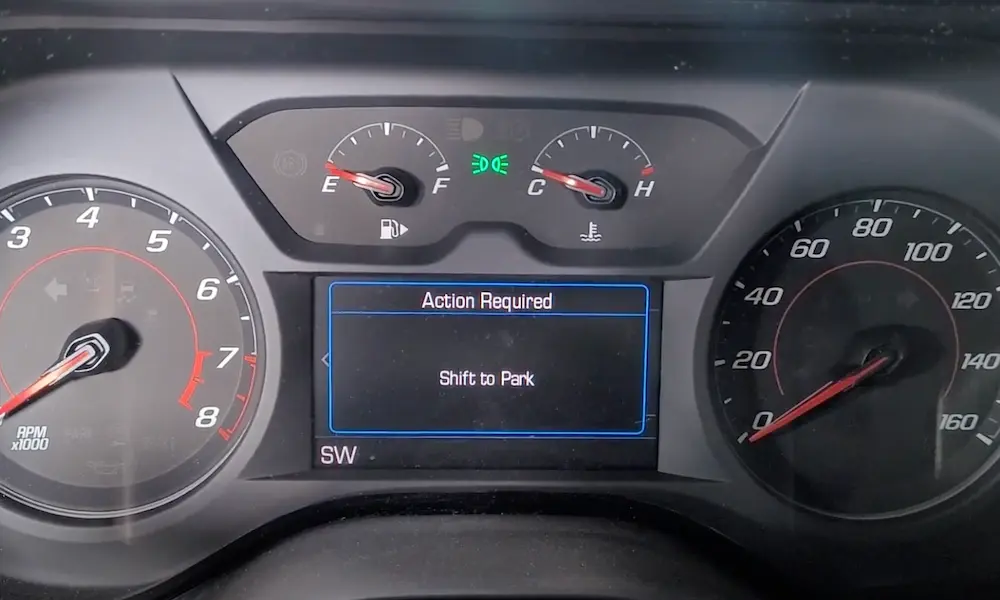
That amber dashboard warning isn’t just annoying—it’s telling you something’s wrong with your 4-wheel drive system. This warning typically appears when your vehicle’s computer detects a problem with mode shifting or component communication.
Many Silverado and Suburban owners report this warning appearing after 150,000 miles, often linked to a faulty transfer case encoder motor position sensor. In a 2000 Chevy Suburban, this same warning appeared due to a defective front propeller shaft speed sensor, diagnosed through a C0305 trouble code.
4WD Switch Buttons Don’t Light Up
When you press those 4WD selector buttons and nothing lights up, you’re dealing with a classic symptom of switch failure. The buttons should illuminate to confirm your selection, but internal electrical problems often cause this function to fail.
The root cause is usually poor solder connections inside the switch assembly itself. These connections crack over time due to temperature changes and vibration, breaking the electrical circuit that powers the indicator lights and sends signals to the transfer case control module (TCCM).
4WD Modes Won’t Engage or Disengage
You press the button, but your truck stays stubbornly in 2WD—or worse, gets stuck in 4WD. This inability to shift between modes is frustrating and potentially damaging to your drivetrain.
A 2005 Chevy Silverado owner reported being stuck permanently in 4Low due to a faulty encoder motor. After replacing the motor, normal function returned. The problem typically stems from:
- Electrical failures in the switch assembly
- Failed encoder motor
- Communication issues between the switch and TCCM
- Mechanical binding in the transfer case
Intermittent 4WD Operation
Perhaps the most maddening symptom is when your 4WD works sometimes but not others. You might press the switch and get lucky, or you might be stranded in the wrong mode at the worst time.
This unpredictability almost always points to electrical issues—specifically cracked solder joints in the switch that make intermittent contact. One Silverado owner fixed this by disassembling the switch and reflowing solder joints on the circuit board, restoring reliable function.
Diagnosing Your Chevy 4WD Switch Issues
Using OBD-II Diagnostic Codes
The fastest way to pinpoint 4WD problems is through diagnostic trouble codes (DTCs). These codes reveal specific faults in the system:
- C0305: Front Propeller Shaft Speed Sensor Circuit
- C0307: Rear Propeller Shaft Speed Sensor Circuit
- C0327: Transfer Case Encoder Motor Position Sensor Circuit
- C0569: Transfer Case Control Module Circuit
For example, when a 2000 Suburban displayed code C0305, testing revealed the front speed sensor had a resistance of 2 MΩ instead of the normal 1,100–1,250 Ω, confirming the sensor had failed.
Physical Switch Inspection
Before replacing anything, inspect the 4WD selector switch itself:
- Remove the dashboard bezel (usually snap-fitted)
- Unplug the electrical connector from the switch
- Look for corrosion on the terminals
- If possible, test button function with a multimeter
A properly functioning switch should output different voltages (between 1.5-4.6V) when different modes are selected. If readings are inconsistent or non-existent, your switch needs repair or replacement.
Testing the Encoder Motor
The transfer case encoder motor is a critical component that physically shifts your 4WD modes. To test it:
- Locate the encoder motor on the transfer case (driver’s side)
- Check for loose connections
- Test the signal wire for proper voltage (typically 5V)
- Try manually rotating the encoder motor shaft
If the motor binds or doesn’t move freely, it’s likely failed. A seized motor will prevent proper 4WD engagement regardless of switch condition.
The Most Common Chevy 4WD Switch Failures
Internal Solder Joint Cracks
By far the most common failure in Chevy 4WD switches is cracked solder joints on the internal circuit board. These microscopic cracks break electrical connections and cause intermittent or complete switch failure.
Models from 1999-2006 are especially prone to this problem. The good news? This is often repairable without replacing the entire switch. A Silverado owner documented successfully restoring switch function by disassembling the unit and resoldering the connections.
Corroded Electrical Connections
Water intrusion and environmental exposure lead to corroded terminals that disrupt communication between the switch and transfer case module. This corrosion creates high resistance in the circuit, preventing proper signals from reaching the TCCM.
Cleaning terminals with electrical contact cleaner and applying dielectric grease can resolve these issues in many cases. Pay special attention to the connections at both the switch and the transfer case encoder motor.
Failed Button Mechanisms
Physical wear of the button mechanisms themselves can cause switch failure. The rubber contacts inside the switch assembly compress over time, creating insufficient contact when pressed.
This type of mechanical failure typically requires switch replacement, though some owners have successfully restored function by cleaning the contacts and adding small shims to improve contact pressure.
TCCM Communication Errors
Sometimes the issue isn’t with the switch itself but with how the Transfer Case Control Module interprets signals. A technical service bulletin (TSB #1481410) highlights cases where the TCCM enters a “sleep mode,” requiring reprogramming.
This software-related issue affects numerous Chevy models and causes systems to appear failed when they actually need a module reset or reprogramming.
How to Fix Chevy 4WD Switch Problems
DIY Switch Repair: Resoldering Technique
For the technically inclined, resoldering the switch offers a cost-effective solution:
- Remove the switch from the dashboard
- Open the plastic housing (usually snaps apart)
- Locate the circuit board with solder connections
- Identify and reflow any cracked solder joints
- Reassemble and test functionality
This repair typically takes about an hour and requires basic soldering equipment. Success rates are high, with many owners reporting years of trouble-free operation after repair.
Replacing the Switch Assembly
If repair isn’t feasible, replacement is straightforward:
- Purchase a new switch assembly (Dorman 600-120 is a popular replacement)
- Remove the dashboard bezel
- Unplug the electrical connector
- Remove the old switch
- Install the new switch and reconnect
- Test all 4WD modes
New switches cost between $50-150 depending on source and model. Aftermarket options often work as well as OEM parts at lower prices.
Encoder Motor Replacement
If diagnostics point to the encoder motor, here’s how to replace it:
- Disconnect the battery
- Remove the skid plate if equipped
- Disconnect the electrical connector from the motor
- Remove the retaining bolts (usually three)
- Pull the motor straight out
- Install the new motor (part #19125571 for many models)
- Reconnect and test functionality
After replacement, remember that engaging 4Low requires shifting the transmission to Neutral first—a step many owners forget. The encoder motor costs around $100-200 depending on source.
TCCM Reset and Reprogramming
For software-related issues, try these approaches:
- Basic Reset: Disconnect the battery for 15+ minutes or pull the TCCM fuse for 30 seconds
- Professional Reprogramming: Dealerships use SPS software to flash updated calibrations
The simple reset method resolves many intermittent issues, especially after encoder motor replacement. For persistent problems, professional reprogramming at the dealership costs around $100-150 but often provides a permanent solution.
Preventative Maintenance for 4WD Systems
Regular System Engagement
Exercise your 4WD system monthly, even in dry conditions. This practice lubricates internal components and prevents seizing of mechanical parts. Cycle through all available modes (2HI, AUTO, 4HI, 4LO) at appropriate speeds to maintain system health.
Electric Contact Maintenance
Apply dielectric grease to all 4WD system electrical connections during regular maintenance. This includes:
- Switch connector
- Encoder motor connector
- Speed sensor connectors
- TCCM connections
This simple step prevents corrosion and improves long-term reliability, especially in humid climates or if you frequently drive off-road.
Transfer Case Fluid Service
Don’t overlook transfer case fluid service. Fresh fluid ensures proper lubrication of moving parts and helps prevent overheating. Most Chevy models require fluid changes every 50,000 miles, though this interval shortens with heavy use.
Use only GM-approved transfer case fluid for best results. Improper fluids can damage seals and internal components, leading to premature failure.
Comparing Repair Costs: DIY vs. Professional Service
| Repair Type | DIY Cost | Shop Cost | Time Investment (DIY) | Difficulty Level |
|---|---|---|---|---|
| Switch Resoldering | $0-10 | $200-350 | 1-2 hours | Moderate |
| Switch Replacement | $50-150 | $250-400 | 30-60 minutes | Easy |
| Encoder Motor Replacement | $100-200 | $300-500 | 1-3 hours | Moderate |
| TCCM Reset | $0 | $50-100 | 15 minutes | Easy |
| TCCM Reprogramming | N/A | $100-150 | N/A | Professional Only |
Most Affected Chevy Models and Years
The 4WD switch problems are most common in these Chevrolet models:
- Silverado 1500/2500/3500 (1999-2006)
- Suburban (2000-2006)
- Tahoe (2000-2006)
- Avalanche (2002-2006)
These vehicles share similar 4WD system components and are susceptible to the same failure points. Later models (2007+) have redesigned systems with improved reliability, though they can still develop issues at high mileage.
Switch Versus System: Understanding the Bigger Picture
It’s important to distinguish between switch problems and larger 4WD system failures. The symptoms may appear similar, but the root causes and repair approaches differ:
Switch-Related Problems:
- Non-illuminated buttons
- Intermittent operation
- No response when pressed
- Usually fixable without major mechanical work
Broader System Problems:
- Grinding noises during shifts
- Transfer case leaks
- Binding during turns in 4WD
- Usually require more extensive repairs
Understanding this distinction helps you avoid unnecessary repairs or overlooking more serious issues. When in doubt, proper diagnostic testing is essential for accurate troubleshooting.
Real-World Success Stories
Many Chevy owners have successfully resolved their 4WD switch problems. One 2000 Silverado owner with 175,000 miles was quoted $400 for a new switch assembly at the dealership. Instead, they disassembled and resoldered their existing switch, restoring perfect function for the cost of solder.
Another success story involves a 2005 Suburban owner whose vehicle was stuck in 4Low. After diagnosing a failed encoder motor, they replaced the part themselves for $120 and resolved the issue completely—saving hundreds compared to the $500+ dealer quote.