Is your Chevy’s air conditioning blowing hot when it should be cold? Or maybe you’re hearing that annoying clicking sound from behind your dashboard? These are classic symptoms of a blend door actuator problem. Before spending money on a replacement part or mechanic visit, try resetting the actuator yourself.
What is a Chevy Blend Door Actuator?
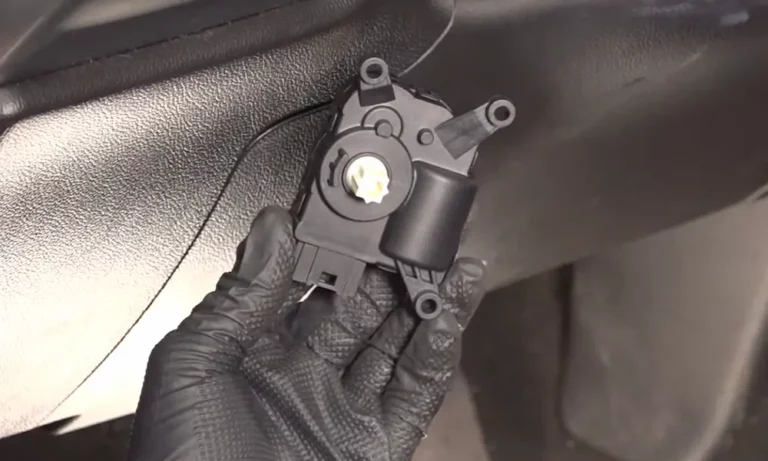
The blend door actuator is a small motorized component in your Chevy’s HVAC system that controls the flow and temperature of air in your vehicle. It moves the blend doors that direct air through the heating and cooling systems before reaching the cabin.
When working properly, it responds to your climate control settings by adjusting these doors. When it malfunctions, you’ll experience inconsistent temperatures, strange noises, or complete failure of temperature control.
Signs Your Chevy’s Blend Door Actuator Needs Resetting
- Temperature doesn’t match your settings
- Clicking or ticking noises from the dashboard
- Air blowing from wrong vents
- Temperature changes unpredictably
- Climate control system becomes unresponsive
Reset Methods for Chevy Blend Door Actuators
Method 1: HVAC Control Module Reset
This built-in reset procedure works great for most Chevrolet vehicles with automatic climate control:
- Turn the ignition to “ON” without starting the engine
- Press and hold specific button combinations:
- For 2010-2017 models (Equinox, Silverado): Hold “AUTO” + “RECIRCULATE” for 10 seconds until HVAC lights flash
- For models with shared Dodge/Ram components: Use “AC” + “RECIRCULATE” combination
- Wait 1-2 minutes for the actuator to self-test (you’ll hear gear movement)
- Test the system by adjusting temperature settings
For manual climate control systems, position temperature sliders about half an inch from the full cold setting before starting the reset process.
Method 2: HVAC Fuse Removal Technique
This method works for virtually all Chevy models with accessible fuse boxes:
- Locate the correct fuse:
- Check the underhood fuse block for a 10A HVAC/ECAS fuse (often labeled F109)
- In models like 2003-2007 Silverado, check under the glove box
- Remove the fuse for at least 60 seconds
- Reinstall the fuse and start the engine
- Don’t touch the HVAC controls for 2 minutes
- Turn the ignition OFF for 10-30 seconds, then restart and test
A real-world example: One 2006 Equinox owner resolved persistent hot air issues by removing fuse F27 and waiting 90 seconds before reinstallation.
Method 3: Battery Disconnection Method
When other methods fail, try this more comprehensive reset:
- Turn off all accessories and remove the key from ignition
- Disconnect battery terminals (negative first, then positive)
- Wait 10-15 minutes for system capacitors to fully discharge
- Reconnect the battery (positive first, then negative)
- Start the vehicle and let the actuators run through their calibration cycle
Note: 2012-2014 Camaro owners should be aware this method will also require window motor recalibration.
Method 4: Ignition Cycling for Actuator Recalibration
Essential after installing a new actuator:
- Ensure the actuator is properly mounted with all wiring connected
- Turn ignition to “ON” (Position II) for 10 seconds
- Cycle OFF → ON three times without starting the engine
- Start the engine, set temperature to 72°F (in Auto mode), and idle for 2 minutes
This procedure helps the actuator learn its mechanical limits by moving through its full range of motion.
Troubleshooting After Reset
Temperature Still Inconsistent?
If you’re experiencing issues like driver-side heat and passenger-side cold air (common in 2004-2006 Tahoe/Yukon models):
- Make sure you’ve removed the fuse for at least 60 seconds during reset
- Consider using a borescope to inspect for stripped gears if accessible
Electrical Issues?
For the technically inclined, you can perform some simple diagnostics:
- Use a multimeter to check for 12V at the actuator connector pins
- Measure circuit resistance (should be 10-15Ω); higher values indicate motor wear
Model-Specific Reset Instructions
Chevrolet Silverado (2003-2014)
- Fuse location varies by model year: Check underhood fuse block (2003-2007) or passenger footwell (2010-2014)
- Always recalibrate actuators after disconnecting the battery to prevent default-to-defrost behavior
Chevrolet Equinox (2010-2017)
- Accessing the actuator requires removing the glove box and detaching the blower motor wires
- After reset, watch for 8-second cycles between hot and cold, which indicates incomplete calibration
When Resetting Isn’t Enough: Replacement Tips
If resetting doesn’t solve your issues, you may need to replace the actuator:
- Choose compatible parts: ACDelco 15-73599 or Dorman 604-300 work well for most GM vehicles
- Proper alignment is crucial: Line up actuator shaft splines with the blend door linkage before tightening screws
- Apply lubricant: A small amount of lithium grease on gear teeth can reduce noise and wear
DIY Replacement Cost Savings
Replacing a blend door actuator at a dealership typically costs $200-400 including parts and labor. DIY replacement costs only $30-80 for the part itself, saving you a significant amount.
Advanced Techniques (For Professional Tools)
If you have access to professional diagnostic equipment:
- Use a Tech2 or other GM-compatible scanner for bi-directional control and calibration
- For 2015+ models with advanced LIN-bus-actuators, you’ll need GDS2 software to navigate to the HVAC module for proper resets
The Mechanical Side: How Blend Door Actuators Work
Your Chevy’s blend door actuator uses a small electric motor with plastic gears to rotate the blend doors to specific positions. When you adjust the temperature, the car’s computer sends signals to the actuator to move these doors, controlling how much hot or cold air enters the cabin.
The most common failure point is the plastic gears inside the actuator, which strip over time, particularly in high-mileage vehicles. This is why you might hear clicking noises – the motor is trying to turn, but the stripped gears can’t move the door.
Preventing Future Blend Door Actuator Issues
- Avoid cranking temperature settings from one extreme to another
- Use moderate fan speeds when possible
- Keep your vehicle’s electrical system in good condition
- Consider applying dielectric grease to electrical connections when replacing
Statistics on Blend Door Actuator Problems
Blend door actuator failures are remarkably common in certain Chevy models. Nearly 70% of temperature control issues can be resolved with proper reset procedures without replacing parts.
The 2010-2017 Equinox and Silverado models show increased failure rates due to plastic gear degradation compared to earlier models.
| Model | Common Failure Period | Most Effective Reset Method |
|---|---|---|
| Silverado (2003-2007) | 70,000-100,000 miles | Fuse removal technique |
| Equinox (2010-2017) | 50,000-80,000 miles | HVAC control module reset |
| Tahoe/Suburban (2007-2014) | 90,000-120,000 miles | Battery disconnection |
| Camaro (2010-2015) | 60,000-90,000 miles | Ignition cycling method |
Time to Call a Professional
While many blend door actuator issues can be resolved with DIY methods, here are situations where professional help might be necessary:
- Multiple actuators failing simultaneously
- Electrical problems beyond the actuator itself
- Dashboard disassembly required for access
- Diagnostic scan codes indicating communication failures
Resetting your Chevy’s blend door actuator is often a quick fix that can save you hundreds in unnecessary repairs. Start with the simple reset methods outlined here before assuming you need a replacement part. In most cases, one of these procedures will restore proper HVAC function and get your climate control working properly again.