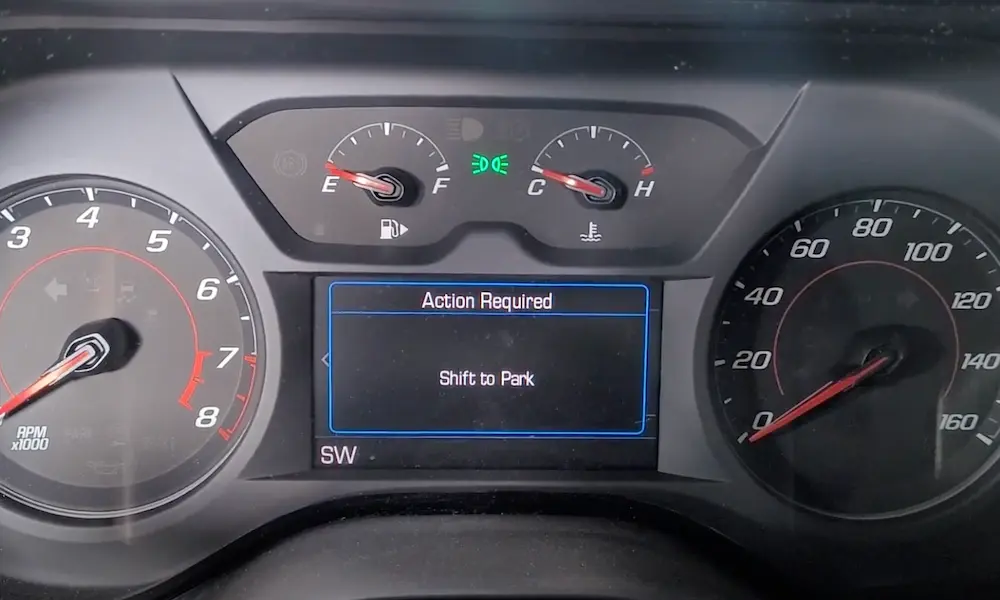
Your ABS light just came on, Stabilitrak’s disabled, and your scan tool is throwing a Chevy C0035 code. Sound familiar? This guide breaks down exactly what’s going on, what’s causing it, and how to sort it out — no guesswork, no jargon.
What Is the Chevy C0035 Code?
The C0035 code means your vehicle’s Electronic Brake Control Module (EBCM) detected a problem with the left front wheel speed sensor circuit. On some GM vehicles, it can also point to the right front wheel speed sensor supply circuit — so the exact definition depends on your specific platform.
The EBCM constantly compares signals from all four wheel speed sensors. If the left front reading deviates significantly — or the circuit’s voltage or resistance falls outside acceptable limits — it logs C0035 and shuts down your ABS and stability systems.
This isn’t just a nuisance code. It directly affects your braking and handling safety, so it’s worth addressing quickly.
Why This Code Has Two Definitions
Here’s something that trips up a lot of people. The KBB diagnostic database documents C0035 as referencing the “Right Front Wheel Speed Sensor Supply” on certain GM vehicles, while the standard OBD-II definition points to the left front sensor.
The difference comes down to manufacturer-specific subfaults, often called symptom bytes. These are hexadecimal codes appended to the base DTC that tell you exactly what kind of failure you’re dealing with.
| Symptom Byte | What It Means |
|---|---|
| 00 | General failure — no specific electrical signature |
| 0F | Erratic signal — debris or a loose bearing is likely |
| 18 | Signal too weak for the EBCM to read |
| 5A | Speed signal exists but doesn’t match other wheels |
| 02 | Short to ground — unintended chassis contact |
| 05 | Open circuit or short to high voltage |
Source: NHTSA Technical Service Bulletin
If your scan tool shows symptom byte 0F, for example, you’re dealing with a contaminated encoder ring — not a broken wire. That distinction saves you from replacing perfectly good parts.
How Wheel Speed Sensors Actually Work
Before you can diagnose C0035 on your Chevy, you need to understand what you’re testing. There are two completely different sensor types, and they require different diagnostic approaches.
Passive (Variable Reluctance) Sensors
These older sensors are self-generating. A permanent magnet and coil sit near a toothed steel ring. As the ring spins, it disrupts the magnetic field and induces an AC voltage signal. No external power needed.
The catch? They struggle at low speeds. Slow rotation means weak voltage, which can trigger false ABS activation during a gentle stop. A healthy passive sensor reads 800–2,000 ohms of resistance.
Active (Hall-Effect) Sensors
Modern Chevys — Silverado, Tahoe, Equinox, Malibu — use active sensors almost exclusively. These sensors don’t generate their own voltage. Instead, the EBCM sends a 5–12V reference signal to the sensor, which then modulates the current draw to send speed data back.
The result? Accurate readings down to nearly 0 mph, which is essential for Hill Start Assist and Autonomous Emergency Braking.
| Feature | Passive Sensor | Active Sensor |
|---|---|---|
| Needs power? | No | Yes — 5V to 12V |
| Output signal | AC sine wave | Digital DC square wave |
| Low-speed accuracy | Poor | Excellent |
| Resistance check | 800–2,000 ohms | Not applicable |
| Wire count | 2 wires | 2 or 3 wires |
One important warning: testing active sensors with a standard resistance check can damage them. Use voltage and current tests instead.
What Actually Causes the Chevy C0035 Code
Corroded Connectors (Pin-Rot)
Road salt is a major culprit — especially in northern states. Salt and de-icing chemicals seep into the sensor connector and cause galvanic corrosion between the metal pins. This raises electrical resistance, which drops the supply voltage below the sensor’s operating threshold.
In severe cases, the pins dissolve entirely inside the connector. Looks fine from the outside, completely corroded within.
Damaged Wiring Harness
The left front wheel steers. That means the sensor harness flexes thousands of times per year as you turn. Over time, the copper strands inside the wire fatigue and break — even when the outer insulation still looks fine.
On Silverado and Sierra trucks, there are known rub points where the harness clips to the upper control arm. If those clips fail, the wire can contact the tire or frame and short to ground. The NHTSA service bulletin specifically identifies this as a trigger for symptom byte 02.
Contaminated Magnetic Encoder Ring
Modern Chevys use a magnetized rubber ring embedded in the wheel hub bearing instead of a steel toothed ring. This ring attracts microscopic metal particles from brake dust and road debris.
When those particles bridge the gap between the north and south magnetic poles, they “smear” the magnetic field. The EBCM sees a scrambled signal (symptom byte 0F) and often triggers unnecessary ABS activation at slow speeds. You might hear a ratcheting or grinding noise even without an active code.
Failing EBCM Internal Regulator
Here’s the one that catches people off guard. The EBCM itself contains a voltage regulator that creates the 5V reference signal for active sensors. If that regulator fails, it may output less than 4.0V, triggering C0035.
Replacing the sensor won’t fix this. The fault is inside the module.
Worn Wheel Hub Bearing
The magnetic encoder ring is pressed into the hub bearing. When the bearing wears, the encoder ring can wobble, increasing the air gap between the ring and sensor tip. A larger air gap means a weaker signal — and potentially a C0035 code.
How to Diagnose Chevy C0035 Correctly
Don’t just throw parts at this. Here’s a structured approach that actually works.
Step 1: Check Live Data First
Connect your scan tool and watch live wheel speed data while someone drives slowly. All four sensors should read 0 mph when stationary. During a slow roll, every sensor should rise smoothly together.
- Sensor stuck at 0 mph while moving → Check air gap and encoder ring
- Sensor jumping erratically → Suspect debris or wiring damage
- All four sensors look fine but code is present → Dig into the EBCM supply voltage
Step 2: Test Supply Voltage at the Connector
Disconnect the sensor and probe the harness-side connector with a multimeter, ignition on.
| Test | Healthy Reading | Fault Indicator |
|---|---|---|
| Reference voltage | 4.5V – 5.5V | Below 4.0V = module or harness fault |
| Ground continuity | Under 0.5 ohms | Above 5.0 ohms = corroded ground |
| Signal waveform (scope) | Clean square wave | Rounded edges = EMI or debris |
If voltage is below 4.0V and the harness checks out, the EBCM regulator is failing.
Step 3: The Cross-Swap Test
If your front sensors are identical, swap left and right. If the code moves from C0035 to C0040, the sensor itself is bad. If C0035 stays put, the problem is in the wiring or module — not the sensor.
How the C0035 Code Affects Other Systems
This code doesn’t stay contained to the ABS. It ripples through your entire vehicle network.
Stabilitrak / ESC: Fully disabled. The stability control system needs accurate wheel speed data to calculate slip angle. Without it, there’s no electronic intervention if you start to oversteer or understeer — a real concern in trucks like the Silverado and Tahoe.
Electric Power Steering: Many Chevys use speed-sensitive EPS. When the EBCM loses wheel speed data, the EPS module may throw a U0415 code (Invalid Data from EBCM) and default to heavy steering mode. Great for highway safety, terrible in a parking lot.
Traction Control: Also disabled. On icy roads or loose surfaces, you lose electronic wheelspin management entirely.
Repair Costs: What to Expect
| Repair | Parts Cost | Labor Time | Estimated Total |
|---|---|---|---|
| Wheel speed sensor | $50–$150 | 0.5–1.0 hrs | $120–$300 |
| Wiring harness repair | $20–$60 | 1.0–2.0 hrs | $150–$350 |
| Hub / bearing assembly | $150–$400 | 1.5–2.5 hrs | $350–$750 |
| EBCM replacement | $600–$900 | 2.0–4.0 hrs | $900–$1,500 |
Note: EBCM replacement on modern Chevys requires factory-level reprogramming since the module is VIN-locked to the vehicle’s CAN network.
How to Fix It Right the First Time
Sensor Installation
Clean the sensor mounting surface on the steering knuckle completely. Even minor rust buildup — called “rust jack” — can push the sensor away from the encoder ring and trigger the code again after your repair. Apply a thin coat of dielectric grease to the sensor tip before installation.
Wiring Repairs Done Properly
Standard crimp connectors don’t belong on a wheel speed sensor repair. The signal is low-current and high-frequency — any added resistance corrupts the data.
- Solder the connection, then seal it with dual-wall adhesive-lined heat shrink tubing
- Maintain the wire twist — speed sensor wires are twisted to cancel electromagnetic interference, and that twist must be preserved in any repair section
- Consider a full sub-harness — GM Genuine Parts offers a front driver side ABS sensor wiring harness designed for this exact job with pre-crimped connectors and high-flex wiring
Preventing C0035 From Coming Back
A few simple habits keep this code from returning:
- Inspect the sensor harness every time you pull a wheel for brakes or tires — look for cracked insulation or rub marks near the upper control arm clips
- Clean and re-grease the connectors every 2–3 years, especially if you drive in salted road conditions
- Remove the sensor tip periodically to check for metallic debris buildup on the encoder ring — a quick wipe prevents the smearing effect before it starts
The Chevy C0035 code is one of those faults that looks simple on the surface but has several possible causes hiding underneath. Use the symptom bytes, test the supply voltage first, and rule out the EBCM before replacing parts. Do it right once, and your ABS, Stabilitrak, and traction control stay exactly where they belong — working quietly in the background.