That “Stop Engine – Low Oil Pressure” warning just lit up your dash, and now your scanner’s showing a Chevy P0521 code. Before you panic, know this: it’s not always a death sentence for your engine. Sometimes it’s a $10 screen. Read to the end, and you’ll know exactly what you’re dealing with.
What Is the Chevy P0521 Code?
The P0521 code means “Engine Oil Pressure Sensor/Switch Range/Performance.” Your powertrain control module (PCM) constantly calculates what your oil pressure should be based on engine speed, oil temp, and throttle position. When the actual sensor reading drifts more than about 6.8 to 7.3 PSI from that expected value for more than four seconds, it triggers the P0521 code.
The key word here is performance. The electrical circuit itself is fine. The problem is that the data coming back doesn’t make logical sense — like reading high pressure at idle or low pressure at high RPM.
How the Oil Pressure Sensor Actually Works
Your Chevy doesn’t use a simple on/off oil pressure switch. It uses a three-wire pressure transducer that sends a continuous voltage signal back to the PCM. Here’s what each wire does:
| Sensor Wire | Voltage (Key ON, Engine OFF) | Voltage (Hot Idle) | Purpose |
|---|---|---|---|
| 5V Reference | 4.8V – 5.2V | 5.0V | Regulated power from PCM |
| Low Reference | < 0.1V | < 0.1V | Ground return path |
| Signal Wire | ~0.5V | 1.0V – 1.5V | Sends pressure data to PCM |
The signal voltage climbs linearly from about 1.0 volt at idle up to nearly 4.0 volts at high pressure. When this signal falls outside the PCM’s predicted window, you get the Chevy P0521 code.
This three-wire setup also lets the PCM spot specific electrical faults. A signal below 0.1V triggers P0522 (short to ground). A signal above 4.4V triggers P0523 (short to voltage). P0521 sits in the middle — the wiring looks good, but the numbers don’t add up.
Why Active Fuel Management Makes P0521 So Common
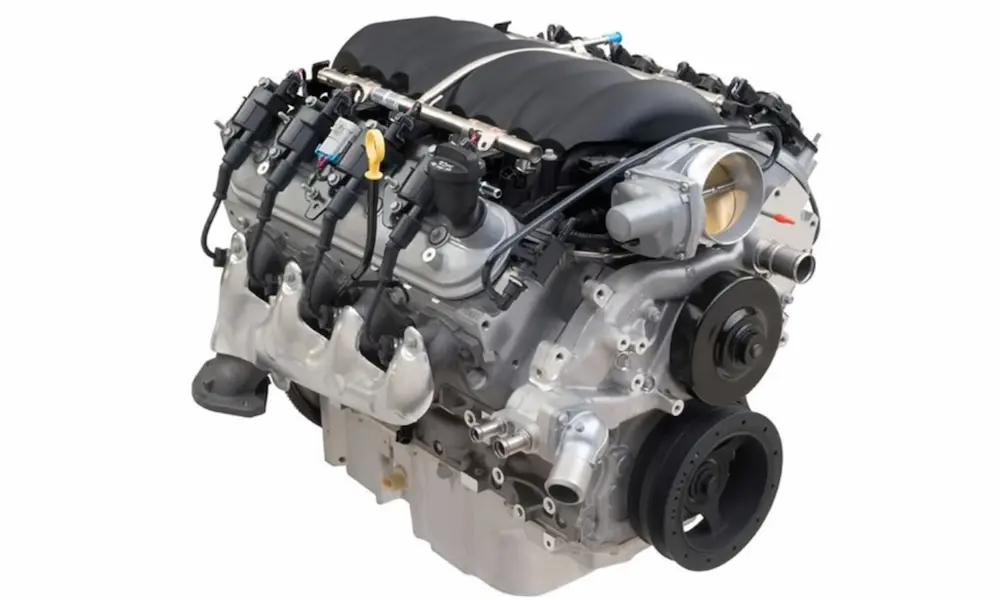
If your Silverado, Tahoe, or Suburban has a 5.3L or 6.2L V8, Active Fuel Management (AFM) is almost certainly involved in your P0521 diagnosis. AFM shuts down half the cylinders at light load using hydraulic lifters — and those lifters are extremely sensitive to oil pressure and oil quality.
Here’s where things get sneaky. GM’s AFM-equipped engines use a small filter screen tucked directly beneath the oil pressure sensor. Its job is to protect the AFM solenoids from debris. Over time, carbon deposits and sludge from extended oil change intervals pack this tiny screen tight. The engine might be making 40 PSI at the main bearings, but the sensor only sees 10 PSI through that clogged screen. That gap is exactly what triggers the Chevy P0521 code.
The 4.8L Vortec V8 skips all of this — no AFM, no VLOM manifold, no filter screen. It can still get a bad sensor, but it’s far less likely to suffer these “false” low-pressure readings.
AFM also adds a secondary oil pressure relief valve in the oil pan. If that valve sticks open, oil gets dumped back into the pan before it reaches the upper galleries where the sensor lives. More on that below.
How to Diagnose Chevy P0521 Step by Step
Don’t skip straight to parts replacement. A real low-pressure condition will destroy crankshaft bearings and valvetrain in minutes. Rule that out first.
Step 1: Check the basics
Pull the dipstick. Low oil level lets the pump suck air, causing pressure fluctuations that easily trigger P0521. Also check oil condition. Black, sludgy oil blocks passages and clogs the sensor screen fast.
Step 2: Read live data
Use a quality scan tool and watch the “Engine Oil Pressure” PID at operating temperature. A healthy engine should show:
- Hot idle: At least 20 PSI (some GM specs allow slightly lower)
- 2,000 RPM: 40–50 PSI
Erratic or low readings at either point mean you keep diagnosing. Normal readings at both points point strongly toward the sensor or screen.
Step 3: Run a mechanical pressure test
This is non-negotiable if scan data looks bad. Pull the electronic sensor, thread in a manual gauge using the appropriate adapter, and compare real pressure to what the PCM sees.
| Test Location | Expected Reading (Hot Idle) | What Low Reading Means |
|---|---|---|
| Oil Filter Housing | 20–30 PSI | Oil pump or pan relief valve failure |
| Oil Pressure Sensor Port | 18–25 PSI | Blocked VLOM screen if filter housing reads higher |
| Difference Between Ports | < 10 PSI | Bigger gaps point to clogged passages or screen |
If the mechanical gauge shows healthy pressure but the scan tool shows low — you’ve got a bad sensor, a clogged screen, or a wiring issue. If the mechanical gauge also shows low pressure, the problem is internal: oil pump, worn bearings, or a stuck relief valve.
The Most Common Fix: Sensor and Filter Screen
The most frequent resolution for Chevy P0521 is replacing the oil pressure sensor and the little filter screen underneath it at the same time. Here’s what you’re working with:
| Component | GM Part Number | Approximate Cost | Role |
|---|---|---|---|
| Oil Pressure Sensor | 12677836 / 12727099 | $55–$80 | Sends pressure data to PCM |
| Lifter Filter Screen | 12623757 | $7–$15 | Protects AFM solenoids from debris |
| Sensor Socket (Lisle 13250) | — | $15–$25 | Specialty tool for rear engine access |
Check the electrical connector before you buy anything. Oil wicking into the harness plug adds resistance and causes signal drift — a dead giveaway that the sensor itself has failed internally.
The filter screen (GM part 12623757) is often the real villain. It sits in a small well below the sensor and traps debris like a drain screen traps hair. Even minor buildup creates enough of a pressure drop to fool the PCM. Technicians pull it with a small pick or a lag bolt threaded into the plastic frame — no intake manifold removal needed if you’re patient and have the right socket.
Access warning: The sensor sits at the very back of the engine block near the firewall. Factory manuals call for intake manifold removal, but experienced techs use a 1-1/16 inch deep socket with a universal swivel joint and handle it in under 45 minutes.
The Trickier Problem: Stuck Oil Pressure Relief Valve
In early 2025, GM issued Technical Service Bulletin 24-NA-173 addressing a specific failure pattern: some engines show low oil pressure only at idle because the oil pump’s internal relief valve is stuck partially open.
When this valve sticks, the pump can’t build enough pressure at low RPM. As engine speed climbs, the oil volume overcomes the leak and pressure looks normal. This classic idle-low, RPM-normal behavior is a textbook P0521 trigger — and it points directly at the pump, not the sensor.
If you’ve already replaced the sensor and screen and the code keeps coming back, watch your hot idle pressure closely. Under 20 PSI at idle that jumps past 40 PSI under load? That’s the relief valve talking.
Fixing it means dropping the oil pan to access the pump. On 4WD models, that involves removing the front differential, skid plates, and steering rack. Labor runs 8 to 10 hours at a shop.
Repair Costs: What to Budget
| Service | Labor Time | Dealer Cost | Independent Shop |
|---|---|---|---|
| Sensor & Screen Swap | 0.8–1.5 hrs | $250–$350 | $180–$260 |
| Intake Manifold Removal | 2.5–3.5 hrs | $500–$700 | $400–$550 |
| Oil Pump (RWD) | 4.0–6.0 hrs | $900–$1,200 | $750–$1,000 |
| Oil Pump (4WD) | 8.0–10.0 hrs | $1,400–$1,800 | $1,100–$1,400 |
If your engine needs major work anyway, a lot of owners go the AFM delete route — swap in standard lifters, a non-AFM cam, and retune the PCM. It removes the VLOM, the filter screen, and most of the root causes behind P0521 and P0523 entirely. Fuel economy takes a small hit, but the chronic oil pressure drama stops.
GM’s Track Record: TSBs and Lawsuits You Should Know About
The Chevy P0521 code doesn’t exist in a vacuum. GM has a documented history of oiling system issues tied directly to AFM engines:
| Model Year Range | Primary Issue | TSB or Legal Action | Outcome |
|---|---|---|---|
| 2007–2011 | Valve Cover PCV Design | TSB 10-06-01-008 | Updated valve cover issued |
| 2011–2014 | LC9 Piston Ring Wear | Siqueiros v. GM | $150M settlement fund |
| 2010–2013 | 2.4L Ecotec Oil Consumption | Class action litigation | $45M settlement |
| 2014–2024 | Oil Pump Relief Valve | TSB 24-NA-173 | Pump replacement guidance |
Some 2016–2018 vehicles also received extended warranty coverage for oil pressure sensor issues — up to 10 years or 120,000 miles on select models. Check whether your VIN qualifies before you pay out of pocket.
How to Prevent Chevy P0521 From Coming Back
Use the right oil. GM requires Dexos-certified full synthetic for modern V8 and EcoTec engines. Put in 10W-40 when the engine calls for 5W-30, and you’ll see higher-than-expected cold-start pressures — another way to trigger the P0521 code.
Change your oil more often. The on-board Oil Life Monitor might say 7,500 or 10,000 miles, but AFM-equipped engines benefit from a 5,000-mile limit. Cleaner oil means a cleaner filter screen and a happier PCM.
Keep the connector clean. Road salt and heat cycles corrode the sensor’s electrical plug over time. Clean it with electrical contact cleaner and pack it with dielectric grease. This simple step prevents the voltage drift that causes false P0521 readings.
Install the updated valve cover. TSB 10-06-01-008 covers the updated left valve cover design that reduces oil being pulled into the intake. Less oil burning means less carbon buildup on the sensor screen — and fewer P0521 codes down the road.
Stick with AC Delco sensors. Aftermarket sensors sometimes have calibration curves that don’t match the PCM’s mapping. The code comes right back, and you’ve wasted money twice.