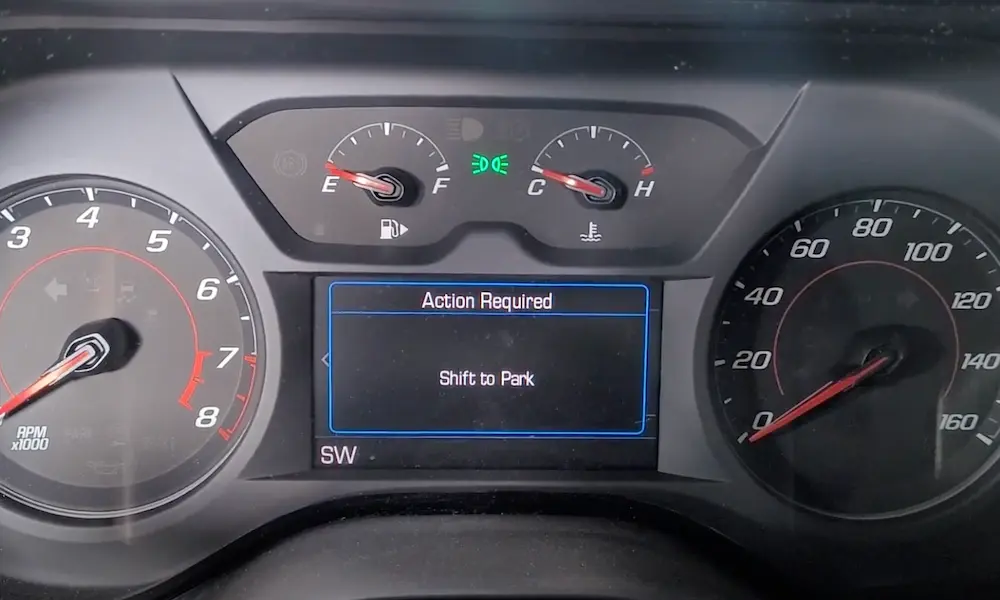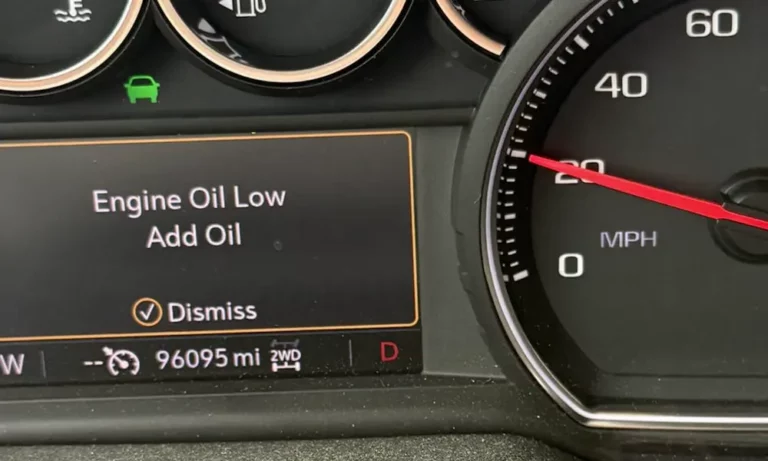
Seeing “Engine Oil Low Add Oil” flash on your Chevy’s dashboard? Don’t panic, but don’t ignore it either. This warning means your engine needs immediate attention to avoid serious damage. Here’s exactly what you need to do right now and how to prevent this from becoming a costly nightmare.
Why Your Chevy Is Screaming for Oil
When that warning pops up, your oil level has dropped dangerously low. We’re talking dipstick-reading-dry low. Your engine’s oil sensor doesn’t mess around—it only triggers when things are getting critical.
Here’s the thing: modern Chevrolet engines actually consume oil as part of their normal operation. Surprised? Most owners are. GM considers up to 1 quart per 1,000 miles normal consumption for their engines. Yeah, you read that right.
Your V6 or V8 typically starts drinking oil after hitting 40,000-50,000 miles. It’s not a defect—it’s just how piston rings and valve seals wear over time. Annoying? Absolutely. But it’s reality.
Different engines have different appetites. The 5.3L V8 in Silverados, Tahoes, and Suburbans usually starts getting thirsty around 50,000 miles. Newer turbocharged engines like the 2.7L and 1.5L tend to behave better thanks to improved engineering.
Many Chevy owners report getting the low oil warning at around 35% oil life remaining—way before their scheduled change. If you’re driving a higher-mileage V8, this pattern becomes frustratingly familiar.
Stop Driving (Almost) Immediately
First rule when you see “Chevy engine oil low add oil”: limit yourself to 20-30 miles maximum. That’s enough to get somewhere safe, but not enough to destroy your engine.
Find level ground and park. Let your engine cool for at least 10 minutes. This isn’t optional—hot oil gives false readings and hot engines burn fingers.
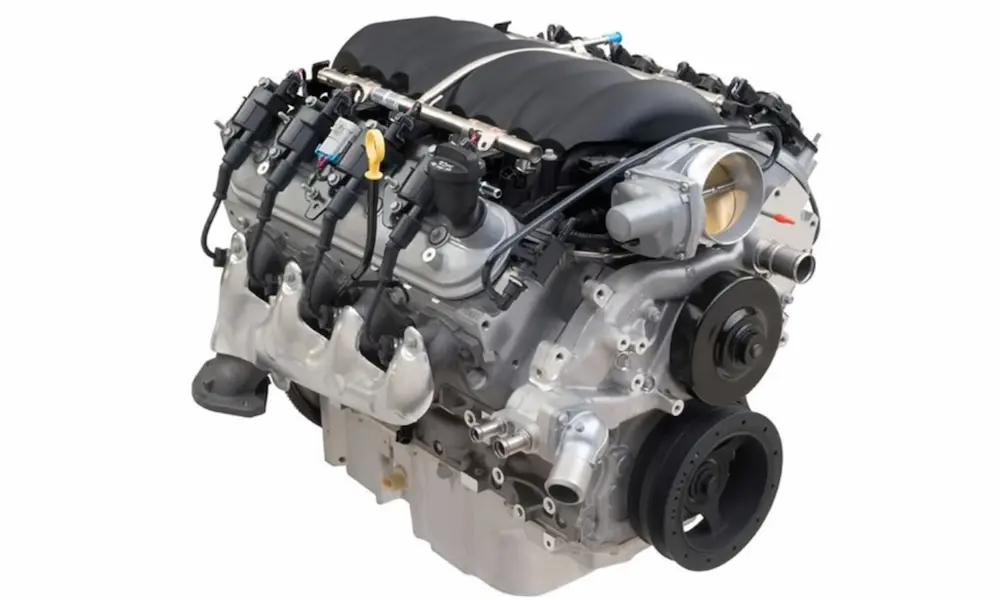
Grab your dipstick. It’s got a yellow handle on most Chevys, sticking out of your engine block. Pull it out, wipe it clean with a rag, shove it all the way back in, then pull it out again. That’s your real reading.
The dipstick shows two marks: “FULL” and “ADD.” The space between them represents about one quart. If you’re reading below “ADD” or seeing nothing at all, you’re in the danger zone.
Most Chevy engines hold 4-8 quarts total. When that warning light hits, you’re usually down 1-2 quarts depending on how long you’ve been ignoring those oil life percentages.
Getting the Right Oil for Your Chevy
Don’t just grab any oil off the shelf. Modern Chevrolets are picky eaters—they need dexos1 certified oil. Using the wrong stuff can void your warranty faster than you can say “expensive mistake.”
| Engine Type | Required Oil Spec | Common Models |
|---|---|---|
| 2019+ 5.3L & 6.2L V8 | 0W-20 dexos1 | Silverado, Tahoe, Suburban |
| Most V6 & Older V8 | 5W-30 dexos1 | Equinox, Traverse, Malibu |
| 3.0L Duramax Diesel | dexosD 0W-20 | Silverado 1500, Tahoe |
Check your oil filler cap—it’ll tell you exactly what your engine wants. Don’t guess. Don’t assume. Just read the cap.
GM developed dexos1 specifications for a reason. This stuff provides better piston cleanliness, reduced consumption, superior viscosity control, and better performance when it’s freezing or scorching outside.
Some high-mileage owners swear by switching from 0W-20 back to 5W-30 to reduce consumption. It’s a thing in Silverado forums. But stick with factory specs unless you know what you’re doing.
Synthetic vs. conventional? Modern Chevys are designed for full synthetic. Period. It costs more upfront but lets you go 7,500-10,000 miles between changes instead of 3,000-5,000. Do the math—it’s actually cheaper.
How to Add Oil Without Screwing Up
Find your oil filler cap on top of the engine. It’s got an oil can symbol on it. Can’t miss it unless you’re not looking.
Twist it counterclockwise and set it somewhere clean. You’d be amazed how much dirt can fall into an open oil port.
Here’s your step-by-step:
Grab a funnel. Skip this step and you’ll have oil all over your engine bay. Not a good look.
Add half a quart at a time. Pour slowly. Let it settle for 30 seconds between additions. Your engine isn’t a beer—chugging doesn’t work here.
Check the dipstick after each addition. Wipe, insert, remove, read. Repeat until you’re between the ADD and FULL marks.
Don’t overfill. This is critical. Too much oil is worse than slightly too little. Overfilling causes your crankshaft to whip the oil into foam, which can’t lubricate anything. You’ll bend connecting rods, damage seals, and potentially destroy your engine.
Replace the cap firmly but don’t gorilla-grip it. Hand-tight works fine.
When Oil Consumption Becomes a Problem
Remember that 1 quart per 1,000 miles thing? That’s GM’s official “normal” threshold. But just because it’s normal doesn’t mean it’s ideal.
If you’re burning through more than that, something’s wrong. Common culprits include worn piston rings, shot valve guide seals, or leaking gaskets.
Watch for these red flags:
Blue or white smoke from your exhaust means oil’s burning in your cylinders. That’s not condensation—that’s money disappearing.
Unusual engine noises like knocking or ticking suggest parts aren’t getting enough lubrication. Metal-on-metal contact sounds expensive because it is.
Needing oil additions more than once every 1,000 miles means it’s time for professional diagnosis. Dealerships can run oil consumption tests to document usage patterns and determine if your engine qualifies for warranty coverage.
Smart Monitoring Prevents Expensive Disasters
Check your oil weekly. Seriously. It takes 60 seconds and prevents catastrophic failures.
Most Chevy owners with higher-mileage engines report needing to add oil halfway between changes. Once you know your truck’s pattern, you can stay ahead of the warning light.
Your Chevy’s Oil Life Monitoring System is pretty smart. It considers driving conditions, engine temperature, and RPMs to calculate when you need fresh oil. Trust it more than arbitrary 3,000-mile intervals.
Severe driving conditions require more frequent changes. Lots of short trips, extreme temperatures, towing, or dusty conditions all accelerate oil degradation.
After adding oil, reset your Oil Life System according to your owner’s manual. Otherwise, you’ll get reminder notifications based on outdated information.
| Oil Type | Change Interval | Best For |
|---|---|---|
| Full Synthetic dexos1 | 7,500-10,000 miles | Normal driving, modern engines |
| Synthetic Blend | 5,000-7,500 miles | High-mileage engines, budget option |
| Conventional (not recommended) | 3,000-5,000 miles | Older engines pre-2011 |
The Real Cost of Ignoring That Warning
Drive with low oil and you’re courting disaster. Insufficient lubrication causes excessive friction, overheating, and accelerated wear of basically every moving part in your engine.
Keep ignoring it? You’ll seize the engine, damage bearings, or need complete replacement. We’re talking $10,000+ for a new engine versus $7 for a quart of oil.
The math isn’t complicated. Preventive maintenance is always cheaper than repairs. Always.
Chevy engines properly maintained routinely exceed 200,000 miles. Neglect them and you’ll be lucky to hit 100,000 before major problems surface.
Engine damage from low oil doesn’t happen gradually—it happens catastrophically. One day your truck runs fine. The next day it’s making sounds like a rock tumbler and won’t start.
Don’t be that person explaining to their spouse why they need a new engine because they couldn’t be bothered to check the dipstick.
Understanding Your Engine’s Quirks
Different Chevy engines have different personalities. The 5.3L V8 is legendary for oil consumption after 50,000 miles. Owners joke that it’s not leaking oil—it’s marking its territory.
The newer 2.7L turbo four-cylinder in Silverados has shown better oil retention. Turbocharged engines typically consume less because of tighter piston ring tolerances.
Diesel engines like the 3.0L Duramax require dexosD oil—not regular dexos1. Mix them up and you’ll have problems. Diesel oil handles different combustion byproducts and operating temperatures.
Some Silverado forums report certain model years consuming more oil than others. The 2014-2018 5.3L engines seem particularly thirsty according to owner experiences.
AFM (Active Fuel Management) engines tend to consume more oil. This system shuts down cylinders during light loads to save fuel. Great for MPG, rough on oil consumption.
Making Peace With Oil Consumption
If your Chevy consistently needs a quart every 1,500-2,000 miles, you’ve got choices. You can accept it as normal maintenance and keep a spare quart in your truck. Buy it by the case at Walmart—dexos1 oil runs about $25 for a 5-quart jug.
Or you can switch to slightly heavier oil. Some owners report success moving from 0W-20 to 5W-30 on high-mileage engines. The thicker oil seals better and burns slower. Just make sure it’s still dexos1 certified.
High-mileage synthetic oils contain seal conditioners that can reduce consumption by softening and swelling rubber seals. Brands like Mobil 1 High Mileage and Castrol Edge High Mileage are dexos1 approved.
You could also tackle the root cause. New piston rings and valve seals run $2,000-4,000 installed. Only worth it if you’re planning to keep the truck another 100,000 miles.
The Bottom Line on Chevy Oil Warnings
When your dashboard says “Chevy engine oil low add oil,” it’s not suggesting—it’s demanding. Add the correct dexos1 oil immediately. Check your level weekly. Accept that some oil consumption is normal in higher-mileage engines.
Keep a quart of the right oil in your truck. You’ll use it. Print your oil spec on a sticky note and slap it on your garage wall. When you’re at the auto parts store, you’ll remember 0W-20 dexos1 instead of guessing.
Your Chevy’s engine is a $10,000 component that requires maybe $100 annually in oil top-ups. That’s cheap insurance.
Stay ahead of the warnings, use the right oil, and your truck will hit 200,000 miles without drama. Ignore them, and you’ll be intimately familiar with your local Chevy service department’s waiting room.