That “Service StabiliTrak” message just lit up your dashboard, and now you’re wondering if you should pull over, keep driving, or panic-call your mechanic. Good news — this guide breaks down exactly what’s happening, why it happens on the Equinox specifically, and what fixing it actually costs. Stick around, because the culprit might surprise you.
What Is StabiliTrak, Anyway?
StabiliTrak is GM’s electronic stability control system. Think of it as your Equinox’s safety net when things go sideways — literally.
The system constantly compares where you want to go (based on your steering input) against where the car actually goes (based on sensors). If it spots a dangerous gap between the two — like understeer on a wet curve — it steps in. It modulates engine torque and applies brakes to individual wheels to pull the car back in line.
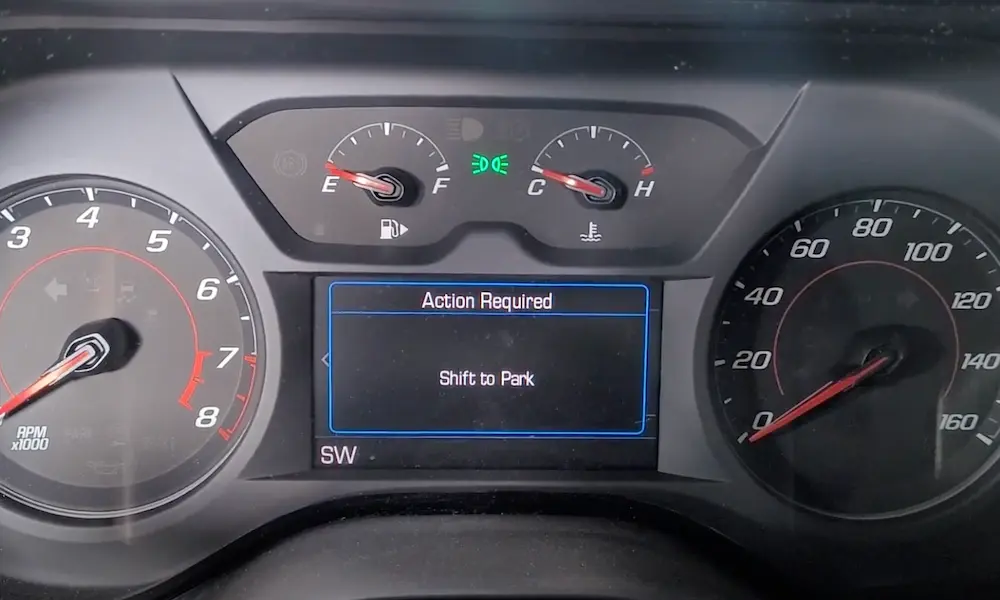
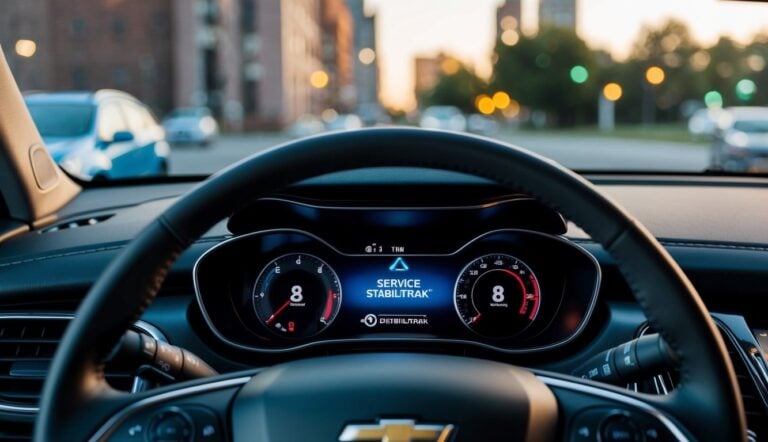
When the Driver Information Center shows “Service StabiliTrak,” that safety net has a hole in it. The system has shut itself down because it detected a fault it can’t work around.
It’s not always a crisis. But it’s never something to ignore.
Why Does the Chevy Equinox Get This Warning So Often?
The Equinox has a handful of weak spots that make this warning more common than it should be. Here’s what makes this platform particularly vulnerable.
Wheel Speed Sensor and Hub Assembly Problems
This is the most common cause of chevy equinox service stabilitrak warnings. Your Equinox uses magnetic encoder rings embedded in the wheel hub bearings to track how fast each wheel spins. These rings generate a signal every time a north or south magnetic pole passes the sensor.
The problem? Those rings are magnetic — which means they attract metal debris from the road. That debris scrambles the signal. The Electronic Brake Control Module (EBCM) reads garbage data, panics, and shuts down StabiliTrak.
According to NHTSA Technical Service Bulletin MC-10246913, the first step isn’t replacing the sensor — it’s cleaning the encoder ring with a non-magnetic tool. The sensor itself is often fine.
Common codes you’ll see with hub/sensor issues:
- C0035 – C0050: Individual wheel speed sensor faults, front to rear
- C0035-5A: Erratic signal — classic debris contamination signature
- C0035-18: Signal too weak — possible wiring damage or sensor displacement
Throttle Body Failure and “Reduced Engine Power”
StabiliTrak must be able to cut engine power instantly. If it can’t, it shuts itself down.
That’s why a dirty or failing throttle body triggers the chevy equinox service stabilitrak warning, often alongside the dreaded “Reduced Engine Power” message. Carbon buildup on the throttle plate — especially on 2.4L Ecotec engines — prevents the plate from hitting precise angles. The ECM loses confidence in torque control, and StabiliTrak goes offline.
This is a known Equinox headache. The 2.4L engine’s PCV system issues push oil vapor into the intake, accelerating carbon buildup significantly.
Important: After cleaning or replacing the throttle body, you must run a Throttle Relearn procedure with a scan tool. Skip it, and the idle will be rough and the warning may return.
Wiring Harness Chafing (2012–2014 Models)
If you own a 2012–2014 Equinox with a 2.4L engine, check this one first. NHTSA TSB PI1004A documents a factory defect where the engine wiring harness rubs against the rear corner of the engine block or cam cover. Over time, this chafes through the insulation on the high-speed CAN bus wires — circuits 2500 and 2501.
When those wires get damaged, the EBCM and ECM lose communication. You’ll often see a cluster of warning lights all at once: StabiliTrak, Power Steering, and the Check Engine light together.
X411 Connector Corrosion (2010–2016 Models)
NHTSA TSB PIT5427A flags a connector under the rear of the vehicle, near the fuel tank, called X411. Road salt eats into this connector, cutting signal to the rear wheel speed sensors and the AWD module. You’ll often see “Service AWD” alongside the StabiliTrak warning.
This is especially common on Equinoxes driven in northern states where road salt is heavy.
The 2.4L Engine’s Bigger Secret: Timing Chain Problems
Here’s where things get expensive. The 2.4L Ecotec engine in many Equinox models has a documented oil consumption problem. Low oil accelerates timing chain wear. A stretched timing chain throws crankshaft-to-camshaft correlation codes — P0016 and P0017.
Because those codes mean the ECM can’t accurately predict torque output, StabiliTrak shuts itself down. Owners chase the stability warning and miss the real issue: a failing engine. What looks like a $200 sensor problem could be a $2,000–$13,000 engine job.
Reading the Diagnostic Codes
A standard OBD-II reader won’t cut it here. You need a GMLAN-compatible scanner that reads Chassis (C) and Network (U) codes, not just Powertrain (P) codes. Consumer-level scanners miss the root cause half the time.
Here’s a breakdown of what you’re likely to find:
| Code | Category | What It Means |
|---|---|---|
| C0035 – C0050 | Chassis | Wheel speed sensor fault (FL, FR, RL, RR) — check encoder rings first |
| C0121 | Chassis | Steering Angle Sensor fault — check calibration |
| C0186 / C0196 | Chassis | Yaw rate or lateral accelerometer issue |
| C0561 | Chassis | System disabled — secondary code, look for root cause |
| U0073 / U0100 | Network | Lost communication with ECM — check wiring harness |
| U0415 | Network | Invalid data from EBCM — often a wheel speed sensor reading zero while moving |
| P0121 / P0221 | Powertrain | Throttle position sensor fault — disables StabiliTrak |
| P0016 / P0017 | Powertrain | Timing chain correlation — often signals deeper engine trouble |
| P0404 / P0405 | Powertrain | EGR valve fault — common on 3.4L engines |
That two-digit “symptom byte” after your code tells you more than the code itself. A C0035-5A points to debris on the magnetic ring. A C0035-18 points to a wiring problem or a sensor that’s shifted position. Knowing the difference saves you from replacing a perfectly good sensor.
How to Fix It: Start Here Before Spending Money
Step 1: Try a Reset First
Turn the car off and wait 15–25 seconds. If the fault was a one-time communication glitch caused by low battery voltage during startup, the light might clear on its own.
For a deeper reset, disconnect the negative battery terminal for 10–15 minutes. This clears volatile memory in the BCM and EBCM and forces the system to re-poll all sensors. After reconnecting, rotate the steering wheel to full lock in both directions — this recalibrates the Steering Angle Sensor and can clear a C0121 code without any parts.
Step 2: Inspect the Wheel Hubs
Pull the wheel off and look at the sensor wiring. Check for “stress whitening” — tiny cracks in the insulation from repeated flexing. Then clean the magnetic encoder ring with a lint-free cloth or compressed air. Don’t use anything magnetic or metallic near the ring.
Step 3: Check the Throttle Body
Look at the butterfly valve inside the throttle body. Significant black carbon deposits? Clean it with an approved throttle-body cleaner. Then run a Throttle Relearn with a scan tool before calling it done.
Step 4: Verify Battery and Ground Connections
A weak battery or dirty ground connection generates electrical noise that fakes sensor faults. Check engine grounds G101 and G102 on the engine block for corrosion. Test battery voltage — if it drops below 12V under load, that may be your whole problem.
What Will This Actually Cost?
Here’s a realistic cost breakdown based on current repair data:
| Repair | Parts | Labor | Total Range |
|---|---|---|---|
| Front Wheel Speed Sensor | $64–$80 | $118–$173 | $182–$253 |
| Rear Wheel Speed Sensor | $120–$180 | $150–$220 | $270–$400 |
| Hub/Bearing Assembly (with sensor) | $150–$300 | $180–$250 | $330–$550 |
| Throttle Body Replacement | $182–$424 | $125–$215 | $307–$639 |
| Steering Angle Sensor | $150–$450 | $200–$600 | $350–$1,050 |
| EBCM / ABS Module | $400–$900 | $250–$500 | $650–$1,400 |
| Diagnostic Fee | — | $100–$180 | $100–$180 |
Don’t skip the diagnostic fee. A proper scan with the right tool — one that reads C and U codes — is the difference between a $250 fix and a $1,400 mistake.
Recalls and Service Bulletins You Should Know About
The Equinox has several active TSBs directly tied to StabiliTrak problems. Cross-reference your VIN at NHTSA.gov before spending a dollar on repairs.
| TSB / Recall | What It Covers | Models Affected |
|---|---|---|
| PI1004A | Wiring harness chafing causing communication codes | 2012–2014 (2.4L) |
| PIT5427A | X411 connector corrosion, rear WSS signal loss | 2010–2016 |
| N222372310 | Fuel pump failure triggering StabiliTrak warning | 2021–2022 |
| High Oil Consumption Special Coverage | Timing chain damage from oil loss disabling stability system | 2010–2014 (2.4L) |
If your Equinox falls into any of these windows, push hard for dealer coverage before paying out of pocket.
Cold Weather Makes Everything Worse
If your StabiliTrak light appears every winter and clears up by spring, you’re not imagining things. Road salt corrodes wheel speed sensor wiring. Cold temperatures drop battery voltage — sometimes below the threshold the CAN bus needs to function during startup. A battery that tests fine in August may cause communication faults every January morning.
Before winter hits, check your battery’s cold-cranking amp rating, inspect sensor wiring near the wheels, and clean any visible corrosion from external connectors underneath the car.
The Bottom Line on Chevy Equinox Service StabiliTrak
The chevy equinox service stabilitrak warning covers a wide range of problems — from a $0 reset to a $13,000 engine replacement. Most of the time, it’s a wheel speed sensor, a dirty throttle body, or a corroded connector. But on 2.4L Ecotec models especially, it can be a warning sign of engine trouble that’s been quietly building.
Start with a proper scan using a GMLAN-compatible tool. Clean before you replace. Check your grounds and battery before chasing sensors. And always run your VIN through NHTSA’s recall database — you might be entitled to a free fix you didn’t know about.