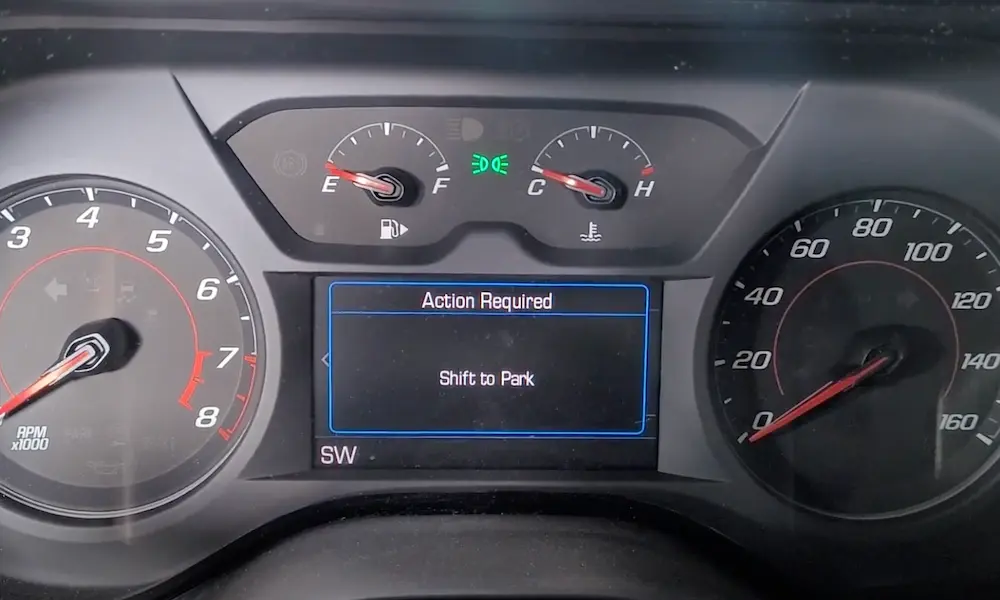
You’re driving your Chevy Impala when suddenly a warning flashes: “Service StabiliTrak.” Your stomach drops. What’s wrong? How much will it cost? Can you still drive safely? Don’t panic—this warning doesn’t always mean expensive repairs. Let’s break down what’s happening, why it’s happening, and how to fix it without getting ripped off.
What Is StabiliTrak and Why Does Your Impala Have It?
StabiliTrak is GM’s name for electronic stability control, a safety system that keeps your car from sliding or spinning out. Think of it as a smart copilot that watches how you’re steering versus where the car’s actually going.
When things don’t match up—like when you hit ice or swerve to avoid something—StabiliTrak jumps in. It automatically applies brakes to specific wheels and adjusts engine power to keep you on course. This all happens in milliseconds, faster than you could react.
The system uses several sensors working together:
- Wheel speed sensors at each tire
- A steering wheel position sensor
- Yaw rate and lateral acceleration sensors
- Throttle position sensors
When any of these components fail or send bad data, your Impala can’t trust the system. That’s when you see the Service StabiliTrak warning.
Why the “Service StabiliTrak” Warning Appears
Your Chevy Impala’s brain—the Electronic Brake Control Module—constantly monitors data from all those sensors. If something looks wrong, it shuts down StabiliTrak as a safety precaution and tells you to get help.
Here’s what triggers the warning:
Sensor Problems
The wheel speed sensors are prime suspects. They’re mounted near each wheel hub and take a beating from road debris, moisture, and constant flexing. One bad signal and the whole system goes offline.
Wiring Issues
In 2006–2013 Impalas, the front wheel speed sensor wiring is routed along the lower control arm. Years of steering cycles cause the wires inside to fatigue and break. You might notice the warning only appears during sharp turns or bumpy roads—that’s the damaged wire flexing and losing connection.
Engine Performance Problems
This one surprises people. A misfiring engine or dirty throttle body can trigger the warning. Why? Because StabiliTrak controls engine power during stability events. If your engine can’t respond predictably, the system shuts down.
Electrical Ground Problems
The 2014 model year had a recall for a bad ground connection at location G111. This affected the power steering module, which feeds data to StabiliTrak. Poor grounds cause all sorts of electrical gremlins.
Water Damage
Tenth-generation Impalas (2014–2020) sometimes leak water into the trunk through faulty tail lamp gaskets. Critical modules live back there. Water and electronics don’t mix—you get corrosion and network failures.
Common Causes by Impala Generation
Different model years have different weak spots:
| Model Years | Common Problem | What Fails |
|---|---|---|
| 2006–2013 | Wheel speed sensor harness | Wiring fatigue from flexing |
| 2009–2011 | Accelerator pedal position sensor | Internal solder joint cracks |
| 2012 | EBCM calibration error | Software bug (recall issued) |
| 2014 | Power steering ground | Bad connection at G111 |
| 2014–2020 | Trunk water leaks | Tail lamp gasket failure |
The 2009–2011 Accelerator Pedal Issue
GM issued Special Coverage Adjustment 14636 for these years. The accelerator pedal position sensor had defective solder connections. When it failed, you’d get “Service StabiliTrak” along with “Reduced Engine Power.”
The good news? GM covered the repair free for 10 years or 120,000 miles. Even if you’re outside that window now, at least you know the exact problem.
How to Diagnose the Problem Yourself
Before spending money at the shop, try these steps:
1. Turn Everything Off and Restart
Shut down your engine completely. Wait 20 seconds. Restart. If the light doesn’t come back, you probably had a temporary glitch from low battery voltage.
2. Check Your Gas Cap
Seriously. A loose gas cap can trigger engine codes that cascade into StabiliTrak warnings. Tighten it until it clicks three times.
3. Try the Steering Wheel Reset
With the engine running and the car parked, turn your steering wheel all the way left until it stops. Then turn it all the way right. Sometimes this recalibrates the steering angle sensor.
4. Look for Other Warning Lights
Is “Check Engine” on too? “Reduced Engine Power”? These clues tell the story. Multiple warnings usually point to engine or throttle issues rather than the StabiliTrak hardware itself.
5. Listen and Feel
Does your car pull to one side? Hear grinding from a wheel? Feel vibration? These symptoms suggest a failing wheel bearing, which damages the wheel speed sensor.
Simple Fixes You Can Try First
Clean the Throttle Body
Carbon deposits on the throttle plate prevent it from moving smoothly. When StabiliTrak needs to cut engine power quickly, a sticky throttle can’t respond.
Warning: Don’t manually force the throttle plate open with your fingers. You’ll damage the internal gears. Use throttle body cleaner spray and a soft cloth. After cleaning, you’ll need a throttle relearn procedure with a scan tool.
Check Your Battery
A weak battery causes voltage drops that confuse sensors. If your battery is more than four years old or struggles to start the car, replace it. It’s cheap insurance against electrical gremlins.
Inspect for Visible Damage
Pop the hood and look at the wiring near each wheel. See any frayed or rubbed-through wires? That’s likely your culprit. You can buy a repair pigtail for under $50 and splice it in yourself if you’re handy with a soldering iron.
What Professional Repairs Cost
Here’s what you’re looking at if the DIY stuff doesn’t work:
| Repair | Cost Range | When You Need It |
|---|---|---|
| Throttle body cleaning | $100–$200 | Carbon buildup causing poor response |
| Wheel speed sensor harness | $150–$300 | Wire damage from flexing |
| Wheel hub/bearing assembly | $300–$600 | Bearing wear affecting sensor signal |
| Steering angle sensor | $400–$900 | Sensor failure or crash damage |
| ABS control module | $800–$1,200 | Internal circuit failure |
| Transmission control module | $1,200–$2,500 | Water damage or network failure |
The StabiliTrak repair cost varies wildly because “Service StabiliTrak” isn’t one problem—it’s a symptom of many possible issues.
Can You Drive With the Warning On?
Technically, yes. Your Impala will drive normally in most conditions. But here’s what you’re giving up:
No Stability Control
On wet or icy roads, you’re on your own. The car won’t catch a slide or prevent a spin. If you’ve never driven without stability control, you don’t know how much it helps until it’s gone.
No ABS
Often, when StabiliTrak is disabled, so is ABS. Your wheels can lock during hard braking, increasing stopping distance and eliminating your ability to steer while braking.
Possible Power Loss
If the problem is in the accelerator pedal sensor or throttle body, the car might enter “Reduced Engine Power” mode. You’ll lose the ability to accelerate normally—dangerous when merging onto highways.
Unexpected Braking
In rare cases, like the 2012 recall condition, a faulty system might randomly apply brakes on one side. This pulls the car unpredictably.
Generation-Specific Problems to Know About
2006–2013 Ninth-Generation Issues
The biggest problem is wheel speed sensor harness failure. The wiring routes along the control arm and flexes thousands of times. Eventually, the copper strands break inside the insulation.
You’ll notice:
- Warning appears during sharp turns
- Light comes on over bumps then disappears
- Problem worse in cold weather
This wiring issue affects the left front sensor most often. A repair harness costs about $40. Labor runs $150–$200 if you can’t do it yourself.
2014–2020 Tenth-Generation Issues
Water leaks are the nemesis here. Check your trunk after rain. If it’s wet, you’ve got a tail lamp gasket problem. Fix it immediately—before water damages the $1,500 transmission control module.
The power steering ground recall affected 2014 models. If you own one and haven’t had this fixed, call your Chevy dealer. Recalls are free, always.
Understanding the Engine Connection
This confuses people: why does a spark plug cause a stability control warning?
Here’s why. StabiliTrak doesn’t just use brakes—it also controls engine power. During a slide, it might need to cut power by 50% in 100 milliseconds. It does this by telling the engine computer to reduce torque.
If your engine is misfiring, the engine computer can’t guarantee accurate torque control. So it tells the StabiliTrak module: “I can’t do what you’re asking reliably.” StabiliTrak shuts down as a safety measure.
That’s why fixing misfires, cleaning the throttle body, or replacing a bad throttle position sensor often clears the StabiliTrak warning.
When It’s Actually Serious
Most StabiliTrak warnings are annoying but not dangerous. A few situations demand immediate attention:
You See “Reduced Engine Power”
This means the car is in limp mode. You have minimal acceleration. Get off the highway and to a shop safely.
The Steering Feels Wrong
If the power steering stops working along with the warning, you might have the G111 ground issue. Steering will be extremely heavy. Pull over safely.
You Hear Metal-on-Metal Grinding
This suggests a wheel bearing has failed catastrophically. The wheel could literally fall off. Stop driving immediately.
Multiple Systems Fail at Once
If you lose StabiliTrak, ABS, traction control, and see transmission warnings, you likely have a network problem from water damage or a major electrical fault. Don’t drive it.
The Bottom Line on Chevy Impala Service StabiliTrak
The “Service StabiliTrak” warning isn’t one problem—it’s your car telling you something in the stability system isn’t right. It could be as simple as a loose connection or as complex as a failed control module.
Start with the free stuff: restart the car, check the gas cap, try the steering wheel reset. If those don’t work, you need a proper diagnosis with a scan tool.
Don’t ignore it. The system exists to save your life when things go wrong. Driving without it is like skydiving without a reserve parachute—probably fine until it’s really not fine.
For most Impala owners, the fix costs between $100 and $600. That’s not nothing, but it’s reasonable for restoring a critical safety system. And now you know enough to avoid unnecessary repairs and catch any shop trying to sell you parts you don’t need.
Your Chevy Impala’s StabiliTrak system is sophisticated, but understanding it doesn’t require an engineering degree. Armed with this knowledge, you can make smart decisions about repairs and keep this important safety net functioning for years to come.