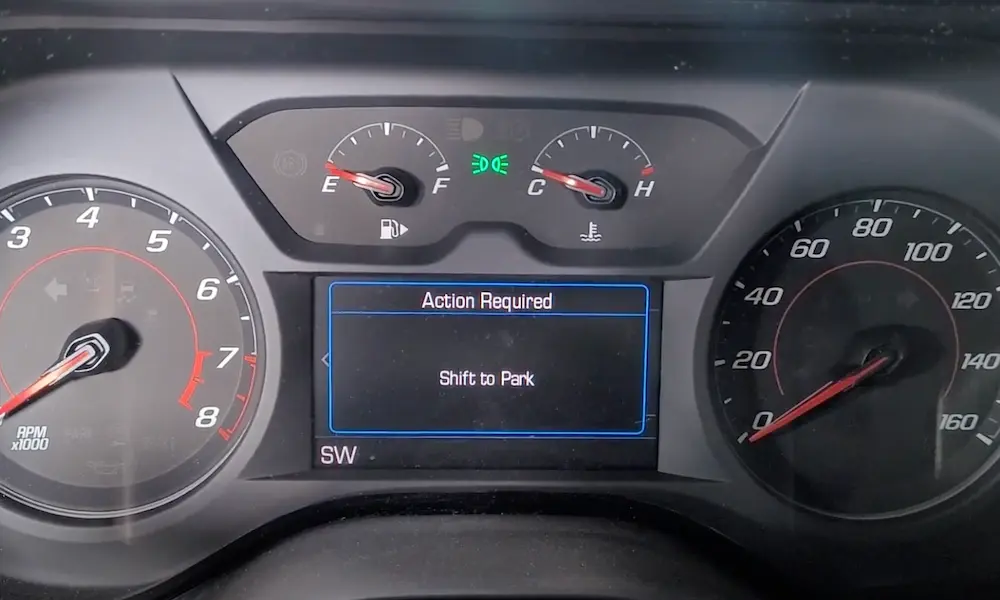
That “Service StabiliTrak” warning glaring from your Chevy Traverse dashboard? It’s not just about your brakes. This message is your vehicle’s way of saying something’s off with multiple systems that keep you safe on the road. Let’s cut through the confusion and get you back to driving worry-free.
What StabiliTrak Actually Does (And Why It Matters)
StabiliTrak isn’t just a fancy name—it’s GM’s version of electronic stability control that’s been federally required on all vehicles since the 2012 model year. Think of it as your vehicle’s guardian angel during slippery conditions or sharp turns.
Here’s how it works: sensors constantly monitor your steering angle, vehicle rotation, and sideways forces. When the system detects you’re sliding or losing grip, it selectively brakes individual wheels and cuts engine power to keep you pointed in the right direction.
The problem? StabiliTrak relies on accurate data from your engine, wheels, and steering. When any of these inputs go haywire, the system shuts down completely rather than risk making things worse. That’s why a dirty throttle body or rusty wheel sensor can disable your entire stability control system.
The “Triad of Lights” Problem: Throttle Body Issues
If you’re seeing three warnings at once—Service StabiliTrak, Service Traction Control, and Reduced Engine Power—congratulations, you’ve hit the Traverse jackpot. This specific combination almost always points to your electronic throttle control system.
Why Your Throttle Body Is Probably the Culprit
Modern vehicles don’t use cables connecting your gas pedal to the engine anymore. Instead, sensors measure how far you press the pedal, and the computer opens a motorized butterfly valve in the throttle body. Your Traverse uses two independent sensors for safety—if they don’t agree with each other, everything shuts down.
Two things typically cause this correlation failure:
Carbon buildup from oil vapors. Your engine’s ventilation system recycles crankcase fumes back through the intake. Over time, these oily deposits bake onto the throttle plate, creating a crusty ridge that prevents it from closing fully. The computer commands the throttle to close to 0%, the sensors report it’s stuck at 2-3%, and boom—P2135 code and reduced power mode.
Worn sensor tracks. The internal sensors use little wiper arms that slide across resistive carbon tracks. After 100,000+ miles, these tracks wear down and create dead spots. When the wiper hits a worn area, the voltage drops out momentarily, breaking the correlation between the two sensors.
The Cleaning vs. Replacement Decision
Start with a thorough cleaning using dedicated throttle body cleaner (CRC makes a good one). Remove the air intake duct and scrub both the bore and the butterfly valve with a soft brush. Just don’t force the valve open aggressively—the internal gears are plastic and strip easily.
Critical step: after cleaning or replacement, you’ll need to perform a throttle idle relearn procedure. This involves letting the engine idle for 3 minutes, shutting it off for 60 seconds, and repeating. It allows the computer to recalibrate what “closed” actually means.
If cleaning doesn’t fix it, you’re looking at replacement. Expect to pay $260-$760 depending on whether you choose aftermarket or GM OEM parts, with labor running 1-1.5 hours.
Wheel Speed Sensors: The Rust Belt Nightmare
Living in snow country? Your wheel speed sensors are fighting a losing battle against road salt and corrosion. These sensors are critical—they tell StabiliTrak exactly how fast each wheel is spinning so the system can detect slips and slides.
The “Rust Jacking” Phenomenon
Here’s what happens: your wheel speed sensor sits in a bore drilled into the steering knuckle or rear hub housing. As iron oxide (rust) forms between the plastic sensor housing and the cast iron mounting surface, it expands. This expansion literally pushes the sensor out of its hole, increasing the air gap between the sensor tip and the magnetic encoder ring on your wheel bearing.
As the gap widens, the signal weakens. Eventually, the computer can’t read it reliably and throws codes like C0035, C0040, C0045, or C0050—one for each wheel position.
Metal Debris on the Encoder Ring
Another common issue: brake dust and rust particles stick to the magnetic encoder ring built into your wheel bearing seal. This debris distorts the signal, causing false ABS activation at low speeds (you’ll hear a buzzing or grinding from the brakes just before stopping) or intermittent StabiliTrak warnings.
The fix is surprisingly simple. GM’s TSB 14-05-25-004 recommends cleaning the encoder ring with a soft nylon brush and mild soap. Don’t use wire brushes or harsh solvents—you’ll damage the magnetic material.
Replacement Costs and Complications
Front wheel speed sensor replacement typically runs $215-$330, while rear sensors cost $240-$380 due to trickier access. That’s assuming the sensor comes out cleanly. If rust has seized it in place, techs often have to drill it out, adding time and cost.
If the magnetic encoder ring itself is damaged, you’re replacing the entire wheel hub assembly—$340-$700 per corner.
The Battery and Electrical Gremlins You’d Never Suspect
StabiliTrak runs on your vehicle’s high-speed data network, which is ridiculously sensitive to voltage fluctuations and corrosion. These electrical issues are sneaky because they’re intermittent and hard to reproduce.
Auto Stop/Start Voltage Sag
If you have a 2018+ Traverse with auto stop/start, here’s a weird one: the “Service StabiliTrak” message appears right when you lift off the brake and the engine restarts. This happens when your battery’s health is marginal. The starter motor draws massive current during restart, and voltage momentarily dips below what the stability modules need to function (around 9.0-9.5 volts).
Replacing the battery with a fresh AGM unit that can maintain voltage during cranking solves this specific issue. It’s not cheap, but it beats chasing phantom sensor problems.
Fretting Corrosion at the BCM
Your Body Control Module acts as the gateway for the vehicle’s communication network. The connectors (X1 and X2 specifically) are prone to “fretting corrosion”—microscopic movements from vibration and thermal expansion create insulating oxide layers on the terminals.
When resistance builds up at these connections, data packets between your steering angle sensor, the stability module, and the powertrain computer get lost in translation. The fix involves disconnecting the connectors, applying dielectric grease, and reseating them. Sometimes it’s that simple.
Ground Cable Issues
The negative battery cable on some GM platforms has a known crimp defect at the battery terminal. High resistance at this main ground point creates voltage offsets throughout the entire electrical system, causing modules to reset randomly.
Pull your negative cable and inspect the terminal clamp for heat discoloration, corrosion, or looseness. If it looks sketchy, replace it. It’s a $30 part that can save you hundreds in misdiagnosis.
Steering and Brake System Failures
Less common, but serious when they happen.
Brake Pedal Position Sensor
Your Traverse doesn’t use a simple on/off brake switch—it has a variable voltage sensor that measures exactly how hard you’re pressing the pedal. This allows panic brake assist and proper traction control integration.
When this sensor fails (code C0161), you’ll notice distinct symptoms beyond the StabiliTrak warning: brake lights staying on constantly, or the transmission refusing to shift out of Park. Replacement requires a brake pedal position relearn using a scan tool.
Electric Power Steering Gear Failure
For 2014-2017 models specifically, GM identified a defect in the electric rack and pinion assembly where internal component interference creates metal debris. This debris damages the torque sensor or internal electronics.
The symptoms are unmistakable: simultaneous “Service StabiliTrak” and “Service Power Steering” warnings, combined with loss of steering assist. This is the one scenario where you’re looking at a major repair—complete steering gear replacement running $1,300-$2,100 with subframe work and alignment.
How to Actually Diagnose This Thing
Stop throwing parts at the problem. Here’s the smart approach:
Step 1: Get the codes read. Not just the powertrain codes—you need all modules scanned (PCM, EBCM, BCM, TCM). The pattern of codes tells you where to look.
If you see P2135, P0121, or P0223, it’s throttle-related. Codes C0035-C0050 point to a specific wheel. U0100, U0121, or U0126 indicate network communication problems.
Step 2: Watch live data. Drive the vehicle while monitoring your scan tool. All four wheel speeds should agree within 1-2 mph. A sensor suddenly dropping to zero or spiking identifies the bad wheel.
For throttle issues, slowly press the accelerator with the engine off. Both throttle position sensor voltages should change smoothly without sudden jumps or dropouts.
Step 3: Physical inspection. The “wiggle test” works: manipulate wiring harnesses while watching the scan tool data. A change confirms a bad connection. For wheel speed issues, remove the sensor and inspect the encoder ring with a borescope—look for debris or damage.
What It’ll Cost You
Here’s the reality of Chevy Traverse Service StabiliTrak repairs in 2025, using Chicago-area labor rates as a benchmark:
| Repair | Parts Cost | Labor Cost | Total |
|---|---|---|---|
| Throttle body replacement | $150-$519 | $110-$240 | $260-$760 |
| Wheel speed sensor (front) | $90-$130 | $125-$200 | $215-$330 |
| Wheel speed sensor (rear) | $90-$130 | $150-$250 | $240-$380 |
| Wheel hub assembly | $150-$300 | $190-$400 | $340-$700 |
| EBCM replacement | $700-$1,700 | $220-$400 | $920-$2,100 |
| Steering gear assembly | $800-$1,200 | $500-$900 | $1,300-$2,100 |
The wild variance in parts costs comes down to OEM vs. aftermarket. Given how sensitive the StabiliTrak system is to voltage correlation, spending extra for ACDelco or GM Genuine parts often prevents comebacks.
The DIY Route: What You Need to Know
If you’re mechanically inclined, throttle body cleaning and wheel speed sensor replacement are doable at home. But there are gotchas:
You’ll need a scan tool with bidirectional capability for relearn procedures. The $30 code readers from AutoZone won’t cut it. A good bidirectional scanner runs $300-500, but pays for itself if you do multiple repairs.
Don’t cheap out on sensors. The market is flooded with garbage aftermarket electronics that’ll have you chasing the same problem in six months. Stick with OEM.
Safety-critical systems aren’t the place to learn wrenching. If you’re not confident working on braking or steering components, let a pro handle it. The consequences of mistakes are severe.
Preventing Future Issues
You can’t eliminate all StabiliTrak problems, but you can reduce the odds:
Clean your throttle body every 50,000 miles as preventative maintenance. It takes 20 minutes and costs $8 in cleaner.
If you live where roads get salted, rinse your wheel wells regularly in winter. The less salt sitting on your wheel speed sensors, the longer they’ll last.
Don’t ignore electrical issues. That flickering dash or intermittent radio problem? It’s often the same corroded connector that’ll eventually trigger StabiliTrak warnings.
Replace your battery proactively at 4-5 years, especially if you have auto stop/start. A weak battery creates voltage instabilities that cascade through every electronic system.
The Bottom Line
The Chevy Traverse Service StabiliTrak warning isn’t a single problem—it’s a symptom of issues anywhere in your vehicle’s integrated safety systems. The most common culprits are throttle body carbon buildup and corroded wheel speed sensors, but electrical gremlins and steering failures happen too.
The key is methodical diagnosis using actual data rather than guessing. Get all modules scanned, watch live sensor data, and follow the evidence. Most repairs are straightforward once you’ve identified the real cause.
And if you see that “triad of lights”—StabiliTrak, Traction Control, and Reduced Power all at once—start with your throttle body. It’s the right answer about 80% of the time.