Got a flashing check engine light and a rough-running engine? Your Chevy’s probably throwing a P0300 code — and it’s trying to tell you something’s seriously wrong. This guide breaks down exactly what causes it, which Chevy models are most at risk, and how to fix it without throwing money at random parts.
What Is the Chevy P0300 Code?
The chevy P0300 code stands for “Random or Multiple Cylinder Misfire Detected.” Unlike codes P0301–P0308, which point to one specific cylinder, P0300 means the misfire is jumping around — or hitting multiple cylinders at once.
Your Powertrain Control Module (PCM) catches this by watching the crankshaft. Every time a cylinder fires, it gives the crankshaft a small speed boost. When that boost doesn’t happen, the PCM logs a misfire. If it keeps happening across different cylinders without a clear pattern, you get P0300.
Two things can happen with the check engine light:
- Steady light → Lower-level misfire affecting emissions and fuel economy
- Flashing light → Severe misfire that’s threatening your catalytic converter — pull over now
A flashing light isn’t something to ignore. Raw fuel dumping into your catalytic converter can melt its internal substrate. Replacement costs easily run past $1,000.
What Causes the Chevy P0300 Code?
P0300 rarely comes from one bad part. It’s usually a system-wide problem. Here are the four main categories to check:
| Failure Area | Common Culprits | What Goes Wrong |
|---|---|---|
| Ignition | Spark plugs, coil packs, ignition wires | Weak or absent spark — fuel doesn’t ignite |
| Fuel Delivery | Fuel pump, injectors, fuel pressure regulator | Lean or rich mixture that won’t burn cleanly |
| Induction/Vacuum | MAF sensor, intake gaskets, vacuum lines, EGR | Unmetered air throws off the fuel ratio |
| Mechanical | Lifters (AFM), timing chain, valves, compression | Physical failure to contain the combustion event |
Ignition Problems
Ignition-related faults cause about 40% of P0300 codes in Chevrolet vehicles. As spark plugs wear, their electrode gap widens. Under heavy load — like towing or hard acceleration — the coil can’t produce enough voltage to bridge that gap. No spark, no combustion.
Chevy’s coil-on-plug (COP) systems, found in the Malibu and Silverado, can also develop individual coil failures that create intermittent, hard-to-pin-down misfires. Carbon tracking on the spark plug’s ceramic insulator is another culprit — it lets the voltage leak to ground before it ever reaches the electrode.
Fuel Delivery Issues
For clean combustion, your engine needs a precise air-fuel ratio of roughly 14.7:1. Go too lean (too much air, not enough fuel) and the mixture won’t ignite reliably.
Clogged fuel injectors are a persistent problem in Chevys. Microscopic deposits restrict fuel flow and lean out the affected cylinders. Since P0300 involves multiple cylinders, a systemic issue like low fuel pressure is often to blame. A failing pump might hold pressure at idle but fall flat under hard acceleration — which is exactly when you’ll feel the misfire.
Vacuum and Induction Leaks
When air sneaks into your engine past the throttle body, the PCM can’t account for it. That “unmetered air” creates a lean condition — and rough idle with a P0300 code that disappears as RPMs climb.
One well-known Chevy-specific issue involves the 4.8L, 5.3L, and 6.0L Vortec engines. Their original intake manifold gaskets were made from orange silicone that hardened and shrank over time — especially in cold climates. The leak would show up on a cold start, then seal itself as the engine warmed up. Classic intermittent misfire behavior that drove owners crazy.
Model-Specific P0300 Causes to Know
Chevy Silverado: AFM Lifter Failures
The Silverado’s Active Fuel Management (AFM) system deactivates half the cylinders under light loads to save fuel. It uses specialized collapsible lifters to do this. The problem? These lifters are sensitive to oil quality and pressure.
If a lifter gets stuck in the collapsed position, that cylinder can’t draw in air or exhaust spent gases. The result is a permanent misfire with a distinct mechanical tick — and a repair bill that can top $3,000.
Chevy Equinox: Moisture and Carbon Buildup
The 1.5L and 2.0L turbocharged Equinox engines have their own quirks. TSB 22-NA-065 documents a moisture buildup issue inside the charge air cooler (intercooler). In high humidity or rainy conditions, water accumulates inside the intercooler. Under hard acceleration, that water gets sucked into the combustion chamber — causing a sudden random misfire and a flashing check engine light.
The fix involves installing a grille cover to control airflow and temperature in the charge air cooler.
These engines are also direct-injection, which means fuel doesn’t wash over the intake valves. Carbon deposits from the PCV system build up on the valve backs over time, disrupting airflow and triggering P0300 symptoms.
Chevy Malibu: Electrical Noise and Ground Faults
In Malibu and other Ecotec-powered Chevys, corroded or loose ground connections can introduce electrical noise into the crankshaft position sensor signal. The PCM reads this noise as fluctuations in crankshaft speed — and logs phantom misfires that never actually happened.
Before chasing ignition or fuel components, check your battery terminals, alternator output, and engine grounding straps.
Symptoms That Come With P0300
You’ll usually feel this code before you see it. Watch for:
- Rough idle — The engine shakes or vibrates at a stop
- Hesitation under load — Stumbling or jerking during acceleration
- Reduced fuel economy — Unburned fuel exits through the exhaust instead of powering the wheels
- Ticking noises — Often points to AFM lifter issues in V8 Chevys
- Hissing sounds — Usually indicates a vacuum leak
- Strong fuel smell from the exhaust — Sign of unburned hydrocarbons
- Failed emissions test — Excess hydrocarbons will fail inspection every time
How to Diagnose the Chevy P0300 Code
Skip the part-swap guessing game. Use data first.
Step 1: Pull the Freeze Frame and Live Data
Connect a scan tool and pull the freeze frame data — it shows exactly what the engine was doing when the code set. High RPM + high load? Focus on ignition and fuel. Idle-only misfire? Start with vacuum leaks.
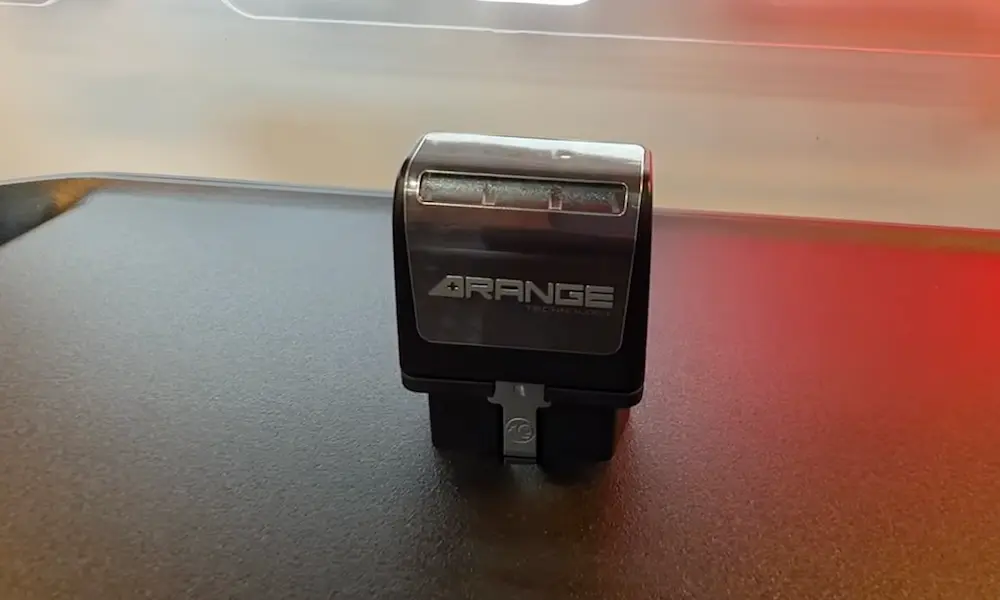
Even with a P0300 code, most advanced scan tools can show individual cylinder misfire counters. If Cylinder 4 shows 500 misfires and the rest show zero, your problem is localized — even though the generic code doesn’t say so.
Step 2: Check Fuel Trim Data
Short-Term Fuel Trim (STFT) and Long-Term Fuel Trim (LTFT) tell you what the PCM is doing to compensate. Large positive fuel trims — say, over +10% — mean the engine is running lean. The PCM is adding extra fuel to compensate for excess air, pointing toward a vacuum leak or low fuel pressure.
Step 3: Physical Testing
Once data narrows it down, confirm with hands-on tests:
- Coil swap test — Move the suspect coil to another cylinder. If the misfire follows it, the coil is bad
- Smoke test — Pressurized smoke in the intake manifold will show vacuum leaks instantly with visual confirmation of any gasket failures
- Fuel pressure test — Check pressure at idle AND under simulated load
- Compression and leak-down tests — Rules out mechanical failures like worn rings, bad valves, or a blown head gasket
| Test | What It Checks | What the Result Means |
|---|---|---|
| Coil Swap | Ignition coil condition | Misfire follows coil = bad coil |
| Fuel Trim Monitor | Air-fuel balance | High positive trim = lean condition |
| Smoke Test | Vacuum integrity | Visible smoke = gasket or hose leak |
| Compression Test | Cylinder seal | Low PSI = ring or valve damage |
| Injector Balance | Fuel flow per cylinder | Low flow = clogged injector |
What Does It Cost to Fix Chevy P0300?
The price range is wide — it depends entirely on what’s causing the misfire.
| Repair | Component | Estimated Cost (Parts + Labor) |
|---|---|---|
| Minor | Spark plugs (full set) | $100 – $250 |
| Minor | Single ignition coil | $90 – $200 |
| Moderate | Single fuel injector | $200 – $400 |
| Moderate | Intake manifold gaskets | $300 – $600 |
| Major | Fuel pump assembly | $500 – $1,500 |
| Major | AFM lifter replacement | $2,000 – $4,000 |
| Major | Catalytic converter | $800 – $1,800 |
Most P0300 codes on well-maintained Chevys come down to worn spark plugs or a failed ignition coil — both relatively affordable fixes. The expensive repairs come from ignored symptoms that lead to secondary damage.
How to Prevent the P0300 Code
A little maintenance goes a long way:
- Replace spark plugs at 75,000 miles — Don’t wait for GM’s 100,000-mile recommendation. Early replacement protects your coils from overworking
- Use Top Tier detergent fuel — It keeps injectors cleaner over time
- Change oil every 5,000 miles on AFM V8s — The Silverado, Tahoe, and Suburban’s AFM lifters depend on clean oil. Sludge kills them fast
- Inspect grounding points regularly — Corroded battery terminals and ground straps cause fake misfire codes in Malibu and Ecotec engines
- Don’t ignore a flashing check engine light — Pull over safely and have the vehicle towed rather than drive it. The catalytic converter damage you’ll avoid is worth far more than the tow bill
The chevy P0300 code isn’t a death sentence — but it does demand attention. The faster you diagnose it with actual data instead of guesswork, the cheaper and faster the fix will be.