Got a Chevy P0641 code and your dashboard looks like a Christmas tree? You’re dealing with a 5-volt reference circuit fault — and it can trigger “Reduced Engine Power” mode fast. This post breaks down exactly what’s happening, which sensors are involved, and how to diagnose it without throwing parts at the problem blindly. Stick with it — the fix is more logical than it sounds.
What Is the Chevy P0641 Code?
The Chevy P0641 code is officially labeled “Sensor Reference Voltage A Circuit/Open.” In plain English, your Powertrain Control Module (PCM) noticed that the 5-volt signal it sends to a group of sensors has gone wrong — either too low, too high, or completely dead.
Your PCM doesn’t run on raw 12-volt power from the battery. It uses internal voltage regulators to produce a clean, stable 5-volt reference signal. This signal feeds multiple sensors at once through a shared circuit — called Circuit A, or Reference 1. When that circuit drops below 4.5V or climbs above 5.5V, the PCM stores P0641 and often slaps you with Limp Mode.
Here’s the tricky part: this isn’t always a broken sensor. One bad sensor, one chafed wire, or a corroded connector can drag the entire Circuit A rail out of spec — affecting every sensor connected to it.
What Symptoms Will You Notice?
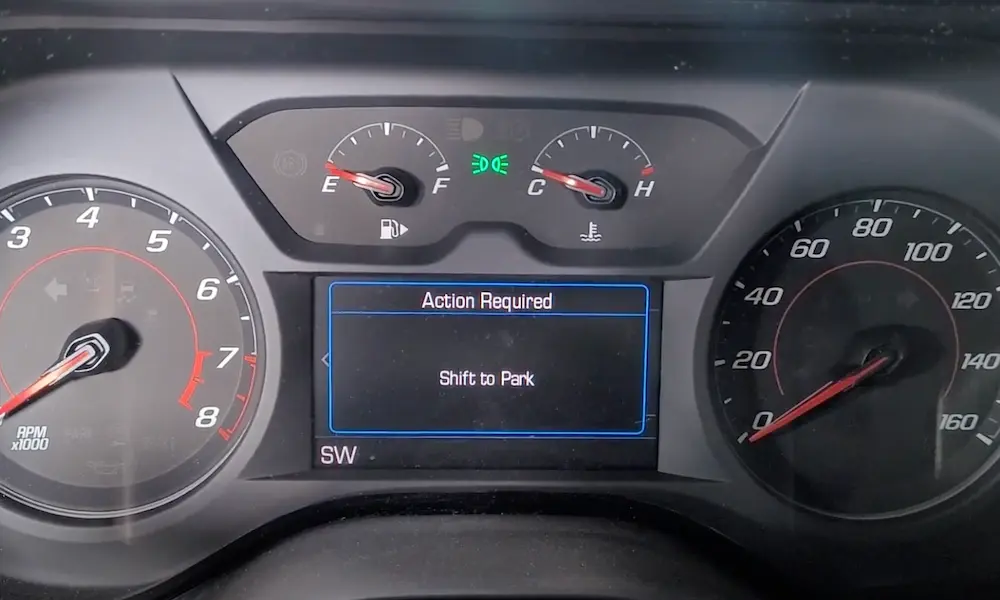
The symptoms of Chevy P0641 can range from annoying to genuinely scary, depending on which sensors share Circuit A on your specific vehicle.
Common symptoms include:
- Reduced Engine Power warning on the instrument cluster
- Oil pressure gauge reading zero (even if oil is fine)
- Rough idle or engine hesitation
- Erratic transmission shifting
- A/C compressor not engaging
- Extended crank before the engine starts
- Multiple unrelated DTCs stored simultaneously
That last point matters. If your scan tool pulls P0641 alongside codes like P0107 (MAP low voltage) or P0452 (fuel tank pressure low), don’t treat them as separate problems. They’re almost certainly telling you the same story — Circuit A is compromised.
How the 5-Volt Reference Circuit Actually Works
Think of the 5-volt reference circuit like a shared power strip. The PCM is the wall outlet. Multiple sensors plug into that strip and draw a small, regulated 5 volts to operate.
Each sensor is a three-wire device: a 5V supply wire, a ground wire, and a signal return wire. The sensor acts as a voltage divider — as pressure, position, or temperature changes, its internal resistance shifts, and the signal voltage it returns to the PCM changes. The PCM reads that change and knows, say, how much pressure is in the intake manifold.
If anything shorts that shared 5V rail to ground — even one sensor with a failed internal seal — the entire rail collapses. The PCM continuously monitors that voltage and stores P0641 once it detects the deviation lasting more than two seconds.
| Voltage State | Threshold | PCM Response |
|---|---|---|
| Normal Operation | 4.5V – 5.5V | Standard control logic |
| Short to Ground (Low) | Below 4.2V | Sets P0641, activates Limp Mode |
| Short to Battery (High) | Above 5.8V | Sets P0641, component protection mode |
| Transient Fluctuation | Over 0.2V variation | Possible intermittent P0641 |
Which Sensors Does P0641 Affect on Your Chevy?
The sensors assigned to Circuit A vary by model and engine. Knowing your platform narrows the search dramatically.
Chevrolet Silverado
On the Silverado, Circuit A is loaded with drivetrain-critical sensors:
| Sensor | Role | Symptom When Failed |
|---|---|---|
| Engine Oil Pressure (EOP) | Lubrication monitoring | Gauge at zero, warning chimes |
| Fuel Rail Pressure (FRP) | Injection timing | Misfire, stall, no-start |
| Manifold Absolute Pressure (MAP) | Load calculation | Rough idle, erratic shifts |
| Camshaft Position (CMP) | Valve timing | Extended crank, poor timing |
| A/C Refrigerant Pressure | HVAC control | A/C inoperative |
One important detail for Silverado owners: the engine oil pressure sensor and the MAP sensor share internal PCM bussing. Oil can breach the EOP sensor’s internal seal, enter the connector, and silently pull down the voltage for the MAP sensor. Your truck feels like it has a fuel or idle problem — but the real culprit is a $30 oil pressure sensor.
Chevrolet Equinox
The Equinox’s Circuit A typically covers:
- Manifold Absolute Pressure (MAP) Sensor
- Fuel Tank Pressure (FTP) Sensor
- A/C Refrigerant Pressure Sensor
- Accelerator Pedal Position (APP) Sensor No. 2
- Engine Oil Pressure Sensor
The FTP sensor sits under the chassis, fully exposed to road salt and moisture. Corroded wiring on that single sensor can load down the entire Circuit A rail. If you live in a rust belt state and own an Equinox, start your diagnosis there.
Chevrolet Malibu
The Malibu shares a similar Circuit A layout to the Equinox, covering the CMP, MAP, FTP, A/C pressure, and APP No. 2 sensors. Its forward engine bay makes harness chafing more common. On 2011 Malibu models, technicians regularly see P0641 show up alongside P0452 and P0107 — a clear sign the entire Reference 1 rail has collapsed rather than a single sensor failing in isolation.
The Wiring Harness Is Often the Real Problem
Here’s what a lot of people miss with Chevy P0641: it’s frequently a mechanical problem disguised as an electrical one.
General Motors issued Technical Service Bulletin #21-NA-149 — and a related NHTSA bulletin — specifically about engine harness chafing on 2019-2021 T1 platform trucks (Silverado, Sierra, Tahoe, Suburban). Engine vibration and heat cycles cause the wiring loom to rub against metal components until insulation wears through.
| Engine | Chafing Location | What’s Rubbing |
|---|---|---|
| 2.7L L3B | Camshaft carrier cover | Harness on cover studs/bolts |
| 2.7L L3B | Generator bracket | Harness contact under load |
| 4.3L LV3 | Left cylinder head | Front corner of harness |
| 3.0L LM2 Diesel | Top of generator | Approx. 18 inches from ECM |
| 5.3L / 6.2L | ECM/TCM bracket | Sharp bracket edges |
The 2.7L L3B has a specific issue where engine “rocking” under acceleration brings the harness into contact with the generator bracket. You won’t see this during a static inspection — the engine has to be running and under load. On older K2XX Silverados (2007-2015), the wiring behind the intake manifold becomes brittle from cylinder head heat, cracks, and lets the 5V wire touch the engine block. On 4WD models, the front driveshaft has been known to contact the oxygen sensor harness and shear through wiring instantly.
The Sawtooth Pattern: What It Means on an Oscilloscope
If you’re using a lab scope to diagnose Chevy P0641, you might see something that looks like a repeating zigzag waveform on the 5V reference wire. Don’t mistake this for a communication signal.
This is the PCM’s self-protection logic in action. When it detects a short to ground, it doesn’t just shut off. It uses a current-limited driver to repeatedly “retry” the circuit — pulsing the 5V on, detecting excess current, shutting off, and trying again. That cycle produces the sawtooth pattern you see.
Here’s the useful part: if you unplug a sensor and the sawtooth pattern disappears, that sensor (or its connector/pigtail) is the short. If the pattern stays, keep unplugging sensors one by one.
A real-world case study showed a 2010 Chevrolet Impala intermittently triggering Reduced Power Mode only when hitting specific bumps. The 5V signal looked fine in the bay. A PicoScope during a test drive revealed a vibration-induced momentary ground fault near the A/C compressor bracket. Mechanical movement. Electrical symptom.
How to Diagnose Chevy P0641 Step by Step
Don’t start buying sensors. Work through this process first.
Step 1 — Read All Codes
Pull every stored DTC with a capable scan tool. Secondary codes like P0107 or P0452 point you toward which sensors on Circuit A are showing the most voltage deviation. Check live data for the “5V Reference Voltage” parameter.
Step 2 — Isolation Test (Ignition On, Engine Off)
With the key on, monitor the 5V reference voltage on your scanner. If it’s below 4.5V, start unplugging Circuit A sensors one at a time:
- Unplug MAP sensor → watch scan tool
- Voltage jumps to 5.0V? That sensor is internally shorted → replace it
- Voltage stays low? Reconnect and unplug the next sensor
- Repeat for every sensor on Circuit A
Step 3 — Harness Testing
If unplugging all sensors doesn’t restore voltage, the fault is in the wiring or PCM itself.
- Short to ground: Set a DMM to resistance (Ω). Check continuity between the 5V reference wire and chassis ground at any unplugged sensor connector. Any reading below infinite resistance means you’ve got a rub-through.
- Continuity check: Measure resistance of the 5V wire from the PCM connector to the sensor connector. Should be under 2 ohms.
- Short to voltage: With the key on, check for 12V+ on the 5V reference wire. That means it’s contacting a power-carrying wire somewhere in the loom.
Step 4 — PCM Testing (Last Resort)
If the harness checks clean and all sensors are disconnected, test the 5V output directly at the PCM pin. If the sawtooth pattern or low voltage still appears at the PCM pin itself, the internal voltage regulator has failed and the PCM needs replacement or reprogramming.
What Will the Repair Cost You?
The cost to fix Chevy P0641 swings widely based on what’s actually wrong. Dealerships run 15-30% higher than independent shops on electrical diagnosis, but they do have direct access to GM’s Service Information manuals — which helps when tracking down obscure harness rub points.
| Repair Type | Independent Shop | Dealership |
|---|---|---|
| Diagnostic Labor (1-2 hrs) | $90 – $300 | $150 – $500 |
| Sensor Replacement (MAP/EOP) | $100 – $300 | $250 – $450 |
| Wiring Harness Repair | $100 – $300 | $300 – $600 |
| PCM Replacement & Programming | $800 – $1,500 | $1,500 – $3,000 |
Independent shops often repair localized harness damage rather than replacing an entire loom assembly — which keeps costs reasonable. If the fault is a $25 sensor with a failed internal seal, total costs stay under $200. If a rub-through has shorted a section of the main engine harness, budget for more labor time.
The best outcome comes from doing the isolation steps above before you bring it in. If you can tell the shop “the voltage restored when I unplugged the MAP sensor,” you’ve saved yourself an hour of diagnostic billing.
Don’t Let P0641 Sit
The Chevy P0641 code isn’t just a dashboard annoyance. Running your engine in Limp Mode long-term puts stress on components that are now operating without accurate sensor feedback. Incorrect fuel trim and timing cause real damage over time.
More importantly, if P0641 is masking a genuine oil pressure drop — because the EOP sensor is shorted and reading false data — you could be running an engine without knowing the lubrication system is struggling.
Work through the isolation steps, check the TSB-identified chafe points for your engine, and fix the root cause. It’s almost always a sensor or a wire — not a PCM.