Got a P1258 code on your Chevy and wondering if your engine is about to explode? It’s not that dramatic — but it is serious. This code means your engine hit a dangerous temperature, and your car’s computer jumped in to protect itself. Read to the end and you’ll know exactly what caused it, what’s happening inside your engine, and how to fix it properly.
What Is the Chevy P1258 Code?
The Chevy P1258 code means “Engine Coolant Over-Temperature — Protection Mode Active.” Your engine hit 131°C (268°F), and the Powertrain Control Module (PCM) kicked into emergency mode to prevent a meltdown.
This isn’t just a warning light. Your PCM actually changes how the engine runs to protect it. It shuts off fuel to half the cylinders so those dead cylinders act like air pumps, pushing cool air through the engine to pull heat away from the cylinder head.
It’s a clever survival trick. But it’s also your car screaming that something in the cooling system failed.
Why P1258 Confuses So Many Mechanics
Here’s a frustrating reality: many generic OBD-II scanners don’t know you’re working on a GM vehicle. They’ll display the wrong definition entirely, usually the Ford or PSA Peugeot Citroën version — which ties P1258 to an accelerator pedal sensor problem.
That sends techs down the wrong rabbit hole. They swap the pedal assembly or throttle body and fix nothing. Meanwhile, the engine is still overheating.
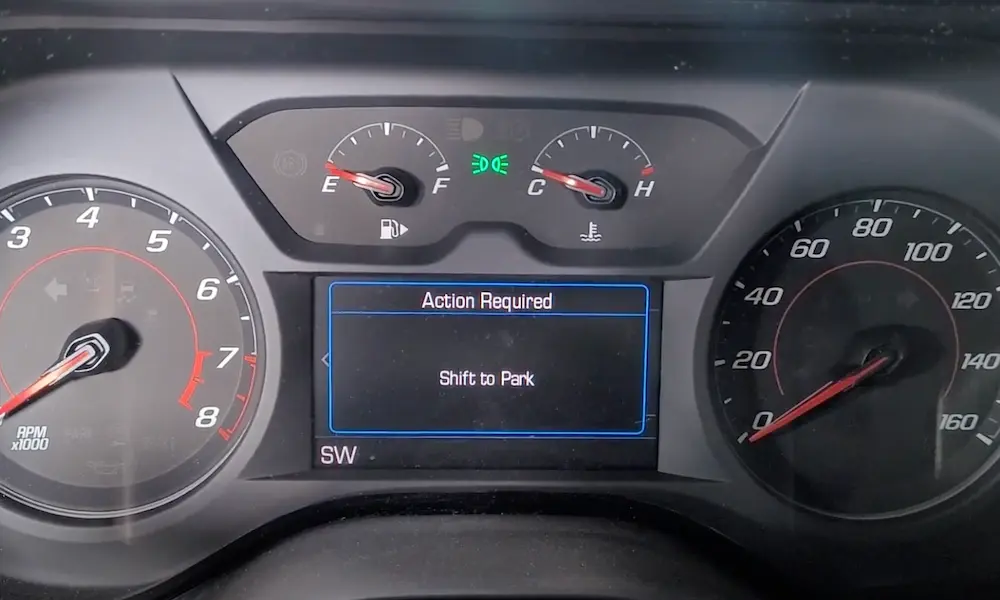
Always use a GM-specific scan tool and cross-check with actual symptoms like a climbing temperature gauge, a boiling coolant reservoir, or an “Engine Hot, AC Off” message on the dash.
| Manufacturer | P1258 Definition | System Involved |
|---|---|---|
| GM (Chevy, GMC, Cadillac) | Engine Coolant Over-Temperature | Cooling System |
| Ford | Pedal Position Sensor Correlation | Electronic Throttle |
| PSA (Peugeot, Citroën) | Pedal Correlation PDS1/PDS2 | Electronic Throttle |
| Honda/Acura | VTEC System Malfunction | Valve Timing/Oil Pressure |
| Audi/Volkswagen | Engine Overheating Protection | Cooling System |
What Happens to Your Car When P1258 Triggers
When the Chevy P1258 code activates, you’ll notice several things happening at once:
- Reduced Engine Power — the throttle plate restricts to limit heat
- Rough idle or shaking — caused by alternating cylinder deactivation
- “Service StabiliTrak” warning — because the Electronic Brake Control Module can’t accurately manage torque when half the cylinders drop out
- Traction Control Off light — same reason; the system disables itself
These aren’t separate problems. They’re all side effects of the protection mode running. Fix the cooling issue, and they go away.
The Most Common Causes of Chevy P1258
Stuck Thermostat
A thermostat that fails in the closed position traps hot coolant inside the engine block. It can’t reach the radiator to cool down, so the temperature spikes fast.
You can spot this without tools. Feel both radiator hoses after the engine warms up. If the top hose is scorching hot and the bottom hose is cold, the thermostat isn’t opening. Coolant isn’t circulating through the radiator at all.
Failing Water Pump
The water pump keeps coolant moving through the system. On the 1.4L Ecotec engine found in the Chevy Cruze and Sonic, water pump failures are common enough that GM issued a Special Coverage Adjustment (Bulletin No. 19-NA-045) for shaft seal leaks. A slow leak from the weep hole can air-lock the system before you even see a puddle on the ground.
On the 3.6L V6 in the Traverse, Acadia, and Buick Enclave, the water pump can leak internally behind the timing cover. No visible puddle, no warning — just a sudden P1258.
Low Coolant or Pressure Loss
The radiator cap holds the system at roughly 15 psi. That pressure raises the coolant’s boiling point significantly. If the cap fails, coolant boils at a much lower temperature, creates steam pockets, and triggers P1258 even if the coolant level looks fine.
Check for:
- Cracked reservoir tank
- Swollen or cracked hoses
- A cap that doesn’t hold pressure when tested
Blown Head Gasket
A breached head gasket is both a cause and a result of P1258. Combustion gases force their way into the cooling jacket, displace coolant, and send the ECT sensor reading through the roof almost instantly.
Signs it’s a head gasket problem:
- Bubbling or gurgling in the coolant reservoir
- White exhaust smoke with a sweet smell
- Coolant level keeps dropping with no visible external leak
Confirm it with a chemical block test. It detects combustion gases in the cooling system in minutes.
Cooling Fan Failure
At idle or in stop-and-go traffic, the electric fans are your only source of airflow through the radiator. If a fan motor, relay, or PWM fan control module fails, temperatures climb the moment you stop moving.
On most GM platforms, the low-speed fan should kick on around 105°C and the high-speed fan around 112°C. If neither runs before the 131°C threshold, the fan circuit is where you look next.
Is It a Bad ECT Sensor?
Sometimes the cooling system is fine, but a bad Engine Coolant Temperature (ECT) sensor lies to the PCM. The ECT sensor is an NTC thermistor — its resistance drops as temperature rises. The PCM reads that resistance drop as a voltage signal.
An electrical short to ground bypasses the sensor’s resistance entirely. The PCM reads it as an impossibly high temperature and activates protection mode instantly — even on a cold engine.
Use this table to verify your sensor’s readings with a multimeter:
| Coolant Temp (°C) | Coolant Temp (°F) | Resistance (Ω) | Signal Voltage (V) |
|---|---|---|---|
| 100 | 212 | ~177 | 0.60 – 0.80 |
| 80 | 176 | 270 – 380 | 1.00 – 1.30 |
| 60 | 140 | ~800 | 2.00 – 2.50 |
| 40 | 104 | 1000 – 1200 | 2.50 – 3.00 |
| 20 | 68 | 2200 – 2800 | 3.00 – 3.50 |
| 0 | 32 | 4800 – 6600 | 4.00 – 4.50 |
On the 3.6L V6, the ECT sensor connector sits in a high-heat zone at the rear of the cylinder head. The plastic housing becomes brittle over time, breaks, and causes intermittent signal spikes that can falsely trigger P1258. Do the wiggle test — gently move the harness while watching live data on a scan tool. If the temperature reading jumps wildly, you found your problem.
What Happens Inside the Engine During a P1258 Event
This is the part that should motivate you to fix it fast.
At 131°C, aluminum cylinder heads expand significantly — nearly twice as much as cast iron. That expansion scrubs against the head gasket, crushing the fire rings and destroying the combustion seal. If the head itself warps, even a new gasket won’t seal properly until the head gets resurfaced.
Oil doesn’t escape damage either. At that temperature, even synthetic oil thins out dramatically. The film that keeps metal parts separated breaks down fast. The heat also accelerates oil oxidation, creating sludge that clogs VVT solenoids and oil pickup screens — problems you’ll deal with long after the cooling system is repaired.
How to Diagnose Chevy P1258 Step by Step
Cold start checks first:
- Inspect coolant color. Brown or muddy coolant means the system needs a full flush before anything else
- Pressure test the system to 15 psi. Watch for drops that indicate a leak
- Test the surge tank cap — it should hold and release at its rated pressure
Electrical checks with a scan tool:
- After an overnight cold soak, compare the ECT reading against the intake air temperature and ambient temperature sensors. They should all be within 2–3°C of each other. A big gap points to a faulty ECT sensor or circuit
- Do the wiggle test on the ECT connector while watching live data
Dynamic thermal checks while driving:
- Watch for a slight temperature dip when the thermostat opens around 90–95°C. No dip and a steady climb past 110°C means a stuck-closed thermostat
- Verify both cooling fans engage before reaching the P1258 threshold
- If overheating continues after replacing the thermostat and confirming fan operation, run a chemical block test to rule out a head gasket breach
Engine-Specific Notes for Chevy P1258
5.3L / 6.0L V8 (Tahoe, Suburban, Silverado)
These trucks handle heat well, but neglected Dex-Cool can turn into brown sludge that clogs the radiator. Air entering through a leaking heater quick-connect fitting or a cracked surge tank is a common entry point. You’ll often feel the engine shake at stoplights — that’s the PCM alternating cylinders while the fans do their best to keep up.
3.6L V6 (Traverse, Acadia, Enclave)
Watch the ECT connector first. It’s brittle, it breaks, and it’s a known issue on this platform. Also check the water pump for internal leaks behind the timing cover — there’s often no visible drip, just an unexpected overheating event.
1.4L Turbo (Cruze, Sonic)
The NHTSA service bulletin covering water pump shaft seal failures exists for a reason. The coolant capacity on these engines is small — under 6 quarts. A minor leak drains the system fast. The turbo also adds extra heat load, so the cooling system has zero tolerance for weak components. Also check the plastic thermostat housing — cracking is common.
What to Replace After a P1258 Repair
Even after you fix the root cause, replace these components. They take damage during an overheating event and can cause a repeat failure:
- Thermostat — the wax pellet inside can shift, making it open at the wrong temperature
- ECT sensor — the thermistor drifts after exposure to 131°C+ heat, giving inaccurate readings
- Pressure cap — the spring and seal can fail to hold pressure after a steam event
- Coolant — refill with fresh Dex-Cool in a 50/50 mix with distilled water only. Tap water leaves mineral deposits that act as insulation inside the radiator tubes, making overheating more likely to happen again
The Chevy P1258 code isn’t just an annoying light — it’s your engine telling you it fought off a thermal catastrophe and barely won. Treat it that way, fix it completely, and your engine will reward you with a long life.