That “Reduced Engine Power” message on your dash is one of the most frustrating things a GM owner can see. Your Chevy suddenly crawls to 20 mph, and you have no idea why. The culprit is often the Chevy P1516 code, and the good news is that it’s not always an expensive fix. Stick around — by the end of this post, you’ll know exactly what’s causing it and what to do next.
What Is the Chevy P1516 Code?
The P1516 code stands for “Throttle Actuator Control (TAC) Module Throttle Actuator Position Performance.” That’s a mouthful, so here’s the plain-English version.
Your engine’s computer (PCM) sends a signal telling the throttle blade to move to a specific angle. Then it checks whether the blade actually got there. If it didn’t — or if the blade moved erratically — the PCM flags P1516 and shuts the engine down to a safe, restricted mode.
The word “performance” in the definition matters. It’s not a wiring short or an open circuit. The electrical system looks fine on paper. The problem is that the mechanical result doesn’t match the command. That distinction changes how you diagnose it.
What Happens When P1516 Triggers
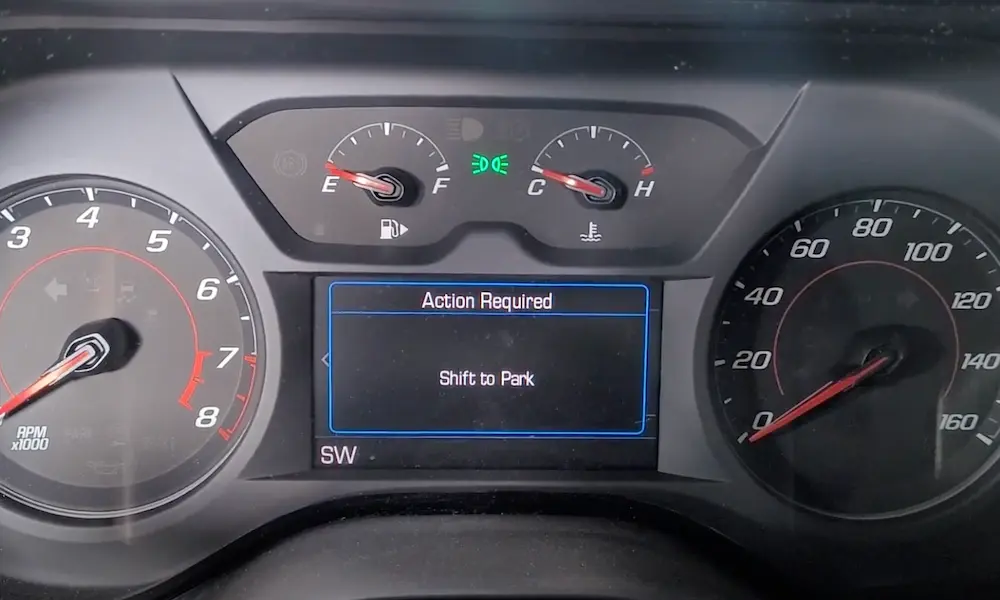
When your PCM logs this code, it activates Fail-Safe (Limp Home) mode. The driver sees “Reduced Engine Power” on the dash. Here’s what that actually means for driveability:
- Throttle opening gets capped at a very low percentage
- The vehicle may struggle to exceed 20–30 mph
- Acceleration feels sluggish or non-existent
- In severe cases, the PCM may cut fuel to specific cylinders
This isn’t just an annoyance. The PCM does this deliberately to prevent a stuck-open throttle (runaway engine) or erratic torque spikes that can damage the transmission. Don’t drive the vehicle like this any longer than you need to.
Codes That Often Show Up With P1516
The Chevy P1516 code rarely appears by itself. The companion codes tell you a lot about where the fault actually is.
| DTC | Description | What It Tells You |
|---|---|---|
| P2135 | TPS Sensor 1-2 Correlation | Points to an electrical issue at the throttle body connector |
| P2101 | Throttle Actuator Position Performance | Motor can’t reach the commanded position |
| P1514 | Airflow vs. TP Sensor Correlation | MAF airflow doesn’t match throttle angle |
| P0120 | TPS 1 Circuit Malfunction | Hard electrical fault in the primary sensor circuit |
| P2176 | Minimum Idle Position Not Learned | Common after battery disconnect or TB cleaning |
If you see P2135 alongside P1516, focus on the throttle body’s wiring connector first. If P2176 shows up, carbon buildup or a failed throttle relearn is the more likely culprit.
The 5 Most Common Causes of Chevy P1516
1. Carbon Buildup on the Throttle Body
This is the most common cause, and it’s one you can often fix yourself for under $20.
The EGR and PCV systems push oil vapors and exhaust particles into the intake. Over time, those deposits harden around the throttle blade — a process called “coking.” At idle, the gap between the blade and the throttle bore is tiny. Carbon bridges that gap and creates resistance the motor can’t overcome fast enough.
The PCM measures throttle response in milliseconds. If the blade delays by even a few degrees, it fails the performance test, and P1516 gets logged.
One important warning: never use your fingers to move the throttle blade while the ignition is on. The motor is powerful enough to cause a serious injury if it suddenly cycles. Also, use the right cleaner — the wrong solvent strips the moly-coating inside the bore, which is there to control airflow at low throttle angles.
2. Frozen PCV System (Cold Weather)
This one catches a lot of people off guard. GM documented this specific failure in Technical Service Bulletin PIP4573B for temperatures below -10°F (-23°C).
Here’s what happens: the PCV system normally removes moisture from the crankcase. In extreme cold — especially on short trips where the engine never fully warms up — that moisture condenses and freezes inside the PCV pipes or right at the throttle body entrance.
On a cold start, the PCM tries to move the blade to its start position. Ice physically blocks it. The motor’s current spikes, the TPS sensors see zero movement, and P1516 triggers.
| Symptom | What It Means |
|---|---|
| Code only sets in winter | Ice in the PCV or throttle body |
| Fresh oil leaks at rear main or dipstick | Excessive crankcase pressure from a frozen PCV |
| Icing inside the PCV vacuum hose | Moisture buildup blocking vacuum flow to the throttle |
The fix here isn’t parts — it’s cleaning the ice and sludge from the PCV system and throttle body. Context matters before you condemn expensive components.
3. Wiring Harness Damage — The “Yellow Wire” Problem
On many 2003–2006 GM trucks, a broken wire in the throttle body harness is the leading cause of P1516. Specifically, the yellow wire (Circuit 581), one of the two motor control wires, is prone to work-hardening from constant engine vibration.
Here’s the tricky part: the copper strands inside the wire snap, but the outer plastic insulation looks perfectly fine. This creates a “hidden open” circuit. At idle, the connection holds. Under acceleration — when the engine rocks on its mounts and pulls the harness — the broken strands separate for a millisecond. The throttle motor loses power, the blade drops, and the PCM logs P1516.
Technicians use a “tug test” — gently pulling on individual wires near the connector — to find these internal breaks. A visual inspection won’t catch this one.
4. Pin Fretting in the Throttle Body Connector
Pin fretting is electrical degradation caused by microscopic movement between the male and female terminals inside the 8-pin throttle body connector (X511). Engine vibration and thermal cycling cause these tiny metal-on-metal movements. Over time, the tin plating wears off, the base metal oxidizes, and you get a non-conductive layer on the terminals.
Because the TAC system runs on low-voltage 5V signals, even a tiny increase in resistance disrupts communication. This produces intermittent P1516 or P2135 codes that disappear when you unplug and replug the connector. That “fix” only works temporarily — the vibration scrapes the oxide layer off, but it comes back.
When checking for this, use a pin fit (drag) test. Insert a new, same-size male terminal into each cavity of the female connector. You should feel clear mechanical resistance when pulling it out. If it falls out or feels loose, the terminal’s internal tensioning spring has failed.
5. Weak Battery or Poor Engine Ground
On Chevy Impala and Malibu models with the 3.5L and 3.9L V6, a weak battery is a surprisingly common P1516 trigger. If battery voltage drops below 10.5V during cranking, the TAC system can glitch during initialization. The code clears once the alternator takes over — but it’ll keep coming back if the battery is marginal.
Poor engine grounds cause a different version of the same problem. The TAC module needs a clean ground to interpret the tiny voltage changes from the TPS sensors. If grounds G103 or G104 — typically located on the rear of the cylinder head or near the starter — are corroded or loose, the TPS signals float and appear erratic to the PCM. P1516 follows. A voltage drop test between the battery negative and engine block during cranking confirms whether the ground path is healthy.
What It Costs to Fix Chevy P1516
The repair cost ranges wildly depending on root cause. Don’t jump straight to a throttle body replacement.
| Repair | Parts Cost | Labor Cost | Total Range |
|---|---|---|---|
| DIY throttle body cleaning | ~$15 | $0 | ~$15 |
| Professional cleaning | ~$10 | $80–$120 | $90–$130 |
| Pigtail/connector replacement | $40–$70 | $150–$200 | $190–$270 |
| Silverado throttle body replacement | $329–$465 | $77–$113 | $406–$578 |
| Cadillac throttle body replacement | $500–$592 | $123–$180 | $622–$772 |
Diagnostic time adds another $100–$250 if the fault is intermittent. This is exactly why replacing the throttle body without diagnosing the root cause first is a bad call.
How to Fix It: Step-by-Step
Step 1: Read All the Codes
Pull every stored and pending code before you touch anything. The companion codes (especially P2135 and P2176) guide your entire diagnostic path.
Step 2: Inspect the Wiring Harness First
Check the throttle body connector for:
- Corrosion or green deposits on the terminals
- Loose pins using the drag test
- Wire damage near the connector, especially the yellow and orange wires
- Harness tension — is it clipped too tightly against a bracket?
If you find fretting corrosion or a failed terminal, a harness pigtail kit (PT1572 / 88986255) fixes it for around $40–$70 in parts.
Step 3: Clean the Throttle Body
If wiring checks out, clean the throttle body with a dedicated throttle cleaner. Be gentle around the bore coating, and don’t move the blade by hand with the key on.
Step 4: Perform the Throttle Relearn
After cleaning or replacing the throttle body, the ECM needs to relearn idle values. A clean TB flows more air at a 2% opening than a dirty one — if you skip this, you’ll likely get a 1,500–2,000 RPM idle or rough surging.
Here’s the manual relearn procedure for most GM trucks:
- Start the engine and idle in Park for 3 minutes — don’t touch the pedal
- Turn the engine off and wait 60 seconds — lets the PCM write new data to memory
- Restart and idle for another 3 minutes
- Idle should stabilize to 600–700 RPM by the end of the second cycle
On 2007 and newer models, you may also need a service drive cycle — driving above 44 mph with several decelerations so the ECM calibrates throttle response at higher airflow rates.
Step 5: Check Grounds and Battery
If the code returns after cleaning and relearning, test the engine grounds and battery voltage. A voltage drop above 0.1V across the ground path during cranking means the ground needs cleaning or re-routing.
Model-Specific Notes
Silverado / Sierra (2003–2013): The harness pigtail is the most common failure point. The V8’s heavy vibration — especially under towing loads — works the wires until they break internally. Always check the harness before replacing the throttle body.
Trailblazer / Envoy (4.2L I6): The vertically mounted throttle motor makes these units prone to stripped internal gears. If someone forced the throttle plate during cleaning, check whether the motor spins freely without moving the blade.
Impala / Malibu (3.5L, 3.9L V6): Check battery health first. A marginal battery that dips below 10.5V during cranking can trigger P1516 on every cold start, even with a perfectly healthy throttle body.
How to Prevent P1516 From Coming Back
- Clean the throttle body every 30,000–50,000 miles — this is the most effective preventative step
- Inspect PCV hoses for cracks or soft spots annually, especially in cold climates
- Apply dielectric grease (Nyogel 760G) to the throttle body connector terminals during reassembly
- Keep the battery in good health — a strong battery prevents voltage-drop triggering during cold starts
- On trucks that tow regularly, check harness routing and make sure it isn’t pulled tight against brackets
The NHTSA Technical Service Bulletin covering the TPS sensor cover issue on 2008–2011 models is worth reading if you own one of those vehicles and are seeing P2135 alongside P1516.
The Chevy P1516 code is beatable — and most of the time, it doesn’t require an expensive throttle body. Start with the cheap stuff, follow the codes, and you’ll most likely find the answer before you spend more than $50.