Thinking about a new car but confused by transmission options? You’re looking at specs that mention DCT or CVT transmissions, and now you’re wondering which one belongs in your driveway. By the end of this post, you’ll understand exactly what sets these modern transmissions apart and which one might be the perfect match for your driving style.
What Are DCT and CVT Transmissions?
DCT (Dual Clutch Transmission) and CVT (Continuously Variable Transmission) represent two distinct approaches to moving power from your engine to the wheels.
A DCT uses two separate clutches that work together to pre-select the next gear before you need it. One clutch handles odd-numbered gears (1st, 3rd, 5th), while the other manages even-numbered gears (2nd, 4th, 6th). This design allows for lightning-fast gear changes that can happen in less than 100 milliseconds – faster than you can blink!
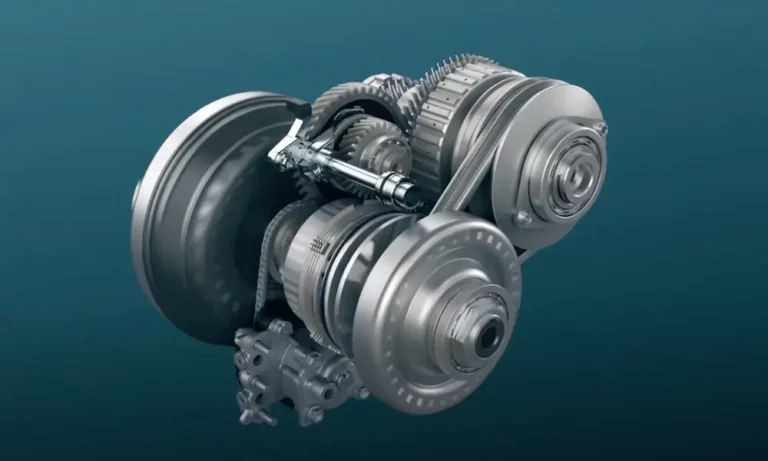
Meanwhile, a CVT doesn’t have traditional fixed gears at all. Instead, it uses a system of pulleys connected by a belt or chain that can continuously adjust to create an infinite number of gear ratios. Think of it as having one gear that’s constantly changing rather than stepping through distinct gears.
The History Behind the Technology
DCT Origins
The DCT wasn’t born yesterday. Its concept dates back to before World War II, but Porsche pioneered its practical use in the 1983 956 race car. Volkswagen later brought it to the masses with the 2003 Golf R32, making lightning-quick shifts available to everyday drivers.
CVT Evolution
CVTs have an even longer history, with designs first sketched by Leonardo da Vinci himself! The technology entered production in the 1958 DAF 600 and gained popularity in Japanese eco-friendly models during the early 2000s. Today’s CVTs have come a long way from those early designs.
Performance Face-Off: DCT vs CVT
Acceleration and Driving Feel
DCTs shine when it comes to acceleration and sporty driving. Their rapid-fire shifts create a direct, engaging feeling that performance enthusiasts love. Volkswagen’s DSG transmission, for example, can deliver 0-60 mph times comparable to manual transmissions while requiring no clutch work from the driver.
CVTs, however, prioritize smoothness over sportiness. When you accelerate with a CVT, the engine often holds a steady RPM while the car gains speed – creating what some drivers call a “rubber-band” effect. This can feel strange if you’re used to traditional transmissions with distinct shift points, but it’s actually maximizing efficiency.
Power Handling Capabilities
If you’re looking at a high-powered car, pay attention to torque capabilities. DCTs can handle significantly more power than CVTs:
| Transmission Type | Typical Torque Capacity | Suitable For |
|---|---|---|
| DCT (Wet Clutch) | Up to 480 Nm (354 lb-ft) | Performance cars, turbocharged vehicles |
| DCT (Dry Clutch) | Up to 250 Nm (184 lb-ft) | Compact cars, smaller engines |
| CVT | 200-250 Nm (148-184 lb-ft) | Economy cars, hybrids |
Hyundai’s wet-clutch DCTs can handle up to 480 Nm of torque, making them suitable for turbocharged SUVs like the Kia Sorento. Meanwhile, most CVTs are limited to around 250 Nm, which explains why you rarely see them in high-performance applications.
Fuel Efficiency Comparison
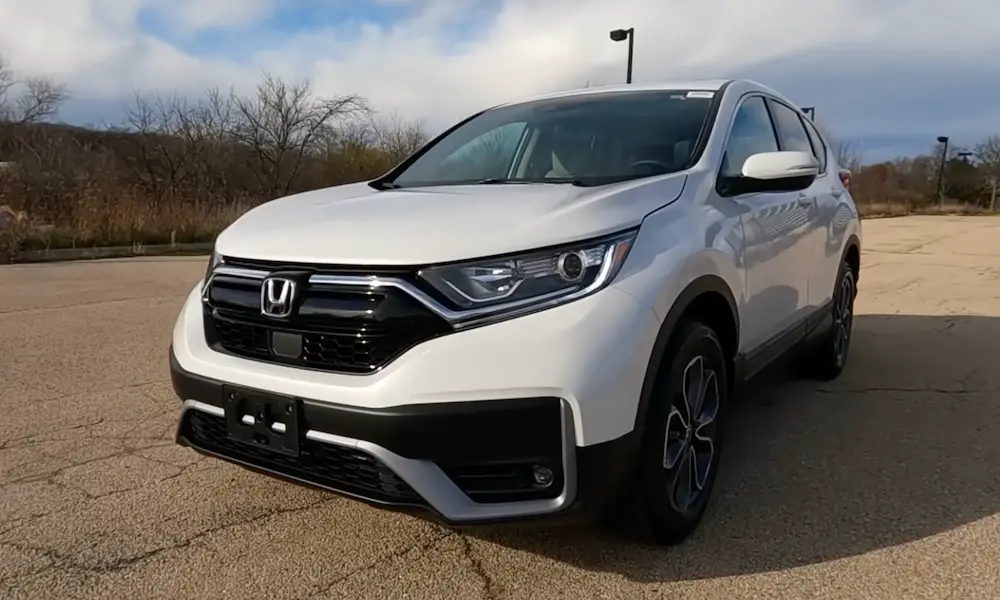
If saving money at the pump is your priority, CVTs generally have a slight edge. The ability to keep the engine running at its most efficient RPM gives CVT-equipped vehicles like the Honda Civic a 4-8% fuel economy advantage over comparable DCT models in city driving.
DCTs aren’t far behind though. They typically improve fuel economy by 6-9% compared to traditional 4-speed automatics by eliminating the power losses associated with torque converters. During highway cruising, a DCT can maintain engines within optimal efficiency bands, particularly in vehicles with turbocharged engines.
| Driving Condition | More Efficient Transmission | Typical Advantage |
|---|---|---|
| City Driving | CVT | 4-8% better mpg |
| Highway Driving | Comparable (slight DCT edge) | 1-2% difference |
| Mixed Driving | CVT | 2-5% better mpg |
Reliability and Maintenance: The Long-Term View
DCT Reliability Concerns
DCTs can suffer from clutch wear, especially in stop-and-go traffic where frequent starts accelerate friction material degradation. Reddit users have reported failures as early as 60,000 miles in some models, with repair costs exceeding $3,500.
Wet-clutch DCT designs (which operate in oil) tend to last longer but require more expensive maintenance – fluid and filter changes can cost over $1,000 and are typically needed every 40,000 miles.
CVT Reliability Issues
CVTs have their own reliability concerns. The belts can degrade unpredictably, with lifespans varying dramatically based on driving style. Nissan’s Jatco-built CVTs have faced class-action lawsuits over premature failures, often requiring complete replacements costing $8,000 or more.
Unlike DCTs, where components can sometimes be replaced individually, CVT repairs typically involve replacing the entire unit when problems occur.
Maintenance Costs Compared
Regular maintenance is essential for both transmission types, but costs vary:
| Maintenance Type | DCT Cost | CVT Cost |
|---|---|---|
| Regular Fluid Change | $300-500 every 30,000-40,000 miles | $150-300 every 30,000 miles |
| Major Service | $1,200+ (clutch packs) at 60,000+ miles | Not applicable |
| Typical Replacement | $3,500-4,500 | $2,500-8,000 |
CVTs have simpler regular maintenance but can be catastrophically expensive if they fail completely. DCTs typically have higher routine maintenance costs but may offer more repair options before complete replacement.
Which Cars Use DCT vs CVT?
DCT-Equipped Vehicles
DCTs are commonly found in:
- Performance-oriented vehicles (Hyundai Veloster N, Volkswagen GTI)
- European luxury brands (Audi, BMW, Porsche)
- Sports cars seeking maximum acceleration
- Some compact cars focusing on sporty driving
CVT-Equipped Vehicles
CVTs are typically found in:
- Economy-focused models (Honda Civic, Nissan Sentra)
- Hybrid vehicles (Toyota Prius)
- Subcompact and compact cars
- Vehicles where smoothness and efficiency take priority
Driving Experience: What to Expect
DCT Driving Characteristics
Driving a DCT-equipped car feels responsive and direct. You’ll notice:
- Quick, crisp gear changes that feel sporty
- Direct connection between throttle input and acceleration
- Occasional low-speed hesitation (especially in older designs)
- Manual shift mode that closely mimics a true manual transmission
- A more traditional driving experience with distinct shift points
CVT Driving Characteristics
Behind the wheel of a CVT vehicle, expect:
- Seamless, shift-free acceleration
- Engine RPM that sometimes stays constant while speed increases
- Excellent smoothness in stop-and-go traffic
- Less direct connection between throttle and engine response
- Some models with simulated “shift points” to feel more familiar
Making Your Choice: DCT or CVT?
Choose DCT If You:
- Value performance and driving engagement
- Frequently drive on highways or in areas with little traffic
- Plan to keep your car for less than 6-7 years
- Don’t mind higher maintenance costs for better driving dynamics
- Enjoy a sportier driving experience
Choose CVT If You:
- Prioritize fuel economy above all else
- Drive primarily in city traffic
- Want the smoothest possible driving experience
- Prefer simplicity over performance
- Drive conservatively rather than aggressively
The Future of Transmissions
Both technologies continue to evolve. Modern DCTs are addressing early reliability concerns with improved wet-clutch designs and smarter control software. CVTs are becoming more durable and incorporating simulated shift points to please drivers accustomed to traditional automatics.
However, as electric vehicles gain market share, both transmission types may eventually become less common. Electric cars typically don’t need multi-speed transmissions at all, operating efficiently with just a single-speed reducer.
Real-World Owner Experiences
DCT owners often report loving the sporty feel but express frustration with low-speed drivability and maintenance costs. “The DCT is amazing on the open road but can be jerky in traffic,” notes one forum poster.
CVT owners generally praise the smoothness and efficiency but sometimes mention the “droning” engine note during acceleration. “My CVT gives great gas mileage, but the engine noise takes some getting used to,” shares a Reddit user.
Technical Breakdown: How They Work
DCT Mechanics
A DCT essentially combines two manual transmissions into one unit. Each has its own clutch, controlled electronically rather than by your left foot. When you’re in first gear, the second clutch has already pre-selected second gear, waiting to engage. When it’s time to shift, one clutch disengages while the other engages – all in a fraction of a second.
This design allows for incredibly fast shifts that traditional automatics simply can’t match, along with the efficiency benefits of manual transmissions.
CVT Mechanics
A CVT uses two pulleys connected by a steel belt or chain. One pulley connects to the engine, the other to the wheels. Each pulley consists of two conical halves that can move closer together or further apart, effectively changing the diameter where the belt rides.
By continuously adjusting these pulleys, the CVT can provide any gear ratio within its range, allowing the engine to stay at its most efficient or powerful RPM regardless of vehicle speed.
The Bottom Line
Both DCT and CVT transmissions offer significant advantages over older automatic transmissions, but they serve different priorities. DCTs deliver performance and engagement at the expense of some smoothness and potentially higher maintenance costs. CVTs prioritize efficiency and smoothness but sacrifice some driving excitement and power-handling capability.
Your choice should align with your driving style, maintenance expectations, and performance needs. Test drive both types before making your final decision – the real-world feel behind the wheel might surprise you!