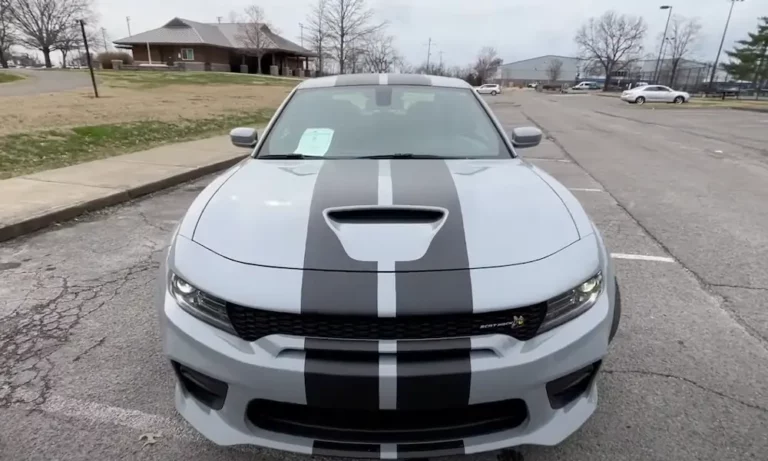
If you own a 2014-2021 Dodge Charger, there’s a good chance you’ve noticed your door panels starting to warp, bubble, or peel away from the window seal. You’re dealing with one of the most widespread interior defects in modern Dodge history—and no, it’s not just “normal wear and tear” like your dealer might claim.
What’s Really Causing Your Dodge Charger Door Panel Peeling
The dodge charger door panel peeling issue isn’t about spilled coffee or rough use. It’s a materials engineering failure that affects thousands of Chargers (and Chrysler 300s) built between 2014 and 2021.
Here’s the science: Your door panels are made of three layers. There’s a hard plastic substrate, a thin foam middle layer, and a vinyl outer skin. That vinyl covering contains chemicals called plasticizers that keep it flexible. Over time—especially in hot climates—those plasticizers evaporate out of the material.
When the vinyl loses those chemicals, it shrinks. Think of it like a t-shirt that’s been through the dryer too many times. The problem? The hard plastic underneath doesn’t shrink with it.
This creates massive tension at the glue line. The vinyl is literally trying to pull itself into a smaller shape while glued to something that won’t budge. Eventually, that tension wins, and you get the characteristic warping and separation—especially around the armrest valley and along the top edge near your window.
Heat Makes It Worse (But Isn’t the Only Culprit)
If you live in Texas, Florida, Arizona, or Southern California, you’ve probably noticed this problem earlier than owners in cooler states. A class action lawsuit shows significantly higher failure rates in “Sun Belt” states.
Your car’s interior can hit 140°F on a summer day. At those temperatures, two things happen: the plasticizers cook out of the vinyl faster, and the adhesive FCA used starts to break down chemically.
But here’s the thing—owners in Wisconsin and Michigan are reporting the same failures. Heat accelerates the problem, but the real issue is that the materials were incompatible from day one at the factory.
Is Dodge Charger Door Panel Peeling Actually Dangerous?
Your dealer will probably tell you it’s “cosmetic.” The reality is more nuanced.
The warped panel can interfere with your door lock mechanism. As the panel rises and distorts, it puts pressure on the lock rod. Some owners report locks that won’t engage fully or won’t unlock in emergencies—not great if you’re trying to exit after an accident.
More concerning: the lawsuit alleges that the separation exposes the inner door cavity, potentially affecting side airbag deployment sensors. These sensors rely on pressure changes inside the sealed door to trigger curtain airbags during side impacts.
When your panel warps away from the window seal, you also lose cabin integrity. Water gets in, accelerating rust on the window regulator and door latch. Air leaks in, forcing your AC to work harder.
The Class Action Lawsuit (And Why It Probably Won’t Help You)
The Johnson v. FCA US LLC case has been working through federal court since 2020. Unfortunately for most owners, it’s not going well.
The judge dismissed most claims by making a critical distinction: this is a design defect, not a manufacturing defect. The panels were built exactly as FCA designed them—the design itself is flawed. Since the warranty only covers manufacturing defects (parts built wrong), the warranty doesn’t apply.
There’s one surviving claim under the Texas Deceptive Trade Practices Act. If you’re in Texas and can prove FCA knew about the inevitable failure but hid it to make sales, you might see damages. For everyone else? Don’t hold your breath for a settlement check.
No Recall Coming
The NHTSA hasn’t issued a recall. Recalls require proof of immediate safety risk. While the airbag concern is real, there isn’t crash data showing bags failed to deploy specifically because of warped panels.
What Doesn’t Work: The Fixes That Waste Your Money
OEM Replacement Parts Are a Trap
Here’s the dirty secret: buying new panels from the dealer doesn’t fix anything long-term.
The replacement part (part number 5SD861X9AK) costs around $650-$995 per door before labor. Total bill for all four doors? Easily $3,000-$4,500.
The problem: those “new” panels use the exact same materials and construction as your failed ones. You’re paying $4,000 for parts that will warp again in 3-5 years. It’s replacing a broken part with an identical broken part.
Plus, these parts are frequently on national backorder. You might wait months while your car looks trashed.
Just Re-Gluing It Won’t Last
Every week on Reddit, someone suggests super glue or Gorilla Glue. Here’s why that fails:
Super glue is too brittle. Your door panel flexes constantly from vibration and temperature swings. Brittle adhesive cracks.
Standard contact cement melts around 130°F. Your interior regularly exceeds 140°F. The glue literally liquefies and lets go.
Even if you use high-temperature adhesive like 3M High Strength 90, you’re fighting the physics problem: the vinyl is under constant tension, pulling away from the substrate 24/7. Glue might hold for a few months, but the tension will win.
What Actually Works: Real Fixes for Dodge Charger Door Panel Peeling
The Staple Method (Best DIY Solution)
This is the gold standard repair in the Charger community. Instead of fighting the chemical bond failure with more glue, you use mechanical fasteners that can’t fail.
You’ll need:
- Heat gun
- Heavy-duty stapler (pneumatic upholstery stapler is ideal)
- Short-leg staples (1/4 inch)
- Two-part epoxy
- Dremel rotary tool
- SEM interior trim paint (black)
- Heavy work gloves
The process:
First, remove the entire door panel. Pop off the handle covers, remove the screws around the perimeter, disconnect the electrical harnesses.
Heat the vinyl with your heat gun until it becomes pliable. You need it hot enough to stretch but not so hot it melts the texture. Wear gloves—this material will burn you.
While the vinyl is hot and stretched back into position, drive staples through it into the plastic substrate underneath. Focus on the valley where the armrest meets the door—that’s where tension is highest. You want staples every few millimeters to distribute the load.
Once stapled, use your Dremel to grind the staple heads flush with the surface. Mix your two-part epoxy and spread it over the staple line to fill the divots. Texture it with a sponge before it fully cures to match the surrounding grain.
Sand smooth when cured, then paint with SEM interior paint to color-match.
Done right, this repair is invisible and permanent. The mechanical bond can’t fail like glue can.
Cost: Under $50 in materials.
Downside: Labor intensive and requires skill to achieve a perfect finish.
Professional Upholstery Shop (Best Overall Solution)
If you’re not confident with the DIY approach, a good automotive upholstery shop can perform the same staple method—or go further and actually replace the vinyl covering with fresh material sized correctly for the panel.
Expect to pay $200-$400 per door at a reputable shop. That’s still vastly cheaper than OEM replacement, and it actually solves the problem instead of postponing it.
Many shops will warranty their labor for 1-2 years. Make sure you ask.
Coverlay Hard Plastic Overlays (Durable But Different)
Coverlay Manufacturing makes hard ABS plastic shells designed to fit over your damaged door panel inserts.
Cost: Around $437-$575 for a pair of front door panels.
These don’t fix your existing panel—they cover the damage with a new hard surface. The benefit? ABS plastic won’t warp or shrink. It’s dimensionally stable.
The trade-off is feel. Your Charger came with a soft-touch padded door panel. Coverlay parts are hard plastic. You’re sacrificing that luxury tactile feel for durability and a cleaner look.
If you just want the problem gone and don’t care about the exact OEM feel, this is a solid middle-ground option.
If You Decide to Use High-Temp Adhesive Anyway
Some owners have success with adhesive repairs if they do it right. Here’s the proper protocol:
Use a true high-temperature contact adhesive—Dap Weldwood HHR (High Heat Resistant), 3M High Strength 90, or Gorilla Contact Adhesive Ultimate. Hardware store glue won’t cut it.
Prep is everything. Sand the substrate to remove all the old crystallized glue and oxidized plastic. You need a fresh surface for the new adhesive to grab.
Apply adhesive to both surfaces according to the manufacturer’s instructions. Most contact cements require you to let it dry to the touch, then press the surfaces together.
Here’s the critical part: you need continuous clamping pressure for 24-48 hours. Use C-clamps with wood blocks to distribute pressure without marring the vinyl. The vinyl has “memory” and wants to pull back—you’re forcing it to stay while the adhesive cross-links chemically.
Even done perfectly, adhesive-only repairs have a higher failure rate than mechanical fastening. But if you’re gentle with the door and park in shade, it can buy you time.
The Warranty Gamble and “Goodwill” Assistance
If your Charger is still under the 3-year/36,000-mile bumper-to-bumper warranty and the panels are warping, push hard for coverage. The dealer should replace them for free.
The problem? The defect typically shows up in year 4 or 5, right after warranty expires. That’s not coincidence—it’s the physics of plasticizer migration.
Once you’re out of warranty, you can request “Goodwill” assistance from Stellantis (the company that owns FCA/Dodge). This is a discretionary fund where the manufacturer might pay part of the repair to keep you loyal.
Success with Goodwill is wildly inconsistent. Some owners report 50% co-pay offers—you pay $1,000, FCA pays $1,000. Others get flatly denied.
What seems to help: owning multiple previous FCA vehicles (they track “loyalty score”), being persistent but polite, and having a service manager who’s willing to advocate for you.
Don’t expect much. And remember—even if they pay for it, you’re getting parts that will fail again.
Real-World Repair Costs Compared
Here’s what you’re actually looking at financially:
| Repair Method | Cost Per Door | Total (4 Doors) | Will It Last? | OEM Feel? |
|---|---|---|---|---|
| OEM Dealer Replacement | $800-$1,100 | $3,200-$4,400 | No (same defect) | Perfect |
| Upholstery Shop | $200-$400 | $800-$1,600 | Yes | Excellent |
| DIY Staple Method | <$50 | <$200 | Yes | Good (depends on skill) |
| Coverlay Overlay | ~$250 | ~$1,000 | Yes | Different (hard plastic) |
| Adhesive Only | <$30 | <$120 | Maybe | Good (if done right) |
When your Charger has a trade-in value around $15,000-$20,000, spending $4,000 on interior panels that will fail again makes zero financial sense.
How This Affects Your Charger’s Resale Value
Let’s talk about the elephant in the room: what happens when you try to sell or trade in a Charger with warped door panels?
Dealerships know about this defect. Appraisers take one look at those panels and deduct the full OEM repair cost from your trade-in offer. That’s an instant $3,000-$4,000 hit to your equity.
Worse, some franchise dealers won’t even retail a Charger with this issue. They send it straight to wholesale auction and offer you “auction pricing” instead of retail trade-in value. You lose thousands.
In the private sale market, buyers see warped panels as a red flag. Even if your engine and transmission are perfect, the interior condition signals “neglected vehicle” to most people. Expect lowball offers.
If you’re planning to sell soon, getting the panels professionally repaired (upholstery shop or Coverlay) for $800-$1,600 will likely return more than that in higher sale price.
Why There’s No Technical Service Bulletin
You might wonder why there’s no TSB (Technical Service Bulletin) authorizing free repairs like there was for other FCA issues.
FCA issued TSB 31-002-20 for aluminum body panel corrosion on the Charger. That TSB provides repair procedures and extends coverage.
There’s no equivalent TSB for door panels. Why? Because FCA’s position is that the panels were built to specification. Since the court agreed it’s a design issue, not a manufacturing defect, there’s no legal obligation to extend warranty coverage.
A TSB would be an admission that the design is flawed. That could open FCA to broader liability in the class action. So they stay silent.
The Bottom Line on Dodge Charger Door Panel Peeling
Your door panels are warping because FCA used incompatible materials that shrink at different rates. The vinyl covering is under constant tension, pulling away from the plastic substrate. Heat accelerates the failure, but the design was flawed from day one.
Don’t buy OEM replacement panels. You’re paying premium money for parts that will fail again in a few years.
The most cost-effective permanent solution is either a professional upholstery shop repair ($200-$400/door) or the DIY staple method if you’re handy. Both create mechanical bonds that can’t fail like adhesive does.
If you want durability over OEM feel, Coverlay hard plastic overlays work well for about $1,000 total.
For owners in Texas, keep an eye on the Johnson lawsuit. The surviving DTPA claim could theoretically lead to reimbursement, though don’t count on it.
Document everything. Keep receipts. And if your dealer tells you this is “normal wear and tear,” know they’re reading from a script designed to avoid warranty claims on a defect that affects thousands of Chargers.
This isn’t about how you treated your car. It’s about a materials engineering failure that Stellantis has successfully defended in court as a “design choice” rather than a defect. You’re stuck fixing it yourself—but now you know what actually works.