Your Dodge Charger is running cold, the heater’s blowing lukewarm air, or that dreaded check engine light just came on. Chances are, your thermostat is the culprit. This guide walks you through everything — diagnosis, parts selection, step-by-step replacement, and bleeding the system correctly. Stick around to the end, because the bleeding process is where most DIYers go wrong.
What Does the Thermostat Actually Do?
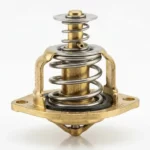
The thermostat is a small wax-filled valve that controls coolant flow between your engine and the radiator. When your engine is cold, it stays closed to trap heat and help the engine warm up fast. Once coolant hits roughly 203°F, the wax inside melts, expands, and pushes the valve open — sending hot coolant to the radiator to cool down.
It’s a brilliantly simple design. No electronics, no computer control. Just physics doing the work.
When it fails, your engine either overheats (stuck closed) or never warms up properly (stuck open). Both situations cause real damage if you ignore them.
Signs Your Dodge Charger Thermostat Is Failing
Here’s what to watch for:
- Check engine light with a P0128 code — the most common symptom
- Temperature gauge sitting below the midpoint even after 10+ minutes of driving
- Weak or cold heat from the cabin vents in winter
- Worse fuel economy — you’re burning more gas than usual
- Engine takes forever to warm up — even on the highway
If you’re seeing a P0128 code, that’s your engine control module telling you the coolant temperature never reached the expected threshold. It’s not just a warning light issue — a stuck-open thermostat forces your engine to run in open-loop mode longer, dumping extra fuel and accelerating internal wear.
Understanding the P0128 Code on the Charger
The P0128 diagnostic trouble code means “Coolant Temperature Below Thermostat Regulating Temperature.” The ECM tracks how long your engine takes to warm up based on intake air temperature and engine load. If the coolant doesn’t rise fast enough, it flags the thermostat as faulty.
Here’s what that looks like in practice:
| Symptom | Cause | Impact |
|---|---|---|
| Check engine light | ECM thermal model fails | Fails emissions inspection |
| Cold cabin air | Heater core gets lukewarm coolant | Poor defrost, uncomfortable cabin |
| Low temp gauge | Radiator constantly cools fluid | Gauge stays below halfway mark |
| Poor fuel economy | Extended open-loop fueling | Higher fuel costs, carbon buildup |
Don’t ignore a P0128 code. Running your engine cold long-term causes moisture and fuel vapor to mix with your oil, forming sludge that kills internal engine components over time.
Don’t Misdiagnose — Check These First
Before you buy a thermostat, rule out two other common culprits that mimic thermostat failure on the Charger.
The 3.6L Pentastar Oil Filter Housing Leak
The 3.6L Pentastar has a well-documented oil filter housing problem. The O-rings on the oil cooler housing degrade over time and start leaking coolant into the engine valley. It often drips down the front of the engine, making it look like a thermostat housing leak.
Grab a flashlight and look deep into the V-valley beneath the intake manifold. If you see orange or purple coolant pooling around the oil filter housing base, that assembly needs replacing — not the thermostat.
Water Pump Weep Hole
On the 5.7L HEMI, a failing water pump often gets mistaken for a thermostat leak. Lift the car and look at the underside of the water pump pulley area. Any coolant dripping from the weep hole — or a chalky crust around it — means the internal seal has failed and the whole pump needs replacement.
If you’re unsure, pressurize the cooling system with a hand pump tester to 15–18 PSI and watch where the leak originates.
Plastic vs. Aluminum Thermostat Housing — Which Should You Buy?
The factory 3.6L Pentastar housing is plastic. It works fine for a while, but daily thermal cycling from freezing temps to 220°F eventually makes it brittle and prone to cracking or warping. That warping creates slow coolant leaks that are frustrating to chase.
The smart move: upgrade to aluminum.
Aluminum housings from companies like Billet Technology and Dorman expand at the same rate as your aluminum engine block. That means no stress on the gasket, no warping, and no repeat leaks. Billet options also come anodized in various colors if you care about engine bay aesthetics.
For HEMI owners, aluminum water neck housings are widely available and bolt on as a direct replacement.
Tools You’ll Need
Gather everything before you start. Here’s the full list:
| Tool | Purpose |
|---|---|
| 8mm, 10mm, 13mm sockets | Housing bolts, intake clamps, engine cover |
| 3/8″ ratchet, extensions, breaker bar | Reach recessed fasteners, move belt tensioner |
| Hose clamp pliers | Safely compress spring clamps on radiator hoses |
| Calibrated torque wrench | Hit exact specs without stripping threads |
| Spill-proof funnel kit | Bleed air from the system during refill |
| Drain pan | Catch old coolant during draining |
| Non-marring gasket scraper | Clean old gasket material from block surface |
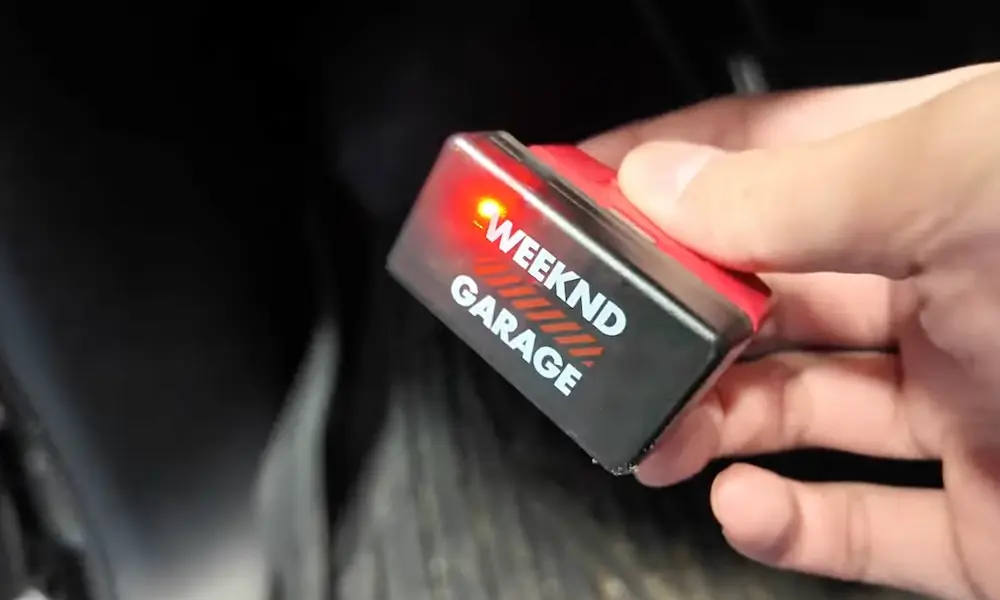
| OBD-II scan tool | Clear P0128 code, monitor live coolant temp |
| Nitrile gloves and safety glasses | Protect from hot coolant and ethylene glycol |
Safety first: never open a hot cooling system. Wait until the engine is completely cold. A pressurized system at operating temperature will erupt burning coolant.
Dodge Charger Thermostat Replacement — 3.6L Pentastar V6
The 3.6L Pentastar thermostat sits at the upper front of the engine block. It’s one of the more accessible setups, and most people can complete this job in about an hour.
Step 1: Drain the Coolant
Park on a level surface. Place your drain pan under the passenger side of the radiator. Remove the radiator cap to allow airflow, then open the draincock at the bottom of the radiator. You don’t need to drain it completely — just drop the level below the thermostat housing to avoid a big spill.
Step 2: Remove the Engine Cover and Intake Tube
Lift the plastic engine cover straight up and forward to pop it off its grommets. Loosen the clamps on the air intake tube using an 8mm socket or flathead screwdriver, then wiggle the tube free from the throttle body.
Step 3: Disconnect the Upper Radiator Hose
Use hose clamp pliers to compress and slide the spring clamp down the hose. Twist the hose to break the heat bond, then pull it off the thermostat housing neck.
Step 4: Remove the Housing
The housing uses two 10mm bolts. Remove them, then pull the housing straight away from the block. On the Pentastar, the thermostat is integrated into the housing — it’s one unit.
Step 5: Clean the Mating Surface
Scrape the engine block surface clean with your non-marring scraper. Remove every bit of old O-ring material and coolant crust. Any debris left behind will cause the new housing to leak.
Step 6: Install the New Housing
Don’t use silicone or sealant unless the manufacturer specifically calls for it. The rubber O-ring seals dry or with a thin film of fresh coolant. Press the housing firmly into position, thread both bolts in by hand first, then torque them to exactly 9 ft-lbs (108 in-lbs / 12 Nm). That’s it — no more. Over-tightening is the number one cause of cracked housings and stripped block threads.
Reconnect the radiator hose, slide the clamp back to its original position, and reinstall the intake tube and engine cover.
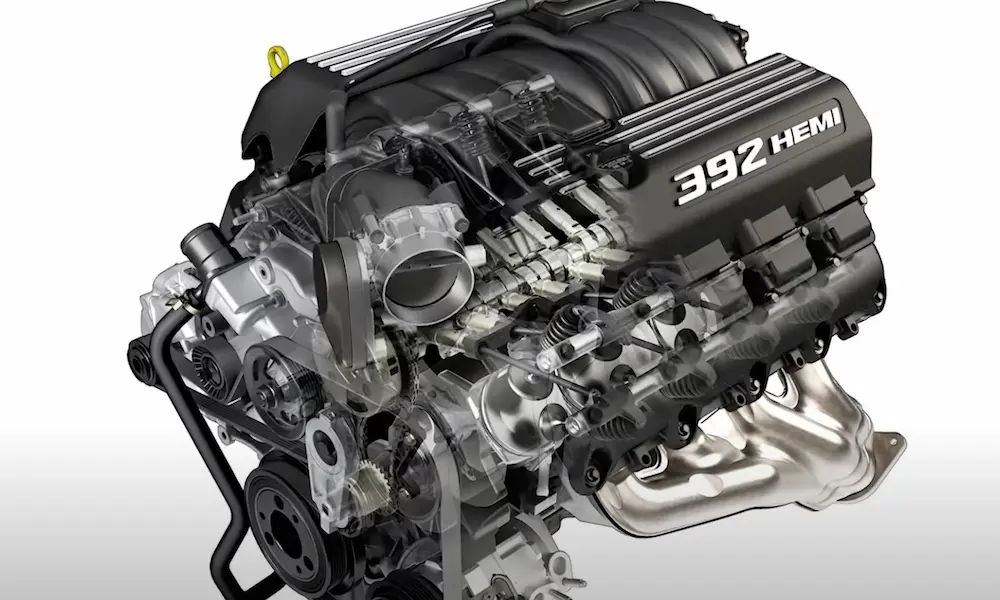
Dodge Charger Thermostat Replacement — 5.7L HEMI V8
The 5.7L HEMI thermostat sits at the top of the water pump housing at the front of the engine. Access can be tight depending on your model year, as the serpentine belt sometimes runs close to the housing.
Step 1: Move the Serpentine Belt
Use a long 3/8″ breaker bar in the tensioner slot. Apply firm pressure to compress the spring, then slip the belt off the upper idler pulleys and let it rest out of the way. You’re not removing it — just creating clearance.
Step 2: Remove the Radiator Hose and Housing Bolts
Disconnect the upper radiator hose from the water neck using hose clamp pliers. Remove the two housing bolts (10mm or 13mm depending on year). Lift the water neck housing away to reveal the separate drop-in thermostat sitting in the water pump cavity.
Step 3: Install the New Thermostat — Orientation Matters
Place the new thermostat with the wax pellet (the long copper/brass cylinder) pointing downward into the engine block cavity. Getting this backwards guarantees instant overheating.
If your thermostat has a small jiggle pin or bleeder hole on the outer flange, position it at 12 o’clock. This lets trapped air escape past the closed thermostat during the fill process.
Set the new gasket in place, lower the housing over the thermostat, and hand-thread the bolts first. Torque to 10 ft-lbs. Reconnect the radiator hose and reposition the serpentine belt.
Torque Specs at a Glance
3.6L Pentastar V6
| Fastener | Torque Spec |
|---|---|
| Thermostat housing bolts | 9 ft-lbs (108 in-lbs / 12 Nm) |
| Coolant pump plate to timing cover | 9 ft-lbs (108 in-lbs / 12 Nm) |
| Engine coolant temp sensor | 16 ft-lbs (22 Nm) |
Gen III HEMI V8 (5.7L / 6.1L / 6.4L)
| Fastener | Torque Spec |
|---|---|
| Thermostat housing water neck | 10 ft-lbs |
| Water pump bolts | 21 ft-lbs |
| Intake manifold bolts | 9 ft-lbs |
How to Bleed the Cooling System — This Step Is Critical
Skipping or rushing the bleed is the most common mistake after a Dodge Charger thermostat replacement. Air pockets trapped in the system act as thermal insulation, preventing the wax element from sensing heat. The new thermostat stays stuck closed, and your engine overheats immediately.
3.6L Pentastar — Built-In Bleeder Screw Method
The Pentastar housing has a bleeder screw built into the top of the housing. Turn it counterclockwise a few rotations to open it — don’t remove it completely.
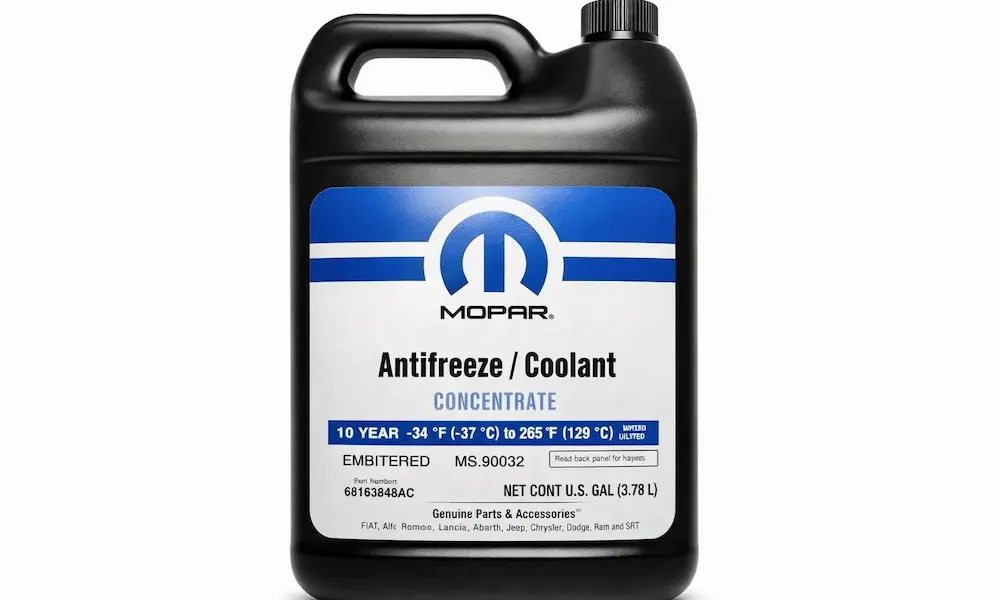
Pour a 50/50 premixed OAT antifreeze slowly into the reservoir or radiator. Watch the bleeder screw. You’ll hear hissing as air escapes. Eventually it’ll start sputtering coolant, then flow a solid, steady stream. The moment it flows solid — tighten it immediately. Don’t over-torque it. The threads are small, and snapping them ruins the new housing.
HEMI and Universal — Spill-Proof Funnel Method
Lock a spill-proof funnel adapter onto the radiator filler neck. Fill it one-third full with coolant. Start the engine with the cabin heater set to max heat, low fan speed. This keeps the heater core loop open.
Watch the funnel closely. When the thermostat opens — usually around 10–15 minutes of idling — a massive surge of air bubbles will rush up into the funnel and the fluid level will drop suddenly. Keep adding coolant to the funnel so it never runs dry.
Once the cooling fans have cycled, the upper radiator hose is hot and firm, and zero bubbles appear even with a brief engine rev, the system is fully bled. Plug the funnel, remove it, and reinstall the pressure cap.
The 180-Degree Thermostat Upgrade — Is It Worth It?
Performance enthusiasts sometimes swap the factory 203°F thermostat for a 180°F unit from companies like RIPP Mods or Mishimoto. Opening the thermostat 23 degrees sooner gives forced-induction builds more headroom against detonation under high load.
But here’s the catch: on a stock vehicle, a 180°F thermostat will trigger a P0128 code every time. The ECM expects the engine to run near 203°F. Without a corresponding tune to recalibrate the coolant temperature thresholds and reprogram the electric fan activation points, the swap delivers almost no real benefit and just annoys you with a check engine light.
If you’re tuned and built, it makes sense. On a stock Charger, stick with OEM temperature spec.
Resetting the P0128 Code and Final Checks
After the job is done and the system is fully bled, plug in your OBD-II scanner and clear the stored P0128 code. Take the car on a real test drive — mix in city stops and a few minutes of highway speed.
Watch for:
- Temperature gauge climbing smoothly to just below the midpoint
- Live coolant temp holding between 200–215°F on your scanner
- Strong, hot air from the cabin vents
- No new check engine light after the drive monitors reset
When you get back, do a visual check around the housing, hose connections, and bleeder screw with a bright light. No wetness, no crusty coolant residue. If it’s clean and dry, you’re done.
Frequently Asked Questions
How do I dispose of old engine coolant properly?
Never pour it down a drain or onto soil. Coolant is toxic and contains heavy metals picked up from inside your engine. Seal it in a labeled container and drop it off at a local auto parts store, a municipal hazardous waste facility, or a mechanic shop — they all have proper recycling setups for it.
Can I use tap water to mix with antifreeze?
Don’t do it. Tap water contains dissolved minerals that bake onto the inside of your radiator and engine passages, forming scale that insulates against heat transfer and causes overheating. Always use distilled water for a 50/50 mix.
What’s a fail-safe thermostat and should I buy one?
A standard thermostat springs shut if the wax element fails, causing instant overheating. A fail-safe thermostat has a secondary mechanism that locks the valve open if temperatures get dangerously high. It’ll trigger a P0128 code afterward, but it prevents a blown engine and gets you home. It’s a solid upgrade, especially for higher-mileage engines.
Does altitude affect how my cooling system works?
Yes. At higher elevations, atmospheric pressure drops, which lowers the boiling point of your coolant. The thermostat still opens at the same temperature, but you have less buffer before the fluid boils. A properly rated, tight pressure cap — typically 15–18 PSI — is especially important in mountain regions because it artificially raises the boiling point of the coolant under pressure.
Can a bad thermostat cause poor cabin heat?
Absolutely. If the thermostat sticks open, coolant constantly flows through the radiator and never gets hot enough to warm the heater core inside the dashboard. The result is lukewarm or cold air from the vents, even when the heater is cranked to max — and in freezing weather, that also means a windshield that won’t defrost properly.