Thinking about a Dodge Durango but worried about gas mileage? Here’s the truth: it depends entirely on which engine you choose. This SUV offers everything from practical V6 efficiency to muscle-car V8 thirst. Let’s break down what you can actually expect at the pump so you can make the smartest choice for your wallet.
What’s the Official Dodge Durango Gas Mileage?
The EPA rates the Durango differently depending on which engine you pick. Here’s what you’re working with:
V6 Models (SXT, GT, Citadel):
- RWD: 19 city / 26 highway / 21 combined MPG
- AWD: 18 city / 25 highway / 21 combined MPG
V8 Models:
- 5.7L HEMI (R/T): 14 city / 22 highway / 17 combined MPG
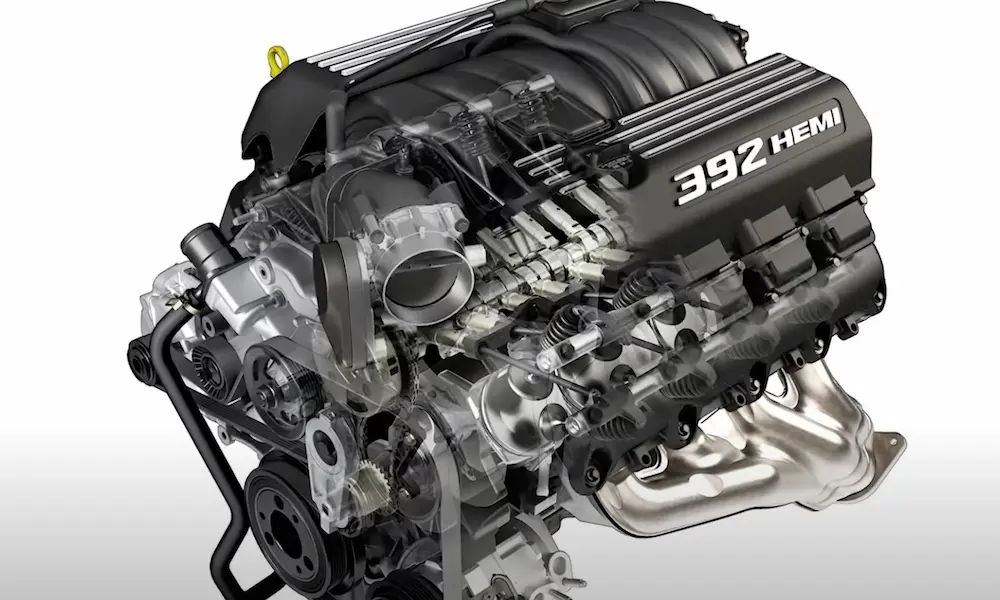
- 6.4L HEMI (SRT 392): 13 city / 19 highway / 15 combined MPG
- 6.2L Supercharged (SRT Hellcat): 12 city / 17 highway / 13 combined MPG
The jump from V6 to V8 isn’t subtle. You’re looking at a 19% drop in combined efficiency when you step up to the 5.7L HEMI. That’s the price of admission for V8 power.
The V6 Durango: Your Practical Family Hauler
If you’re buying a Durango to haul kids and groceries, the 3.6L Pentastar V6 is your answer. It produces 295 horsepower, which is plenty for daily driving and weekend adventures.
The AWD penalty here is minimal—just 1 MPG across the board. You get all-weather traction without sacrificing much efficiency. That’s a trade most families gladly make.
What makes the V6 shine is its fuel flexibility. It runs on regular 87-octane gas. When your competitors require premium fuel, this adds up to real savings over time.
The 24.6-gallon tank gives you serious range. With the RWD V6, you’re looking at nearly 640 miles on a single tank during highway trips. That means fewer fuel stops on family road trips.
Real-World V6 Performance: What Owners Actually Get
EPA numbers tell one story. Real drivers tell another.
Owners of V6 Durangos consistently report hitting or beating EPA estimates. One 2022 owner averaged 23.5 MPG in mixed driving, hitting 26 MPG on highway runs. Another commuter with lots of stop-and-go traffic still managed 20-21 MPG.
The professional tests back this up. Car and Driver’s standardized 75-mph highway test showed the V6 AWD model achieving 22 MPG. That’s slightly below the EPA’s 25 MPG highway rating, which is normal. Higher speeds mean more wind resistance and lower efficiency.
How the Durango V6 Stacks Up Against Competitors
Let’s be honest: the V6 Durango isn’t winning any efficiency awards.
The Ford Explorer with its 2.3L turbocharged four-cylinder hits 23 MPG combined on paper. More importantly, it achieved 28 MPG in real-world highway testing. That’s a 6-MPG advantage over the Durango’s 22 MPG in the same test.
The Kia Telluride looks closer on paper—20 MPG combined versus the Durango’s 21 MPG. But the Telluride pulled 26 MPG in highway testing compared to the Durango’s 22 MPG. That gap matters on long trips.
Here’s what this means: the Durango’s older platform and heavier build work against it. Modern turbocharged engines simply do more with less.
| Model | Engine | EPA Combined | Real-World Highway Test |
|---|---|---|---|
| Dodge Durango GT | 3.6L V6 | 21 MPG | 22 MPG |
| Ford Explorer XLT | 2.3L Turbo I-4 | 23 MPG | 28 MPG |
| Kia Telluride S | 3.8L V6 | 20 MPG | 26 MPG |
The 5.7L HEMI R/T: Where Things Get Interesting
This is where the Durango stops being a normal three-row SUV and becomes something else entirely.
The 5.7L V8 makes 360 horsepower and 390 lb-ft of torque. You can tow up to 8,700 pounds. The exhaust note makes you smile every time you start it.
But it comes with a cost: 14 MPG city / 22 MPG highway / 17 MPG combined.
You’ll also need to budget for 89-octane mid-grade fuel. The manual says 87 is “acceptable,” but you won’t get optimal performance or towing capacity with regular. Mid-grade costs about 18% more per gallon than regular.
Do the math: you’re burning more fuel and paying more per gallon. That’s the double penalty.
The Highway Surprise: When the V8 Beats the V6
Here’s something that surprises people: the 5.7L V8 can actually be more efficient than the V6 on the highway.
In Car and Driver’s 75-mph highway test, the V8 R/T achieved 23 MPG. The V6 AWD model? Only 22 MPG.
This seems backwards until you understand the engineering. The V8’s massive torque—390 lb-ft versus the V6’s 260 lb-ft—means it’s barely working at highway speeds. Add in the cylinder deactivation system that shuts down four cylinders during light cruising, and the V8 is practically loafing along.
The V6, meanwhile, has to work harder. It spins at higher RPMs to maintain 75 mph, burning more fuel in the process.
If you do a lot of highway driving, the V8’s real-world efficiency is surprisingly competitive. It’s the city driving where it kills you.
What R/T Owners Actually Experience
Owner reports for the 5.7L V8 vary wildly, and that tells you everything.
Some owners report averaging 15 MPG. Others see their readout stuck at 11.4 MPG. One frustrated forum poster complained about getting 14 MPG despite mostly freeway driving.
The response from another R/T owner was blunt: “I’m at 11.4. You bought the wrong car if you’re worried about MPG.”
That’s the reality check. The V8’s appeal—its muscle car character—actively encourages spirited driving. Every time you hear that HEMI rumble and feel the acceleration, your right foot gets heavier. And every time it gets heavier, your MPG drops.
One owner with remarkable self-control managed 19.5 MPG on a 40-minute commute at 60 mph in cruise control. But that requires treating a 360-horsepower V8 like a Prius, which defeats the purpose.
The SRT Models: Efficiency Isn’t the Point
The 6.4L HEMI in the SRT 392 makes 475 horsepower. The supercharged 6.2L in the SRT Hellcat makes 710 horsepower.
Both require 91-octane premium fuel. Both achieve abysmal gas mileage.
The SRT 392 gets 13 city / 19 highway / 15 combined. The Hellcat manages 12 city / 17 highway / 13 combined.
Owners confirm these numbers or worse. One SRT 392 owner averaged 12.5 MPG. A Hellcat owner reported 11 MPG. These aren’t outliers—they’re typical.
But here’s the thing: if you’re cross-shopping a 710-horsepower SUV, you’re not really worried about gas mileage. You’re buying a performance experience that has no direct competitor in the three-row segment.
The SRT models exist for people who want muscle car performance with room for seven. The fuel economy is simply the price you pay for that privilege.
Calculating Your Real Costs
MPG numbers only tell half the story. You need to factor in fuel prices and tank range.
The Durango’s 24.6-gallon tank is genuinely massive. Here’s your maximum highway range for each engine:
- V6 RWD: 640 miles
- 5.7L V8: 541 miles
- 6.4L V8: 467 miles
- 6.2L Supercharged: 418 miles
Even the thirsty Hellcat can go over 400 miles between fill-ups on the highway. That’s legitimately impressive for a 710-horsepower anything.
But don’t forget the fuel multiplier. Premium fuel costs about 29% more per gallon than regular. If regular is $3.50, you’re paying $4.50 for premium.
Let’s say you drive 15,000 miles per year:
V6 Citadel (21 MPG combined, regular gas at $3.50/gal):
- 714 gallons per year
- $2,499 annual fuel cost
5.7L V8 R/T (17 MPG combined, mid-grade at $4.13/gal):
- 882 gallons per year
- $3,643 annual fuel cost
You’re spending $1,144 more per year on fuel with the R/T. Over five years of ownership, that’s $5,720.
Is the V8 experience worth an extra $5,700? That’s a question only you can answer.
Which Durango Is Right for You?
Your choice comes down to priorities.
Get the V6 if:
- You need a practical family SUV
- You tow occasionally but not regularly
- You want the lowest operating costs
- You like the Durango’s style but don’t need V8 power
The V6 is competitive with the Telluride and delivers reasonable real-world efficiency. It won’t embarrass you at the pump.
Get the 5.7L V8 if:
- You regularly tow heavy trailers (6,000+ lbs)
- You do lots of highway driving where the V8 actually shines
- You want V8 character without SRT extremes
- You can budget for the extra fuel costs
The R/T is the sweet spot for enthusiasts who still need practicality.
Get the SRT models if:
- Fuel economy isn’t a consideration
- You want the fastest three-row SUV you can buy
- You value performance above all else
- You’re comfortable with premium fuel and single-digit city MPG
The SRT 392 and Hellcat exist for a very specific buyer who already knows what they want.
The Bottom Line on Dodge Durango Gas Mileage
The Durango doesn’t apologize for its fuel consumption, especially in V8 form. It’s a vehicle from a different era—one that prioritizes character, power, and capability over maximum efficiency.
The V6 models deliver acceptable gas mileage for a three-row SUV. You won’t lead the segment, but you won’t be embarrassed either. Real-world highway performance is decent, and running on regular gas keeps costs manageable.
The V8 models are a different story entirely. They’re thirsty in the city, require premium or mid-grade fuel, and actively tempt you to drive in ways that tank your MPG even further.
But they also deliver an experience no competitor can match. There’s no other mainstream three-row SUV with a V8 soundtrack and muscle car acceleration. The NHTSA crash test ratings show it’s safe, and the towing capacity makes it genuinely capable.
If you value efficiency above all else, buy an Explorer or Telluride. If you want something with soul—something that rumbles and growls and makes you grin—the Durango V8 is still here. You’ll just pay for every smile at the pump.