Ever noticed your Dodge Journey suddenly dimming lights, shutting down the radio, or displaying “Battery Saver Mode” on your dash? You’re dealing with a feature that’s meant to help but often causes confusion and frustration instead. I’ll walk you through exactly what this mode is, why it’s activating, and most importantly—how to fix it for good rather than just treating symptoms.
What Is Battery Saver Mode in a Dodge Journey?
Battery Saver Mode is a protective system designed to prevent your Dodge Journey’s battery from being completely drained. When your vehicle detects the battery voltage dropping too low, it automatically begins shutting down non-essential electrical components like your radio, heated seats, and climate control to preserve power for critical functions like starting the engine.
This isn’t just an annoying alert—it’s your car’s way of telling you there’s an underlying electrical issue that needs attention before you end up stranded with a dead battery.
5 Common Causes of Battery Saver Mode Activation
1. Faulty Intelligent Battery Sensor
The most frequent culprit behind persistent Battery Saver Mode issues is a malfunctioning Intelligent Battery Sensor (IBS). This small but critical component attaches to your negative battery terminal and monitors:
- Battery voltage
- Current flow
- Temperature
- Charge status
When the IBS fails, it sends incorrect data to your vehicle’s computer system, triggering Battery Saver Mode even when your battery and charging system are actually working fine.
How to identify an IBS problem:
- Battery Saver Mode activates repeatedly despite a new battery or alternator
- You get error code U113E-00 (Lost Communication With IBS) when scanned
- Electrical systems behave erratically even with a healthy battery
2. Alternator Issues
Your alternator is responsible for recharging the battery while the engine runs. Even alternators that test “good” at auto parts stores can fail under actual driving conditions, especially when hot or under heavy load.
Signs of alternator problems include:
- Battery Saver Mode activates while driving, not just at startup
- Voltage drops below 13.6V while the engine is running
- Headlights dim when you idle or use multiple electrical features
- Battery warning light comes on intermittently
3. Actual Battery Problems
Not all battery issues are obvious. Even a new battery can cause problems if:
- It’s the wrong specification for your specific Dodge Journey model
- It’s an aftermarket battery that doesn’t communicate properly with the IBS
- Internal cell damage prevents it from holding a proper charge
- Terminals have hidden corrosion causing resistance
4. TIPM Failure
The Totally Integrated Power Module (TIPM) is essentially your Journey’s electrical command center. When it starts to fail, you’ll notice multiple electrical problems happening simultaneously:
- Random accessory activation or deactivation
- Battery Saver Mode along with other warning messages
- Intermittent no-start conditions
- “NO BUS” messages on your dashboard
5. Wiring and Connection Problems
Sometimes the issue isn’t a major component but rather the connections between them:
- Damaged power cables from battery to fuse box
- Loose or corroded battery terminals
- Wiring harness damage near the alternator
- Blown fuses, particularly F179 (the 10-amp fuse dedicated to the Battery Sensor)
How to Diagnose the Real Problem
Before replacing expensive parts, work through these diagnostic steps:
Step 1: Check for Battery Saver Mode Activation Patterns
Pay attention to when the mode activates:
- During startup only? Likely a battery issue
- While driving? Points to alternator or charging system
- Randomly with other electrical glitches? Suggests IBS or TIPM issues
Step 2: Test Your Electrical System
| Test | Expected Result | What It Means If Failed |
|---|---|---|
| Battery Voltage (Engine Off) | 12.4-12.6V | Weak or failing battery |
| Charging System (Engine Running) | 13.8-14.6V | Alternator or regulator problem |
| Load Test (Accessories On) | Stable voltage above 12V | Internal battery cell damage |
| Voltage Drop Test | Less than 0.2V across connections | Poor connections causing resistance |
Step 3: Scan for Diagnostic Codes
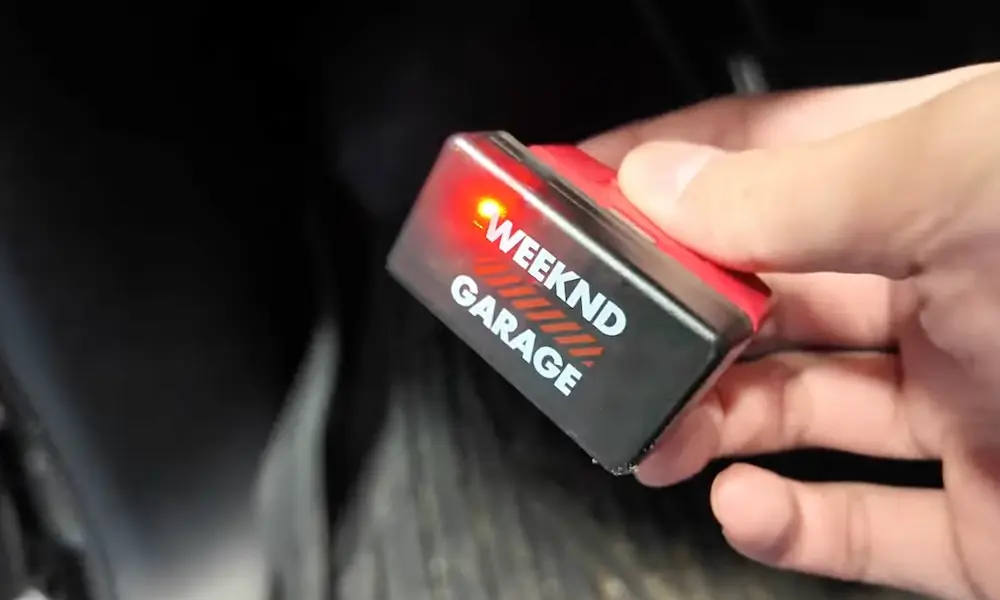
Using an OBD-II scanner, look specifically for:
- U113E-00: Lost communication with battery sensor
- P0562: System voltage low
- Any communication error codes between modules
These codes can pinpoint whether you’re dealing with an IBS, alternator, or TIPM issue.
How to Fix Dodge Journey Battery Saver Mode Issues
Fix #1: Replace the Intelligent Battery Sensor
If you’ve confirmed an IBS issue (especially if code U113E-00 is present), replacing this component is a relatively affordable fix:
- Purchase the correct IBS (Mopar part number 4692269AI or equivalent), which costs around $100-200
- Disconnect the negative battery cable
- Remove the air intake system to access the IBS (it’s integrated with the negative battery terminal)
- Replace the entire sensor assembly
- Reconnect and reset the system
Many Journey owners report this single replacement solved their persistent Battery Saver Mode issues after trying multiple other fixes.
Fix #2: Address Charging System Problems
If testing reveals charging voltage below 13.8V while running:
- Check the alternator belt for proper tension
- Inspect wiring connections at the alternator
- Test the voltage regulator function
- Replace the alternator if it’s not maintaining proper voltage
Remember that alternator issues often appear gradually, with problems worsening as the component heats up during driving.
Fix #3: Battery Replacement and Connection Cleanup
For battery-related issues:
- Replace with an OEM-specification battery – aftermarket batteries can cause compatibility issues with the Journey’s sensitive electrical system
- Clean terminal connections thoroughly with a wire brush
- Apply anti-corrosion spray to terminals
- Ensure terminals are tightened properly – not too loose (poor connection) or too tight (damaged terminals)
Fix #4: TIPM Diagnosis and Repair
If you suspect TIPM issues:
- Consider having it professionally diagnosed first, as TIPM replacement is expensive ($500-$1000)
- Look into TIPM repair services that can fix specific circuit issues rather than replacing the entire module
- Check for available software updates for your vehicle’s powertrain control module that might address TIPM communication
Common Mistakes to Avoid
- Replacing the battery without checking the IBS: Many owners spend money on multiple new batteries when the IBS is the real problem
- Ignoring intermittent symptoms: Electrical issues that come and go are still serious issues
- Incomplete diagnosis: Battery Saver Mode is a symptom, not the root problem
- Using generic parts: The Journey’s electrical system works best with OEM-specification components
- Disconnecting the battery to “reset” the system: This only temporarily masks deeper issues
Cost Comparison Guide for Repairs
| Repair Approach | Typical Cost Range | DIY Difficulty |
|---|---|---|
| IBS Sensor Replacement | $100-250 | Moderate |
| Alternator Replacement | $400-700 | Moderate-Difficult |
| Battery Replacement (OEM) | $150-220 | Easy |
| TIPM Repair | $300-500 | Not DIY-friendly |
| TIPM Replacement | $800-1200 | Not DIY-friendly |
| Wiring Repairs | $50-300 | Varies by location |
Preventative Maintenance Tips
To avoid Battery Saver Mode problems in the future:
- Test your charging system annually, especially on Journeys older than 5 years
- Keep battery terminals clean and tight with regular inspections
- Address warning lights promptly instead of waiting for bigger problems
- Consider a battery tender if your Journey sits unused for extended periods
- Use only OEM or high-quality OEM-equivalent parts for electrical components
Real-World Examples
Many Journey owners have successfully resolved Battery Saver Mode issues by focusing on the IBS sensor. One owner reported: “After replacing the alternator, battery, and even having the dealer look at it, I replaced the $100 IBS sensor myself and haven’t seen Battery Saver Mode in over a year.”
Another common pattern shows alternator issues developing gradually: “My Journey would go into Battery Saver Mode, but only after driving for 30+ minutes. The alternator tested fine when cold but was failing under heat and load.”
Understanding the relationship between these components is key. Your Journey’s electrical system is interlinked—with the battery, IBS sensor, alternator and TIPM all communicating. When one component sends faulty signals, the whole system can behave erratically.
By systematically working through the diagnostic steps and focusing on the most common culprits first (especially that troublesome IBS sensor), you can resolve Battery Saver Mode issues without spending money on unnecessary parts or repairs.