Your F-150 just slammed into first gear at 65 mph. Or maybe it’s shuddering like you’re driving over a cattle grid on the highway. Either way, you’ve got Ford 6R80 transmission problems — and you need real answers fast. This guide breaks down every major failure mode, what causes it, what it costs, and how to stop it from getting worse.
What Is the Ford 6R80 Transmission?
The 6R80 is Ford’s six-speed automatic transmission, built for rear-wheel-drive trucks and SUVs. Ford developed it with German engineering firm ZF — it’s based on the ZF 6HP26 — and manufactures it at their Livonia, Michigan plant.
You’ll find it in:
- Ford F-150 (2009–2020)
- Ford Expedition (2009–2018)
- Ford Mustang (2011–2017)
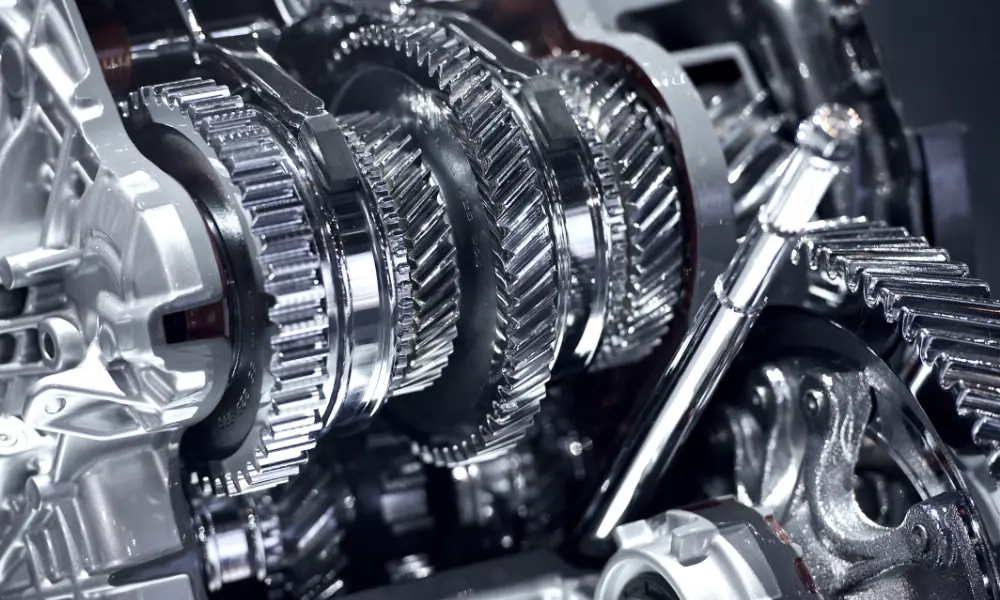
The name tells you a lot: “6” = six forward gears, “R” = rear-wheel-drive orientation, “80” = torque capacity rating. It’s a Lepelletier planetary gear system — a clever design that packs six gear ratios into a compact unit with fewer parts than older transmissions.
Here’s a quick look at the gear ratios:
| Gear | Ratio | Purpose |
|---|---|---|
| 1st | 4.171:1 | Maximum launch torque |
| 2nd | 2.340:1 | Urban acceleration |
| 3rd | 1.521:1 | Mid-range power |
| 4th | 1.143:1 | Final reduction |
| 5th | 0.867:1 | Highway cruising |
| 6th | 0.691:1 | Fuel economy |
| Reverse | 3.403:1 | Heavy-load maneuvering |
Sounds great on paper. But certain design choices — particularly around sensors, hydraulics, and thermal management — create some serious weak points.
The Biggest Ford 6R80 Problem: The Lead Frame Failure
If there’s one component responsible for most 6R80 horror stories, it’s the internal electronic connector plate, known as the lead frame.
This part is the transmission’s nerve center. It houses four critical sensors:
- Output Shaft Speed (OSS) sensor
- Turbine Shaft Speed (TSS) sensor
- Transmission Fluid Temperature (TFT) sensor
- Transmission Range Sensor (TRS)
Around the 2012 model year, Ford moved the Transmission Control Module outside the transmission into the main Powertrain Control Module. The lead frame stayed inside — exposed to heat, vibration, and metallic contamination from worn clutch material.
Why This Gets Dangerous Fast
When the OSS sensor inside the lead frame starts failing, the PCM loses its vehicle speed data. No signal means the transmission’s control logic defaults to a worst-case assumption.
On 2011–2014 models, that assumption triggered an immediate downshift to first gear — at any speed.
At highway speeds, a forced drop into first gear (with its 4.17:1 ratio) causes the engine to redline and the rear wheels to decelerate violently. The result: wheel lockup, skidding, and total loss of vehicle control.
This isn’t a minor drivability annoyance. It’s a safety emergency.
Federal Recalls and Investigations
NHTSA took this seriously. Here’s a breakdown of the major regulatory actions:
| Recall / Program | Vehicles Affected | Fix Applied |
|---|---|---|
| 19V-075 (19S07) | 2011–2013 Ford F-150 | PCM reprogramming to prevent downshift on signal loss |
| 19B05 | 2012–2013 Expedition/Navigator | PCM software calibration |
| 19N01 | 2011–2013 F-150, 2012–2013 SUVs | Extended warranty: 10 years/150,000 miles if P0720 or P0722 codes are present |
| 24S37 | 2014 Ford F-150 | Updated diagnostics and software |
Important: the software fix doesn’t repair the lead frame. It just stops the truck from slamming into first gear when the sensor dies. Instead, the transmission holds its current gear or goes neutral, and a wrench icon lights up on your dash. You still need a physical lead frame replacement to actually solve the problem.
The 2015–2017 Problem Is Still Unfolding
As of early 2026, NHTSA opened investigation PE26-001 covering approximately 1.3 million Ford F-150 trucks from model years 2015–2017.
The symptoms match earlier years almost exactly — sudden multi-gear downshifts, rear tire lockup, and screeching. NHTSA’s data shows over 40% of surveyed 2015–2017 owners experienced a wheel lockup event. There’s also a second risk: a failing TRS sensor can cause a truck reversing uphill to suddenly shift to neutral, rolling forward uncontrolled.
This investigation is currently in the engineering analysis phase — often the step right before a mandatory recall.
6R80 Torque Converter Shudder: That Rumble Strip Feeling
Shudder is probably the most common daily complaint from 6R80 owners. You’ll feel it as a high-frequency vibration — like driving over rumble strips — usually between 25 and 45 mph or at steady highway speeds around 35 to 55 mph.
This happens when the Torque Converter Clutch (TCC) is in a partial-slip state and the friction material starts grabbing unevenly. Ford’s calibration engages the TCC in all six forward gears to squeeze out fuel economy. That’s great for your MPG but brutal on the clutch material over time.
The root causes:
- Degraded MERCON LV fluid that’s lost its frictional modifiers
- Glazed friction material on the converter clutch plates
- Solenoid valve wear affecting TCC pressure regulation
Ford issued TSB 10-25-13 specifically for this — a PCM recalibration that adjusts TCC engagement strategy. It helps, but it doesn’t fix a converter that’s already worn out.
The long-term fix for chronic shudder is a billet torque converter with upgraded friction materials. Standard factory converters can’t handle sustained heat loads, especially in trucks used for towing.
Valve Body and Solenoid Problems
The valve body is how the 6R80 physically executes gear shifts — it’s a maze of channels and precision bores that direct hydraulic pressure to clutch packs. The 6R80 uses seven to eight Variable Force Solenoids (VFS), which give the PCM fine-grained control over shift pressure.
That precision comes at a cost. These solenoids are highly sensitive to fluid contamination. Clutch dust and metallic particles cause the internal plunger to stick, and that means wrong pressures get applied at the wrong time.
Here’s what solenoid failure looks like in practice:
| Solenoid | Controls | Symptoms When Failing |
|---|---|---|
| VFS 1 (A) | 1-2-3-4 Clutch | Delayed forward engagement, harsh upshifts |
| VFS 2 (B) | 3-5-R Clutch | Slipping in 3rd or 5th, loss of reverse |
| VFS 3 (C) | 2-6 Clutch | Flare or harsh shift in 2nd or 6th |
| VFS 6 (TCC) | Torque Converter | Lockup shudder, RPM fluctuation at steady speed |
Beyond the solenoids themselves, the aluminum valve body bores wear over time from constant steel valve movement. When the Pressure Regulator (PR) valve bore wears out, the transmission loses stable line pressure. Shifts become inconsistent — soft and slipping one day, harsh and jarring the next.
You’ll also notice a “coast-down clunk” when slowing to a stop. That’s the solenoid regulator failing to cushion clutch release properly.
Sonnax Zip Kits and TransGo Shift Kits address valve body wear without replacing the whole assembly. They restore hydraulic sealing and fix specific issues like shudder and coast-down clunks at a fraction of the replacement cost.
Overheating: The Silent Killer
The 6R80 uses an internal thermostatic bypass valve to manage fluid temperature. It keeps fluid circulating inside until it hits around 175°F, then opens to route fluid through the external cooler.
If that valve fails in the closed position — and it does — fluid never reaches the cooler. Temperatures can exceed 240°F under load. That leads to:
- Fluid oxidation — the fluid darkens, loses lubrication, and accelerates wear
- Hardened seals — rubber O-rings become brittle, causing internal pressure loss
- Lead frame degradation — Ford’s own investigation links excessive heat to lead frame electrical failures in 2015–2017 models
The aftermarket solution is a cooler bypass delete kit from TransGo. It replaces the thermostatic valve with a full-flow adapter that always routes fluid to the cooler. Owners in warm climates report temperature drops of 40°F to 60°F after installation. For towing applications, pair it with a high-capacity auxiliary cooler for maximum protection.
Diagnostic Codes to Know
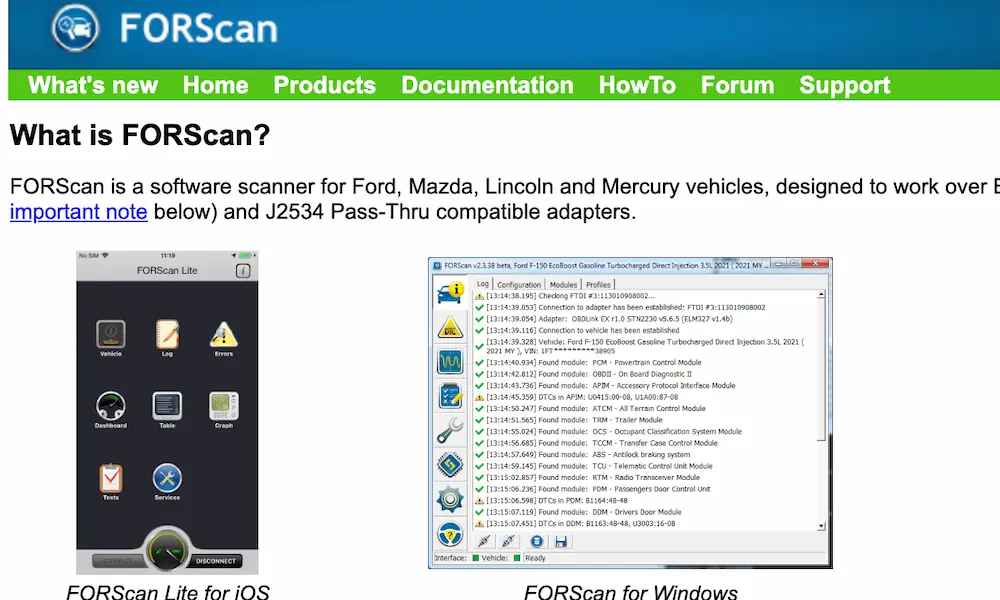
Standard OBD-II scanning often misses the full picture with the 6R80. You need real-time data streaming and relearn capability to diagnose these issues properly.
Key codes and what they actually mean:
| DTC | What It Means |
|---|---|
| P0720 / P0722 | OSS sensor circuit fault — hallmark of lead frame failure |
| P0731–P0736 | Gear ratio error — mechanical slip or sensor mismatch |
| P0741 | TCC performance failure — worn converter clutch or stuck regulator valve |
| P0751 | VFS 1 solenoid commanded on but no hydraulic response |
| P1783 | Fluid temperature exceeded safety threshold — overheating |
| P1500 | Intermittent vehicle speed signal — often overlaps with OSS lead frame failure |
One thing that trips owners up: disconnecting the battery or flashing the PCM resets the transmission’s adaptive learning tables. After a reset, the transmission relearns shift timing over the next 50 to 100 miles. Harsh shifts and gear hunting during that period are normal. If shifts are still rough after 100 miles, you’ve got a real mechanical issue.
What Repairs Actually Cost
Here’s the realistic cost breakdown for the most common 6R80 repairs in 2025/2026:
Lead Frame Replacement:
| Cost Element | Estimated Range |
|---|---|
| Genuine Ford lead frame | $530 – $700 |
| MERCON LV fluid and filter | $150 – $300 |
| Diagnostic fee | $150 – $350 |
| Independent shop labor | $400 – $800 |
| Total | $1,100 – $2,200 |
One important note: dealers often quote 6+ hours of labor for a lead frame job. Ford’s own warranty labor time is 2.2 hours. Shop around — an independent transmission specialist will save you real money here.
Full Rebuild or Replacement:
When you’ve got internal slipping — RPMs climbing without acceleration, or a burning smell — a lead frame swap won’t cut it. A full rebuild runs $3,000 to $7,000 depending on whether you choose a used, rebuilt, or remanufactured unit. Companies like Powertrain Products upgrade the unit during rebuild with improved lead frames, new OSS sensors, and performance-tested valve bodies.
How to “Bulletproof” Your 6R80
If you tow regularly, haul heavy loads, or just want to keep your truck running past 200,000 miles without a transmission bill, these upgrades are worth every penny:
- Change your fluid every 30,000–60,000 miles — the “filled-for-life” claim is a myth the industry has largely discredited. Severe duty (towing, off-road, extensive idling) degrades MERCON LV fast.
- Install a TransGo cooler bypass delete kit — eliminates thermostatic valve failure risk entirely.
- Add a large auxiliary transmission cooler — a 30+ row stacked-plate unit keeps temperatures well below the 215°F danger zone even under maximum tow load.
- Drop a deep aluminum transmission pan — adds fluid capacity, dissipates heat, and gives you a drain plug for easy future services. Brands like PML and PPE make solid options.
- Consider a Sonnax or TransGo shift kit — addresses valve body wear proactively rather than reactively.
- Replace the lead frame at first sign of sensor codes — don’t wait for a full electrical failure.
The 6R80 is fundamentally a strong transmission with a world-class engineering foundation. Its weak points are specific and well-understood. Staying ahead of fluid degradation, thermal stress, and lead frame wear is what separates a 250,000-mile transmission from a $5,000 repair bill.